
Vilnius Old Town — How to Navigate the Historic Core
A practical orientation to Vilnius's Old Town (Senamiestis), the UNESCO-listed historic core: the gates, the main streets (Pilies, Didžioji, Aušros Vartų), the squares, where to eat and how to find your way around. For the full neighbourhood and where-to-stay deep dive, see our canonical Senamiestis (Old Town) page.
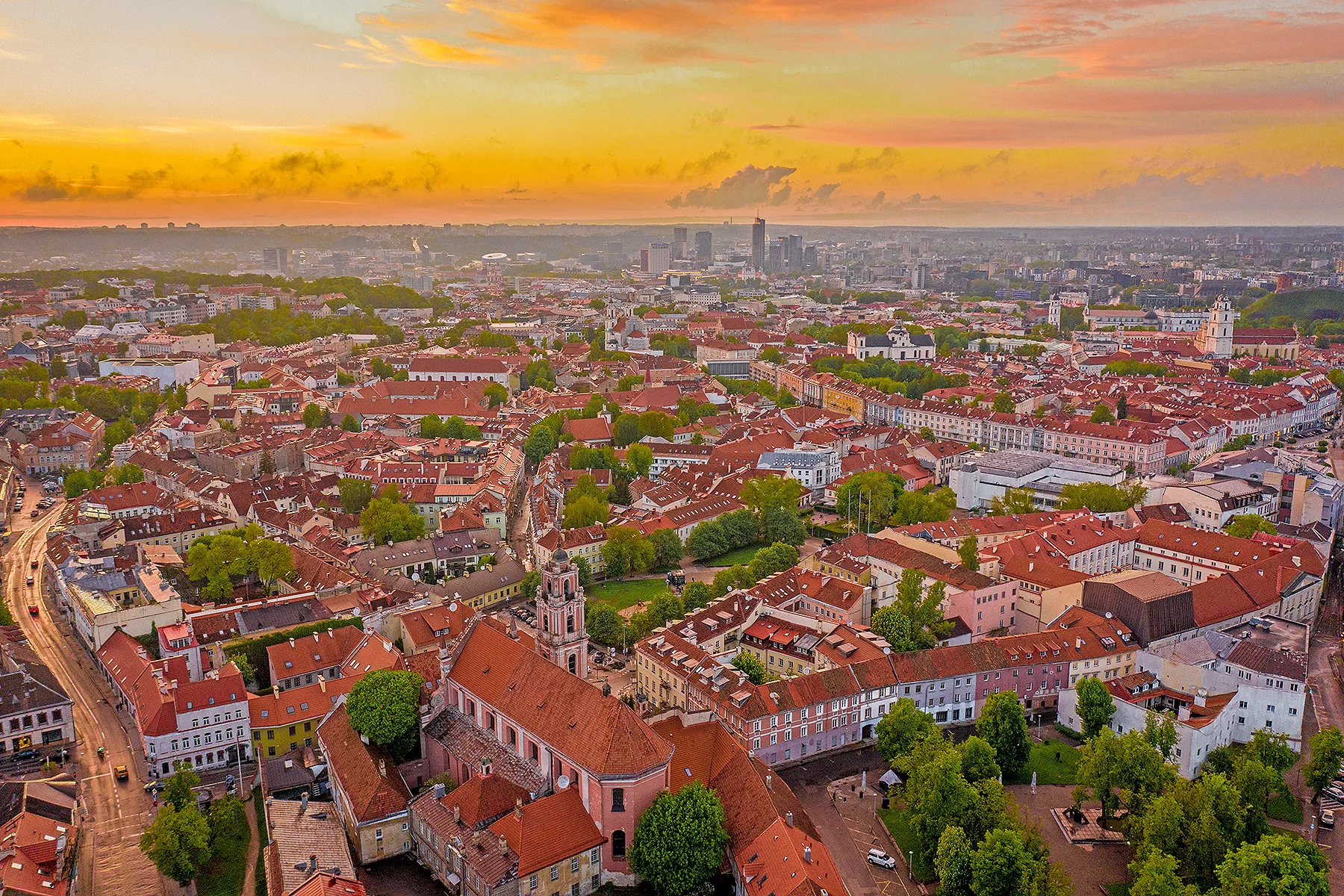
- ✓Vilnius's Old Town is a UNESCO World Heritage site — a labyrinth of cobbled streets, hidden courtyards and Baroque churches.
- ✓It's the vibrant heart of the city, where centuries of history meet lively café culture and most of the headline sights.
- ✓Extremely walkable: most key sights sit within a 15-minute radius, and the core is largely pedestrian-focused.
- ✓One spine runs the length of it — Pilies into Didžioji into Aušros Vartų — and once you find it, you can't really get lost.
- ✓This page is the practical orientation; our full neighbourhood and where-to-stay guide lives at Senamiestis (Old Town).
The historic heart of Vilnius
As a UNESCO World Heritage site, Vilnius's Old Town is a labyrinth of cobblestone streets, hidden courtyards, and stunning Baroque architecture. It's the vibrant heart of the city, where centuries of history meet a lively cafe culture and bustling tourist activity. Staying here means having the city's most iconic sights, restaurants and events right at your doorstep — from Cathedral Square and Gediminas' Tower down Pilies Street to the Gates of Dawn.
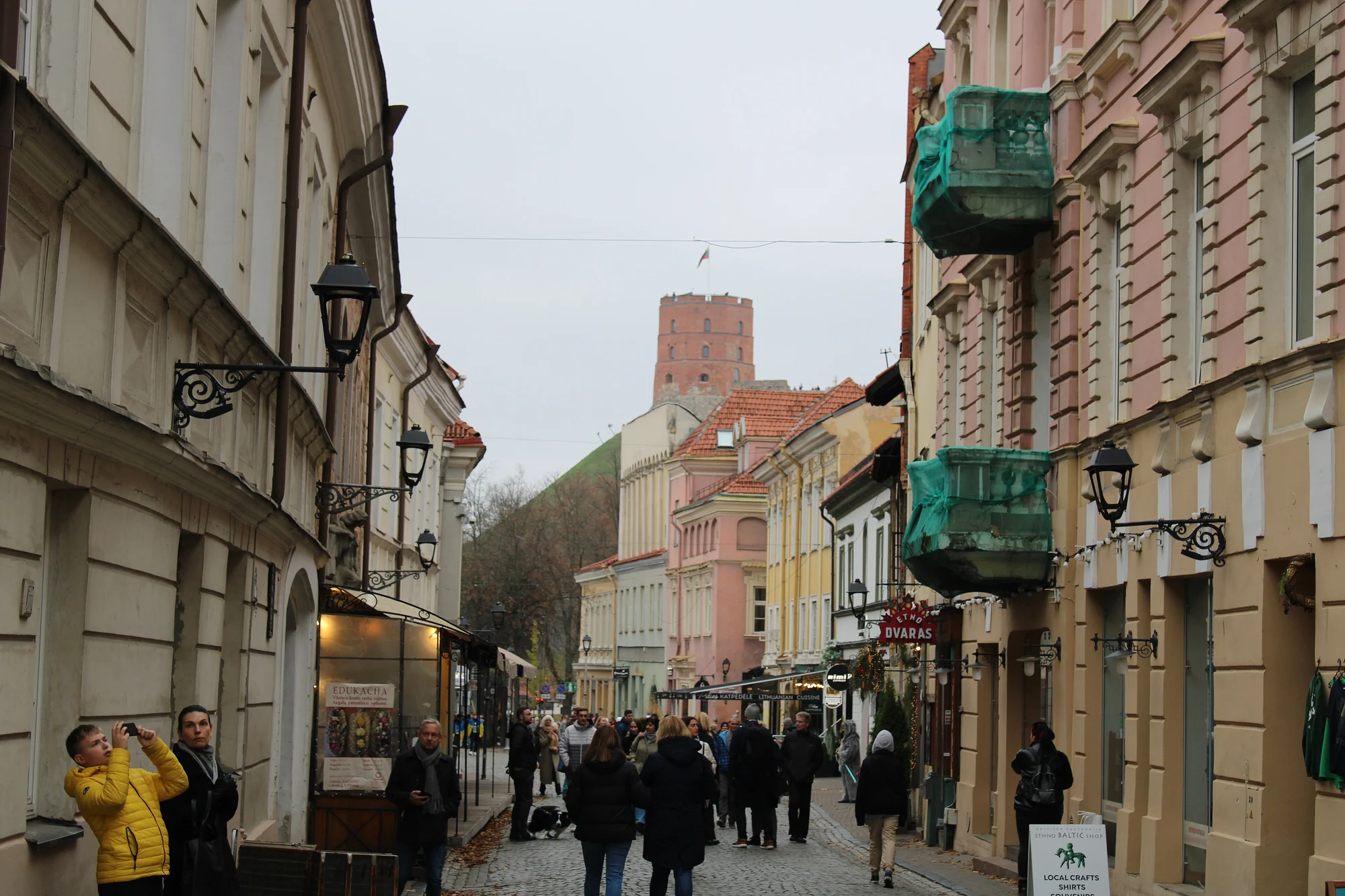
The Old Town is one of the largest surviving medieval old towns in Northern Europe, and its compact scale is part of the charm: it's extremely walkable, with most key sights within a 15-minute radius and a core that's largely pedestrian-focused. It's well served by buses on the periphery and has direct access to the train station from its southern edge, but inside, you'll explore almost entirely on foot.
A few things to know: expect crowds, especially on summer weekends, so duck into the smaller side streets away from Pilies for a quieter experience; many buildings are historic and protected, which makes for characterful (occasionally quirky) apartments; and on-street parking is scarce and expensive, so this is a neighbourhood best explored on foot.
How the Old Town is laid out: one spine, two ends
The single most useful thing to understand about the Old Town is that, for all its tangle of lanes, it has one clear spine. A near-continuous street runs the full length of the historic core from north to south, changing its name as it goes: it begins as Pilies Street (Pilies gatvė, 'Castle Street') just below Cathedral Square, becomes Didžioji Street (Didžioji gatvė, 'Great Street') around the Town Hall, and finishes as Aušros Vartų Street (Gate of Dawn Street) at the old city's southern gate. Walk that line end to end and you've seen the bones of the Old Town; everything else branches off it.
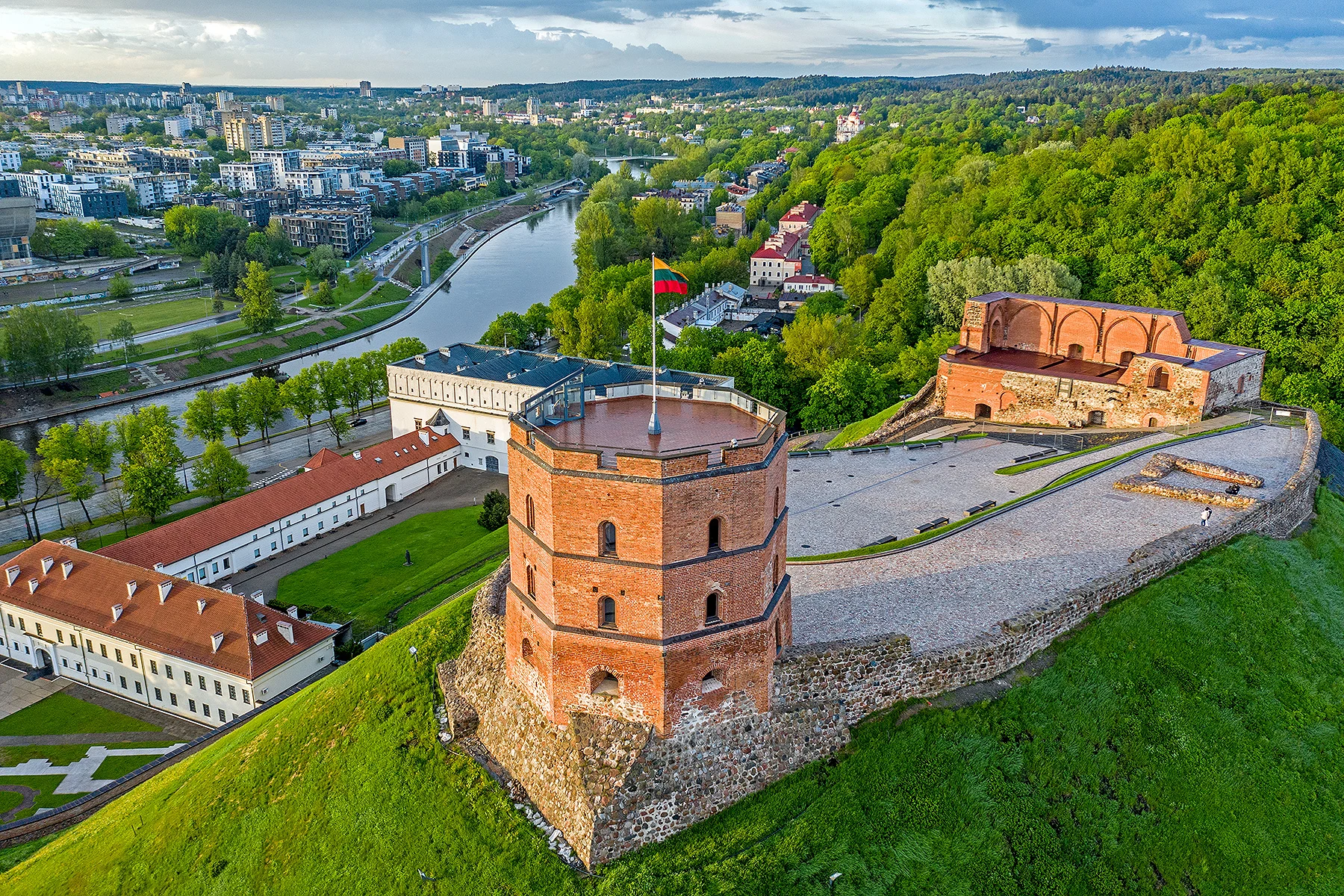
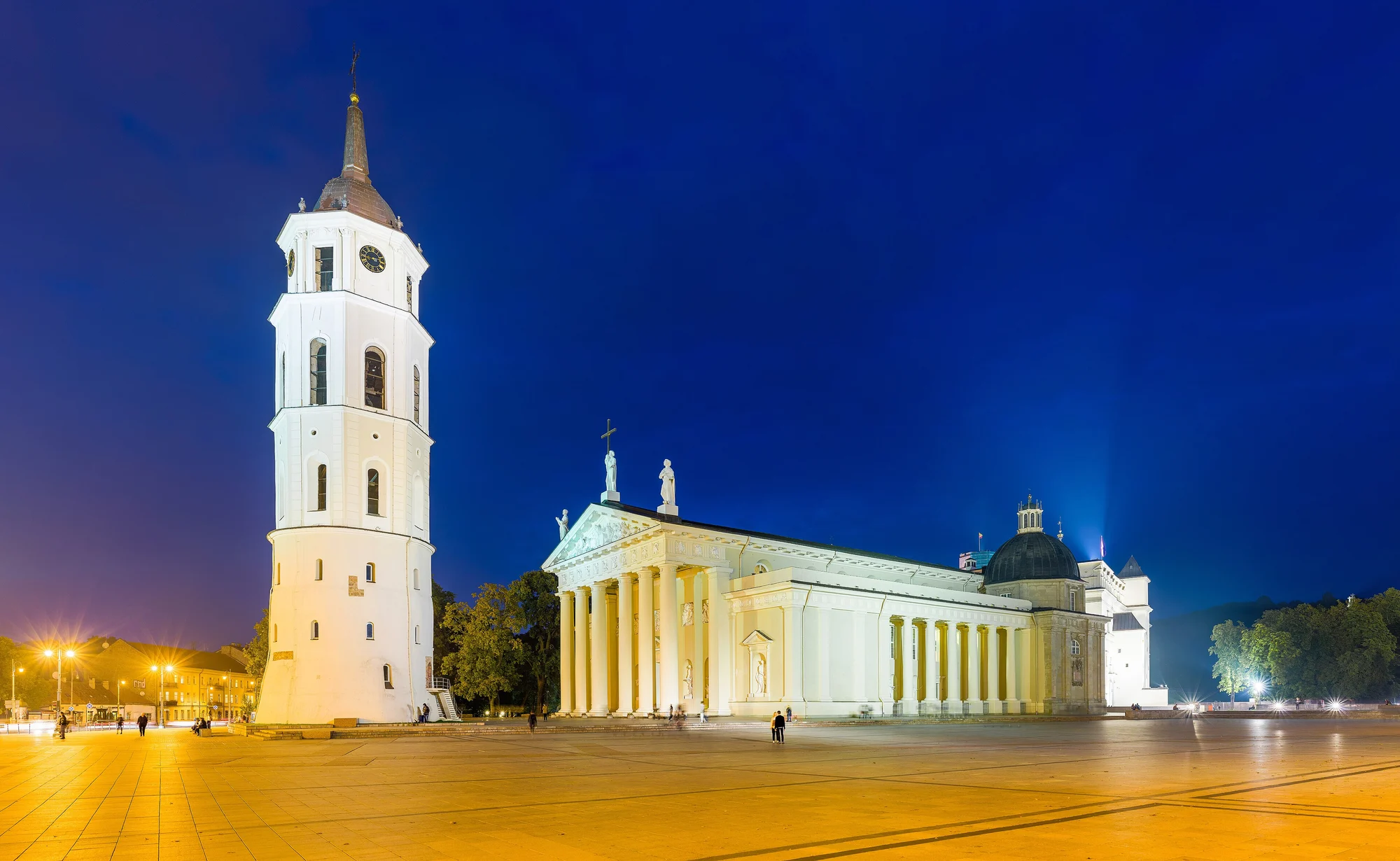
Picture it as a route between two anchors. At the northern end sits Cathedral Square — the white Cathedral, its free-standing bell tower, and the green hill behind topped by Gediminas' Tower, the surviving keep of the upper castle. At the southern end stands the Gate of Dawn (Aušros Vartai), the only surviving gate of the medieval city wall, with its revered chapel and golden Madonna above the arch. The whole walk between them is gently downhill-then-flat and takes perhaps fifteen to twenty minutes without stopping — far longer once you start ducking into churches and courtyards, which you should.
Hold those two anchors and the rest falls into place. Side streets peel off the spine in both directions: east toward the river and Užupis, west toward the university, the Presidential Palace and the green slope below the castle. If you ever feel lost — and the cobbled lanes are designed to disorient — just aim for the spine, or look up for the castle hill or a church tower, and you'll reorient in a minute. This is a place to wander confidently, not anxiously.
A note on the gates and the wall: Vilnius once had a ring of defensive walls with several gates, of which only the Gate of Dawn survives. You can still trace fragments of the old wall — the Bastion of the Vilnius City Wall, off to the southeast, is a restored artillery bastion you can go inside — which helps you read where the medieval town ended and how tightly the historic core was once contained.
- One spine, three names: Pilies → Didžioji → Aušros Vartų, running north to south.
- Northern anchor: Cathedral Square, the bell tower and the castle hill.
- Southern anchor: the Gate of Dawn — the only surviving medieval city gate.
- Lost? Aim for the spine, or look up for the castle hill or a church tower.
The Old Town's main artery, with shops, cafés, the amber trade and the daily street life.
The Gate of Dawn (Aušros Vartai)The southern gate and its chapel — the spine's southern anchor.
Map pins
Map data © OpenStreetMap contributors · Tiles © OpenFreeMap
The squares: Cathedral, Town Hall and Aušros Vartų
Three open spaces punctuate the spine and give the Old Town its rhythm. Cathedral Square (Katedros aikštė) at the north is the city's grand front room: a wide, paved plaza where the Cathedral, the bell tower and the castle hill come together, and where locals gather for everything from independence-day events to the Christmas tree and market. Look for the 'stebuklas' (miracle) tile set into the paving — stand on it, turn around, and make a wish, as the local tradition goes. From here the funicular or the path up the hill takes you to Gediminas' Tower for the classic rooftop view over the red roofs and church spires.
Halfway down, where Pilies becomes Didžioji, the street opens into Town Hall Square (Rotušės aikštė), framed by the neoclassical Town Hall with its columned portico. This is the social middle of the Old Town: café terraces, buskers, seasonal markets and a natural pausing point. It's also a useful hinge — from here it's a short drop east toward the river, Paupys and Užupis, or a continuation south toward the Gate of Dawn.
At the southern end, just inside the Gate of Dawn, the street widens again near a cluster of churches — St Teresa's, the Orthodox Church of the Holy Spirit and the Basilian Gate — before passing under the gate itself and out of the old walled town. Between these three squares, the spine gives you a clear narrative to walk: grand civic opening, lively middle, sacred southern threshold.
What to see and do along the way
The pleasure of the Old Town is that the headline sights string along the spine and the lanes just off it, so you rack them up almost without trying. Starting from the north: the Cathedral and its crypts, the climb to Gediminas' Tower, and the elegant 18th-century courtyards of Vilnius University, whose St John's Church bell tower is among the tallest in the Old Town and open to climb. A short detour east off Pilies brings you to St Anne's Church, the slender red-brick Gothic gem that Napoleon supposedly wished he could carry back to Paris, with the larger Bernardine Church beside it and the Bernardine Garden behind, sloping down to the river.
Carrying south along Didžioji, you pass church after church — this really is the biggest Baroque ensemble in the region — including St Casimir's, the oldest Baroque church in the city, on Town Hall Square. Near the southern end, don't miss the Gate of Dawn chapel above the street, where pilgrims come to the icon of the Madonna, and the nearby Orthodox and Uniate churches that show the city's layered faiths side by side. Tucked off the spine to the southwest is the small but moving former Jewish quarter around Žydų and Stiklių streets, a reminder of the 'Jerusalem of the North' that Vilnius once was.
Above all, leave room to get lost on purpose. The reward of the Old Town isn't only the ticked-off monuments but the courtyards behind unmarked doors, the amber and linen shops on Pilies, the hidden bars down Stiklių, and the way a quiet lane suddenly frames a Baroque façade. Give the spine a full slow morning, then spend an afternoon simply drifting off it.
- North: Cathedral, Gediminas' Tower, Vilnius University courtyards and St John's bell tower.
- A short detour east: St Anne's, the Bernardine Church and the riverside Bernardine Garden.
- South: a dense run of Baroque churches ending at the Gate of Dawn chapel.
- Off the spine: the historic Jewish quarter around Žydų and Stiklių streets.
Where to eat and drink in the Old Town
You're never far from a good meal in the historic core, but a little orientation helps you eat better. The spine itself — Pilies and Didžioji — is lined with terraces that are lovely for a coffee, an ice cream or a people-watching pause, though the most touristed of them trade location for value; the rule of thumb is that quality climbs as you step one or two lanes off the main street. Stiklių, Vokiečių, Islandijos and the small lanes around the Town Hall hold many of the Old Town's better restaurants, wine bars and cocktail spots, often in vaulted cellars or quiet courtyards.
For the full sweep, lean on our food guides rather than guessing from a menu board: the best-restaurants roundup covers where serious cooking is happening across the centre, the wine-bars guide points you to the Old Town's growing natural-wine and cellar scene, and the Lithuanian classics guide steers you to the kitchens doing cepelinai, cold beetroot soup and dark rye well rather than for the tour buses. A sit-down lunch of the traditional dishes is part of the Old Town experience and easy to find here.
And remember the Old Town's edges. The river side leads quickly to the Paupys food hall and to Užupis's terraces, both a short walk away, so an Old Town day can easily end with dinner just over a bridge — a useful trick when the main streets feel busy and you want somewhere calmer for the evening.
- Step one or two lanes off Pilies/Didžioji for better value and better cooking.
- Stiklių, Vokiečių and Islandijos hold many of the best cellar restaurants and bars.
- Lithuanian classics are everywhere — make time for a proper sit-down lunch.
- The riverside edge leads quickly to Paupys's food hall and Užupis's terraces.
Getting here and finding your way
Reaching the Old Town is easy from anywhere in the city. The main train and coach stations sit just beyond its southern edge, a short walk uphill through the Gate of Dawn into the heart of the historic core — which means many visitors' first sight of Vilnius is that southern gate. The airport is a quick ride away by bus, train or taxi/ride-hail, and city buses circle the periphery, with stops along Gedimino Avenue to the west and near the river to the east. There is no metro in Vilnius; inside the Old Town you will move on foot.
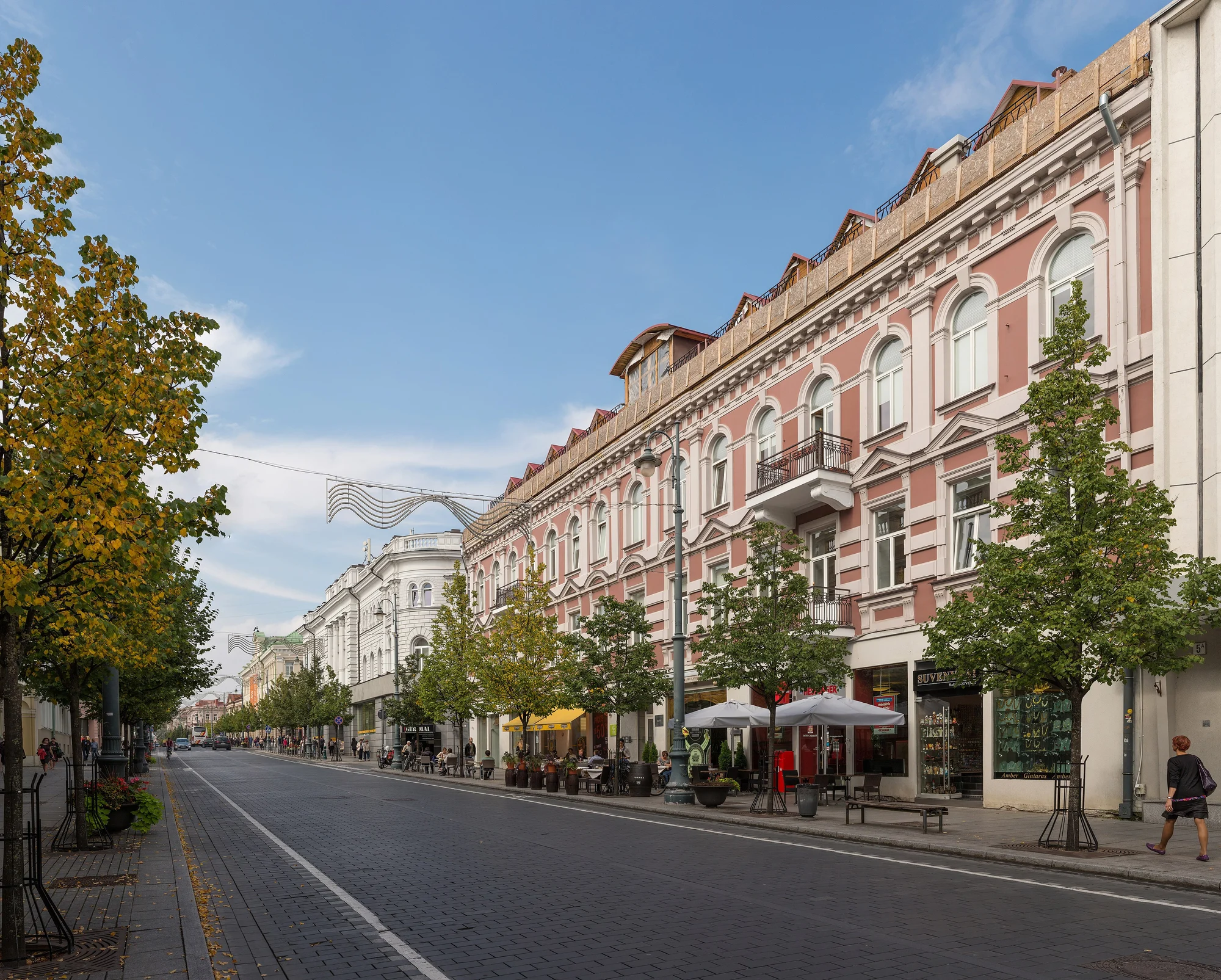
Within the walls, navigation is genuinely simple once you hold the spine and the two anchors in your head. Cathedral Square (and the castle hill above it) marks north; the Gate of Dawn marks south; the river and Užupis lie to the east; Gedimino Avenue, Lukiškės and the New Town lie to the west. The cobbles and the slope toward the river are the main practical hazards — wear comfortable, grippy shoes, especially after rain, and don't plan on wheeling a suitcase smoothly over the older lanes.
Two further orientation tips. First, climb something early: the view from Gediminas' Tower or the St John's bell tower gives you the whole layout at a glance and makes the maze legible. Second, treat the spine as your reset — whenever a wander leaves you turned around, walk to Pilies/Didžioji/Aušros Vartų and you'll instantly know where you are and which way is the Cathedral.
- Train and coach stations sit just below the southern (Gate of Dawn) edge.
- No metro — the Old Town is explored entirely on foot; buses circle the periphery.
- Hold the compass: Cathedral/castle = north, Gate of Dawn = south, river/Užupis = east.
- Climb a tower early to make the maze legible; use the spine as your reset point.
Who it suits, where to stay and a local's tip
Basing yourself in the Old Town suits first-timers above all: you wake up inside the postcard, with the headline sights, restaurants and events on your doorstep and nothing more than a short walk between them. It also suits anyone on a tight schedule who wants to minimise transit, and couples after atmosphere — the lamplit lanes after the day-trippers leave are one of the city's quiet joys. The trade-offs are familiar ones: summer-weekend crowds on the main streets, characterful but sometimes quirky historic apartments, scarce and pricey parking, and a premium on rooms. For the full breakdown of where to sleep within the walls and how the Old Town compares with other bases, our canonical Senamiestis guide and the Old Town hotels guide go deeper.
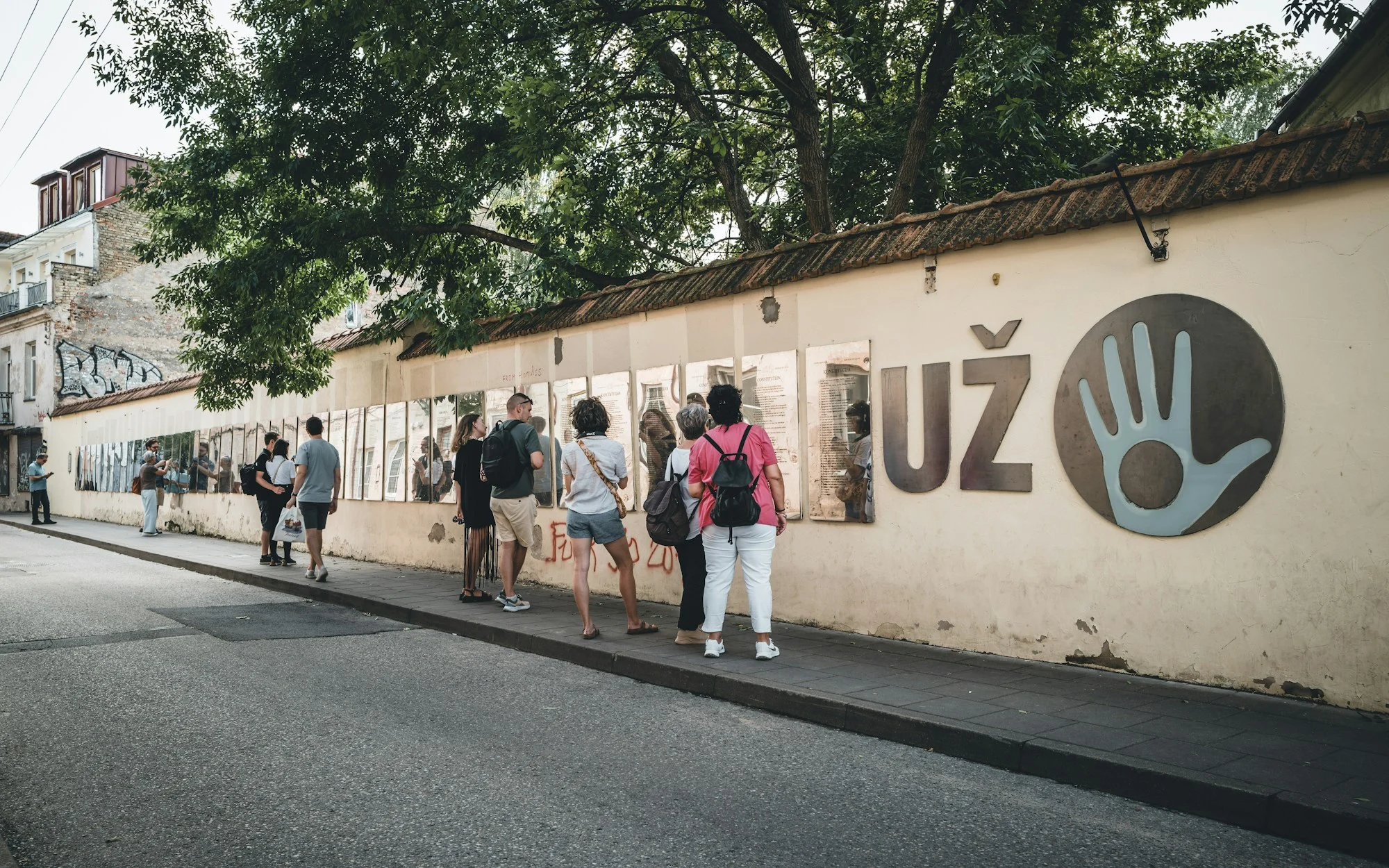
If you'd rather trade a little atmosphere for quieter nights or better value, two near neighbours make easy alternatives without losing walkability: Užupis, the bohemian republic a couple of bridges east, and Lukiškės along Gedimino Avenue to the west, central and well-connected but calmer after dark. Either lets you be in the Old Town in minutes while sleeping somewhere with a different character.
Local's tip: walk the spine twice — once mid-morning and once after dark. By day you'll get the street life, the terraces and the open churches; after the tour groups thin out, the same lanes turn quiet, the façades are floodlit, and Cathedral Square and the castle hill look their best. And early on, find the 'stebuklas' tile in Cathedral Square and stand on it: it marks a spot tied to the 1989 Baltic Way human chain, and it's the most local way to start your loop through the historic core.
- Best for first-timers, tight schedules and couples after atmosphere.
- Trade-offs: summer crowds, quirky historic flats, scarce parking, premium rates.
- Quieter near-neighbours with the same walkability: Užupis and Lukiškės/Gedimino.
- Tip: walk the spine once by day and once after dark — they're two different cities.
The complete neighbourhood and where-to-stay deep dive for the historic core.
Best Old Town HotelsWhere to sleep within the walls, with the trade-offs spelled out.
Užupis Neighborhood GuideThe bohemian republic across the river, a few minutes' walk and a quieter base.
Related guides
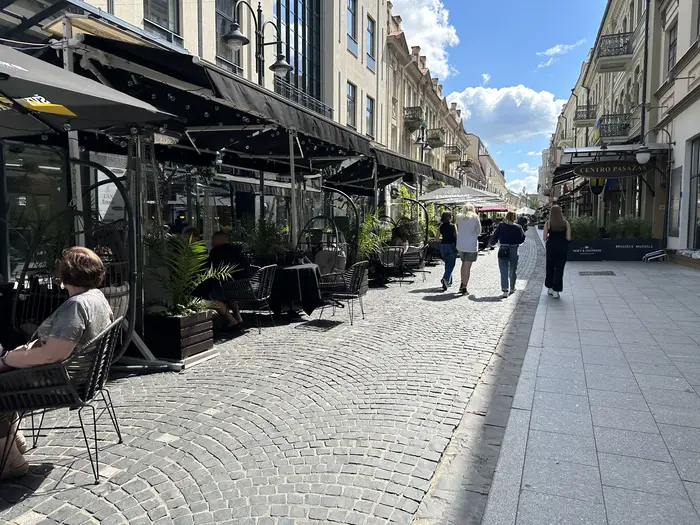
Old Town (Senamiestis): Neighborhood & Where to Stay Guide
The complete guide to staying in Vilnius's Old Town: the UNESCO-listed historic core, what it's like to be based here, the trade-offs of cobbles and crowds, and how to choose your corner of Senamiestis.
Read guide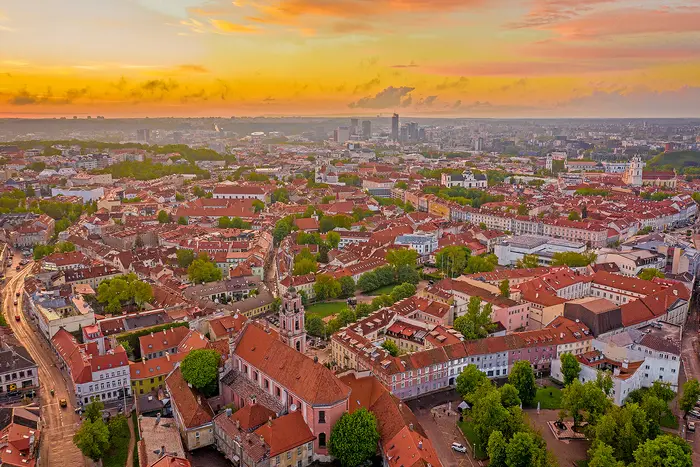
Vilnius Old Town
A guide to Vilnius Old Town: the UNESCO-listed heart of the city, its gates, churches, courtyards, squares, cafés, Jewish history and best photo stops.
Read guide
Self-Guided Vilnius Old Town Walk
A step-by-step self-guided walking route through Vilnius Old Town — from the Gates of Dawn through the Town Hall, Pilies Street, the university and Cathedral Square to Užupis.
Read guide