
St Anne's Church, Vilnius
A guide to St Anne's Church — Vilnius's red-brick Gothic icon — its Flamboyant brickwork, the Napoleon legend, the neighbouring Bernardine ensemble and gardens, the best photo angles and how to combine it with Užupis.
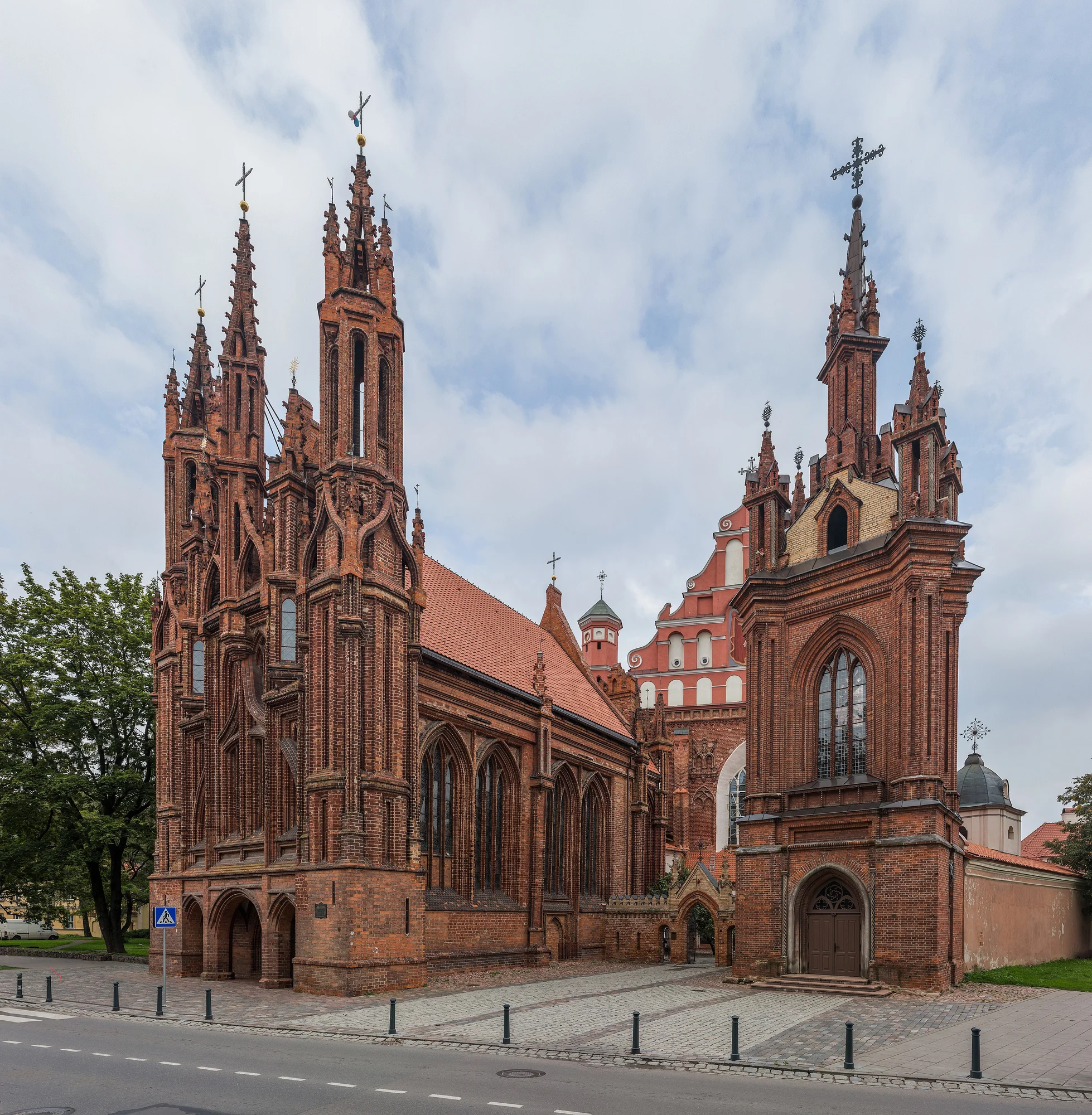
- ✓St Anne's (Šv. Onos bažnyčia) is the most beautiful Gothic church in Vilnius — a slender red-brick masterpiece built around 1495–1501.
- ✓Its Flamboyant Gothic facade uses around thirty-three different shapes of moulded brick, giving it the look of an elegant paper cut-out.
- ✓Legend says Napoleon wished he could carry it back to Paris in the palm of his hand — atmospheric, if unconfirmed.
- ✓It stands beside the larger Bernardine Church and monastery, forming one ensemble; the Bernardine Gardens lie just behind.
- ✓Entry to the interior is generally free during open hours; the real draw is the exterior and its photogenic setting near Užupis.
Vilnius's Gothic masterpiece
St Anne's Church (Šv. Onos bažnyčia) is the building people mean when they say Vilnius has the finest brick Gothic in the Baltics. Built around 1495–1501 on the site of an earlier wooden church, its compact west facade is a tour de force of Flamboyant (late) Gothic: slender pinnacles, lacy arches and a soaring central gable, all worked in around thirty-three different profiles of specially moulded red and glazed brick. The effect is intricate and almost weightless — contemporaries compared it to filigree, and it really does read like an elegant paper cut-out standing against the sky.
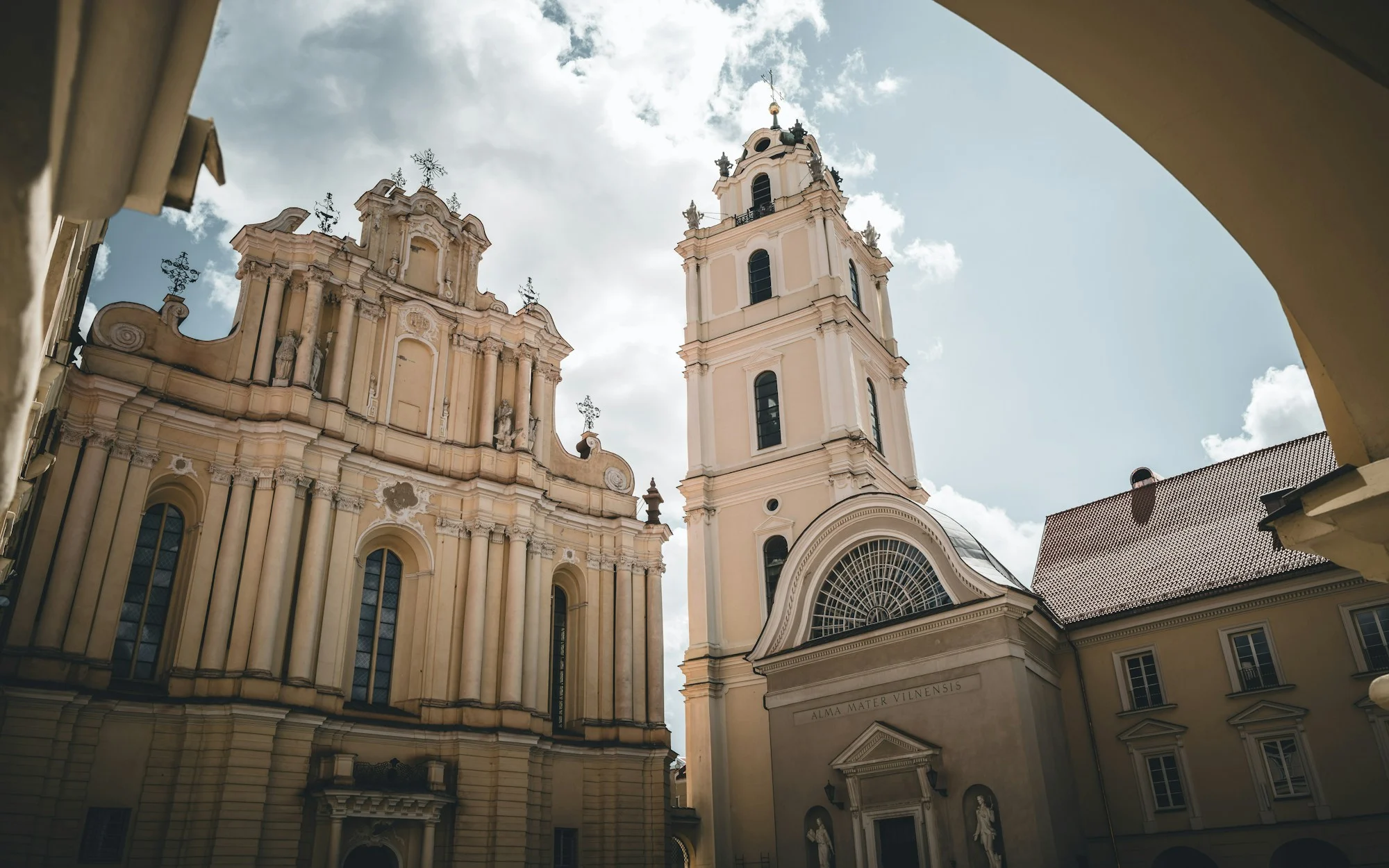
Remarkably, the facade has survived largely intact for over five centuries, through fires, wars and changes of regime, and it remains one of the most photographed buildings in Lithuania. It's a small church — the drama is all in that front elevation — so most visits are about admiring the exterior, stepping inside briefly, and taking in the way it sits within its larger Gothic neighbourhood.
It helps to know what St Anne's is not. Because it stands directly in front of the much bigger Bernardine Church, many first-time visitors photograph the two together and assume they're a single building, or mix up their names. They are separate churches built for different purposes — the dainty parish church of St Anne in front, the grand Bernardine monastic church behind — and seeing them as a pair, the small jewel set against the larger backdrop, is the way locals and guides present the ensemble. Keep that relationship in mind and the whole corner suddenly makes sense.
The Napoleon legend and the Bernardine ensemble
The church's most famous story belongs to Napoleon. When the French emperor passed through Vilnius in 1812, he is said to have been so taken with St Anne's that he wished he could carry it back to Paris in the palm of his hand. It's a lovely line that every guide repeats — and it's worth knowing it's legendary rather than documented; no contemporary record confirms Napoleon ever said it. True or not, it captures exactly how the church strikes first-time visitors.
St Anne's doesn't stand alone. Directly behind it rises the much larger Bernardine Church (the Church of St Francis of Assisi and St Bernard) with its former monastery — together they form the Bernardine ensemble, one of the most important Gothic complexes in Vilnius. The two are often confused, but they're distinct buildings: little St Anne's in front, the big Bernardine church and red bell tower behind. Seeing them together, and understanding how they relate, is half the point of coming here.
- Built around 1495–1501; Flamboyant brick Gothic, ~33 brick shapes.
- The Napoleon 'palm of his hand' line is a cherished legend, not confirmed history.
- Forms the Bernardine ensemble with the larger Church of St Francis of Assisi & St Bernard.
- St Anne's is the small church in front; the Bernardine church and tower stand behind it.
The larger church directly behind St Anne's, forming the same ensemble.
Bernardine GardenThe riverside park just behind the ensemble, with the musical fountain.
Map pins
Map data © OpenStreetMap contributors · Tiles © OpenFreeMap
Visiting, photos and combining with Užupis
Practically, St Anne's is easy. It stands on Maironio Street on the eastern edge of the Old Town, a short walk from the cathedral and Pilies Street. The interior is generally open during the day and around services, and entry is normally free — but the real attraction is outside, so don't be disappointed by the modest, much-restored interior. Opening hours and service times vary, so if you specifically want to go in, check before you visit; otherwise just enjoy the facade, which is on view at any hour.
For photos, the front (west) facade is the money shot, best in soft morning or late-afternoon light when the brick glows warm; the Bernardine bell tower behind makes a fine layered composition. The best move is to combine St Anne's with two neighbours: the Bernardine Gardens immediately behind, for a relaxed riverside stroll, and Užupis just across the Vilnia river, the bohemian republic that's a two-minute walk over the bridge. Together they make an effortless half-hour-to-half-day loop on the Old Town's eastern edge.
- On Maironio Street, eastern edge of the Old Town; entry to the interior is generally free.
- The exterior is the draw — the interior is modest and heavily restored.
- Best light on the west facade is soft morning or late afternoon.
- Combine with the Bernardine Gardens behind and Užupis just across the river.
Reading the architecture
St Anne's is worth slowing down for, because almost everything that makes it special is in the detail of its brickwork. Late-Gothic builders couldn't carve red brick the way stone is carved, so they did something cleverer: they fired bricks in dozens of bespoke shapes — moulded curves, fins, finials and tracery profiles, around thirty-three distinct forms in all — and assembled them like a kit into the flowing, flame-like patterns that give Flamboyant Gothic its name. The result is a facade that looks carved and lace-like even though it's built entirely from baked clay.
Three slender towers crown the front, the central gable rises in a restless tangle of arches and pinnacles, and the whole composition is unusually small and vertical — which is exactly why it reads as delicate rather than monumental. Glazed and differently fired bricks add subtle shifts of colour across the surface, so the facade changes character with the light through the day. It's considered the foremost example of brick Gothic in Lithuania and one of the finest in the whole Baltic region, and its survival, essentially unaltered, since around 1500 is itself remarkable.
The interior, by contrast, is modest: a single rib-vaulted space, much restored over the centuries, with a rosy glow from the brick. Most visitors find the inside a brief stop and the outside the real event — which is fine, because the facade is on free public view at any hour.
Make a day of the eastern Old Town
St Anne's sits at one of the most rewarding junctions in Vilnius, so it's a mistake to see it in isolation. Behind it stretches the Bernardine ensemble — the big Church of St Francis of Assisi and St Bernard with its tall red bell tower — and behind that, the Bernardine Gardens, a relaxed riverside park with lawns, a rose garden and a musical fountain that's a favourite local hangout in warm weather. From the church it's a two-minute stroll into the gardens, making an easy pairing of high Gothic drama and green calm.
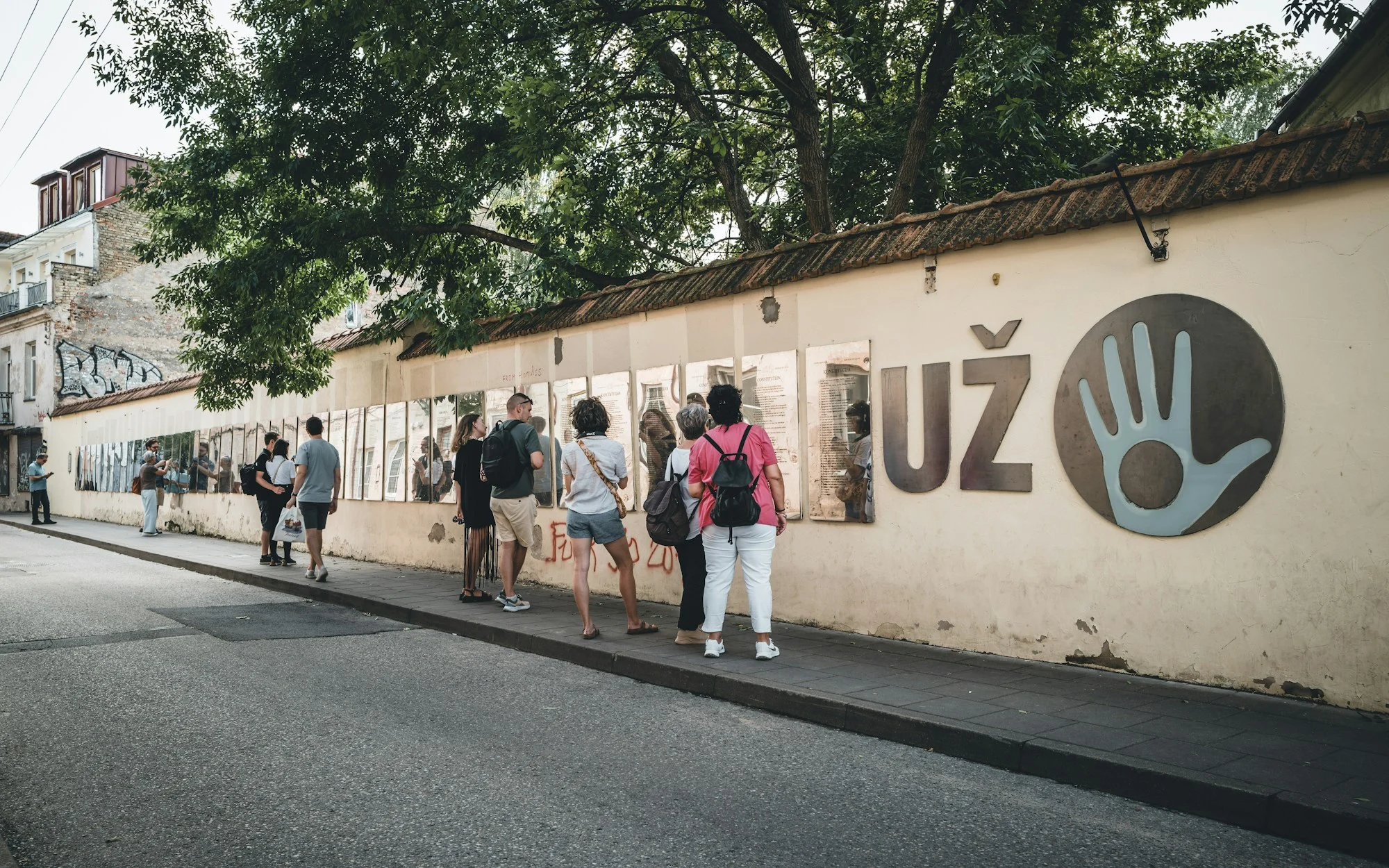
Cross the little bridge over the Vilnia river and you're in Užupis, the self-declared bohemian 'republic' with its tongue-in-cheek constitution, riverside art and quirky cafés — one of the city's most characterful corners and an effortless add-on. Loop the other way and you're quickly back among the cathedral, Pilies Street and the university courtyards. A comfortable plan is St Anne's and the Bernardine church, then the gardens, then Užupis, then back into the central Old Town — a half-day that strings together some of Vilnius's best sights without any rush.
For getting here, the church is on Maironio Street, a flat 5–10 minute walk from Cathedral Square; there's no admission to admire the exterior, and the interior is generally free during open hours. Come for soft morning or late-afternoon light if photography is your priority, and you'll see exactly why this small brick church has charmed everyone from Napoleon's army to today's visitors.
If you have more time, the surrounding streets reward a little wandering of their own. Maironio Street and the lanes towards the river are quieter than the central Old Town, with a scatter of cafés where you can sit with a view of the brick spires, and the riverside path along the Vilnia links the church directly to Užupis and the Bernardine Gardens. In winter the bare trees open up clear sightlines to the facade and the snow sets off the red brick beautifully; in late spring and summer the gardens behind are in full leaf and the whole quarter is at its most inviting. However long you give it, treat St Anne's as the gateway to one of the most atmospheric corners of Vilnius rather than a single tick-box stop.
- Pair with the Bernardine Church and the Bernardine Gardens directly behind it.
- Užupis is a two-minute walk across the Vilnia river — an easy add-on.
- A natural half-day loop links St Anne's, the gardens, Užupis and the central Old Town.
- On Maironio Street, 5–10 minutes' flat walk from Cathedral Square; exterior free at any hour.
- Best photographed in soft morning or late-afternoon light.
Related guides
Church of St Francis of Assisi (Bernardine Church)
The Bernardine Church of St Francis of Assisi and St Bernard — a vast Gothic brick church that, with neighbouring St Anne's, forms one of Vilnius Old Town's most beloved landmark ensembles.
Read guide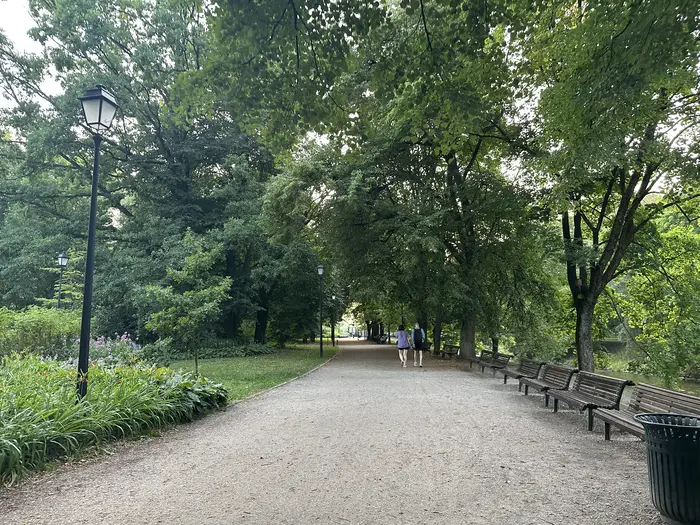
Bernardine Garden — Vilnius
A beautifully restored 7.8-hectare 19th-century garden along the Vilnelė river in Vilnius Old Town, with botanical displays, a musical fountain, playgrounds and the city's oldest oak.
Read guide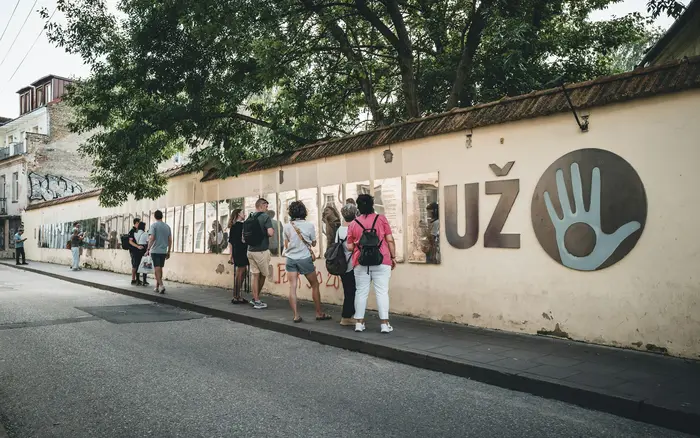
Užupis guide
Explore the self-declared republic: constitution, the Angel, river bridges, galleries, cafés and April 1 spirit.
Read guide