
The Best Photo Spots in Vilnius
Where to take the best photos in Vilnius — hilltop panoramas, Old Town lanes, Baroque churches, Užupis art, street art, Christmas lights and the golden-hour timing that makes them sing.
- ✓Hilltop panoramas from Gediminas Tower and Three Crosses Hill
- ✓Old Town lanes — Pilies, Literatų and the Baroque ensembles around St Anne's
- ✓Užupis art, the Constitution wall and the river crossings
- ✓Naujamiestis street art and the Open Gallery courtyard
- ✓Seasonal magic: Christmas lights, autumn parks and snowy rooftops, all best at golden hour
Shooting Vilnius well
Vilnius is a remarkably photogenic city: a compact Old Town of red roofs and Baroque towers, ringed by green hills and threaded by two rivers, with a creative fringe of street art and bohemian courtyards. It rewards photographers who plan around the light and who are willing to climb a hill or duck down a side lane. This guide groups the best photo spots by type — panoramas, Old Town texture, art and seasonal scenes — and flags when to shoot each.
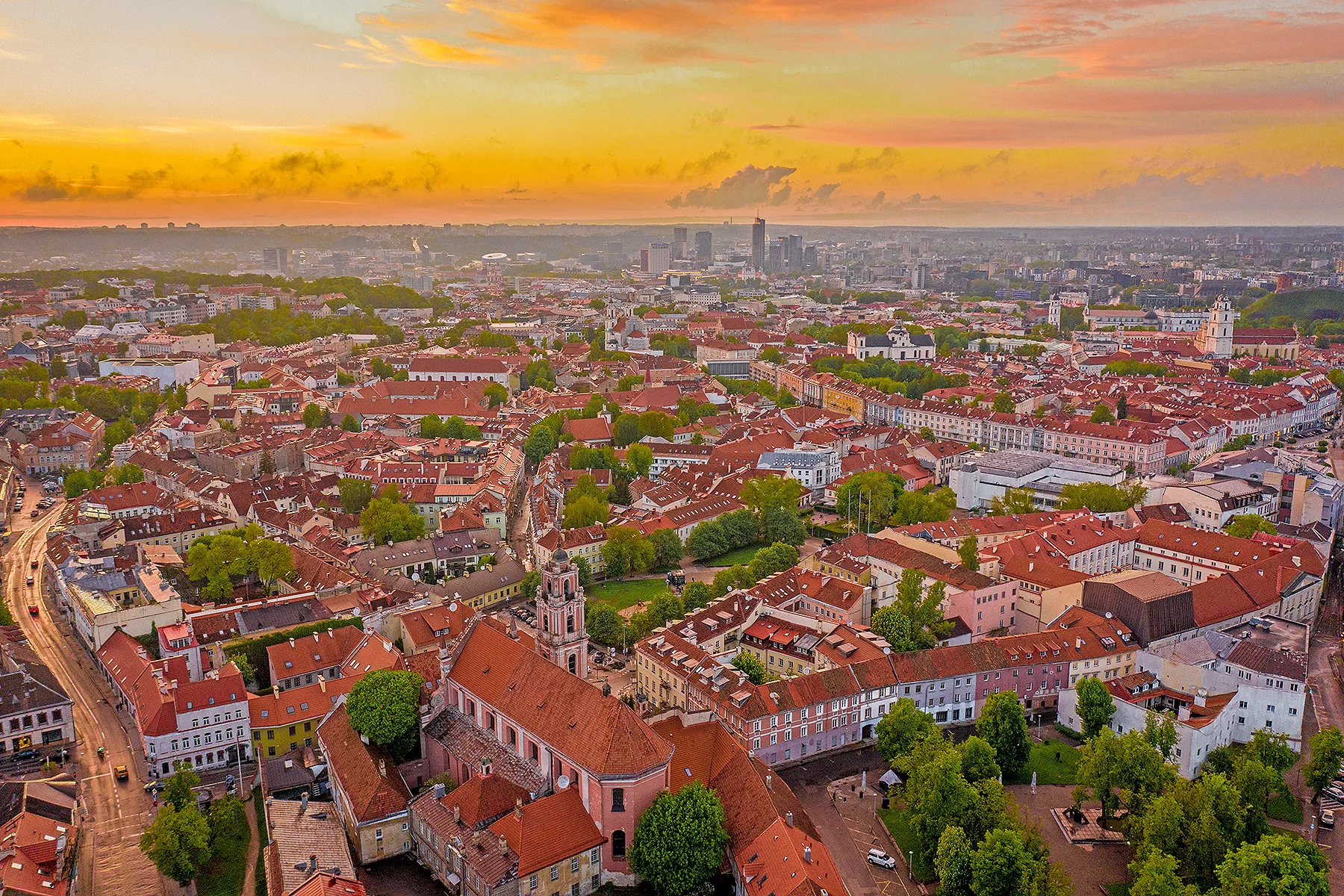
The single biggest lever you have is timing. The golden hours just after sunrise and before sunset bathe the terracotta roofs and stone facades in warm light, while the blue hour after sunset, when the sky still glows and the street lamps come on, is unbeatable for the floodlit churches and the castle. Midday sun is harsh on the pale facades, so use it for shaded courtyards and interiors instead.
A few practicalities make a big difference: comfortable shoes for the hill climbs, a small tripod or steady surface for blue-hour and night shots, and patience for the busy spots, where waiting a few minutes often clears the frame. With that in mind, here are the locations worth building a day around.
Vilnius is also a forgiving city for photographers of every level. Its scale is human and walkable, so you rarely need long lenses or special access — a phone or a single mid-range zoom covers almost everything from sweeping panoramas to street detail. The greatest variety comes not from gear but from changing your vantage point and your timing: the same church looks utterly different shot from a busy square at noon and from a hilltop at dusk.
Because the historic core is so compact, you can revisit the same handful of locations at different times of day and come away with completely different images. Many photographers find it more rewarding to work a small area deeply — returning to a favourite lane or viewpoint for sunrise, midday and blue hour — than to sprint between distant sights. Build your day around the light, and let the geography take care of itself.
A quick orientation helps you plan shots: the Old Town sits in a river bowl ringed by hills, so almost every great panorama looks inward over the same cluster of red roofs and church towers from a slightly different angle and height. Knowing where the sun rises and sets relative to that cluster — it tracks low across the south this far north — lets you predict which viewpoint will be backlit and which will be bathed in warm front light at any hour.
It's also worth saving locations and routes in advance. Vilnius's lanes twist and many of the best courtyards and viewpoints are easy to walk past, so dropping pins for the spots you most want to capture — and noting their best light — saves time and means you arrive when each one looks its finest rather than discovering it in flat midday glare.
Hilltop panoramas
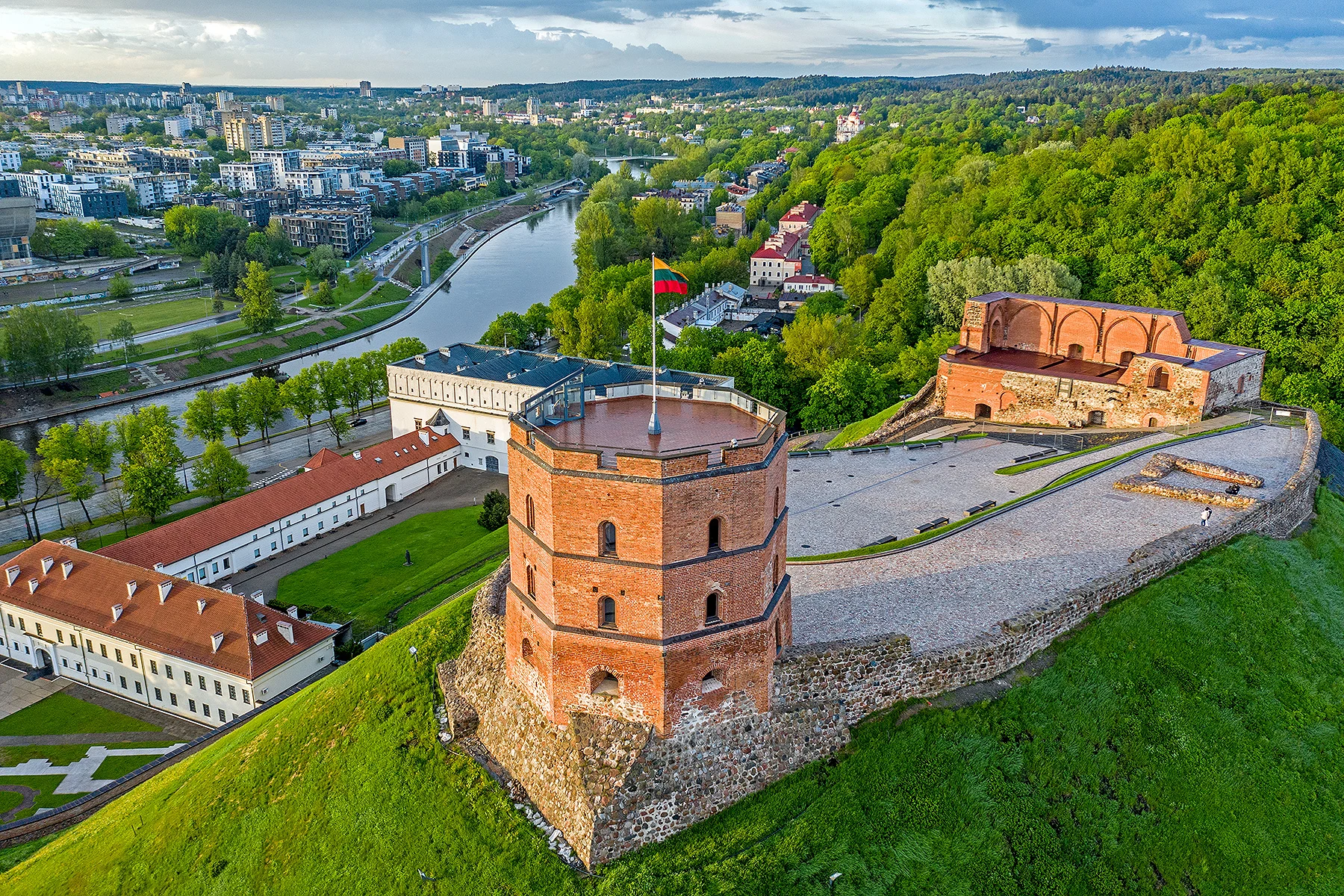
The defining Vilnius photograph is the Old Town seen from above, a sea of red roofs punctuated by green and white church towers. Two hilltops deliver it. Gediminas Tower, reached on foot or by funicular, gives the central, slightly higher angle directly over the Cathedral and roofs — shoot it in late-afternoon light when the tiles glow. The hill terrace just below the tower is free and works almost as well if you would rather not buy a ticket.
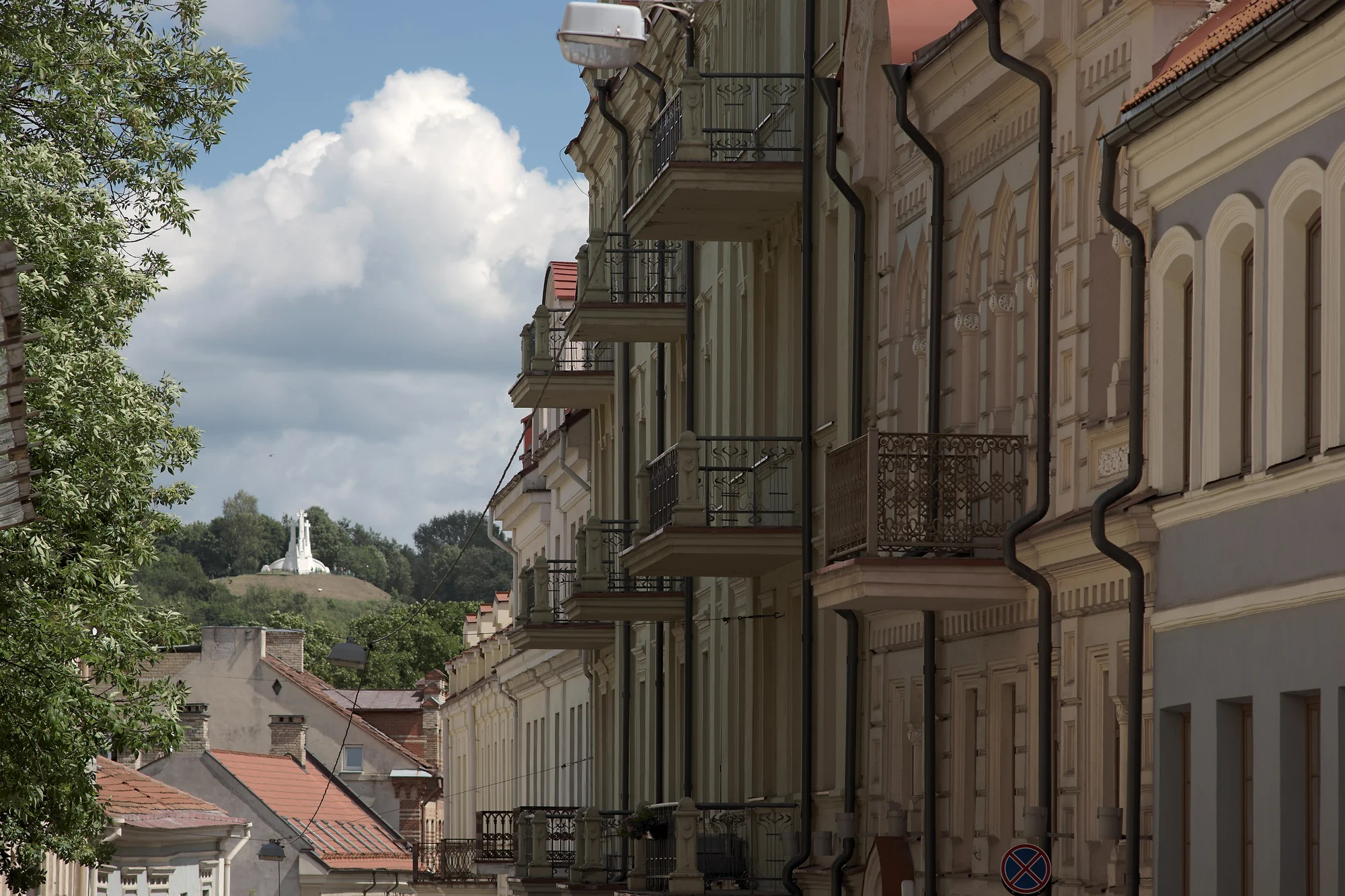
Across the valley, the terrace beside the white Three Crosses monument is the classic sunset shot, with the castle, river and Old Town arranged below and the spires rising from the trees. It is a free, open-all-hours spot, but the climb is steep and the paths slippery when wet, so allow time and wear proper shoes. For the best frames, arrive thirty to forty minutes before sunset to set up and watch the light change.
For a third, higher angle, the TV Tower observation deck looks out over the entire city and the forests beyond — a very different, long-range image that suits clear days and dramatic skies. Together these three give you the city from close, classic and panoramic distances.
Each hilltop has its own best moment. Gediminas works at almost any time but glows in late-afternoon side light; Three Crosses is unbeatable at sunset, when it faces the warm sky behind the Old Town; and the TV Tower is at its most dramatic on clear evenings, when you can shoot the city lights spreading toward the dark forests. Planning which hill to shoot when — rather than trying to do all three in one rushed afternoon — is the key to bringing home strong panoramas.
- Gediminas Tower or its free hill terrace — central, classic, best in late-afternoon light
- Three Crosses Hill terrace — the iconic sunset panorama; arrive early to set up
- TV Tower deck — long-range city-and-forest views on clear days
- Golden and blue hours flatter every one of these far more than midday sun
How to reach the city's signature panorama point.
Three Crosses HillThe free hilltop behind the classic sunset shot.
Map pins
Map data © OpenStreetMap contributors · Tiles © OpenFreeMap
Old Town lanes and churches
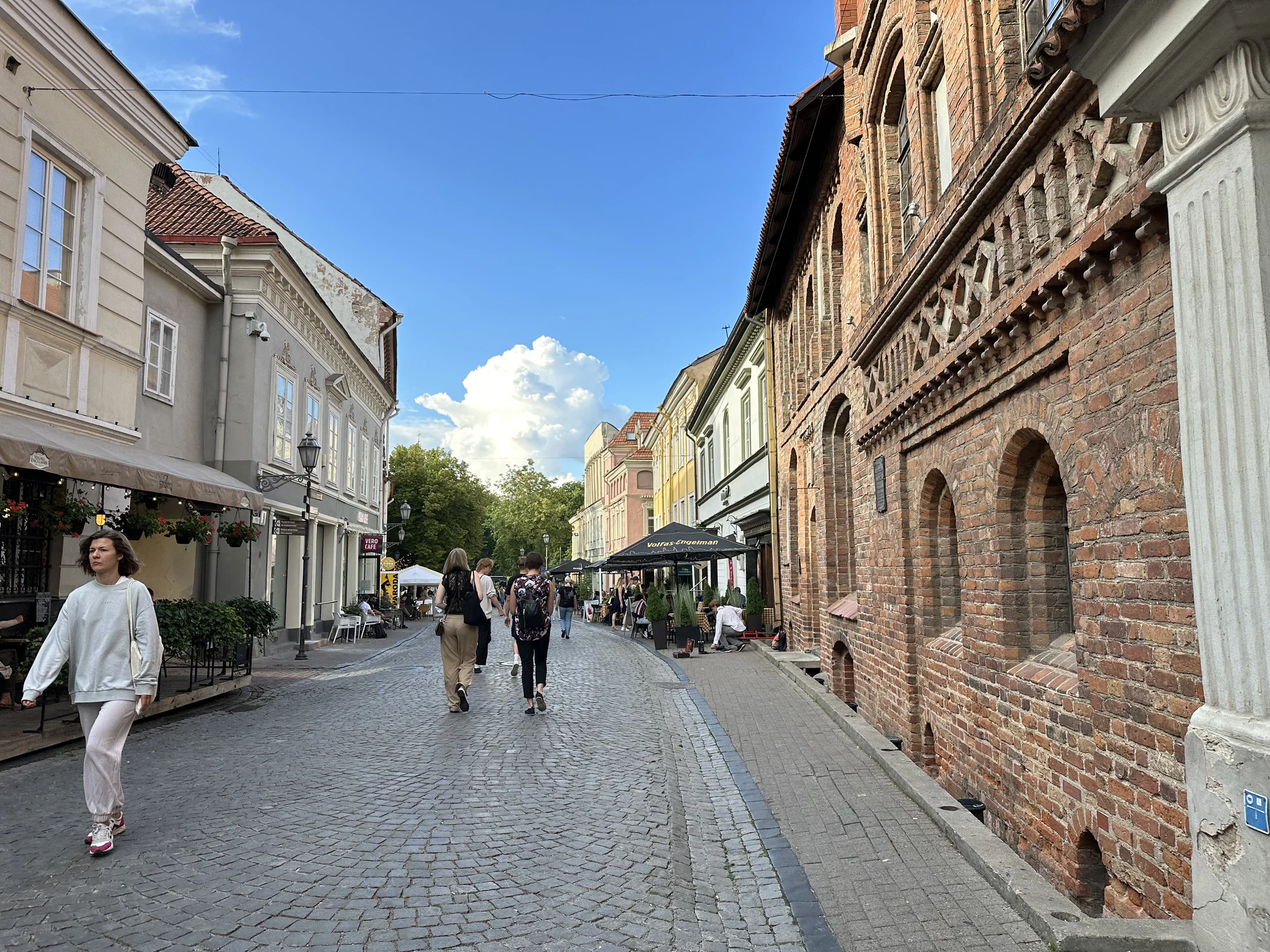
Down at street level, the Old Town is a maze of photogenic detail. Pilies Street, the main artery from the Cathedral toward the university, frames pastel facades and church towers and bustles with life. Literatų Street, with its wall of small artworks dedicated to writers, is one of the most charming close-up subjects in the city — best shot in soft, even light so the metal and ceramic pieces read clearly.
Vilnius's Baroque churches are endlessly rewarding. The red-brick Gothic of St Anne's, paired with the Bernardine church behind it, makes a storybook composition, especially from the little garden and the riverbank; the interiors of the city's grander Baroque churches reward a wide lens and a steady hand in the low light. The university courtyards and the bell tower of St John's add layered arches and frescoes for those who venture inside the ensemble.
For texture, seek out the courtyards. Vilnius hides countless quiet inner yards behind unassuming gates, full of peeling paint, vines and pools of light — some of the most atmospheric, least crowded photographs in the city come from simply pushing open a courtyard door (where it is clearly public) and looking up.
Don't overlook the small stuff. Vilnius is full of photogenic detail at arm's length: ornate door handles and knockers, hand-painted shop signs, wrought-iron balconies, café tables spilling onto cobbles, and the city's beloved cats dozing in windows. A tighter, more observational style — looking for texture, colour and the rhythms of daily life — yields a set of images that feels personal and far less generic than the landmark shots alone.
Užupis, the river and street art
Cross one of the little bridges over the Vilnia into Užupis and the mood shifts. The bohemian 'republic' is full of photographic subjects: the Užupis Angel on its column, the mirrored plaques of the Užupis Constitution, quirky sculptures, murals and the river itself, which is at its prettiest where willows lean over the water and padlocks cluster on the rails. The neighbourhood's relaxed scale makes it ideal for unhurried, wandering photography.
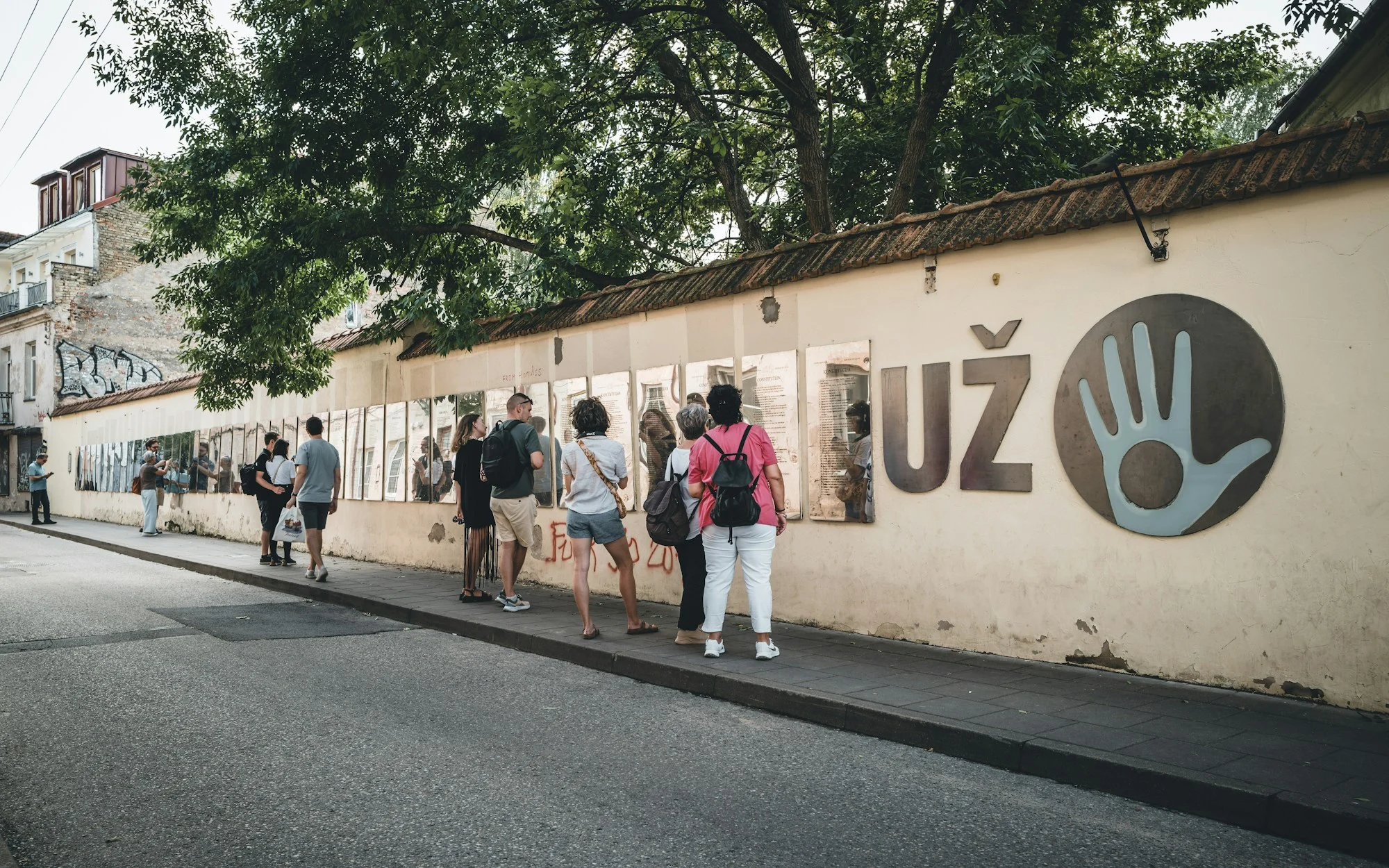
Beyond Užupis, the Naujamiestis district and the station area carry the city's boldest street art, including the open-air Open Gallery courtyard, where painted factory walls and light installations make striking, colourful frames against a gritty backdrop. Overcast light is often best here, giving even illumination on the murals without glare. Be considerate in residential courtyards and avoid framing people's windows.
The river crossings themselves are worth a frame — the bridges over the Neris and the Vilnia offer clean lines and reflections, particularly at blue hour when the water mirrors the lit facades. Together, Užupis, the street art and the bridges give your set a contemporary, human counterpoint to the historic core.
Reflections are an underused tool in Vilnius. The slow Vilnia in Užupis, the broader Neris, and puddles after the city's frequent rain all mirror the facades and towers, doubling a composition and adding depth. Shoot low, close to the water's surface, and wait for a still moment between gusts. At blue hour the effect is at its strongest, when the lit buildings shimmer in the dark water beneath the bridges.
Seasons, lights and golden-hour timing
Vilnius transforms with the seasons, and each one opens new photographs. Winter brings the famous Christmas tree and market on Cathedral Square — one of the most-photographed in Europe — plus the chance of snow dusting the red roofs and the castle, magical at blue hour. Spring and autumn dress the parks and the riverbanks in blossom and gold; the cherry blossoms of the Sugihara Sakura Park and the foliage along the rivers are seasonal highlights.
Whatever the season, plan your day around the light. Begin with sunrise or early-morning shots when the Old Town is quiet and the lanes are empty, save shaded courtyards and church interiors for the harsh midday hours, and reserve the hilltops and floodlit landmarks for golden and blue hour. Checking sunrise and sunset times for the date of your visit — they swing dramatically between the long summer days and the short winter ones this far north — is the most useful single piece of planning you can do.
Finally, leave room for serendipity. Some of the best Vilnius photographs are not of the headline sights at all but of a shaft of light in a courtyard, a cat on a windowsill or steam rising off a café terrace. Carry your camera, keep your eyes up, and let the city surprise you.
- Winter: Cathedral Square Christmas tree and market, snowy rooftops, blue-hour castle
- Spring/autumn: cherry blossom at Sugihara Sakura Park, golden foliage along the rivers
- Plan around local sunrise/sunset times, which swing widely between summer and winter
- Leave time for unplanned courtyard, café and street moments
Gear, etiquette and practical tips
You don't need much, but a few things help. A small tripod or a beanbag steadies blue-hour and interior shots where light is low; a lens cloth matters in Vilnius's frequent drizzle; and spare batteries last longer if you keep them warm in winter, when the cold drains them fast. Beyond that, comfortable waterproof shoes for the hill climbs will do more for your photography than any accessory, because they let you stay out through the best, changeable light.
Be a considerate photographer. Inside churches, check whether photography is permitted, never use flash during services, and keep out of worshippers' way. In Užupis and the residential courtyards, avoid framing people's windows and laundry, and ask before photographing individuals up close. Street performers and market traders generally don't mind being part of a wider scene, but a smile and, where appropriate, a small purchase go a long way.
Finally, respect the places themselves: stay on paths at viewpoints like Three Crosses, don't climb on monuments or graves for a better angle, and leave installations and street art untouched. The most memorable Vilnius photographs come from patience and a light footprint, not from forcing a shot.
A photo route through the day
To make the most of the light, structure your shooting around the sun rather than a map. Begin at sunrise in the Old Town, when the lanes around Pilies Street and the Cathedral are empty and softly lit and you can photograph the architecture without crowds. As the sun climbs and the light hardens toward midday, move into shaded courtyards, church interiors and the covered detail of Literatų Street, where flat or diffuse light actually helps.
Reserve the afternoon for the creative fringe — Užupis, the street art of Naujamiestis and the Open Gallery — where overcast or angled light flatters murals and the relaxed neighbourhoods reward unhurried wandering. Then climb a hilltop for golden hour and stay through blue hour for the floodlit castle, churches and bridges, when Vilnius is at its most photogenic. It's a full day, but it follows the light instead of fighting it.
Adjust the order to the weather: on a grey day, lean into the intimate, close-up subjects and the street art; on a clear one, prioritise the panoramas and the long evening light. The city is generous to photographers who stay flexible and keep shooting as conditions change.
If you only have one golden hour, spend it at Three Crosses Hill at sunset, then stay for blue hour as the castle and churches light up — it's the highest-yield single slot in the city for memorable images. If you have two, add a sunrise walk through the empty Old Town lanes the next morning for an entirely different, crowd-free mood.
Capturing the seasons
Few cities change as dramatically with the calendar as Vilnius, and each season is a distinct photographic project. Winter is the showstopper: snow on the red roofs and the castle, the vast decorated tree and market on Cathedral Square, and the floodlit Old Town glowing against long blue dusks. Dress warmly, protect your gear from the cold and damp, and you'll come away with the city's most magical images.
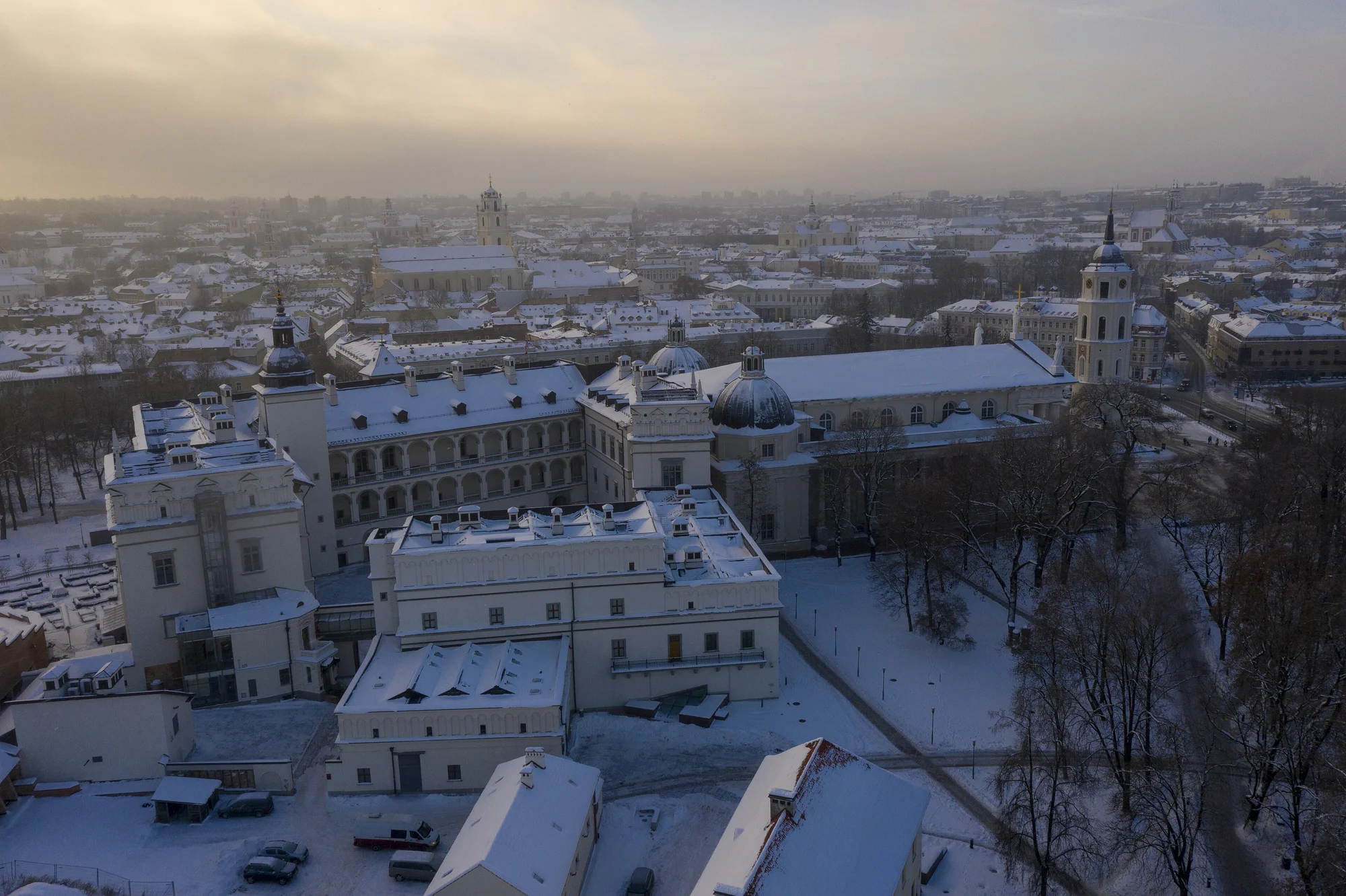
Spring and autumn are the photographer's seasons for colour and light. Spring brings cherry blossom — the Sugihara Sakura Park is a seasonal favourite — and fresh green to the parks and riverbanks; autumn turns the trees of Kalnai, the cemeteries and the river paths gold and copper under soft, low sun. Summer offers long days, late golden light and lively open-air life on the squares and along the water, ideal for street and atmosphere shots.
Whatever the season, the constant is to plan around local sunrise and sunset times, which swing widely this far north, and to keep your camera ready for the unscripted moment. Vilnius rewards the patient, observant photographer in every month of the year.
One more seasonal note: this far north, the difference in daylight between midsummer and midwinter is extreme. In June the sky barely darkens and golden hour stretches late into the evening, giving you hours of soft light; in December the sun sits low all day and sets in the mid-afternoon, which actually makes golden and blue hour easy to fit in but demands warm clothing and fast hands. Always check the day's sunrise and sunset before you plan your shoot — it's the single most useful piece of preparation for photographing Vilnius.
Above all, treat photographing Vilnius as a reason to slow down and look harder rather than a race between landmarks. The city rewards the photographer who returns to a favourite lane at different hours, who waits for the right light on a hilltop, and who notices the small, human moments others walk past. Do that, and you'll leave not just with the postcard shots, but with a set of images that feels genuinely your own.
Related guides
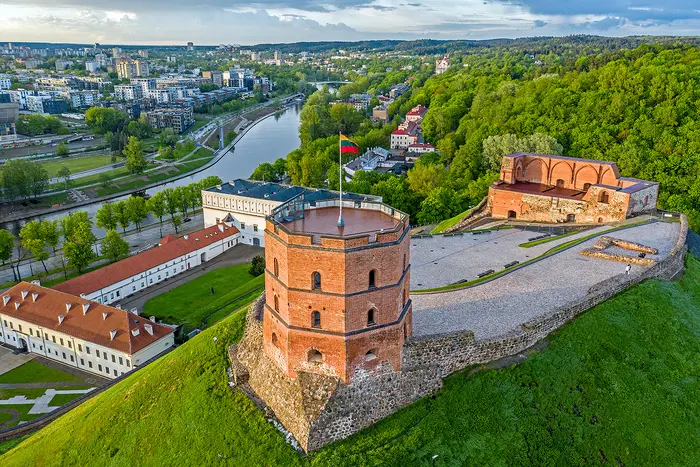
Gediminas Castle Tower
The red-brick tower on Castle Hill is the symbol of Vilnius and the easiest panoramic view in the city — reached by a steep cobbled path or a one-minute funicular, with a small history museum at the top.
Read guide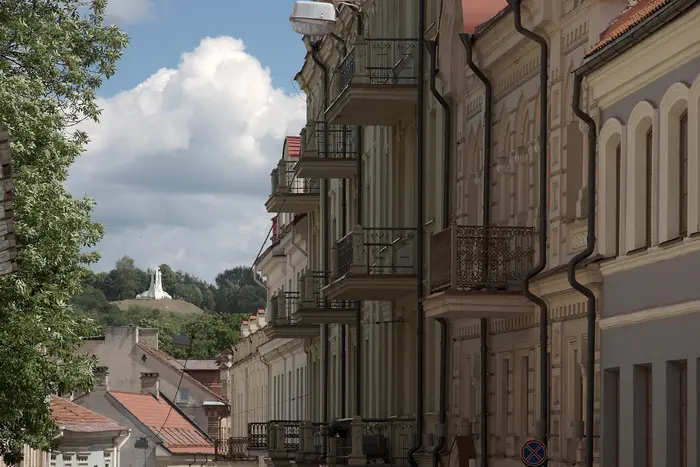
Three Crosses Hill guide
Climb for classic Vilnius views, with route choices, sunrise/sunset timing, winter caution and photo angles.
Read guideThe Best Viewpoints in Vilnius
Compare the best viewpoints in Vilnius — Gediminas Tower, Three Crosses Hill, church bell towers, the TV Tower and rooftop bars — ranked by effort, payoff and the time of day to go.
Read guide