
Vilnius Street Art & the Open Gallery
A walking guide to Vilnius street art — the Open Gallery courtyard in Naujamiestis, station-district murals, Užupis and Old Town pieces, photo stops and respectful routing.
- ✓The Open Gallery — an open-air mural and installation project in a post-industrial Naujamiestis courtyard
- ✓Murals scattered across the Stoties (station) district, Naujamiestis and Užupis
- ✓Large-scale walls by more than fifty Lithuanian and international artists, refreshed every year
- ✓Free to explore on foot, with most of the best pieces a short walk from the Old Town
- ✓An ever-changing scene — works appear, fade and are painted over, so no two visits are the same
Vilnius as an open-air gallery
Vilnius has quietly become one of the most rewarding street-art cities in the Baltics. Over the past decade, blank firewalls, courtyards and railway-side gables across the city have filled with murals, stencils, paste-ups and large-scale installations. The scene is concentrated in a handful of districts just outside the Old Town — close enough to fold into a day of sightseeing, but far enough to feel like you have stepped off the tourist trail.
What makes Vilnius distinctive is the mix of sanctioned, curated projects and looser, spontaneous work. Alongside the city's famous satirical and political pieces, you will find ambitious commissioned murals, abstract colour fields, and playful interventions tucked into passageways. Because much of it is informal and weather-exposed, the scene changes constantly: a wall you photographed last year may be gone, while a striking new piece has appeared around the corner.
The three creative hubs leading this change are the 'independent republic' of Užupis, the Stoties (station) neighbourhood, and post-industrial Naujamiestis — with Naujamiestis home to the city's flagship street-art project, the Open Gallery. Treat the suggestions below as a framework rather than a fixed checklist, and leave room to follow your eye down a side street.
The roots of the scene reach back to the post-Soviet decades, when crumbling factory districts and unloved firewalls offered both space and a reason to brighten the city. Over time, municipal support, private initiative and a generation of art-school graduates turned scattered tagging into something more ambitious: curated mural festivals, commissioned monumental works and permanent open-air installations that now feature in the city's official tourism trails. Vilnius has even drawn international attention for its boldest political and satirical pieces.
For visitors, the practical upshot is that street art here is not a single attraction but a thread you can pull through the whole city. You might come specifically to hunt murals, or simply notice them appearing as you walk between sights. Either way, a little orientation helps, because the best work clusters in a few districts rather than being evenly spread — and because some of it hides in courtyards and passages you would never find by accident.
The Open Gallery in Naujamiestis
The Open Gallery is the single best place to begin. It is a long-term, interdisciplinary art project set inside a post-industrial inner courtyard in Naujamiestis, conceived to bring a formerly run-down factory block back to life with murals, light installations, sculptures and occasional performances and screenings. The result is a free, walk-through, open-air gallery that feels a world away from the cobbled Old Town a short stroll east.
The courtyard sits within the block bordered roughly east-to-west by Vytenio and Švitrigailos streets and north-to-south by Kauno and Paneriai streets; the most reliable way in is from the southern side, on Paneriai street. Inside, painted factory walls carry work by more than fifty Lithuanian and international artists, alongside large-scale light installations and sculptures. Because it is an ongoing project, new long-term pieces are added each year, so it repays return visits.
A slow circular walk around the inside of the courtyard, pausing at each wall, takes roughly fifteen to twenty minutes — longer if you are photographing. Sitting just about ten minutes on foot from the Old Town, the Open Gallery is an easy and free addition to any itinerary, and a natural anchor for a wider street-art wander through Naujamiestis.
What gives the Open Gallery its character is the marriage of art and decay. The works are painted directly onto weathered factory walls, so rust, broken windows and peeling render become part of the picture rather than something to hide. The effect is raw and cinematic, especially in the flat light of an overcast day, and it changes as the project grows — installations are lit after dark, and the courtyard hosts occasional performances and screenings that turn it from a gallery into a venue.
Practically, dress for an industrial environment: the ground can be uneven and puddled, and there are no facilities inside, so come prepared and combine the visit with the cafés and food spots of surrounding Naujamiestis. Entry is free and the space is generally open to wander, but as a living art project the exact configuration shifts, so treat each visit as a fresh discovery rather than expecting a fixed layout.
- Best entrance: the southern side of the block, on Paneriai street
- Roughly bounded by Vytenio, Švitrigailos, Kauno and Paneriai streets
- Allow 15–20 minutes for the full courtyard loop, more for photos
- Free to enter; works are refreshed and added year on year
Map pins
Map data © OpenStreetMap contributors · Tiles © OpenFreeMap
The station district and Naujamiestis murals
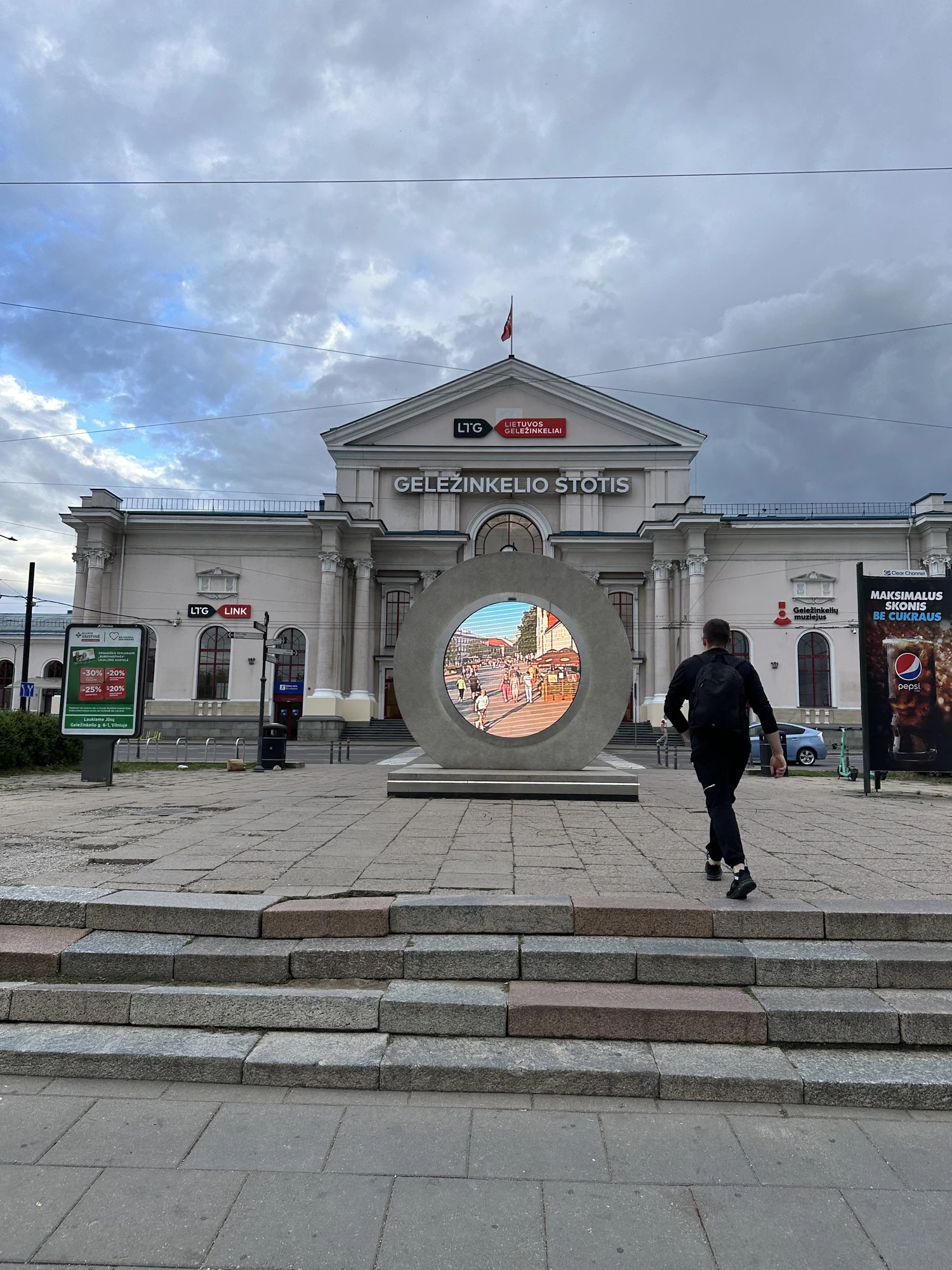
Spreading out from the Open Gallery, the wider Naujamiestis and Stoties (station) districts are dense with murals. The area around Vilnius's railway and bus stations has historically had a rougher reputation, but it has become one of the city's most dynamic canvases, with large gable-end murals visible from the street and tucked-away pieces in courtyards and along side lanes. Pylimo street, running along the edge of the Old Town, is another reliable stretch for spotting works.
This is walking territory: the rewards come from criss-crossing the grid, glancing up at firewalls and ducking into passages. Some of the city's best-known monumental murals — bold, building-height portraits and abstractions — sit here, but so do smaller, ephemeral stencils and paste-ups that you will only notice if you slow down. Because pieces come and go, it is worth checking a current local street-art map or guide before you set out so you can prioritise the standout walls.
Practically, the station district is well connected and walkable from the Old Town, but it is a working part of the city rather than a polished attraction. Stay aware of your surroundings as you would in any transit area, keep valuables secure, and be considerate when photographing — these are residential and working streets, not a theme park.
It helps to know that Naujamiestis ('New Town') is the broad district immediately west and south of the Old Town, of which the station area forms the southern, transit-heavy edge. The whole zone is a patchwork of interwar apartment blocks, Soviet-era buildings, repurposed factories and new development, which gives muralists an unusual variety of surfaces — from vast blank gables to the brick and concrete of old industry. That mix is exactly why the art here feels so varied in scale and style.
Among the best-known monumental works to seek out are the city's large building-height portraits and politically charged murals, which have drawn international coverage and become landmarks in their own right. Locations change as buildings are renovated or repainted, so confirm what's currently visible before making a special trip, but the district reliably holds several show-stopping large-scale pieces at any given time, alongside a churn of smaller, more ephemeral work.
Užupis and Old Town pieces
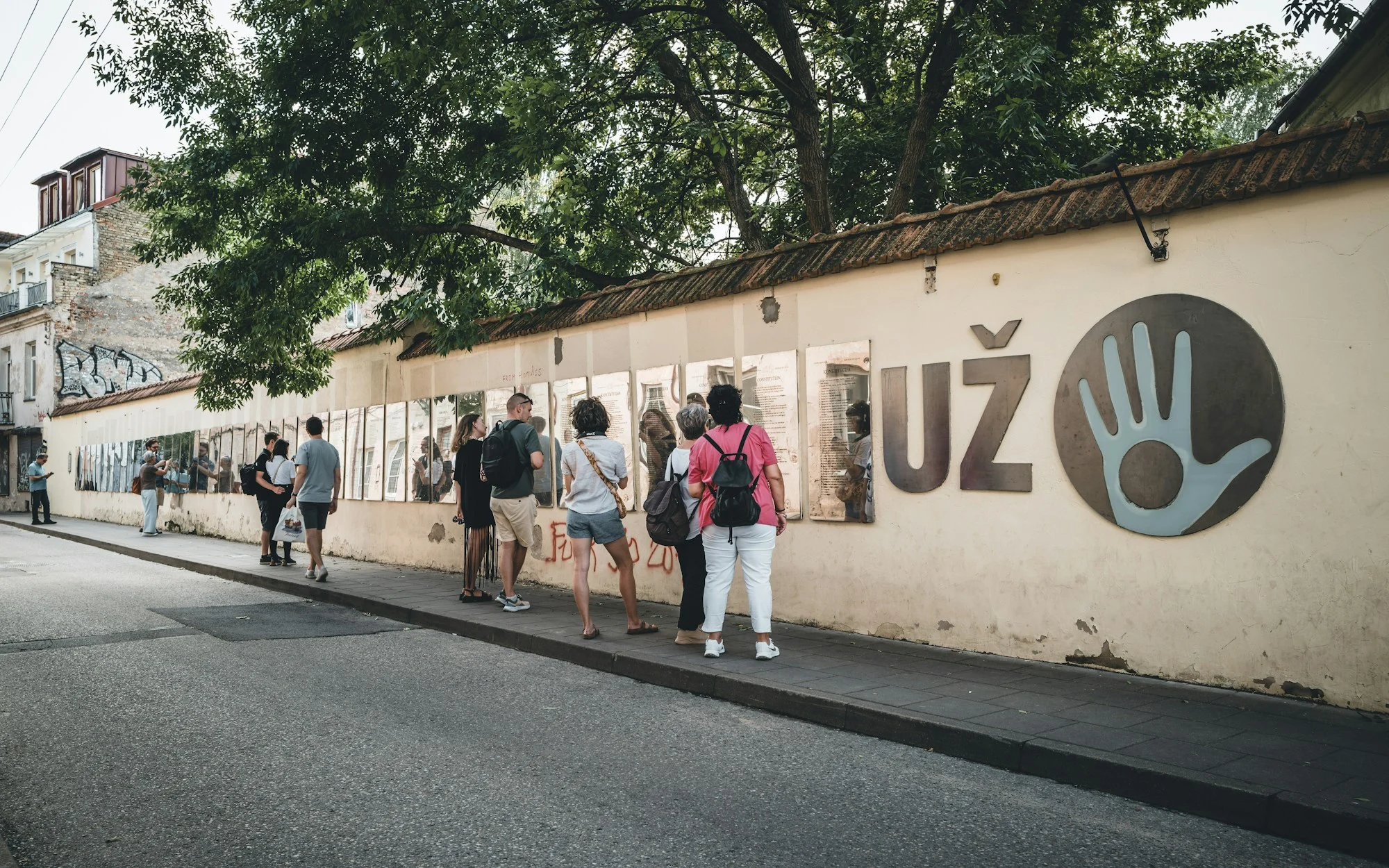
No street-art tour of Vilnius is complete without Užupis, the bohemian district across the Vilnia river that famously declared itself an independent 'republic'. Its lanes are dotted with murals, mosaics, sculptures and the celebrated wall of the Užupis Constitution, and the whole neighbourhood functions as a loose, ever-shifting open-air gallery. The pieces here lean playful, poetic and irreverent, in keeping with the district's character.
Even the edges of the historic Old Town hide modern art if you look. Courtyards, the literary tributes of Literatų Street and assorted contemporary interventions sit cheek by jowl with Baroque churches, making for an appealing contrast on a single walk. These pockets are smaller and more scattered than the Naujamiestis concentration, but they show how thoroughly the contemporary creative scene has woven itself into the medieval core.
For an art-led day, you can string Užupis, the Old Town fringes and the Naujamiestis murals into one loop, breaking for coffee along the way. It pairs especially well with the city's dedicated art-and-design route, which threads galleries, design shops and street art together.
Užupis is best appreciated slowly and on foot, ideally combined with its other quirks — the Angel, the swing over the river, the galleries and the artisan workshops — so that the murals and mosaics read as part of a whole creative ecosystem rather than isolated photo stops. The art here is intimate in scale and often interactive or whimsical, reflecting the neighbourhood's playful self-image, and it rewards visitors who linger over a coffee and let the place reveal itself.
Across town, keep an eye out for the way contemporary art and heritage coexist in the centre. Galleries and design shops tuck modern work behind historic facades, temporary installations appear during festivals, and the boundary between 'street art' and 'public art' blurs pleasantly. This layering — Baroque church, peeling courtyard, bold modern mural, all within a few minutes' walk — is one of the most distinctive pleasures of exploring Vilnius on foot.
How to find current works
Because Vilnius street art is constantly changing, the most useful tool is up-to-date local knowledge rather than a fixed list. Dedicated street-art maps and walking guides maintained by local enthusiasts track which murals are still standing, which have been painted over and where the newest pieces have appeared. Consulting one before you set out means you spend your time at the strongest current walls rather than searching for works that may no longer exist.
Guided street-art walks are another excellent option. Local guides not only lead you efficiently between the best pieces but explain who painted them, what they mean and how the scene has evolved — context that transforms a wall of colour into a story about the city. For independent explorers, simply allowing time to wander the Naujamiestis grid and the Užupis lanes, looking up at gable ends and into courtyards, turns up plenty on its own.
Whichever way you explore, treat the ephemerality as part of the appeal. The piece you photograph today may be gone next year, replaced by something new — which is exactly what keeps Vilnius's open-air gallery alive and worth returning to.
Routing, photos and respect
For the most efficient day, start at the Open Gallery in Naujamiestis when the light is good for the courtyard walls, then drift through the surrounding streets and the station district before crossing town to Užupis and the Old Town fringes in the afternoon. Comfortable shoes and a loose plan beat a rigid schedule — the best discoveries here are accidental.
Photographically, street art rewards both wide shots that show a mural against its gritty surroundings and tight details of texture and brushwork. Overcast days are often ideal, giving even light without harsh shadows on the walls. Watch your framing in residential courtyards so you are not capturing people's windows or laundry, and avoid blocking doorways and passages while you compose.
Above all, treat the art and its neighbourhoods with respect. Don't touch or tag the works, keep noise down in courtyards where people live and work, and remember that much of this is created on a goodwill basis in shared spaces. The scene stays vibrant precisely because residents tolerate — and often champion — the visitors who come to enjoy it thoughtfully.
- Begin at the Open Gallery, then explore Naujamiestis, the station district, Pylimo street, Užupis and the Old Town fringes
- Shoot wide for context and tight for detail; overcast light flatters murals
- Check a current local street-art map, as works change constantly
- Don't touch or tag art; be discreet in residential courtyards
A self-guided street-art route
If you'd like a loose plan, here is a half-day route that links the highlights without backtracking. Start late morning at the Open Gallery in Naujamiestis, entering from Paneriai street, and circle the courtyard slowly. From there, drift through the surrounding Naujamiestis blocks toward Pylimo street, scanning gable ends and ducking into passages, before pausing for lunch in one of the district's cafés or food spots.
In the afternoon, cross the centre — pausing for any Old Town and Literatų Street pieces along the way — and finish in Užupis, where the murals, mosaics and the Constitution wall make a relaxed end to the walk and the light is lovely over the river toward sunset. The whole loop is a comfortable, photo-friendly day on foot, and you can shorten it to just the Open Gallery and Užupis if time is tight.
Because the scene changes constantly, treat the route as a frame to hang your own discoveries on. Half the fun is the mural you weren't expecting, glimpsed down a side street — so build in time to wander, and don't worry about seeing everything.
Allow roughly half a day for the full loop at a relaxed pace, or two to three hours if you focus only on the Open Gallery and Užupis. Wear comfortable shoes, carry water, and break for coffee in Naujamiestis or Užupis, both of which have a strong independent café scene that suits the creative mood of a street-art day. Public transport can shortcut the longer hops if you'd rather not walk the whole way.
Beyond the headline districts
While Naujamiestis, the station area and Užupis hold the densest concentrations, murals turn up all over Vilnius if you keep your eyes open — on suburban firewalls, beside the rivers, in residential courtyards and on the sides of cultural centres. The city has hosted mural festivals and commissioned works that scatter striking pieces well beyond the centre, so don't assume the art stops at the edge of the tourist map.
For travellers staying longer, or returning, these outlying works offer a reason to explore neighbourhoods most visitors never reach, and to see a more everyday, lived-in Vilnius. They also change the fastest, since they're furthest from any conservation effort, which makes finding them feel like a genuine discovery. A current local map or a chat with a guide is the best way to track down the latest.
However far you roam, the essentials stay the same: look up, look into courtyards, tread lightly in residential areas, and treat the art as the goodwill gift to the city that it is. Do that, and Vilnius rewards you with one of the most surprising and human open-air galleries in northern Europe.
If you're in town for a mural festival or a specific commissioned project, you'll find fresh, ambitious work appearing on the city's bigger walls — these events are the engine behind much of Vilnius's most striking public art, and they're well worth timing a visit around if street art is your main interest.
Related guides
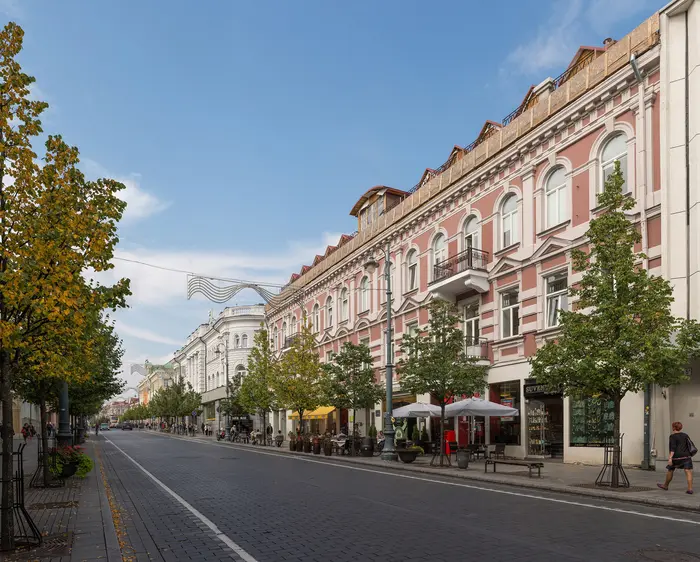
Naujamiestis (New Town) Neighborhood Guide
A guide to Naujamiestis, Vilnius's creative engine in transition: converted factories, third-wave cafés and wine bars, the MO Museum, indie venues and a base between the station and the Old Town that leans local, not touristy.
Read guide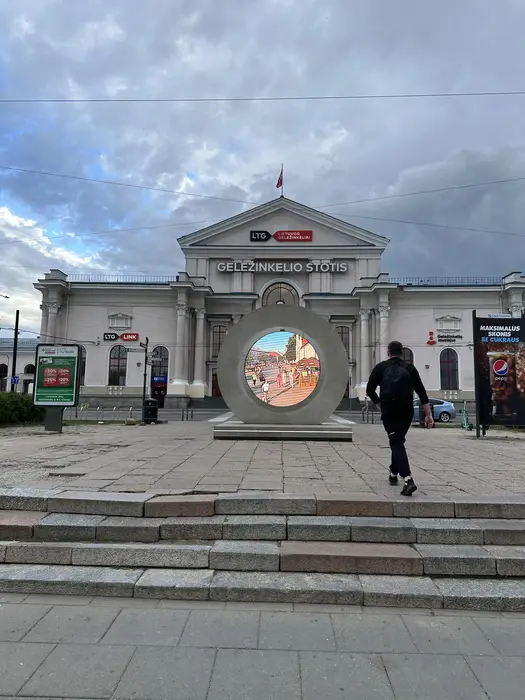
Stoties Rajonas: Vilnius Station District Guide
A guide to Stoties rajonas, Vilnius's edgy, fast-changing Station District: Hales Market, the train and bus stations, converted warehouses, street art, food halls and where it sits relative to the Old Town.
Read guide
Vilnius Art & Design Itinerary
A creative route through Vilnius — the MO Museum, bohemian Užupis, the Open Gallery street art, design boutiques and concept stores, the regenerated Paupys, and the cafés and studios where the city's makers gather.
Read guide