
Vilnius Old Town
A guide to Vilnius Old Town: the UNESCO-listed heart of the city, its gates, churches, courtyards, squares, cafés, Jewish history and best photo stops.
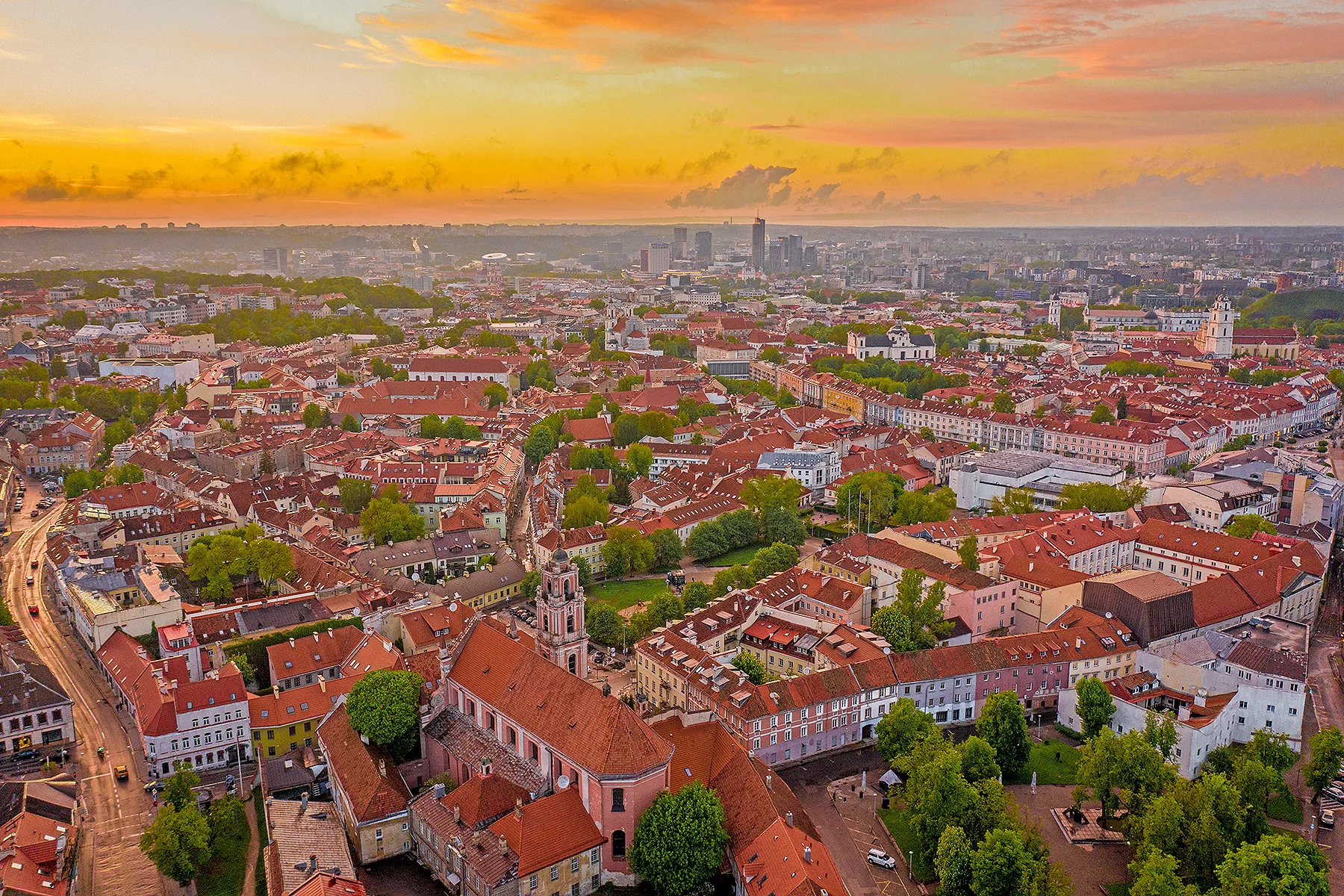
- ✓One of Europe's largest surviving medieval old towns, UNESCO-listed since 1994 and walkable end to end in an afternoon.
- ✓A layered skyline of Gothic, Renaissance, Baroque and Classical buildings — Vilnius is often called a Baroque capital.
- ✓Anchored by Cathedral Square and Gediminas Hill at the north and the Gates of Dawn at the south, linked by Pilies and Aušros Vartų streets.
- ✓Hidden courtyards, the vast Vilnius University complex, and the poignant remains of the Jewish quarter reward slow exploring.
- ✓Compact enough to wander without a plan — but a self-guided walk ties the highlights together neatly.
The heart of the city
Vilnius Old Town (Senamiestis) is the reason most people come — a dense, atmospheric tangle of narrow streets, hidden courtyards and church spires that has been the city's beating heart for the better part of seven centuries. At roughly 360 hectares it is one of the largest surviving medieval old towns in Central and Eastern Europe, and it was inscribed on the UNESCO World Heritage List in 1994 for its exceptional, well-preserved townscape. For all that pedigree, it remains an everyday, lived-in district rather than a roped-off heritage zone — which is precisely what makes it so easy to fall for.
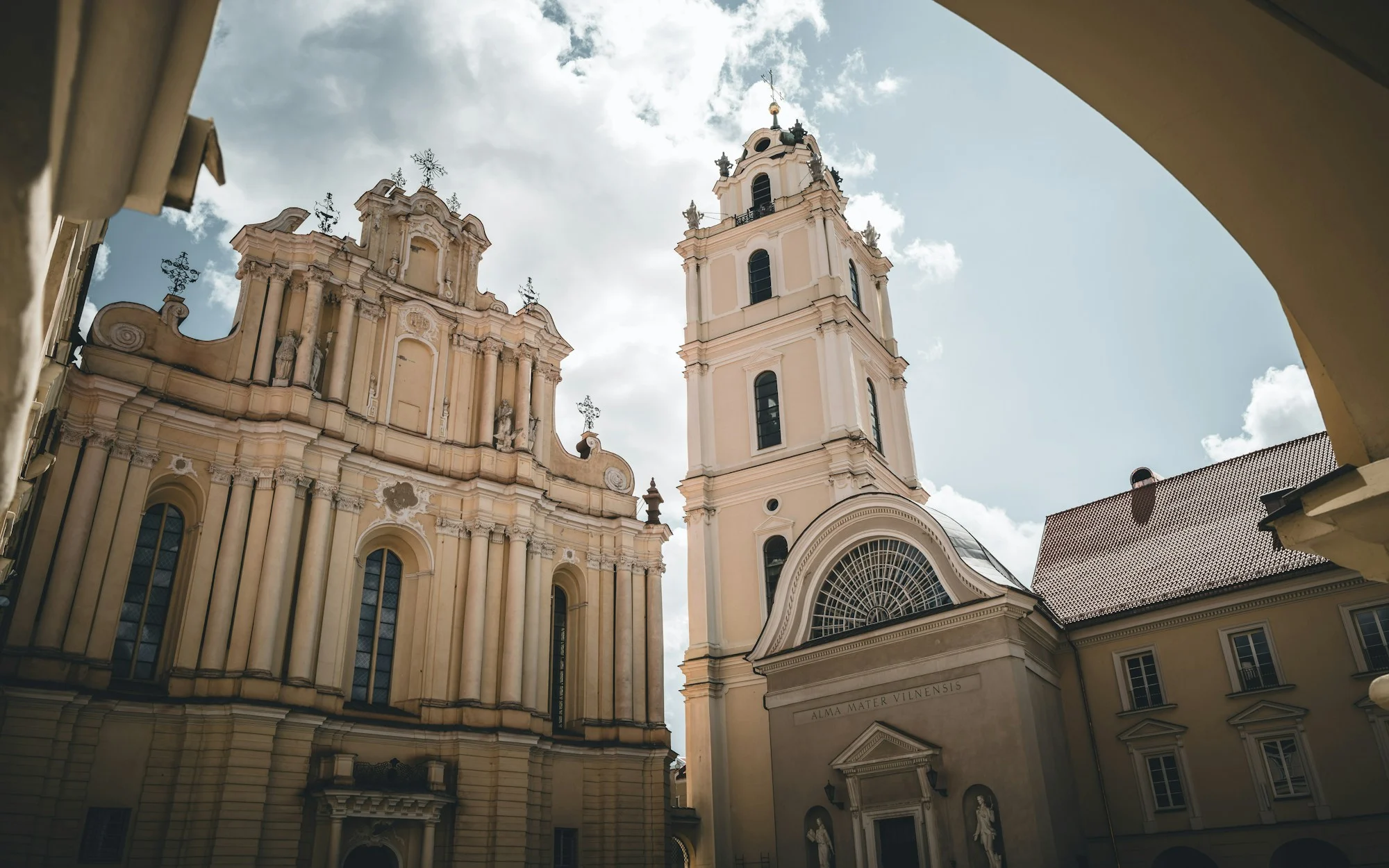
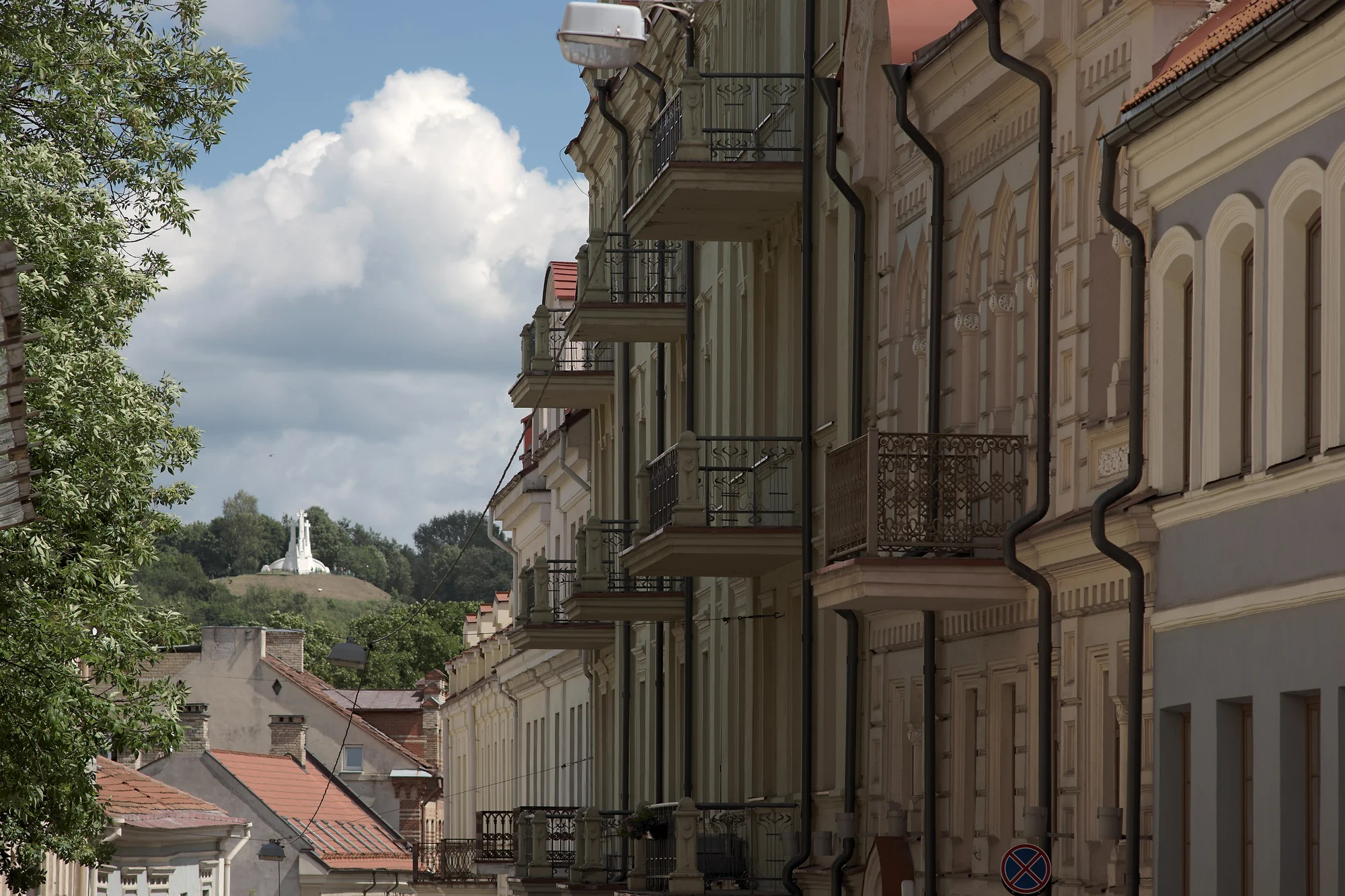
What gives it its character is the layering. Vilnius grew up over centuries without being flattened and rebuilt, so Gothic brick churches stand beside Renaissance palaces, Baroque façades curl around Classical squares, and 19th-century apartment houses fill the gaps. The result is a skyline of more than two dozen churches and a streetscape that rewards looking up as much as looking ahead. Vilnius is frequently described as one of Europe's great Baroque cities — the so-called 'Vilnius Baroque school' shaped a generation of churches here — and the Old Town is where that reputation lives. Founded in the early 14th century and made capital of the Grand Duchy of Lithuania under Gediminas, the city was for a time one of the largest in Europe, and that long, layered history is written into every street.
Crucially, it's small enough to feel manageable. You can stroll from one end to the other in well under an hour, which means you're never far from a café, a quiet courtyard or your next church. The pleasure here is less about ticking off monuments and more about drifting — turning down a side lane because it looks inviting and finding a hushed convent garden or a student-filled bar at the end of it. It's also a refreshingly uncrowded heritage centre: even in high summer the streets stay strollable, and you can photograph the great churches without fighting for a clear shot, something that's increasingly rare in Europe's better-known old towns.
And it's affordable. Coffee, meals, museum tickets and transport all cost noticeably less than in Western European capitals, so lingering in the Old Town — another pastry, another gallery, one more glass of wine in a courtyard — doesn't punish your budget. That ease is a big part of why visitors so often stay longer than they planned.
- UNESCO World Heritage Site since 1994; one of Europe's largest medieval old towns.
- Walkable end to end in 30–45 minutes — but allow far longer to wander.
- Architecture spans Gothic, Renaissance, Baroque and Classical, often on a single street.
How the Old Town is laid out
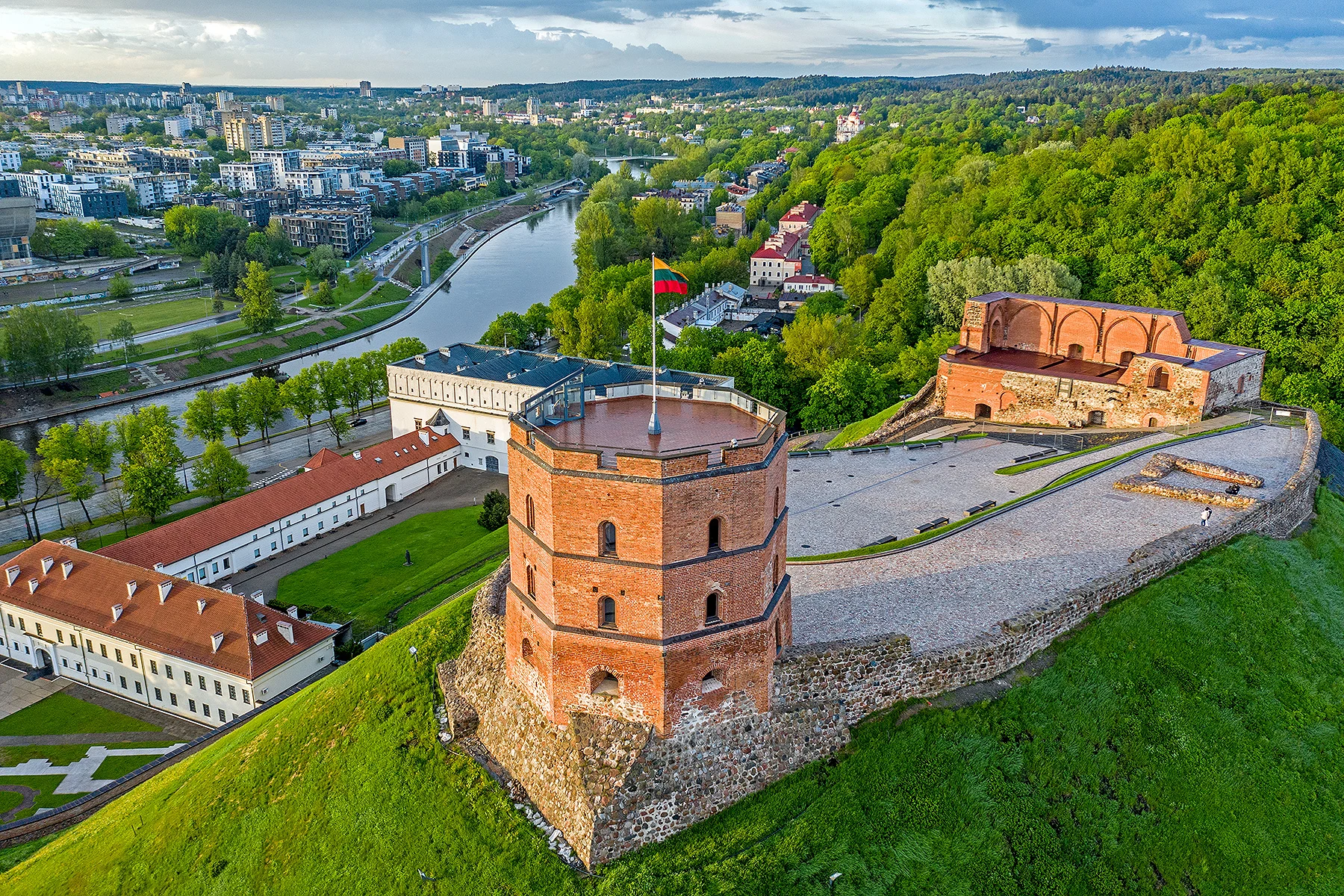
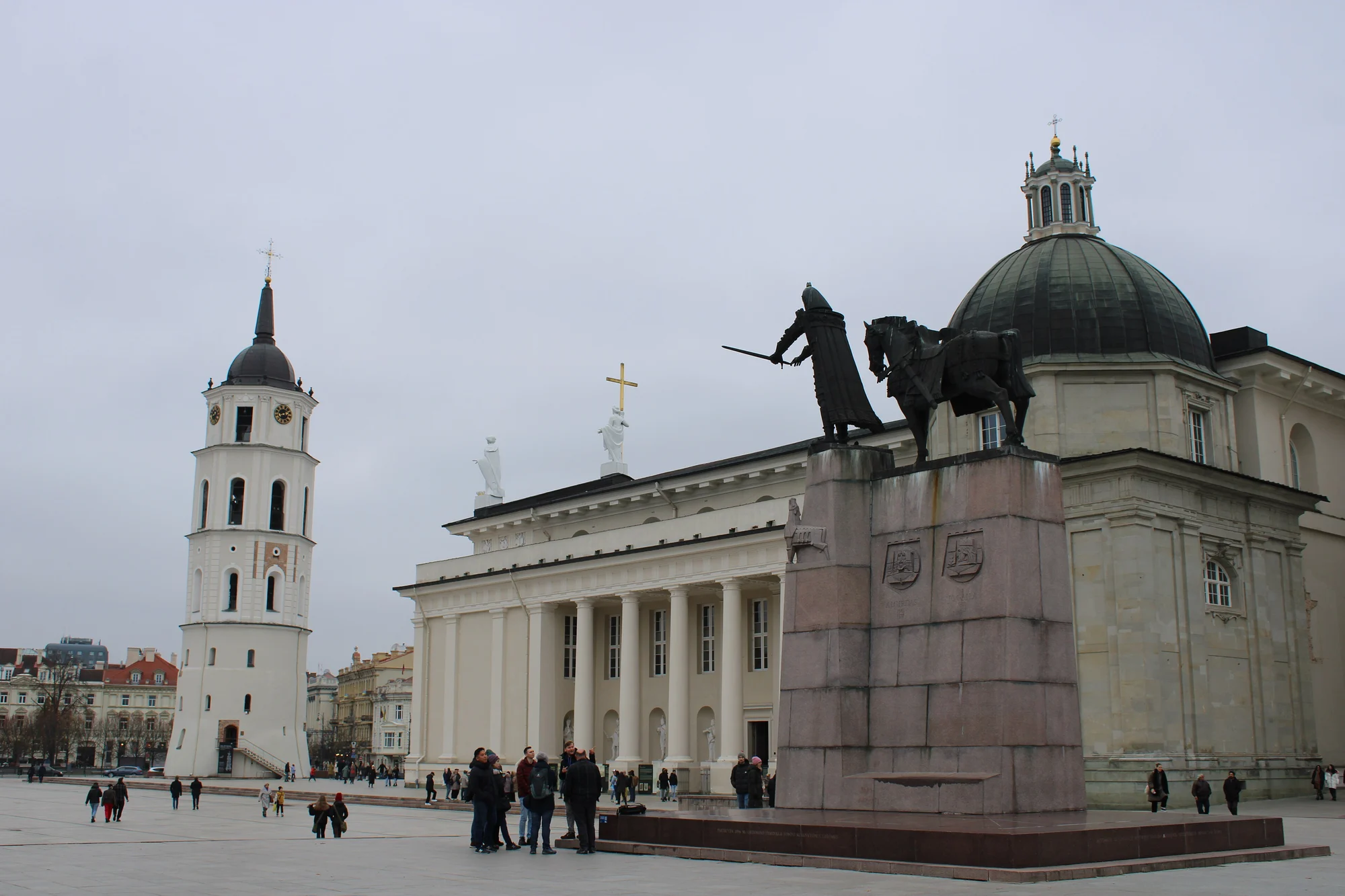
It helps to picture the Old Town as a spine running roughly north to south. At the northern end is Cathedral Square — the great open plaza with the white neoclassical Cathedral, its free-standing belfry, and Gediminas Hill rising behind with the red-brick tower that is the symbol of Vilnius. This is the natural place to start: the square is the city's living room, and the hill gives you the orientation view that makes sense of everything below.
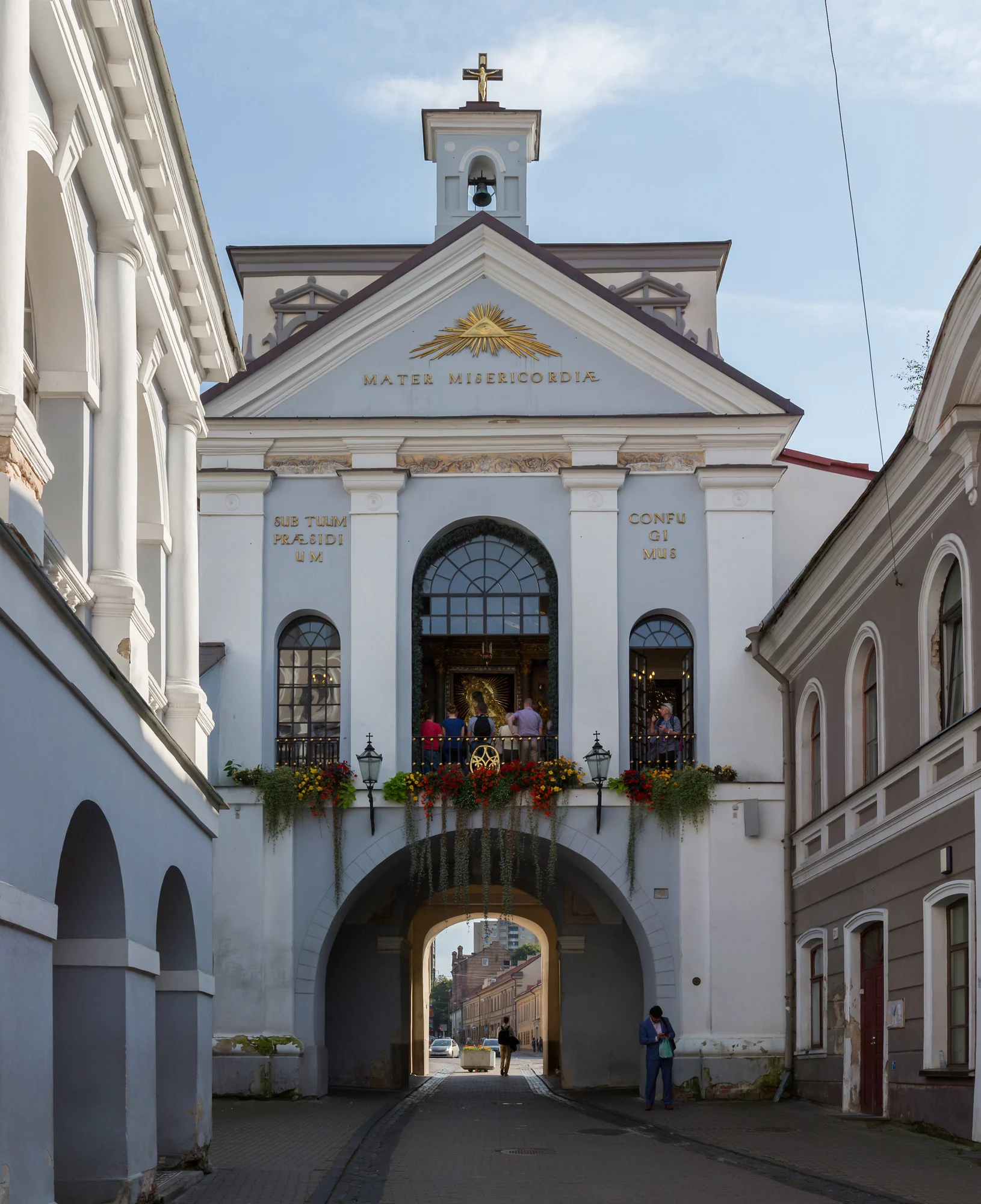
From the square, the historic main street runs south as Pilies (Castle) Street, then becomes Didžioji and finally Aušros Vartų, ending at the Gates of Dawn — the last surviving city gate, with its revered chapel of the Madonna above the arch. Walk that spine and you pass the bulk of the headline sights; step off it into the side streets and you find the quieter, more rewarding half of the Old Town.
Two clusters anchor the middle. The Vilnius University complex, a warren of thirteen linked courtyards built up since the 16th century, opens off Pilies Street and is worth getting lost in. Nearby, the Town Hall and its triangular square mark the old market and civic centre. West of the spine lies the former Jewish quarter around Žydų and Stiklių streets, and east, across a small bridge over the Vilnia, the bohemian Užupis 'republic' — both rewarding detours we cover separately. To the north, behind Cathedral Square, sit the reconstructed Palace of the Grand Dukes and the green sweep of the Bernardine Gardens along the river.
Distances are short throughout. From the Gates of Dawn to Cathedral Square is barely a kilometre on foot, and nothing on this list is more than a ten-minute walk from the spine. That's what makes the Old Town so forgiving to explore: you can strike off down any tempting side street knowing you'll never be far from a landmark or a café to reorient yourself. A self-guided walk is the easiest way to link it all in one go, but the layout is simple enough to improvise once you've got the spine in your head.
- North anchor: Cathedral Square + Gediminas Hill.
- South anchor: the Gates of Dawn.
- The spine: Pilies → Didžioji → Aušros Vartų streets.
- Don't miss: the Vilnius University courtyards and the Town Hall square.
The Old Town's open heart, at the foot of Gediminas Hill.
The Gates of DawnThe last surviving city gate and its famous chapel.
Pilies StreetThe Old Town's lively main artery of cafés and amber shops.
Map pins
Map data © OpenStreetMap contributors · Tiles © OpenFreeMap
Churches, gates and the great squares
Even if you're not religious, the churches are the Old Town's defining sight, and a handful are unmissable. Vilnius Cathedral on the main square is the spiritual centre of Lithuania, rebuilt in clean neoclassical lines over a much older site that goes back to a pagan temple; beneath it lie the royal mausoleum and crypts of the Grand Dukes, and behind the main altar the lavish Baroque Chapel of St. Casimir, patron saint of Lithuania. A short walk away, across the river by the Bernardine Gardens, the Church of St. Anne is the city's Gothic showpiece — a small, intricate confection of red brick said to use 33 different shapes of brick, and the building that, legend has it, Napoleon wished he could carry back to Paris in the palm of his hand.
Beyond those two, the variety is the point. St. Casimir's, with its distinctive green-and-gold crown-topped dome, is the oldest Baroque church in the city; St. Johns', whose towering belfry rises inside the university courtyards, is one of the tallest structures in the Old Town and a fine climb. The trio of Orthodox and Uniate churches along Aušros Vartų, the Dominican Church of the Holy Spirit with its rococo interior, and the astonishing white stucco of St. Peter and St. Paul just east of the centre — packed with some two thousand sculpted figures — each repay a look. At the southern gate, the Chapel of the Gates of Dawn draws pilgrims from across the Catholic world to its golden icon of the Madonna, one of the most venerated images in the region.
Tying it together are the squares: Cathedral Square for grandeur and people-watching, with the free-standing belfry and the 'miracle' tile in the paving; the Town Hall square for cafés, craft markets and summer events; and the smaller plazas and church forecourts where the city slows down. Climb Gediminas Hill — on foot or by the little funicular — for the view that frames all of it at once, the spires and red roofs spread out below with the rivers curling past.
- Cathedral + belfry on Cathedral Square — the spiritual centre.
- Church of St. Anne — the Gothic icon of the city.
- The Gates of Dawn chapel — a major Catholic pilgrimage site.
- Gediminas Hill — the orientation view over the whole Old Town.
Courtyards, cafés and the quieter corners
The Old Town's best-kept secret is its courtyards. Behind the street façades, ornate doorways open onto hidden inner yards — some belonging to the university, some to convents, some simply to old apartment blocks draped in ivy and hung with washing. Pushing open an unlocked gate to find a quiet, sun-trapped courtyard is one of the genuine joys of Vilnius, and the thirteen interlocking courtyards of Vilnius University — founded by the Jesuits in 1579 and one of the oldest universities in this part of Europe — are the grandest example, frescoed arcades and all. Smaller gems hide everywhere: the artists' yards around Literatų Street, the courtyards off Stiklių, and the cloistered gardens of former monasteries.
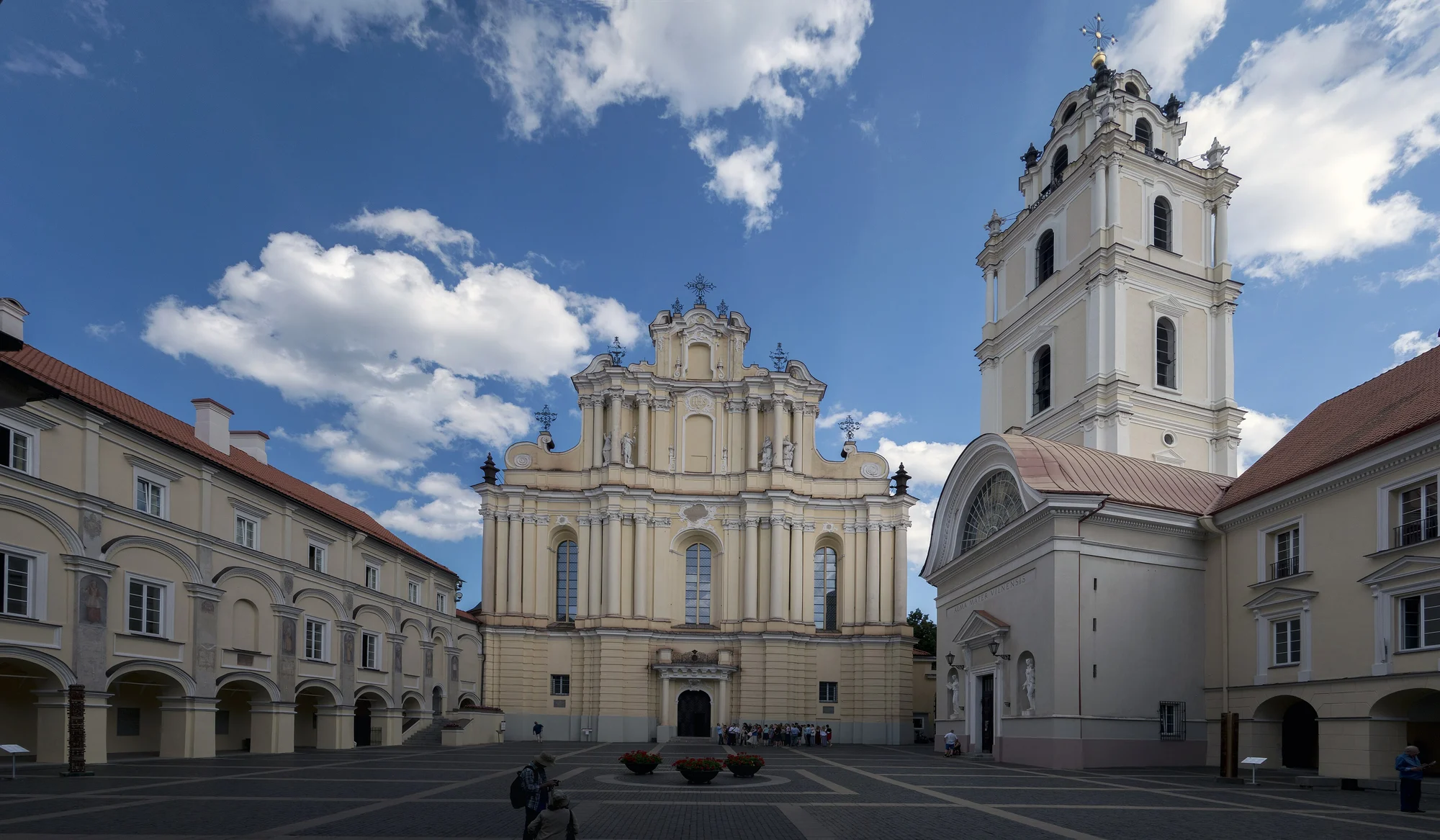
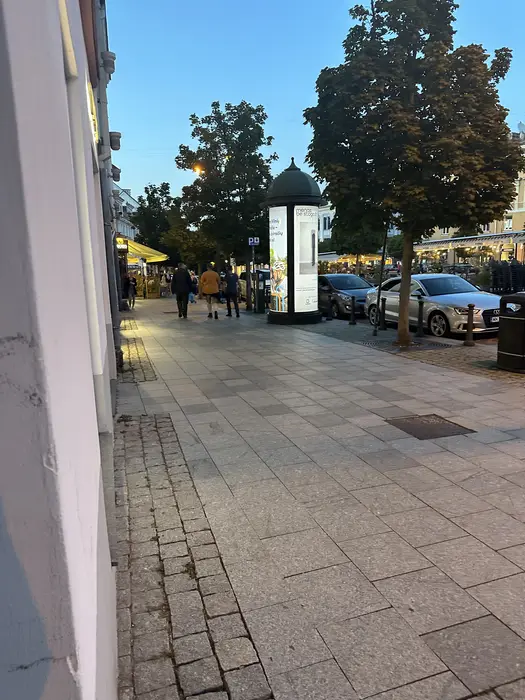
This is also where Vilnius does café culture properly. Pilies Street has the obvious terraces, but step a block off it and you'll find specialty roasters, old-school cake shops, and student bars tucked into cellars and courtyards. Pinavija for pastries and cakes, the third-wave coffee spots around the university, the long-running cafés on the Town Hall square, and the wine bars of Stiklių and Šv. Ignoto streets are all good anchors for a break between sights. Prices are gentle by Western European standards, and the coffee scene in particular has come a long way.
Then there are the literary and artistic corners — Literatų Street, with its wall of small artworks dedicated to writers connected to Vilnius, and the bridge across to Užupis, the self-declared bohemian 'republic' of galleries, studios and riverside bars. These quieter pockets are where the Old Town stops being a monument and starts feeling like a place people actually live.
- Seek out the university's thirteen linked courtyards.
- Step one street off the main spine for the best cafés and bakeries.
- Detours: Literatų Street's art wall and the Užupis bridge.
Jewish Vilnius and the layers beneath
For centuries Vilnius was one of the great centres of Jewish life and learning in Europe — known as the 'Jerusalem of the North' (Yerushalayim de Lita) for its scholars, printing houses, synagogues and yeshivas. By the early 20th century roughly a third of the city was Jewish, and the figure of the Vilna Gaon, the great 18th-century rabbinic scholar, drew students from across the Jewish world. The former Jewish quarter sat in the streets west of the main spine, around today's Žydų (Jews') and Stiklių lanes and the lost Great Synagogue, and the near-total destruction of that community in the Holocaust is one of the city's deepest scars. Memorials, the single surviving Choral Synagogue, the Vilna Gaon museum and quiet plaques mark a heritage that the Old Town carries beneath its postcard surface.
It's worth seeking this layer out, because it changes how you read the place. The same is true of the Old Town's other histories — the medieval defensive walls and the surviving Bastion with its artillery tunnels, the marks of Soviet occupation told most starkly at the Museum of Occupations and Freedom Fights in the former KGB headquarters, and the cellars and foundations that keep turning up under reconstruction. Vilnius wears its centuries lightly on the surface, but they're all still there if you look, and the city has worked hard in recent decades to remember rather than smooth them over. Walking tours dedicated to Jewish Vilnius and to the Soviet years run regularly and are among the most rewarding ways to add this depth, if you'd rather not piece it together alone.
If you have a guide or a good walking route, ask for the Jewish-heritage stops to be woven in; if you're exploring solo, the small monument to the physician and community figure Cemach Szabad near the old quarter is a gentle place to start. The point is simply to remember that the beauty above ground sits on top of a long, complicated and human story.
- Vilnius was the 'Jerusalem of the North' — a major centre of Jewish scholarship.
- The former Jewish quarter lay around Žydų and Stiklių streets, west of the spine.
- Memorials, the Choral Synagogue and quiet plaques mark the lost community.
Practicalities and how to do it well
The single best way to see the Old Town is on foot, slowly, ideally split across more than one visit — one purposeful walk to hit the landmarks, and one aimless wander to find your own corners. Wear shoes you can handle cobblestones in; the historic paving is uneven and gets slippery in rain or snow. Most of the headline churches and squares are free to enter or admire; only a few sights (the cathedral crypt, the bell towers, museums) charge admission, and those vary seasonally, so check on the day.
Timing matters more for atmosphere than for queues. Early morning gives you near-empty streets and the best light for photos; golden hour from Gediminas Hill is unbeatable; and evenings bring the squares and courtyards to life with diners and students. Summer is busiest, but the Old Town never feels overrun the way larger European capitals do. Winter, under snow and Christmas lights, is quietly magical.
Getting around is rarely an issue: the Old Town is pedestrian-friendly and mostly walkable, with buses and trolleybuses skirting its edges and cheap taxis or ride-hailing apps for anything further. There's no need for a car, and parking inside the historic streets is restricted in any case. English is widely spoken, especially among younger people and in cafés and museums, so you'll have no trouble asking directions or ordering food.
If you only have limited time, follow our self-guided walk to string the highlights together, then peel off wherever something catches your eye. And give yourself permission to do less than the map suggests — the Old Town rewards lingering far more than rushing. A morning of focused sightseeing followed by an aimless afternoon, coffee in hand, is the formula most visitors remember most fondly.
- Explore on foot; wear shoes good on wet cobblestones.
- Most churches and squares are free; a few towers and crypts charge — confirm hours seasonally.
- Best light: early morning and golden hour from Gediminas Hill.
- Short on time? Follow the self-guided walk, then wander off it.
Beyond the churches: museums, markets and the Old Town table
The Old Town isn't only spires and squares. Just behind the cathedral, the reconstructed Palace of the Grand Dukes brings the medieval and Renaissance court back to life with restored halls, archaeology and treasures of the Grand Duchy — the best single place to grasp Lithuania's golden age. A few minutes north, the Museum of Occupations and Freedom Fights occupies the former KGB headquarters and tells the harrowing 20th-century story of Nazi and Soviet occupation, including the preserved prison cells in the basement. For a complete change of register, the MO Museum on the Old Town's edge handles modern Lithuanian art in a striking Libeskind-designed building.
Food is half the pleasure of any Old Town day. Hales Market (Halės turgus), the historic covered market near the Gates of Dawn, mixes traditional stalls — rye bread, smoked fish, cheese, honey, pickles — with a new wave of food vendors, and it's the easy place to graze through Lithuanian staples at lunchtime. Around it, and threaded through the lanes, you'll find restaurants serving the hearty national dishes: cepelinai (potato dumplings), cold pink šaltibarščiai soup in summer, dumplings, dark bread and a genuinely good craft-beer scene. Eating well here is cheap by Western European standards.
Then there are the small details that make the Old Town stick in the memory: the amber and linen shops, the antiquarian bookshops, the buskers on Pilies, the way a quiet bell rings out from a courtyard you can't quite locate. Give yourself permission to follow these rather than the map. The monuments give the Old Town its fame; the small, lived-in moments are what make people come back.
- Palace of the Grand Dukes — the court of the Grand Duchy, reconstructed.
- Museum of Occupations and Freedom Fights — the former KGB HQ and prison.
- MO Museum — modern Lithuanian art in a Libeskind building.
- Hales Market — graze through Lithuanian food near the Gates of Dawn.
- Eat: cepelinai, šaltibarščiai (summer), rye bread, craft beer.
The Old Town through the seasons
The Old Town changes character completely across the year, and there's no single 'best' time to come — only different versions of the same place. Summer (June to August) is the liveliest: long evenings, packed café terraces, street musicians on Pilies, open-air markets and a string of festivals spilling into the squares. It's the warmest and busiest stretch, though 'busy' in Vilnius still means strollable streets rather than the crush of larger capitals.
Spring and autumn are arguably the sweet spots. May brings blossom and fresh green to the courtyards and the riverside Bernardine Gardens; September and October turn the parks gold and thin the crowds while keeping the terraces open. Light is softer for photography and the city feels more like itself, lived-in rather than performing for visitors.
Winter is the quiet, atmospheric extreme. Snow settles on the red roofs, the Christmas market and the city's famously inventive tree fill Cathedral Square through December, and the churches glow against early dark. It's cold — Baltic winters mean real sub-zero spells — and the cobbles can be icy, so pack proper footwear, but a winter Old Town — half-empty, hushed, lamplit — is one of the most romantic versions of Vilnius there is. Whatever the season, mornings are quietest and golden hour is best for photos; midday in high summer is the busiest window, though even then the Old Town never feels overwhelmed.
- Summer: liveliest, warmest, festivals and full terraces.
- Spring/autumn: softer light, thinner crowds, blossom or golden parks.
- Winter: snow, Christmas market on Cathedral Square, hushed and romantic.
- Any season: come early for empty streets; stay for golden hour.
Old Town questions, answered
A few of the practical things first-time visitors most often ask about exploring Senamiestis. The short version: it's compact, safe, mostly free and best on foot — but a little planning helps you get the most from it.
If you only take one thing away, make it this: don't try to 'do' the Old Town as a checklist. Walk the spine once for the landmarks, then give yourself an unhurried hour or two to wander the side streets and courtyards. That's where Vilnius stops being a list of sights and becomes a place you remember.
- How long do I need? Half a day for the highlights; a full day or more to do it justice with churches, courtyards and cafés.
- Is it walkable? Entirely — it's about 30–45 minutes end to end, all on foot.
- Is it expensive? No. Most churches, squares and viewpoints are free; only a few towers, crypts and museums charge.
- Where should I start? Cathedral Square in the north or the Gates of Dawn in the south — the two ends of the main spine.
- Is it safe? Yes, Vilnius is a very safe capital; normal city sense around busy tourist spots is enough.
- Best for photos? Early morning for empty streets, and Gediminas Hill at golden hour for the skyline.
Related guides
Self-Guided Vilnius Old Town Walk
A step-by-step self-guided walking route through Vilnius Old Town — from the Gates of Dawn through the Town Hall, Pilies Street, the university and Cathedral Square to Užupis.
Read guide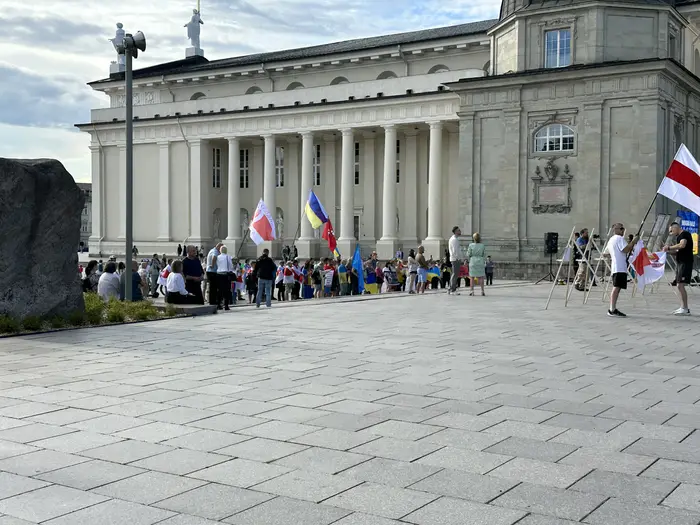
Cathedral Square (Katedros aikštė) — the heart of Vilnius
Cathedral Square is the historic heart of Vilnius — a vast plaza framed by the Cathedral and its free-standing Bell Tower, and the city's stage for festivals, parades and the Christmas market.
Read guide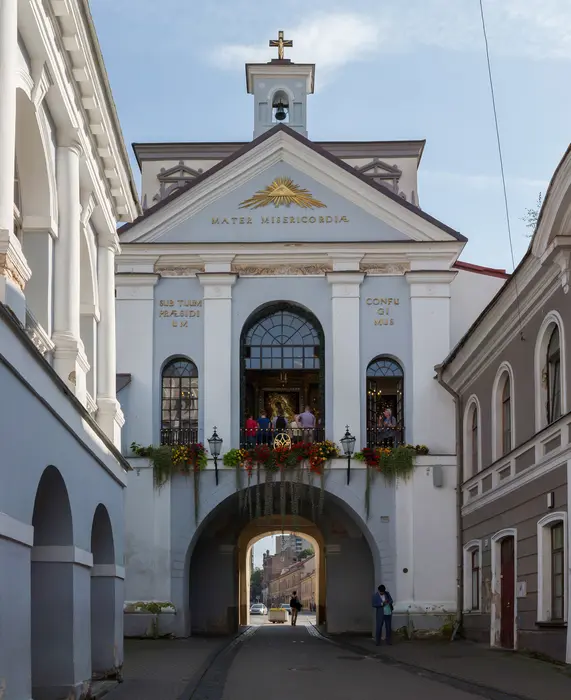
Gates of Dawn
The Gates of Dawn (Aušros Vartai) is the last surviving city gate of Vilnius and one of Eastern Europe's most revered Catholic pilgrimage sites, home to the miraculous icon of Our Lady of Mercy.
Read guide