
Gediminas Avenue: Vilnius's Main Boulevard
A guide to Gediminas Avenue, Vilnius's 1.8 km main boulevard: shops, cafés, museums, theatres, river crossings, parades and parking, and how to use the city's grand axis from Cathedral Square to the Parliament.
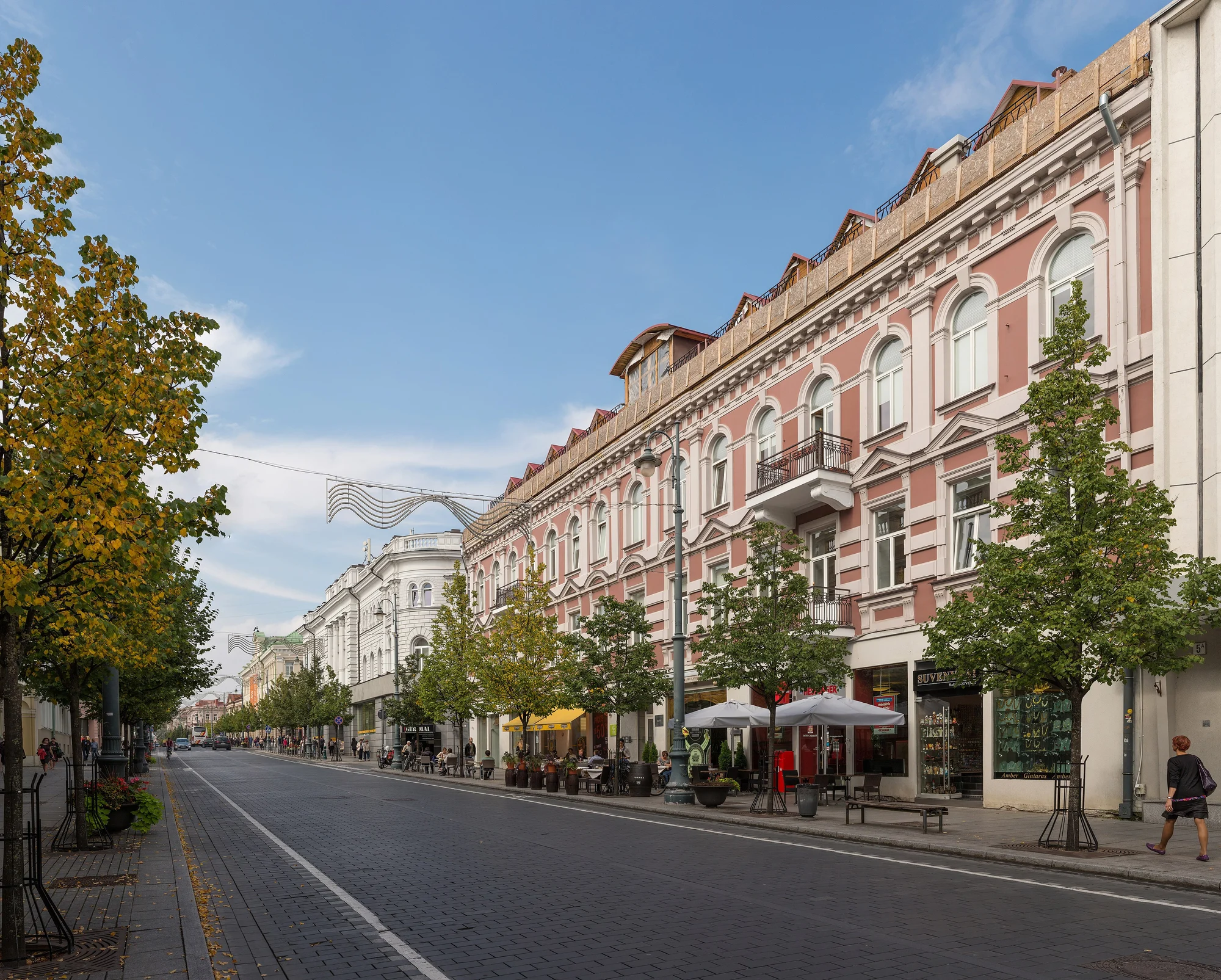
- ✓Gediminas Avenue (Gedimino prospektas) is the city's 1.8 km grand boulevard, running dead straight from Cathedral Square to the Parliament.
- ✓It is Vilnius's civic spine — government, parliament, the central bank, the national drama theatre and the national library all line it.
- ✓By day it's the smart shopping street (international names and Lithuanian boutiques); by night it's a lit promenade for an easy after-dinner stroll.
- ✓Stretches close to traffic on weekends and for the city's big parades and festivals, turning the avenue into one long pedestrian space.
- ✓It links three landmark squares — Cathedral, Lukiškės and Independence — so a single walk threads the city's ceremonial heart together.
Vilnius's grand axis, end to end
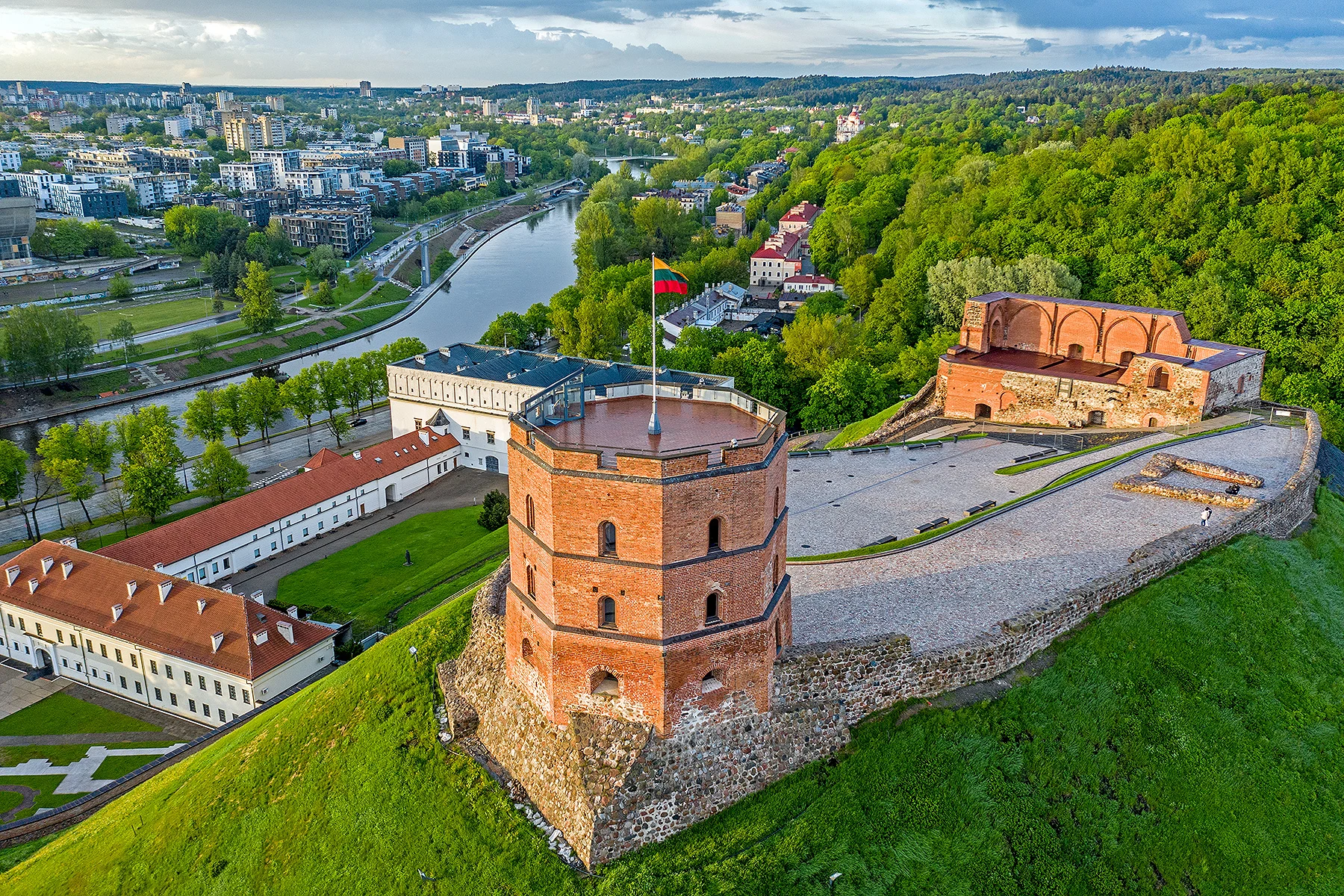
If the Old Town is where Vilnius wanders, Gediminas Avenue is where it stands up straight. The city's main boulevard — Gedimino prospektas to locals — runs in a single confident line for about 1.8 kilometres, from Cathedral Square at the foot of Castle Hill out to the Seimas, the Lithuanian Parliament, near the Neris River. It is the spine the modern city was hung on: laid out in the 1830s (originally as St George's Avenue) when Vilnius spilled beyond its medieval walls, and rebuilt, renamed and re-symbolised many times since. Walk it and you walk through the last two centuries of Lithuanian history in a straight line.
What makes the avenue worth a deliberate stroll rather than just a thoroughfare is its mix. This is at once the government district, the theatre district and the smart shopping street, with grand 19th- and early-20th-century facades on both sides and a wide, tree-lined pavement built for promenading. Unlike the cobbled lanes of Senamiestis just to the south, Gediminas Avenue is flat, broad and legible — you can see where you're going, and you can cover the whole thing in a relaxed twenty-five-minute walk with stops. It's the one part of Vilnius where the city deliberately tried to look like a European capital, and it pulls it off.
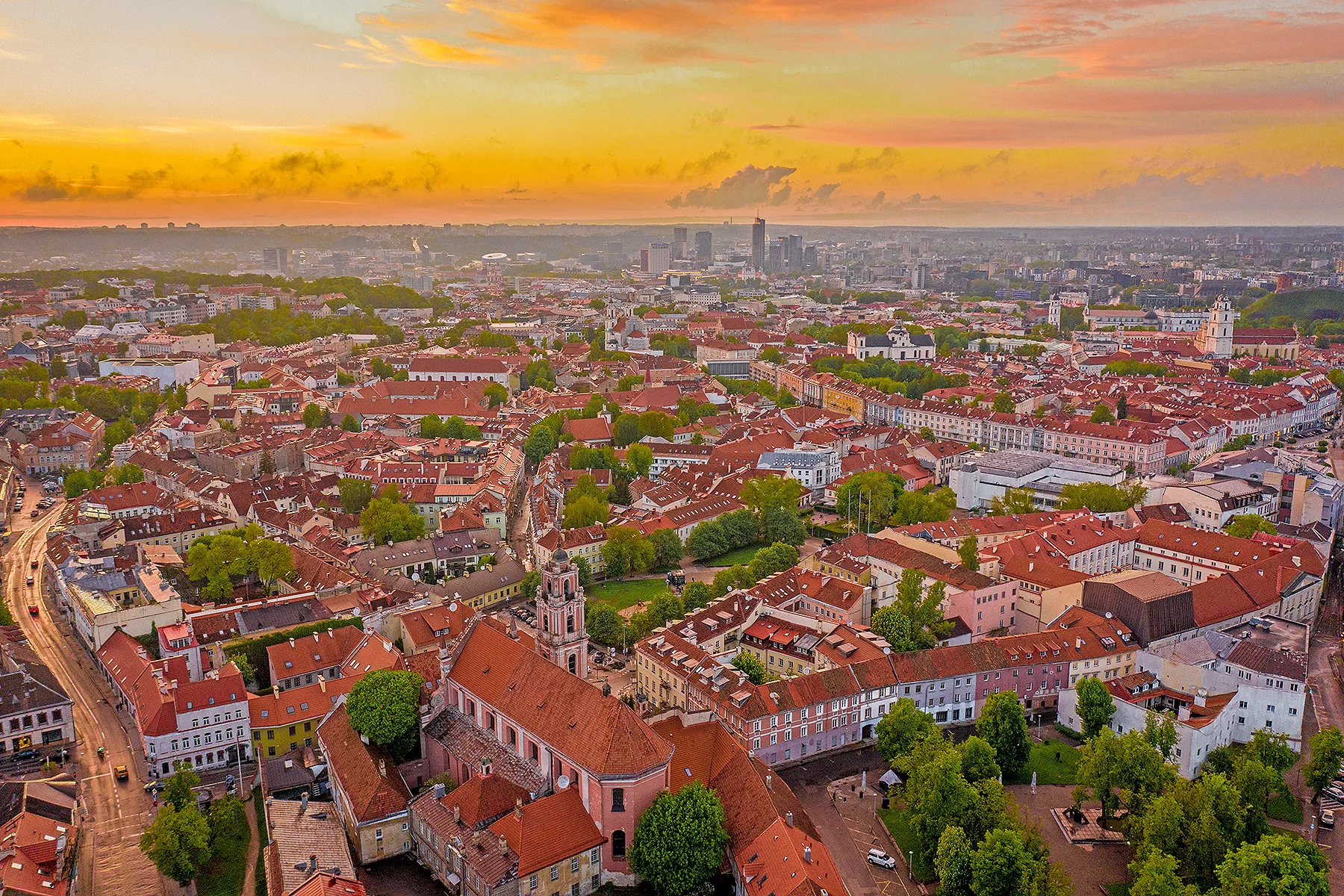
It helps to think of the avenue as the counterpoint to the Old Town rather than a continuation of it. The medieval centre is intimate, irregular and inward-looking — courtyards, dead ends, surprises around every corner. The avenue is the opposite: open, ordered and outward-facing, built to impress and to move people along it. The two sit side by side, joined at Cathedral Square, and the contrast is half the pleasure. Most visitors spend nearly all their time in the Old Town and only cross onto the avenue to shop or eat; giving it a proper walk in its own right is one of the easiest ways to see a different, more modern face of the city without going anywhere at all.
The avenue also tells you something about how Vilnius thinks of itself. Capital cities use their grand boulevards as stages — for parades, protests, national days and ordinary evening promenades — and Gediminas Avenue has played that role through every regime that has governed Lithuania. The names it has carried over the decades read like a list of who was in charge: a saint, a Polish marshal, Stalin, Lenin, and finally the grand duke who founded the city. That layering of names onto a single street is Vilnius in miniature — a small nation's long, much-contested history written down one stretch of pavement.
- Length: about 1.8 km, arrow-straight from Cathedral Square to the Parliament.
- Laid out in the 1830s as the city expanded beyond the Old Town walls.
- Flat, wide and tree-lined — an easy, legible walk after the Old Town's cobbles.
- The civic, cultural and shopping heart of the modern city rolled into one street.
A street that changed its name with history
Few streets anywhere have been renamed as often as this one, and each name marks a chapter of Lithuania's turbulent past. The avenue was laid out in 1836 as St George's Avenue (Šv. Jurgio prospektas), a deliberately grand new street cut through the open ground west of the old walled city as Vilnius modernised under Russian imperial rule. It was the city's first true boulevard — straight, wide and lined with the kind of solid, ornate buildings a 19th-century European capital was expected to have. From the start it drew the institutions of power and money to its frontages, a habit it has never lost.
Through the 20th century the name changed with each shift of power: it carried the name of a Polish marshal in the interwar period when Vilnius was held by Poland, became Stalin Avenue and then Lenin Avenue during the Soviet decades, and was finally given the name it holds today — after Grand Duke Gediminas, the 14th-century ruler credited with founding Vilnius — as Lithuania reclaimed its independence. The current name closes the circle, tying the modern civic heart of the city back to its medieval origin myth. Knowing this backstory makes the walk richer: the grand facades, the squares and the institutions all read as successive attempts to stamp authority on the same prized stretch of ground.
The avenue's symbolic weight is why it keeps appearing at the turning points of recent history. It runs to the Parliament that Lithuanians gathered to defend in January 1991, when Soviet tanks moved on Vilnius; it passes Lukiškės Square, where the Lenin statue once stood and was pulled down; and it is the route the city still chooses for its proudest and most defiant public gatherings. You don't need to know any of this to enjoy a coffee and a shop here — but it's the layer that turns a pleasant boulevard into the most meaningful street in the country.
- Laid out in 1836 as St George's Avenue, the city's first grand boulevard.
- Renamed repeatedly through the 20th century — Polish, Stalin, Lenin — then Gediminas at independence.
- Each name marks a regime; the current one ties the modern city to its 14th-century founder.
- A recurring stage for national turning points, including the 1991 defence of Parliament.
A slower plan with time for the avenue's history and the wider modern city.
Old Town (Senamiestis)The medieval core the avenue was built to extend beyond in the 1830s.
Map pins
Map data © OpenStreetMap contributors · Tiles © OpenFreeMap
The walk: Cathedral Square to Parliament
Start at the bottom, at Cathedral Square (Katedros aikštė), with the white neoclassical Cathedral and its free-standing bell tower at your back and Gediminas' Tower on the hill above. This is the city's ceremonial front room, the assembly point for celebrations and protests alike, and the natural head of the avenue. From here Gediminas Avenue strikes off to the west-southwest, and within a block you're among the theatres and grand facades.
The middle stretch is the busy heart: the Lithuanian National Drama Theatre with its famous dark sculptural group over the entrance, the Bank of Lithuania, the Lithuanian Academy of Music and Theatre, smart cafés spilling onto the pavement, and the shopfronts that make this the city's premier retail street. Side streets peel off toward the Old Town on your left and the quieter 19th-century grid on your right, but the avenue itself keeps its grand, unbroken rhythm.
Further along you reach Lukiškės Square (Lukiškių aikštė), the city's largest open square and a place heavy with history — it was once Lenin Square in the Soviet era, and is now a vast civic space beside the former Lukiškės prison, reborn as a culture-and-events complex. Beyond it the avenue runs on to Independence Square (Nepriklausomybės aikštė) and the Seimas, the Parliament — the western full stop of the walk, and a charged spot in the national memory as the place Lithuanians defended in January 1991. Turn the whole thing into a loop by walking out along the avenue and drifting back through the parallel streets or down to the riverside.
- Cathedral Square — the ceremonial head of the avenue, under Castle Hill.
- The theatre-and-bank middle stretch — National Drama Theatre, Bank of Lithuania, music academy, top shopping.
- Lukiškės Square — the city's biggest square, beside the former prison-turned-culture-complex.
- Independence Square and the Seimas (Parliament) — the western end and a key site of the 1991 independence stand.
Shopping on the avenue
Gediminas Avenue is Vilnius's flagship shopping street, and it has a more grown-up character than the souvenir-heavy lanes of the Old Town. The pull here is a mix of recognisable international high-street names and homegrown Lithuanian labels: you'll pass the big fashion chains alongside local boutiques selling Lithuanian design, linen and leather, jewellers working in Baltic amber, bookshops, opticians, perfumeries and a scattering of concept stores. It's where Vilnius shops for itself rather than for tourists, which is exactly why it's worth a browse.
For practical shopping, the avenue and its immediate surroundings cover most bases: cosmetics and pharmacies, electronics, eyewear and clothing for every budget. If you're hunting for gifts to take home, this is a good complement to the Old Town craft shops — the avenue leans more toward polished retail and design, the Old Town toward handmade souvenirs and amber galleries. Combine the two and you've covered the city's shopping in an afternoon.
The avenue is also a window-shopping pleasure in its own right, quite apart from whether you buy anything. Its grand frontages, wide pavements and the rhythm of well-dressed locals running errands make it one of the most enjoyable streets in the city simply to walk and look. Bookshops with English-language sections, design and homeware stores, jewellers and the odd gallery break up the fashion chains, and the side streets hide smaller independents. Pace yourself with a coffee stop and you've a relaxed afternoon. As ever, individual shops open, close and move, so treat any specific store as a 'check before you go' rather than a guarantee — the avenue's overall character as the city's premier retail street is the constant, not any one shopfront.
- International high-street fashion names sit alongside Lithuanian designer boutiques.
- Good for amber jewellery, Lithuanian linen, books, cosmetics and design pieces.
- More polished and local-facing than the Old Town's souvenir lanes — pair the two.
- Specific shops change over time; confirm any particular store before making a special trip.
Cafés, theatres and museums along the way
The avenue is built for pausing. Its wide pavements carry a string of cafés and patisseries with outdoor seating in the warmer months — it's one of the best people-watching streets in the city, and a coffee here is a low-effort way to feel the rhythm of working Vilnius. In the evening the mood shifts to dinner-and-a-show: the Lithuanian National Drama Theatre anchors the cultural side, and the avenue puts you within easy reach of the opera and ballet theatre, the philharmonic and the city's concert calendar.
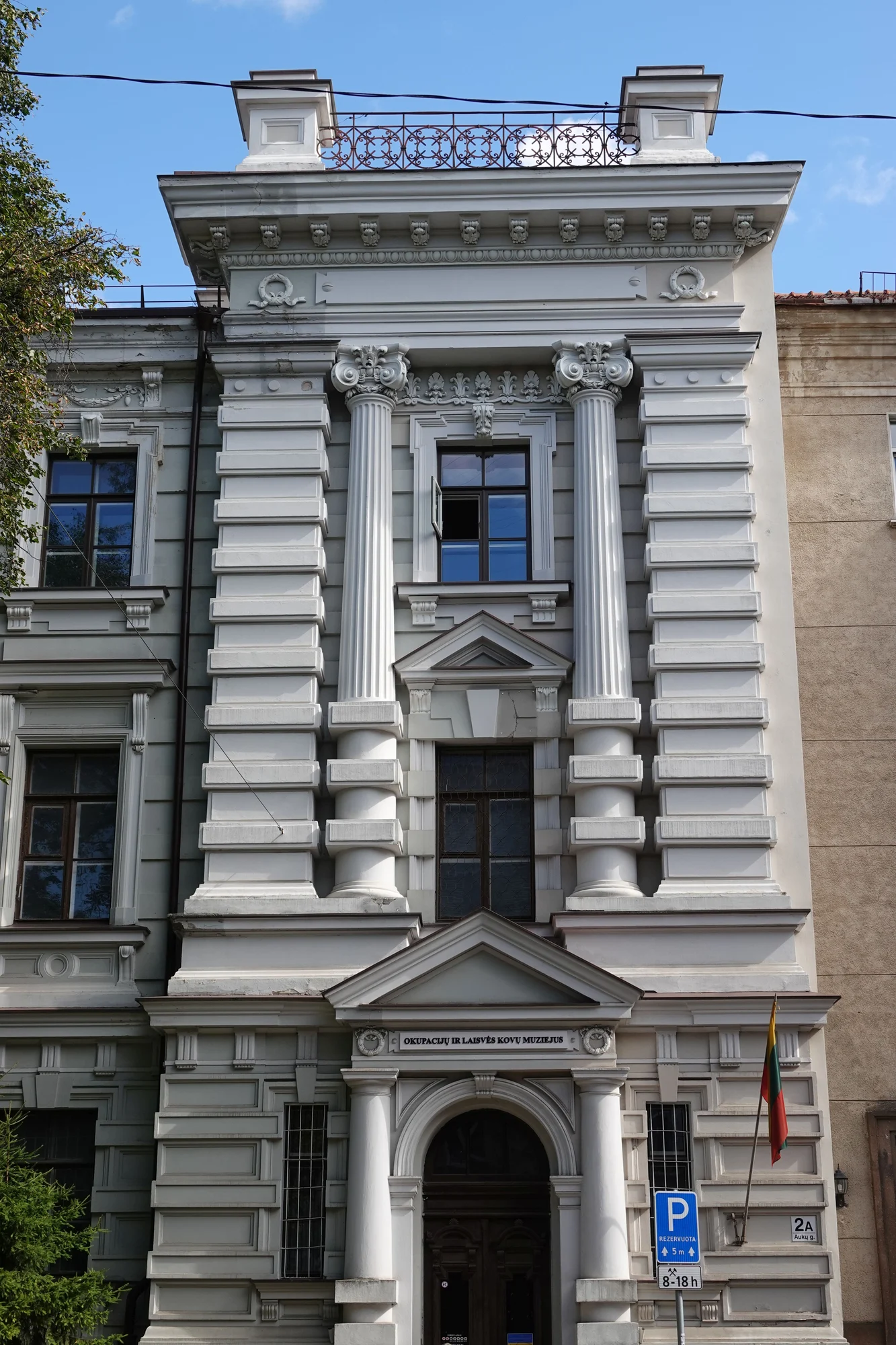
Culturally, Gediminas Avenue is also a route to some of the city's heavier history. Just off it stands the former KGB headquarters, now the Museum of Occupations and Freedom Fights, one of the most affecting museums in the country, with the preserved Soviet-era prison cells in its basement. The avenue's institutions — the Bank of Lithuania, the National Library, the music academy — give the street its serious, civic grain, while the squares at either end (Cathedral and Independence) are stages for national life. It's a street where shopping, culture and statehood share the same pavement.
Because so much sits on or just off the avenue, it makes an efficient half-day spine: window-shop the middle stretch, break for coffee, duck into the Occupations museum, and finish with a theatre or concert in the evening. You're never more than a few minutes from the Old Town if you want to swap grand boulevard for medieval lane.
- Pavement cafés and patisseries make the avenue prime people-watching territory.
- The Lithuanian National Drama Theatre and nearby opera/concert halls cover the evening.
- The Museum of Occupations and Freedom Fights (former KGB HQ) sits just off the avenue.
- An easy half-day spine: shopping, coffee, a museum and an evening show, with the Old Town next door.
Parades, festivals and a car-free street
Gediminas Avenue is the city's parade ground. Because it's wide, straight and central, it's the natural route for Vilnius's big public moments — the Capital Days street festival in early September fills it with stages and stalls, Independence and Statehood Day celebrations process along it, and a string of seasonal markets, runs and parades take it over through the year. On many weekends a central section is closed to traffic and given over to pedestrians, turning the avenue into one long, relaxed promenade with buskers and pop-up cafés.
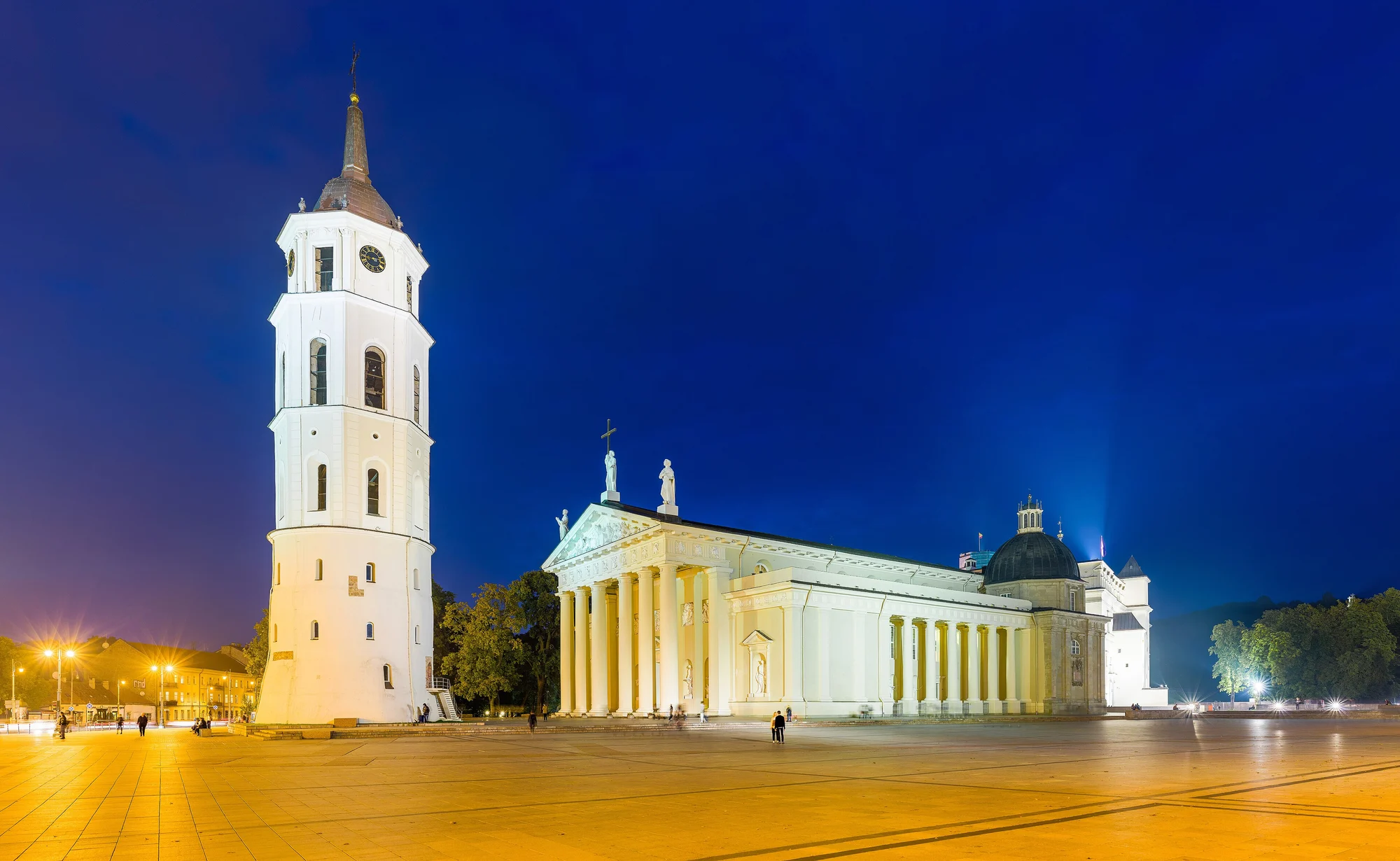
If you can, time at least one walk for an evening or a car-free weekend, when the avenue is at its best: lit facades, an unhurried crowd, and the whole grand axis open to walk down the middle of. For exact festival dates and which weekends the street is pedestrianised, check the city's current events calendar before you go — these shift year to year, and the avenue's programme is busiest from late spring through early autumn.
- Capital Days (early September) is the avenue's flagship street festival.
- National-day parades and seasonal markets regularly take over the boulevard.
- Central stretches go car-free on many weekends — the nicest time to stroll it.
- Check the city's current events calendar for exact dates and pedestrian weekends.
Getting there, hotels and parking
The avenue is right in the centre, so reaching it is easy. From the Old Town it's a short, flat walk — Cathedral Square is effectively the join between the two. Plenty of city buses and trolleybuses run along or across it, and the main train and bus stations are a manageable walk or a very short ride to the south. If you're driving, be aware that this is a busy central street with limited and paid on-street parking; you'll generally do better leaving the car in a central garage and walking, especially on the weekends and festival days when sections close to traffic.
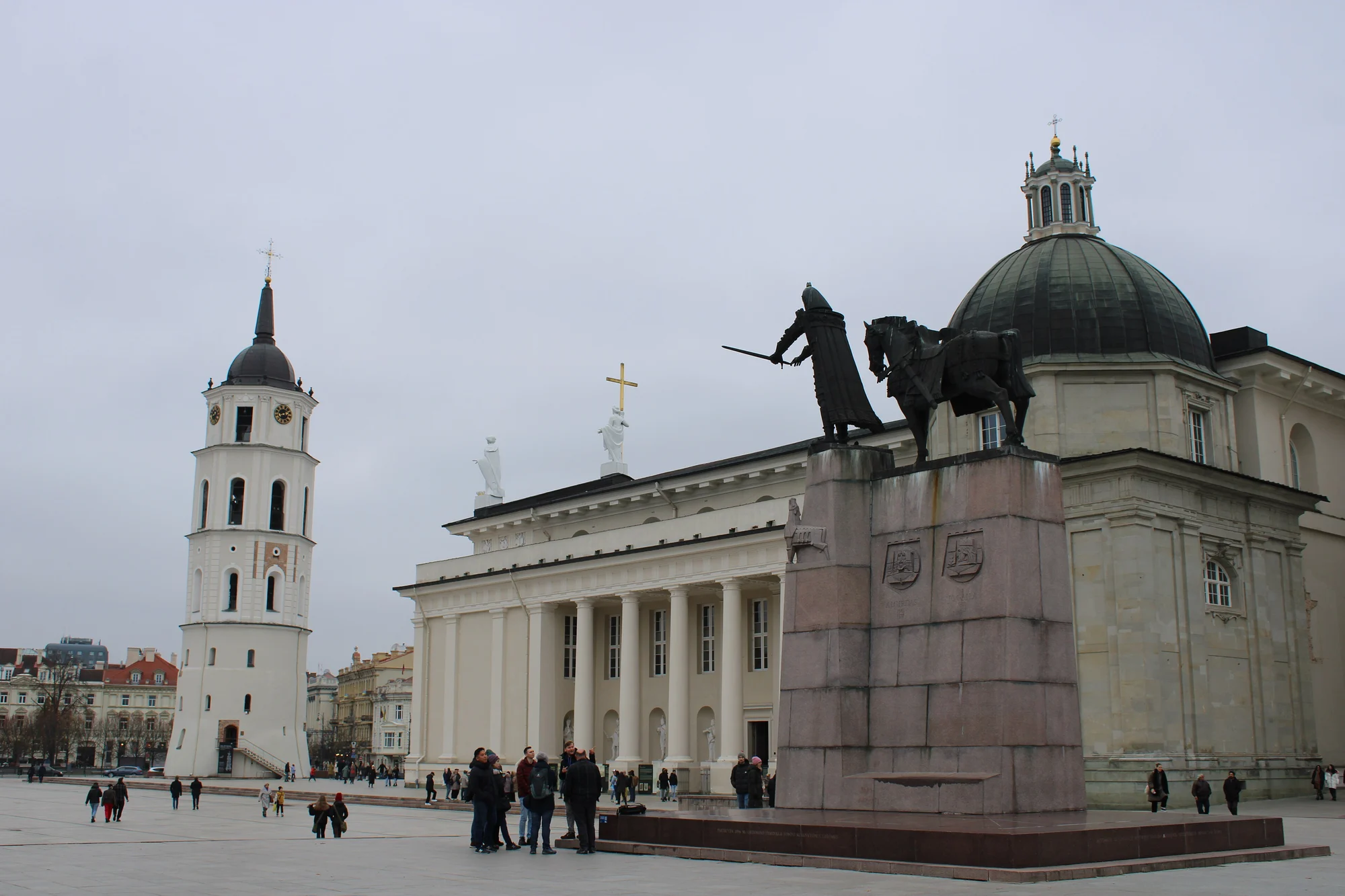
For where to stay, the avenue and the blocks just off it make a smart, well-connected base — you're between the Old Town and the river, on the city's best transport and shopping street, and a short stroll from the main sights. It tends to be a little calmer at night than the heart of the Old Town while staying thoroughly central. If you want to weigh up the avenue against the Old Town, Užupis and the station area, our where-to-stay guides lay out the trade-offs. As always with prices, hours and parking rules, confirm the current details directly before you rely on them.
- A short, flat walk from the Old Town; well served by buses and trolleybuses.
- On-street parking is limited and paid — use a central garage and walk.
- The avenue and side streets make a central, well-connected and slightly quieter base.
- Verify parking rules, fares and any street closures before you travel.
Related guides
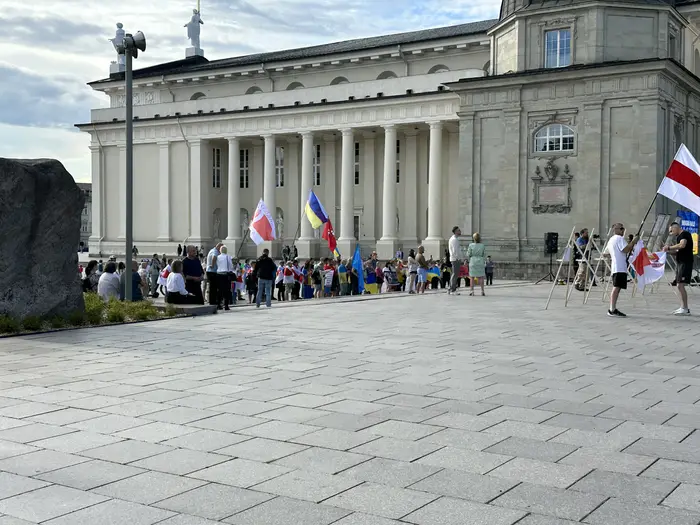
Cathedral Square (Katedros aikštė) — the heart of Vilnius
Cathedral Square is the historic heart of Vilnius — a vast plaza framed by the Cathedral and its free-standing Bell Tower, and the city's stage for festivals, parades and the Christmas market.
Read guide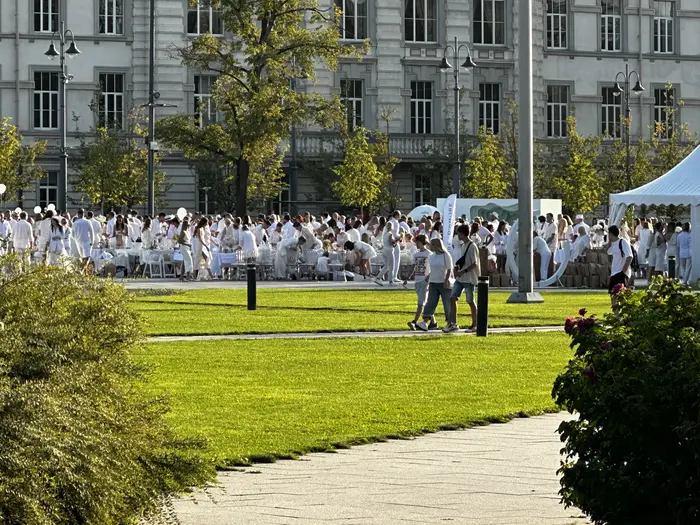
Lukiškės: Vilnius's Central Square & Prison District
A guide to Lukiškės, the central Vilnius district around the city's largest square: Lukiškės Square and its layered history, the former prison turned cultural space Lukiškės Prison 2.0, government and museum streets, restaurants, cocktail bars and central hotel trade-offs.
Read guide
Shopping & What to Buy in Vilnius
Where to shop in Vilnius and what to bring home: Baltic amber, Lithuanian linen, ceramics, books, chocolate and craft goods — plus the Old Town streets, Gediminas Avenue, markets, malls and the Kaziukas Fair.
Read guide