
Vilnius TV Tower guide
Everything you need for the Vilnius TV Tower: the observation deck and its panorama, the café, the January 1991 freedom history, the glass-floor and edge experiences, tickets, transport, weather and whether the detour is worth it.
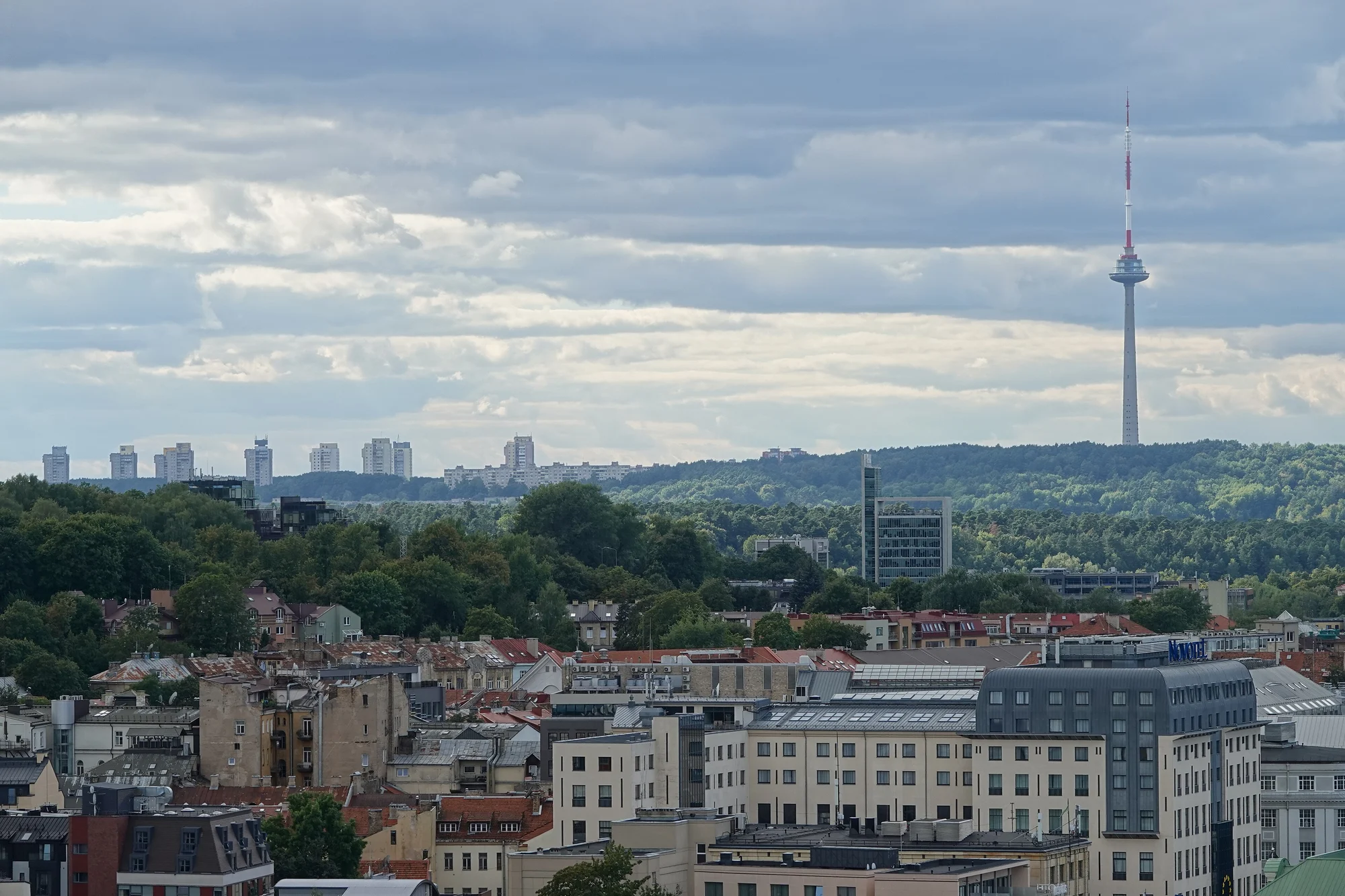
- ✓Lithuania's tallest structure at 326 metres, with an observation deck around 165 metres up
- ✓A memorial to the 13 January 1991 defenders of independence at the foot of the tower
- ✓Optional thrill add-ons: a glass-floor walk and an outdoor edge experience
- ✓A wide panorama over Vilnius that is best on a clear day and underwhelming in fog
What the TV Tower is, and why it matters
The Vilnius TV Tower (Vilniaus televizijos bokštas) is the city's tallest structure, a 326-metre concrete spire on the western edge of town in the Karoliniškės district. It is not in the Old Town and it is not pretty in the postcard sense — it is a functional broadcasting tower from the Soviet era — but it earns its place on any thoughtful Vilnius itinerary for two reasons: the view, and the history.
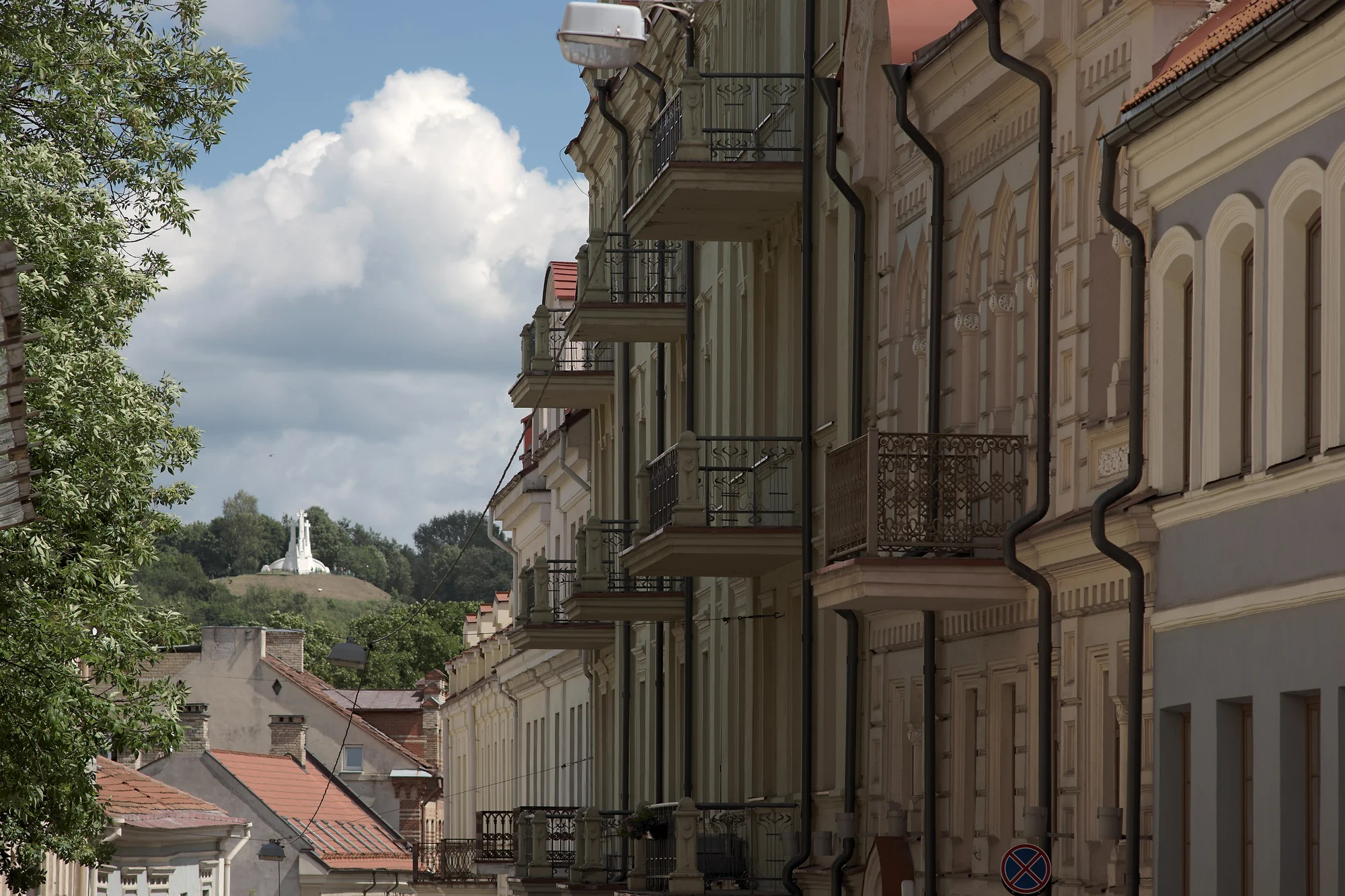
The view comes from a circular observation level roughly 165 metres up, with a café and a band of windows looking out over the whole city. On a clear day you can pick out the Old Town's spires, the Neris winding through, the new business towers across the river and, on the best days, the forests and lakes beyond the city limits.
The history is heavier and more important. In January 1991 this tower was the front line of Lithuania's fight to keep its restored independence, and people died here defending it. That makes a visit different from going up an ordinary observation tower: the panorama you enjoy is a view that was, quite literally, defended.
Built in the late Soviet period and completed in 1980, the tower was first and foremost a working broadcasting mast — and it still is, which is why it sits out in a residential district rather than among the Old Town's spires. That out-of-the-way location puts some visitors off, but it is exactly what gives the deck its wide, uninterrupted sweep: from here you see the whole city laid out, not just the immediate streets around you.
January 1991: the freedom story at the foot of the tower
In the early hours of 13 January 1991, Soviet tanks and paratroopers moved to seize the TV Tower and the city's broadcasting facilities from the thousands of unarmed civilians who had gathered to protect Lithuania's restored independence. Fourteen people were killed across the city that night, many of them here at the tower, and hundreds were injured. Despite the assault, Lithuanian broadcasts continued from elsewhere, and the world saw what had happened.
Today the date is commemorated nationally as the Day of the Defenders of Freedom. At the base of the tower you will find crosses, markers and a memorial naming the victims, and each 13 January the structure is illuminated in their memory. A small exhibition tells the story. Take a few minutes here before or after the lift up — it changes how you see everything above.
None of this should put you off visiting. Lithuanians come to the tower precisely because it was defended, and the combination of a sober memorial below and an open view above is, for many, the whole point.
The companion site at the national broadcaster, also defended in 1991.
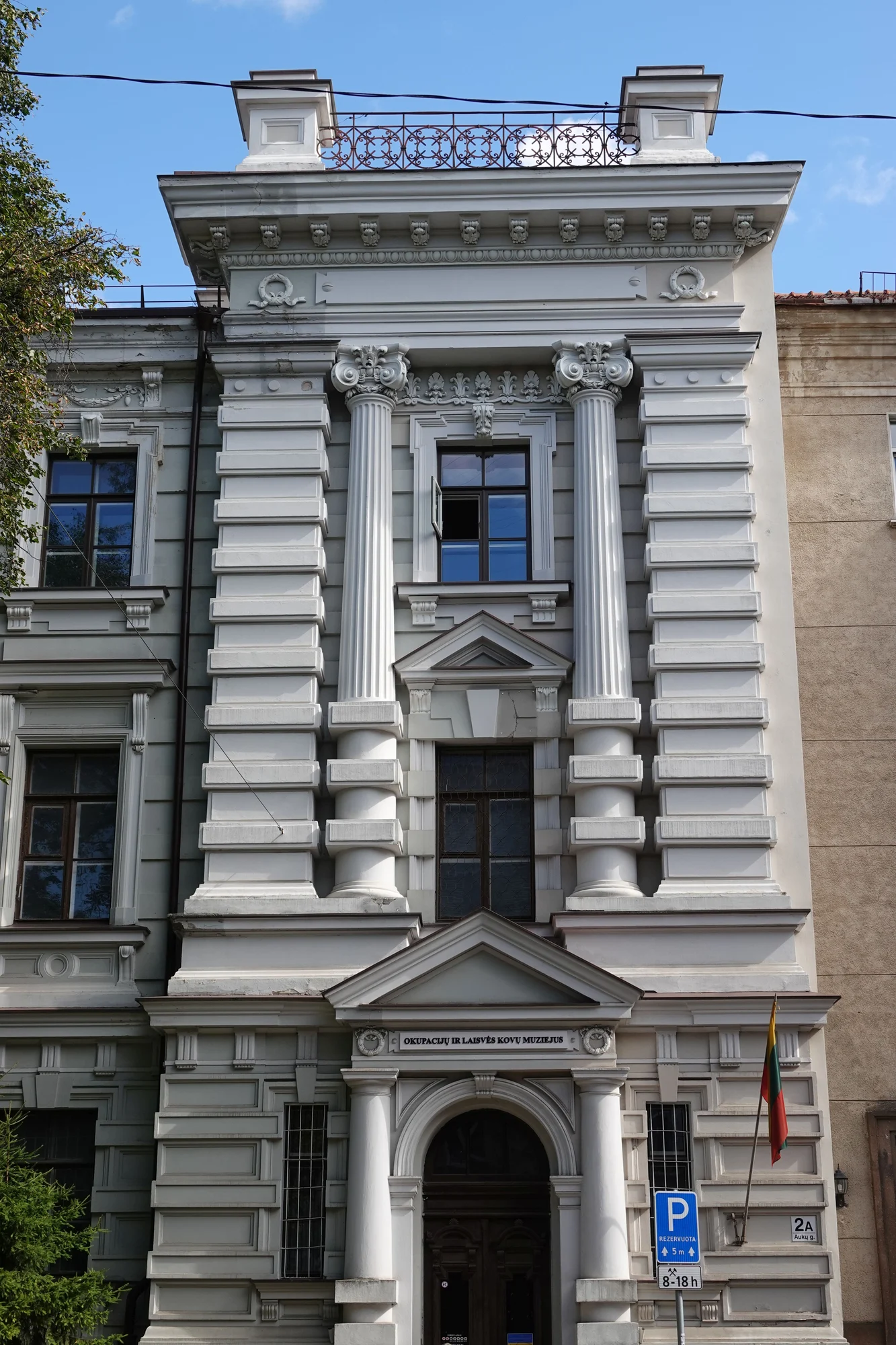
Museum of Occupations and Freedom FightsThe central museum that documents occupation and resistance.
Map pins
Map data © OpenStreetMap contributors · Tiles © OpenFreeMap
The observation deck, café and edge experiences
The standard visit is the lift up to the observation level, where the windows wrap right around and a café lets you linger over the view with a coffee or a glass of something. There is no need to rush — the deck is the experience, and a clear-weather hour up there is easily worth it. Over the years the tower has run a rotating dining concept on this level; what is on offer can change, so check the current café or restaurant arrangement when you book if dining matters to you.
For thrill-seekers the tower offers two optional add-ons in the warmer season. A glass-floor experience lets you stand on a transparent panel and look straight down through the structure, and an outdoor "edge" walk takes you, harnessed, onto the exterior of the tower for an exposed, vertiginous view. Both carry age limits and higher prices, both require advance booking, and both depend on weather. If heights are your thing, they are memorable; if they are not, the standard deck is plenty.
Recently published prices give the observation deck at around €18 for adults and about €9 reduced, with a family ticket near €45; the glass-floor experience around €33 and the edge walk around €57. Prices and the line-up of experiences change, so treat these as a guide and confirm on the official site before you go.
- Observation deck: panorama plus a café, around 165 m up
- Glass-floor experience and outdoor edge walk: seasonal, age-limited, book ahead
- Indicative prices: deck ~€18 adult / ~€9 reduced; glass floor ~€33; edge ~€57 (verify before you go)
Getting there, hours, weather and accessibility
The tower is in Karoliniškės, west of the centre and a few kilometres from the Old Town. The simplest options are a taxi or ride-hail (around 10–15 minutes from the centre) or a city bus toward Karoliniškės; the tower is signposted and visible from far off, so it is hard to miss once you are in the district. There is parking on site if you are driving.
Hours follow the ticket office, recently running roughly 11:00 to 21:00 daily, which makes the tower a good late-afternoon stop to catch the light changing over the city. Crucially, the view depends entirely on the weather: book for a clear day, because in low cloud or fog you will pay to stand inside a grey blanket. Locals will tell you to wait for a bright, sharp day and then go — it is worth the patience.
Note a genuine seasonal limitation: in winter, roughly from mid-November to mid-April, ice can form and fall from the structure, and access may be restricted for safety. If you are visiting in the cold months, check the tower's status before making the trip out. The deck itself is reached by lift and is broadly accessible once you are inside; our accessible-Vilnius guide covers step-free routing and transport across the city in more detail.
Budget around an hour to ninety minutes for the visit itself, plus travel time each way. That is enough to read the memorials at the base, ride up, settle in for the view with a drink, and come back down without rushing. If you are tackling the optional edge or glass-floor experiences, add time for the briefing and the queue, and book those ahead rather than turning up and hoping.
- Location: Karoliniškės, west of the centre; taxi/ride-hail ~10–15 min or city bus
- Recently published hours ~11:00–21:00 daily (verify before you go)
- Go on a clear day — fog ruins the view; winter ice can restrict access (mid-Nov–mid-Apr)
Is the TV Tower worth the detour?
Honestly, it depends on the weather and on what you want. If the sky is clear, the answer is yes: the panorama is the widest in the city, the history at the base is genuinely moving, and the trip out gives you a glimpse of residential Vilnius beyond the tourist core. If it is foggy or pouring, skip it — you will pay for a view you cannot see, and the central viewpoints will serve you better on a grey day.
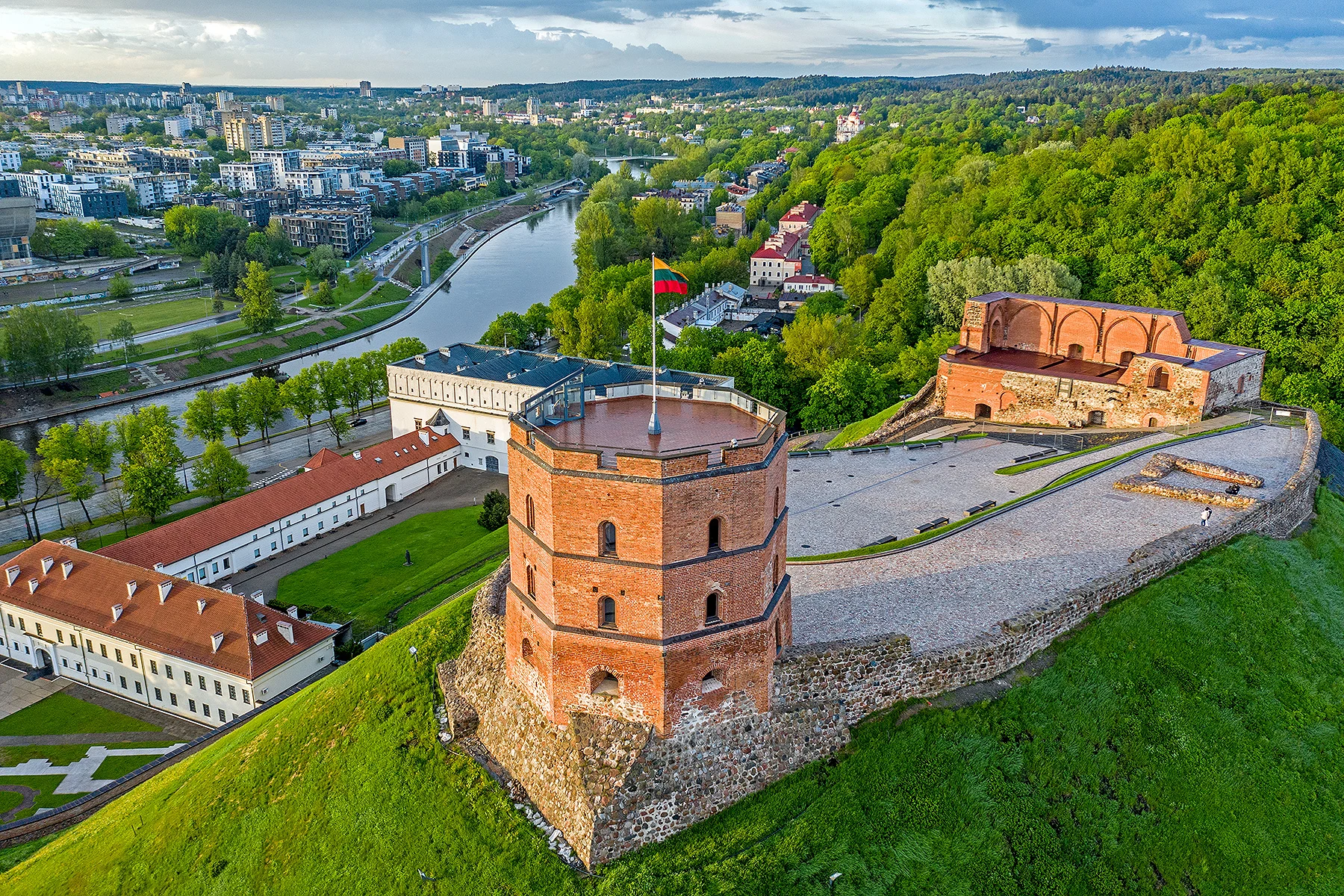
For a first short trip to Vilnius with limited time, the free Old Town viewpoints — Gediminas' Tower and the Three Crosses hill — are easier wins and closer to everything else. The TV Tower earns its place on a second day, on a clear afternoon, or for travellers specifically drawn to the 1991 story or to the thrill of the edge and glass-floor experiences. Families with older kids and teenagers tend to love it for exactly those add-ons.
Either way, treat it as a planned outing rather than a spontaneous one. Check the weather, check that the tower is open (especially in winter), and confirm current prices and any experience bookings before you head out to Karoliniškės. Done on the right day, it is one of the most quietly memorable things you can do in Vilnius.
- Worth it on a clear day; skip it in fog or heavy rain
- First-timers short on time: the free Old Town viewpoints are easier wins
- Best for second days, the 1991 story, or thrill-seekers and teens
Related guides
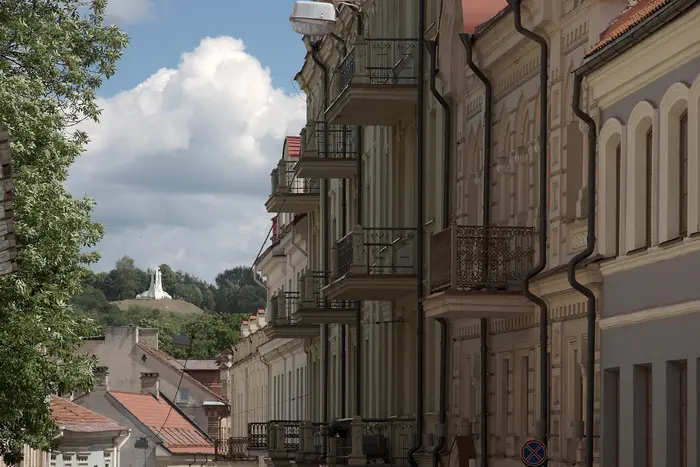
The Best Viewpoints in Vilnius
Compare the best viewpoints in Vilnius — Gediminas Tower, Three Crosses Hill, church bell towers, the TV Tower and rooftop bars — ranked by effort, payoff and the time of day to go.
Read guide
Soviet history sites in Vilnius
A careful guide to Soviet-era Vilnius: the KGB building and Museum of Occupations and Freedom Fights, Lukiškės Prison, the TV Tower of January 1991, Tuskulėnai and the memorials where the city remembers occupation and resistance.
Read guide
Vilnius with Teens
Vilnius for teenagers: viewpoints, street art, the Lukiškės prison, the TV Tower, food halls, bike rides and a Trakai day trip that keep older kids interested.
Read guide