
Soviet history sites in Vilnius
A careful guide to Soviet-era Vilnius: the KGB building and Museum of Occupations and Freedom Fights, Lukiškės Prison, the TV Tower of January 1991, Tuskulėnai and the memorials where the city remembers occupation and resistance.
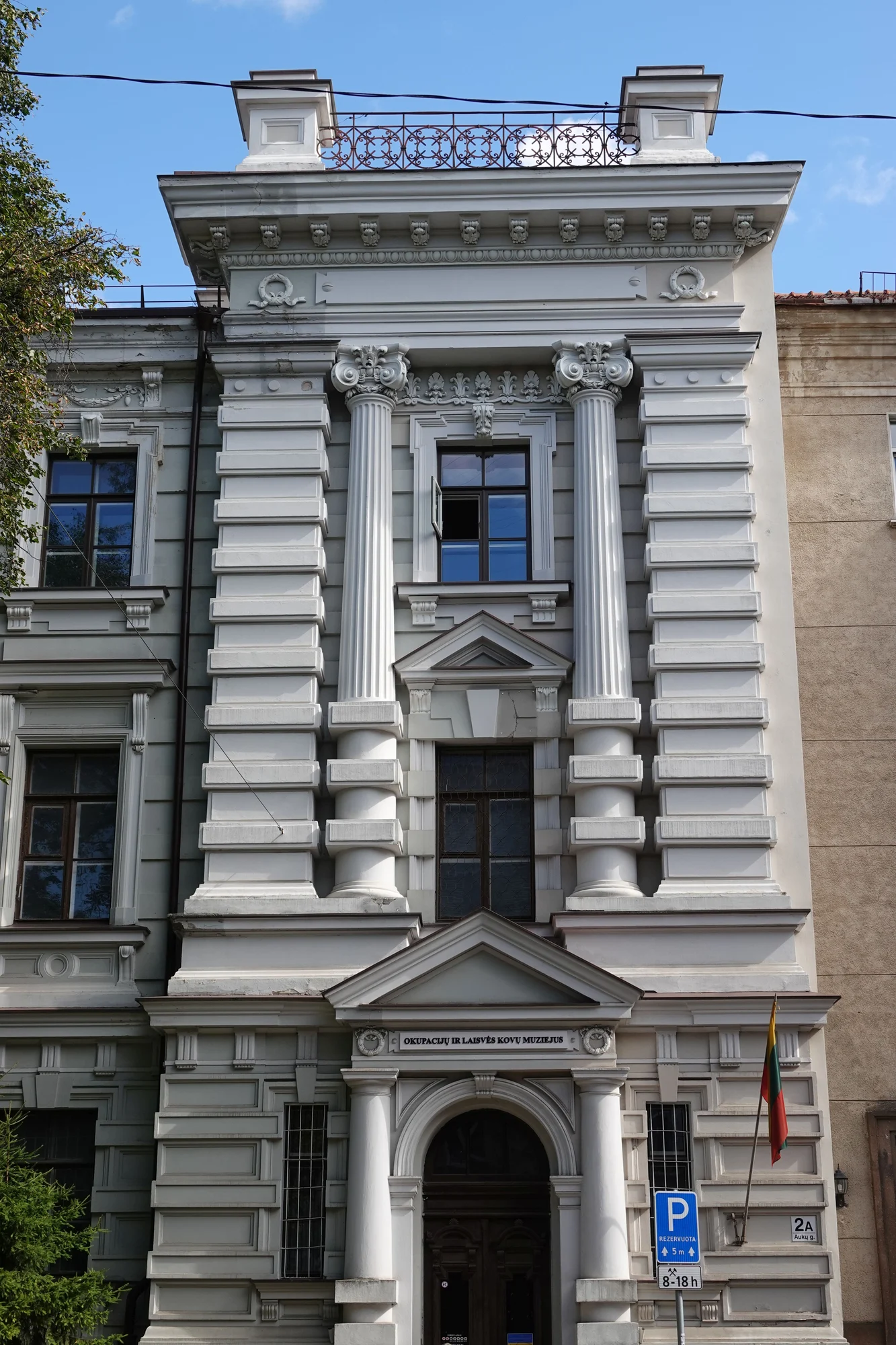
- ✓Museum of Occupations and Freedom Fights, in the former Gestapo and KGB headquarters on Aukų gatvė
- ✓The Vilnius TV Tower, where unarmed civilians were killed defending independence on 13 January 1991
- ✓Lukiškės Prison 2.0 — a Soviet-era jail now reopened for tours, culture and events
- ✓Tuskulėnai Manor and the memorials that mark the city's losses with restraint, not spectacle
How to read Soviet-era Vilnius
Lithuania spent roughly half a century inside the Soviet Union — annexed in 1940, occupied by Nazi Germany from 1941, then re-occupied by the USSR from 1944 until independence was restored in 1990 and finally secured in 1991. Vilnius carries that history quietly. There is no single "Soviet quarter" to visit; instead the period is written into ordinary streets, a handful of museums, a prison, a television tower on the edge of town and a scatter of memorial plaques you could walk past without noticing.
This guide is meant to help you visit those places with context and respect rather than as a curiosity tour. The sites below deal with deportation, surveillance, killing and resistance — some of it within living memory, with survivors and relatives still in the city. We have kept the tone sober on purpose, and we point you toward the institutions and guides who tell these stories with the care they deserve. Where a fact can change — opening hours, ticket prices, what is on display — treat it as a starting point and confirm before you go.
If you only have half a day, the natural spine is the Museum of Occupations and Freedom Fights in the centre, then a tram or taxi out to the TV Tower; both are anchored to the events of January 1991 and read powerfully together. With a full day you can add Lukiškės Prison and the Tuskulėnai memorial, or follow a guided Soviet-history route that joins the threads for you.
It helps to hold two ideas at once. The Soviet period was, for many Lithuanians, an occupation — annexation by force, the suppression of statehood, mass deportation to Siberia, censorship and the long reach of the security services. At the same time it was simply the texture of daily life for several generations: the apartment blocks they grew up in, the factories where they worked, the schools and the queues and the small freedoms found at the edges of the system. A good visit holds the political and the everyday together, and resists both nostalgia and caricature.
We have deliberately avoided turning this into a 'dark tourism' checklist. The places below are worth visiting because they help you understand how Lithuania lost and then regained its independence, and at what cost — not because suffering makes a thrilling backdrop. If a site moves you, sit with it; if you want to go deeper, the museums here are run by serious institutions and the city's specialist guides are excellent.
The former KGB building, now Vilnius's central museum of occupation and resistance.
Vilnius history itineraryA chronological route that places the Soviet period within the city's longer story.
See & do in VilniusBrowse every Vilnius sight, museum and viewpoint in one place.
The KGB building: Museum of Occupations and Freedom Fights
The starting point for almost everyone is the grey, heavy building on the corner of Aukų gatvė and Gedimino prospektas. It served as headquarters for the Gestapo during the Nazi occupation and then, for decades, for the Soviet KGB. Today it houses the Museum of Occupations and Freedom Fights, run by the Genocide and Resistance Research Centre of Lithuania, and it is the single most important place to understand the period.
The upper floors document deportations to Siberia, the Soviet repression apparatus and the armed and unarmed resistance of the post-war partisans, the so-called Forest Brothers. The basement is the hardest part: the preserved KGB prison, with cells, an isolation chamber and an execution room. It is not a sensational "torture museum" — the presentation is restrained and documentary — but it is genuinely affecting, and worth setting aside at least an hour and a half.
Outside, look at the building's stone facade: the surnames of resistance fighters and victims are carved into the lower blocks, a quiet memorial you can read for free at any hour. The museum is on Aukų gatvė 2A. Recent published hours are Wednesday to Saturday 10:00–18:00 and Sunday 10:00–17:00, closed Monday and Tuesday, with an adult ticket around €6 and concessions about €3; admission is free on national days of remembrance such as 13 January and 14 June. Confirm current times and prices on the museum's own channels before visiting, as they change seasonally.
Give the upper floors the time they need before you descend. The displays on the post-war partisan war — the Forest Brothers who fought a hopeless guerrilla campaign against Soviet power into the 1950s — are easy to rush past, but they are central to how Lithuania understands its own resistance, and the personal stories of fighters, couriers and informers complicate any simple picture. The deportation exhibits, with their cattle-wagon reconstructions and the belongings of families sent east, are quietly devastating. Pace yourself.
The basement is best approached slowly and last. The cells, the padded isolation chamber and the water-torture cell are presented with almost clinical restraint, and the execution chamber — where the museum has reconstructed how prisoners were killed and where their remains were later identified — is the emotional floor of the whole building. There is no need to linger longer than you can bear; the point is made.
A small but important note on language and naming: the building was for years known to visitors simply as the 'KGB Museum', and you will still hear that shorthand. Its proper name reflects a wider remit — occupations in the plural, including the Nazi period, and the freedom fights that resisted them. Using the full name is itself a small act of respect for how Lithuania chooses to tell this story.
- Location: Aukų g. 2A, central Vilnius, on Gedimino prospektas
- Allow 1.5–2 hours; the basement prison is the emotional core of the visit
- Free outdoor memorial: victims' names carved into the building's facade
- Recently published: Wed–Sat 10:00–18:00, Sun 10:00–17:00, closed Mon–Tue (verify before you go)
Tickets, layout and what to expect inside the former KGB headquarters.
Best museums in VilniusWhere this museum sits among the city's most worthwhile collections.
Map pins
Map data © OpenStreetMap contributors · Tiles © OpenFreeMap
The TV Tower and January 1991
On the western edge of the city, in the Karoliniškės district, the 326-metre Vilnius TV Tower is the most important site of the independence struggle. In the early hours of 13 January 1991, Soviet tanks and troops moved to seize the tower and the broadcasting centre from unarmed civilians who had gathered to defend Lithuania's restored independence. Fourteen people were killed that night across the city, many of them at the tower, and hundreds were injured. The tanks did not silence the country: broadcasts continued, and within months the Soviet Union itself was gone.
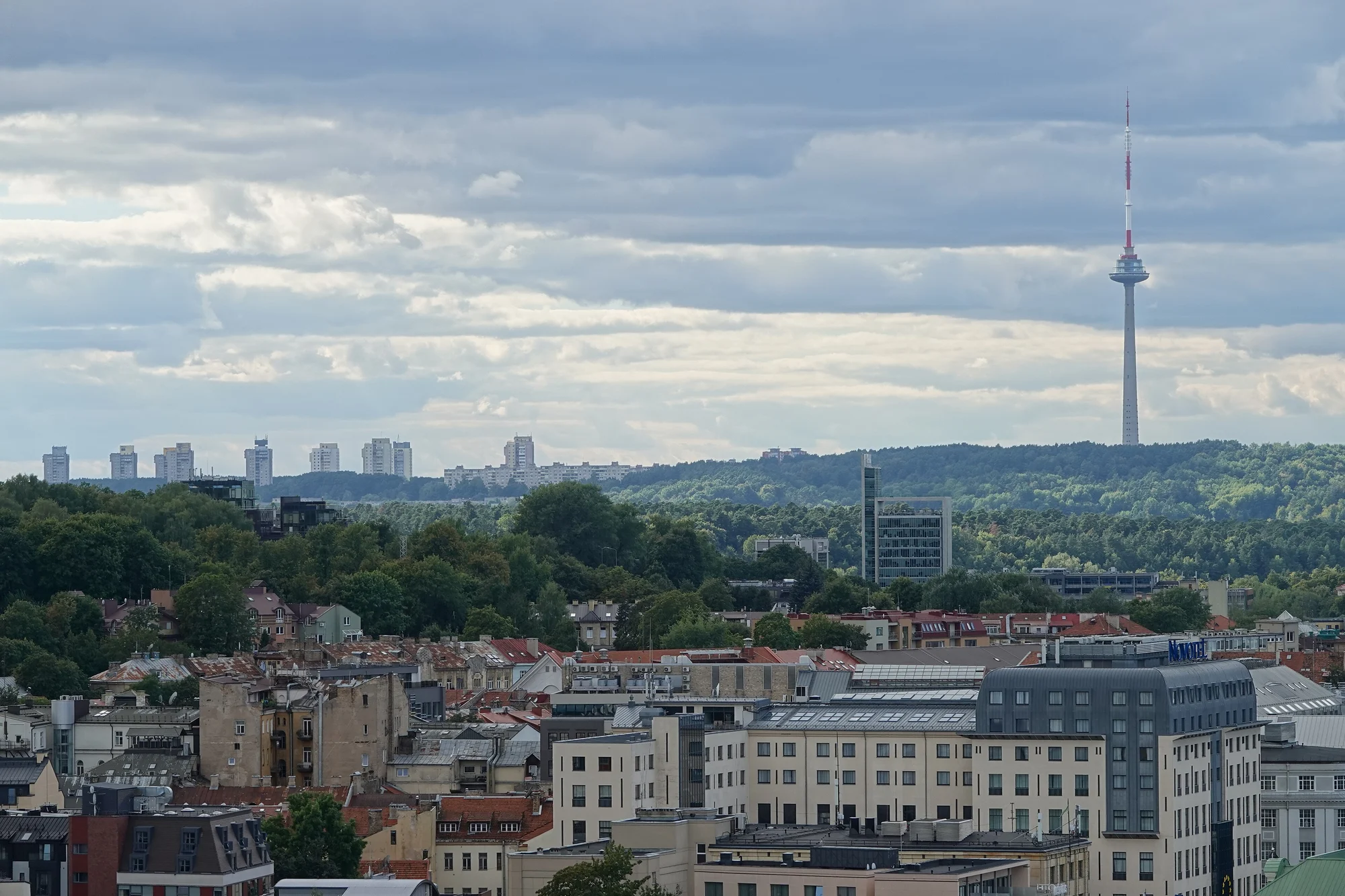
Today the tower is both a memorial and a viewpoint. A ground-level exhibition tells the story of that night, crosses and markers outside name the victims, and every 13 January the tower is wrapped in light for the Day of the Defenders of Freedom. Going up the observation deck for the panorama is not disrespectful — many Lithuanians see the view from a place that was defended as exactly the point — but it is worth pausing at the memorials first.
Practical notes: published adult tickets for the deck are around €18 with reduced entry near €9, the ticket office runs roughly 11:00–21:00, and seasonal safety limits apply in winter (mid-November to mid-April) when ice can fall from the structure. See our dedicated tower guide for full details, transport and the optional edge experiences.
The tower repays a little preparation. Visiting on a clear day is the difference between a moving panorama and a grey blur, and arriving in the late afternoon lets you watch the light change over the city from a place that was defended for exactly this — an ordinary, open view that the country fought to keep. Read the names at the foot of the tower before you go up; the youngest of the fourteen killed that January were barely out of their teens.
If the tower's story grips you, it connects directly to the parliament building in the centre, where citizens built barricades in the same weeks and where fragments of those barricades are preserved as a memorial. The events of January 1991 were not confined to one site; they were a city-wide act of unarmed defiance, and reading the tower alongside the parliament barricades and the broadcaster's memorial gives you the full shape of it.
Lukiškės Prison and the everyday architecture of control
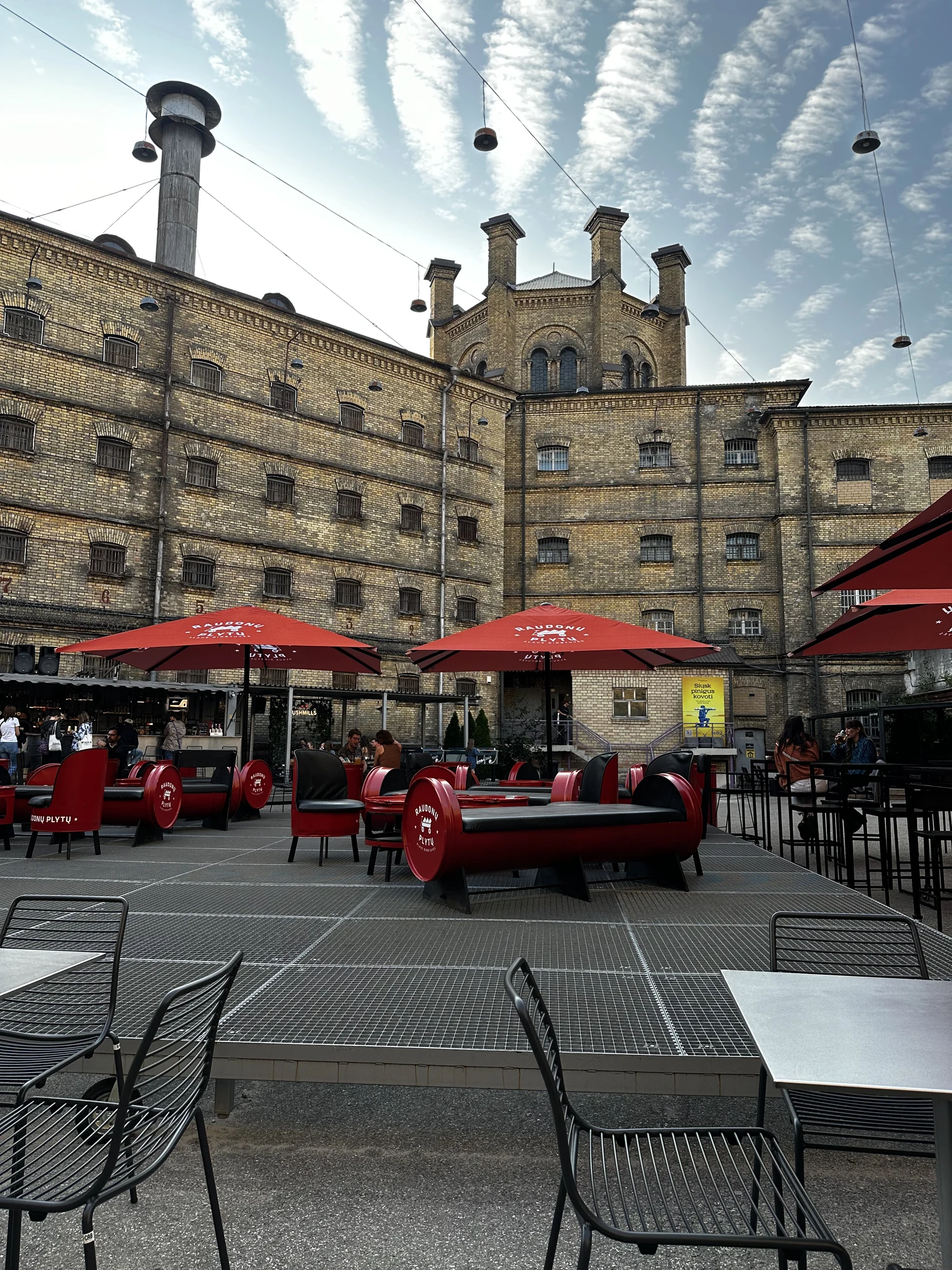
A short walk from the centre, behind Lukiškės Square, stands Lukiškės Prison — a tsarist-era jail that the Soviet regime used for decades and that closed only in 2019. It has since reopened as Lukiškės Prison 2.0, a cultural venue offering guided tours of the cells and corridors alongside concerts, film shoots, art and events. Visiting is a strange experience: you are walking real prison wings, but the framing is now cultural rather than carceral, which some find illuminating and others uneasy. Either way, the architecture of confinement is unforgettable.
Lukiškės Square itself is part of the story. For most of the twentieth century it was Lenin Square, dominated by a giant statue of Lenin that was removed in 1991 — a moment many Vilnius residents remember vividly. The reimagined square is now an open civic space, and the contrast between what stood here and what stands here now is one of the quietest, most eloquent lessons in the city.
If you are interested in how the Soviet system shaped the look of Vilnius beyond prisons and museums, the modernist housing districts on the city's edge — Lazdynai above all — were showcase Soviet-era residential planning, and are increasingly recognised as architecturally significant. They make a thoughtful detour for travellers drawn to twentieth-century urbanism rather than only to memorial sites.
- Lukiškės Prison 2.0: guided tours of a real former Soviet prison, plus events and culture
- Lukiškės Square: once Lenin Square, the Lenin statue removed in 1991
- Lazdynai: award-winning Soviet-era modernist housing district on the city's western edge
Tuskulėnai, memorials and remembering with restraint
North of the centre, the Tuskulėnai Manor estate hides one of the city's most sombre sites: the burial place of hundreds of people executed by the Soviet regime in the late 1940s and early 1950s, whose remains were secretly interred on the grounds. The estate now holds a memorial complex and columbarium with a small exposition, set in calm parkland by the Neris. It is less visited than the central museums, and all the more affecting for it.
Scattered through the city are smaller markers worth pausing at: the memorial to the defenders at the national broadcaster, plaques on the parliament building that recall the 1991 barricades, and the Road of Freedom memorial wall. None of these demand much time, but together they show how Vilnius chooses to remember — soberly, factually, and without turning suffering into spectacle.
If you would rather have the threads pulled together for you, a guided Soviet-history walk or our own history itinerary will sequence the museums, the tower and the memorials into a coherent half- or full-day, with the context that turns a list of buildings into a story. However you visit, go gently: this is recent history, and for many in the city it is personal.
Beyond the headline sites, the Soviet period is legible in fragments all over Vilnius once you know how to look: the monumental scale of the Seimas and ministry buildings, the planned residential districts on the city's edges, the occasional surviving piece of Soviet-era signage or mosaic, and the way Lukiškės Square's emptiness still seems to hold the shape of the statue that once stood there. You do not need a museum to read this layer — you only need to slow down and notice it as you move through the ordinary city.
Routes, timing and how to visit well
How you sequence these sites matters. A focused half-day works best built around the Museum of Occupations and Freedom Fights and the TV Tower, since both turn on January 1991 and reinforce each other. Do the museum first, while you are fresh, then travel out to the tower; the panorama and the memorial below land harder once you understand what the museum has shown you. Add a coffee somewhere ordinary in between — part of understanding the Soviet city is seeing how completely normal life continues over the top of this history.
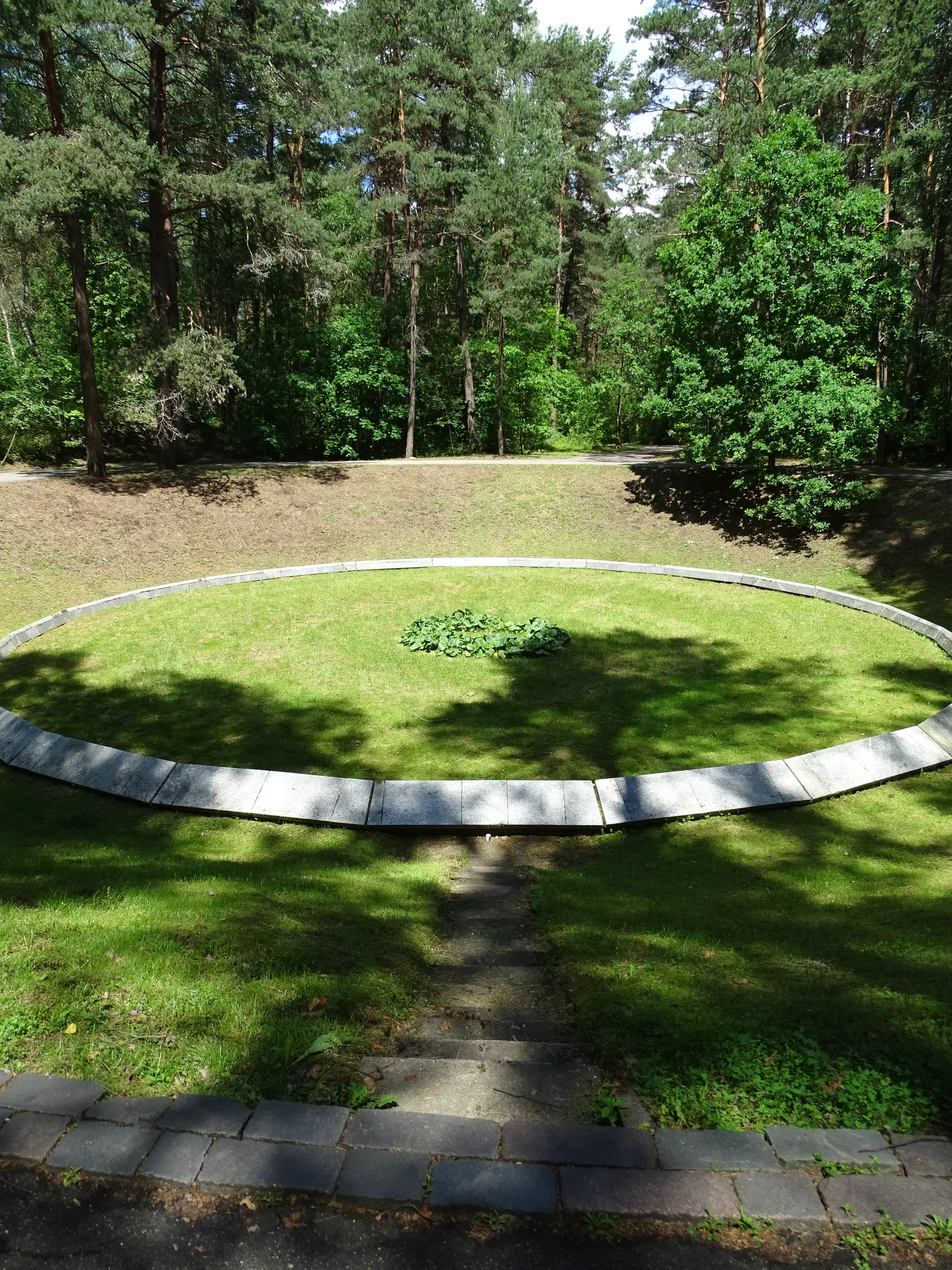
A full day lets you widen out. A workable order is the occupations museum in the morning, Lukiškės Prison and Square at midday, the Tuskulėnai memorial or the parliament barricades in the afternoon, and the TV Tower toward dusk. That is a heavy day emotionally, so leave room to step away — Vilnius's parks and cafés are never far, and you should use them.
On etiquette: this is recent history with living relatives and survivors, so photograph thoughtfully, keep your voice down in the museums and at the memorials, and resist treating Soviet imagery as kitsch. Avoid buying 'Soviet nostalgia' souvenirs, which many Lithuanians find offensive given what the period cost. If you want depth, a licensed local guide or our history itinerary will give you the context and the human stories that no plaque can; if you prefer to go alone, go slowly and read everything.
Finally, keep practical facts current. Museum hours, ticket prices and the status of sites like the prison change with the seasons and from year to year. Everything in this guide is a starting point — confirm the specifics on each site's own channels before you set out, and phrase your expectations loosely so that a closed wing or a changed schedule doesn't derail the day.
- Half-day spine: Occupations Museum → TV Tower (do the museum first)
- Full day: museum → Lukiškės → Tuskulėnai/barricades → TV Tower at dusk
- Etiquette: photograph thoughtfully, avoid Soviet-kitsch souvenirs, keep it sober
- Confirm hours and prices on each site's own channels before you go
Related guides
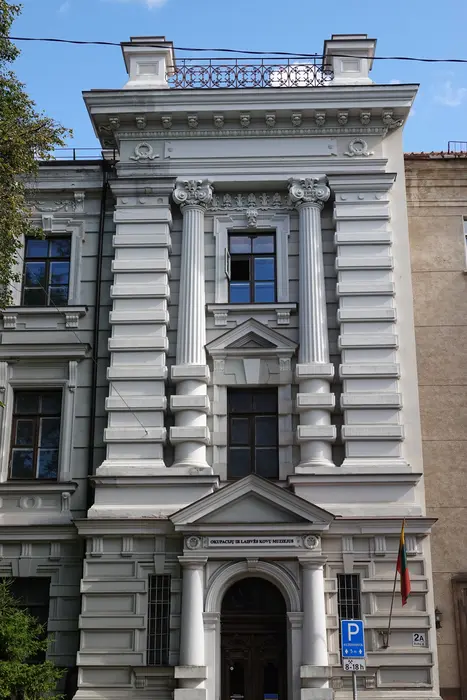
Museum of Occupations and Freedom Fights (KGB Museum)
Set in the former KGB headquarters and prison, this sobering museum tells the story of Lithuania's 20th-century occupations and resistance — including the preserved cells in the basement.
Read guide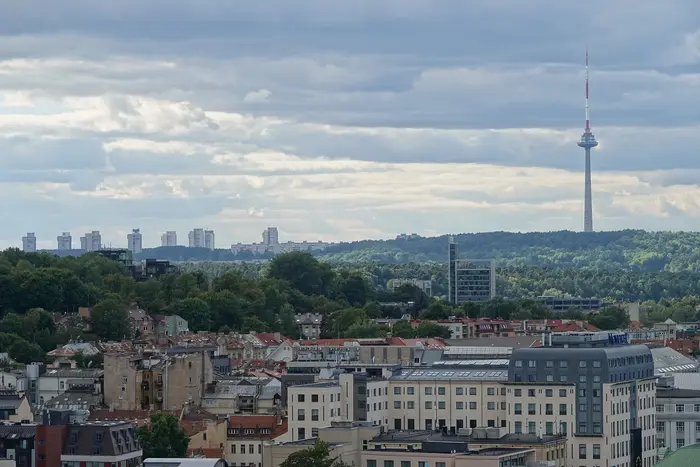
Vilnius TV Tower guide
Everything you need for the Vilnius TV Tower: the observation deck and its panorama, the café, the January 1991 freedom history, the glass-floor and edge experiences, tickets, transport, weather and whether the detour is worth it.
Read guide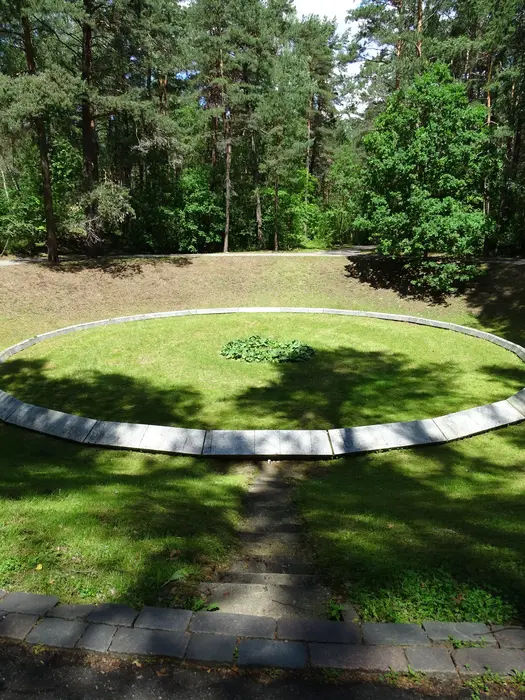
Paneriai Memorial: Visiting from Vilnius
A respectful guide to visiting the Paneriai (Ponary) Holocaust Memorial from Vilnius: how to get there by train, taxi, or tour, the history, time needed, and how to visit with care.
Read guide