
Getting Around Vilnius
How to get around Vilnius: walking the compact Old Town, JUDU buses and trolleybuses, taxis and Bolt, bikes and e-scooters, parking, and when not to bother renting a car.

- ✓Vilnius is a walking city first — the UNESCO Old Town is small enough to cross on foot in about 20 minutes, and most visitors barely use transport at all.
- ✓When you do need it, the JUDU bus-and-trolleybus network covers the airport, both stations, the TV Tower and outlying neighbourhoods; pay by tapping a contactless bank card on board.
- ✓Bolt is the default app for on-demand rides — cheaper and easier than flagging a street taxi, with upfront pricing.
- ✓Bikes, e-scooters and riverside paths make warm-weather Vilnius a joy to roll through; e-scooters are speed-capped and banned from pavements in the centre.
- ✓Don't rent a car just for the city — Old Town streets are narrow, parking is paid and zoned, and you'll spend more time parking than driving. A car only earns its keep for rural day trips.
Walk first — Vilnius is built for it
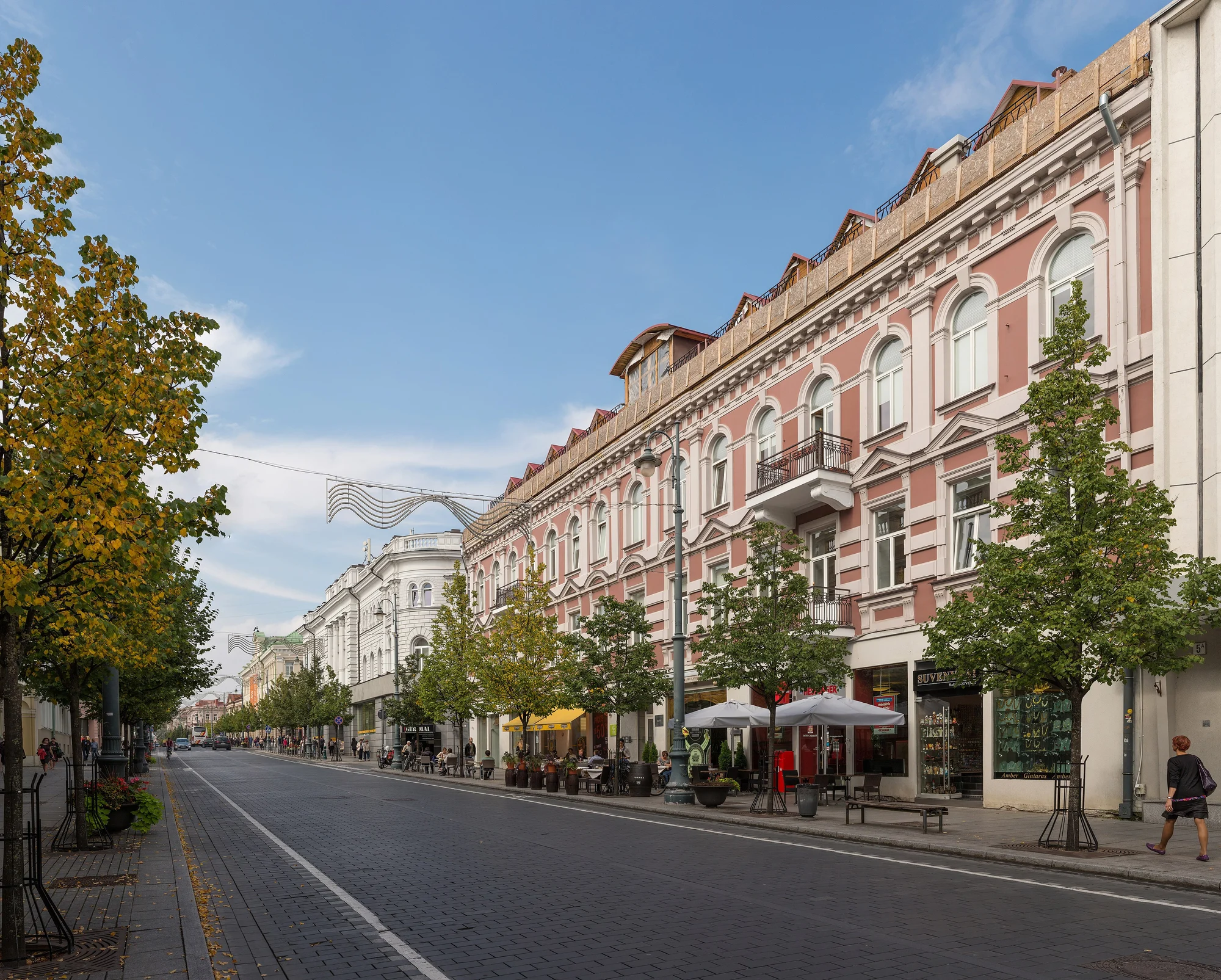
The single most useful thing to know about getting around Vilnius is that you mostly won't need to. The historic core — Senamiestis, the Old Town — is one of the largest in Europe by area but still compact enough to walk end to end, from Cathedral Square down through Pilies and Didžioji streets to the Gate of Dawn, in roughly 20 minutes at an unhurried pace. Add the riverside, Užupis just across the Vilnia, and the modern centre along Gediminas Avenue, and almost everything a first-time visitor wants is within a 30-minute walk of a central hotel.

Walking is also how you actually see the city: the courtyards, the open church doors, the cobbled side streets that pull you off route. Wear shoes you trust — the Old Town is paved in real cobblestones that turn slick in rain and treacherous under winter ice. Beyond that, the only thing to plan for is the gentle topography: Vilnius has a few hills (Castle Hill, the Three Crosses ridge, Užupis), so a couple of routes involve a climb. None of it is strenuous, but it's worth knowing if you're travelling with a stroller, limited mobility, or a heavy day pack.
Distances are short enough that you can string the highlights into a single loop without ever consulting a timetable: Cathedral Square to the university courtyards, down Pilies to the Town Hall, out to Užupis and back along the river, all on foot in a relaxed afternoon. Treat the walkability as the city's defining convenience — it's why so many visitors find Vilnius unexpectedly easy compared with bigger, more sprawling capitals.
- Old Town crosses on foot in ~20 minutes; the wider centre in ~30.
- Real cobblestones — wear grippy shoes, take extra care in rain and winter ice.
- A few short hills (Castle Hill, Užupis, Three Crosses) involve a climb, but nothing strenuous.
- Use Google Maps for walking routes; offline maps work well if you're roaming-light.
Buses and trolleybuses (the JUDU network)
When you do want wheels, Vilnius runs an integrated network of buses and electric trolleybuses under the JUDU brand (operated by Susisiekimo paslaugos). There's no metro and no trams, but for a visitor that rarely matters — the network's real value is reaching the airport, the train and bus stations, the TV Tower, outlying neighbourhoods and the trailheads for nature trips, rather than hopping around a centre you can simply walk.
The easiest way to pay is the most modern one: tap a contactless bank card or phone on the validator as you board, and it issues a standard 60-minute ticket — a single full-price ride costs €1.25, with no card or app to set up first. You can also buy tickets in the JUDU or Trafi apps, which double as live route planners. Tickets are time-based, so within the 60-minute window you can change buses or trolleybuses as often as you need on the one fare. Whatever you do, validate every time you board: an unvalidated ride counts as no ticket if an inspector checks, and fines apply.
Routes are frequent on the central corridors, run from early morning until around midnight, and are backed up by a few night buses on the busiest lines. Google Maps shows JUDU times and routing reliably, so you can plan any hop on the spot rather than memorising line numbers.
- Buses + electric trolleybuses; no metro or trams.
- Tap a contactless bank card or phone on board for a €1.25, 60-minute ticket (verify current fare locally).
- Tickets are time-based — transfer freely within the window on one fare.
- Always validate; an unvalidated ticket counts as no ticket if checked.
- Plan with Google Maps, the JUDU app or Trafi for live times.
The deeper guide to JUDU tickets, apps, fares and airport routes.
Airport to City CenterThe train, the bus and the Bolt option from VNO into town.
Map pins
Map data © OpenStreetMap contributors · Tiles © OpenFreeMap
Taxis, Bolt and ride-hailing
For door-to-door trips — late nights, luggage runs, bad weather — ride-hailing is the easy answer, and in Vilnius that means Bolt. The Estonian-born app dominates locally: you set pickup and destination, see the fare before you confirm, pay in-app, and avoid any awkwardness over routes or change. It's typically cheaper than a hailed street taxi and far more transparent. Uber operates in Lithuania too, but Bolt is the one locals actually use.
Traditional taxis exist and are fine if you book by phone from a reputable company, but flagging an unmarked car on the street is the one habit worth avoiding — that's where the rare overcharging stories come from. If you do take a metered taxi, check the meter is running and ask for a rough estimate up front. For most visitors, though, the simplest rule is: walk where you can, JUDU for the airport and stations, Bolt for everything else.
- Bolt is the default ride-hailing app — upfront fares, in-app payment, widely used by locals.
- Uber works too; street-hailed unmarked taxis are best avoided.
- For airport runs, compare Bolt against the cheap airport train before defaulting to a car.
Bikes, e-scooters and the river paths
From late spring to early autumn, Vilnius is a genuinely good cycling city for visitors. The Neris riverbanks have long, flat, traffic-free paths that link the centre to green Vingis Park and beyond, and the city has been steadily adding protected bike lanes. Shared e-scooters from operators like Bolt and others are scattered across the centre and unlocked through their apps — handy for a quick cross-town hop, though they're speed-limited, often barred from Old Town pavements, and require sober, careful riding (police do enforce). Helmets aren't always provided, so ride defensively on cobbles and tram-free but bus-busy streets.
If you'd rather pedal under your own power, bike-rental shops and tour operators rent city bikes and e-bikes by the hour or day, and a riverside loop or a ride out to a park is one of the nicest ways to spend a warm afternoon. In winter, snow and ice make two wheels impractical for most visitors — that's walking-and-transport season.
- Neris riverside paths are flat, scenic and largely traffic-free.
- Shared e-scooters via app are convenient but speed-capped and restricted from central pavements.
- Rent a city bike or e-bike by the hour/day for park loops and river rides.
- Cobblestones and winter ice make cycling a warm-season activity here.
Driving, parking and when to skip the car
Here's the honest advice most guides bury: for the city itself, don't rent a car. Old Town streets are narrow, partly pedestrianised and one-way; central parking is paid and divided into colour-coded zones with the priciest tariffs nearest the historic core; and you'll spend more energy finding and feeding a parking spot than you'd ever save in travel time. Between walking, JUDU and Bolt, a city visitor simply doesn't need one.
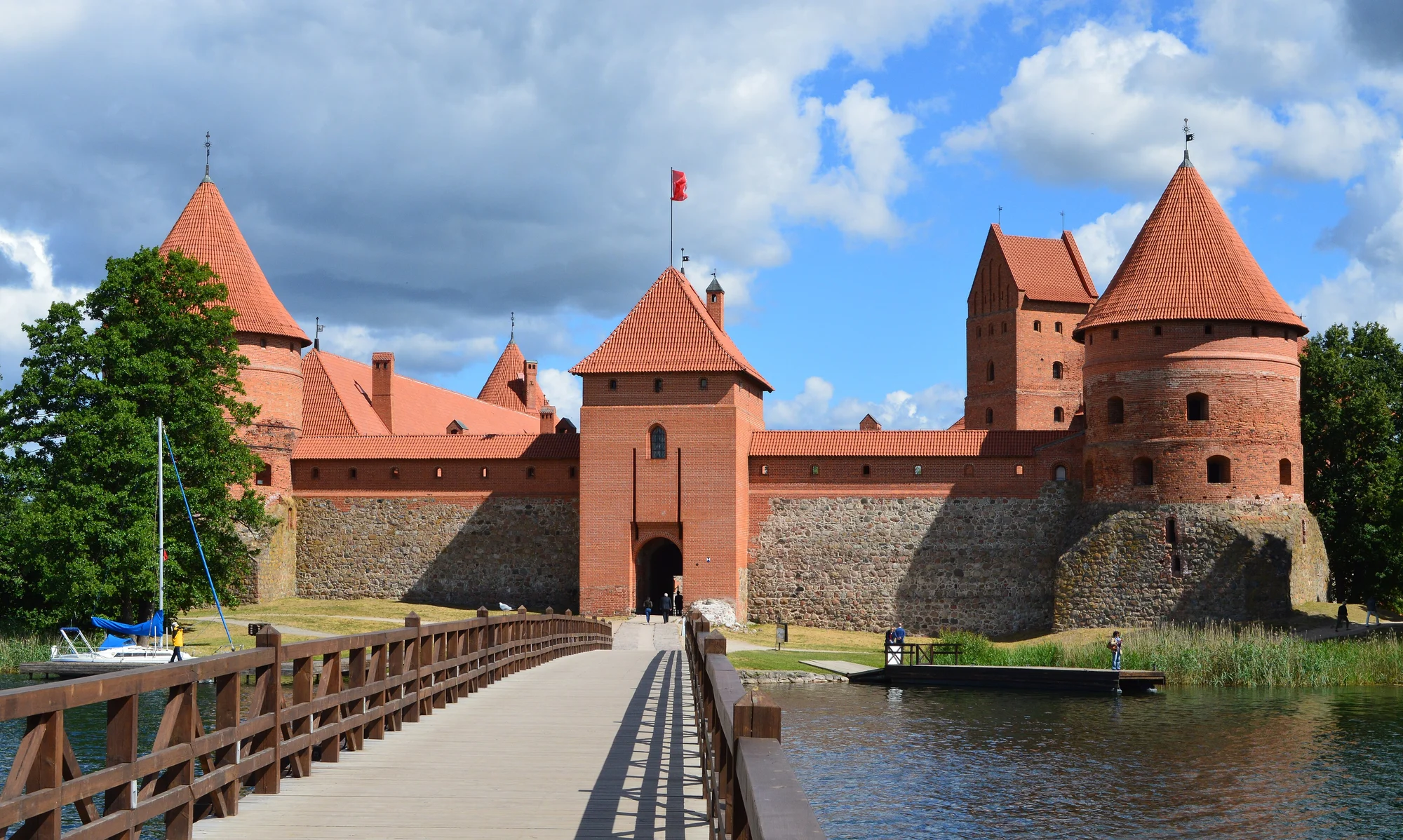
A car earns its place only for the countryside — Aukštaitija lakes, Kernavė, the Centre of Europe, or chaining several rural sights in a day. For the headline day trips, though, public transport usually wins: Trakai and Kaunas are quick and cheap by train or bus, with no parking hassle at the other end. If you do drive, pay attention to winter conditions (studded or winter tyres are legally required in the cold months) and to the zoned parking apps locals use to pay by phone.
- Skip the car for the city — paid zoned parking and narrow Old Town streets aren't worth it.
- A car only helps for rural day trips that public transport can't chain efficiently.
- Trakai and Kaunas are faster and cheaper by train or bus, with no parking to find.
- Winter tyres are legally required in the cold months if you do drive.
Reaching the airport and the stations
Three arrival and departure points dominate most visitors' transport thinking: Vilnius Airport (VNO), the central railway station, and the inter-city bus station. The happy news is they're all easy to reach without a car. The airport has its own dedicated train that links it to the central railway station in about eight minutes for under a euro — the cheapest, fastest airport transfer most travellers will ever take — plus public bus routes and, of course, Bolt for door-to-door convenience with luggage.
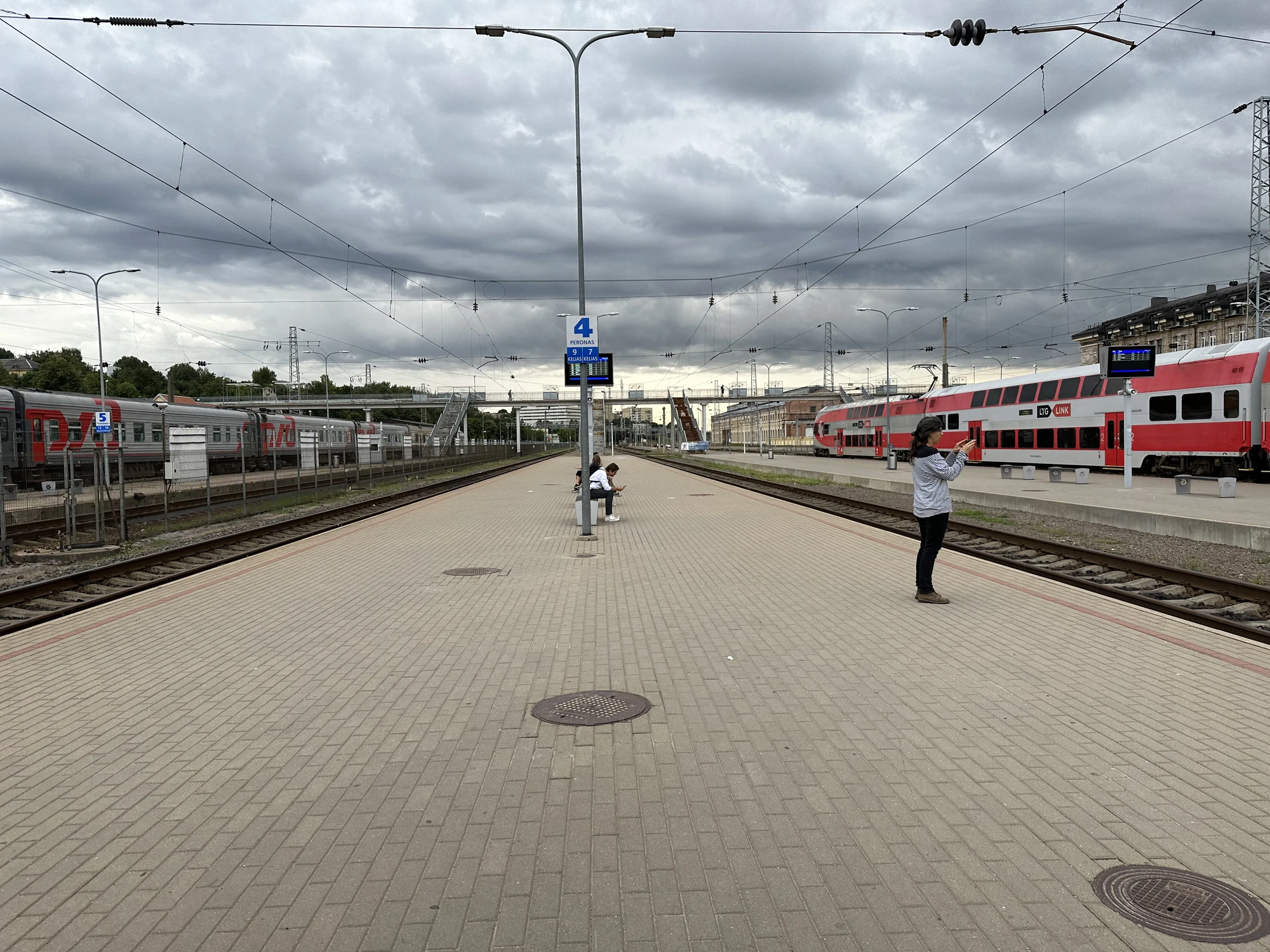
The railway and bus stations sit opposite each other on a shared square at the southern edge of the centre, a 10–15 minute walk below the Old Town. That clustering makes connections painless: you can step off an inter-city coach, cross the road, and catch the airport train, or simply walk uphill to a central hotel. For most trips you'll only need transport at these three nodes — to the airport and back, and out to a day-trip departure — and walk or Bolt for everything in between.
If you're plotting a tight connection or a late arrival, build in a small buffer. The airport train runs through the day rather than every few minutes, JUDU buses thin out late at night, and the one time a quick Bolt is clearly worth the small extra cost is hauling bags between a midnight arrival and your bed.
- Airport train: ~8 minutes to the central railway station for under €1.
- Railway and bus stations share a square 10–15 minutes' walk below the Old Town.
- Walk or Bolt for everything between the airport, stations and your hotel.
- For late or tight connections, a short Bolt is the low-stress choice with luggage.
Common questions and a simple rule of thumb
First-timers tend to ask the same handful of things. Do you need a transport pass? Usually not — Vilnius is too walkable to justify one, and tapping a contactless card for the occasional ride is cheaper than committing to a day pass unless you'll genuinely ride a lot. Is there a metro? No — buses and electric trolleybuses are the whole network, and that's plenty for a city this size. Are taxis safe? Yes, especially through Bolt; the only thing to skip is flagging an unmarked car off the street. Can you get around without speaking Lithuanian? Easily — apps, contactless payment and English signage cover almost everything a visitor needs.
The simple rule that serves nearly every Vilnius trip: walk the centre, take the airport train to and from VNO, use JUDU buses for the few longer hops (the TV Tower, outlying neighbourhoods, trailheads), and call a Bolt for late nights, bad weather and luggage runs. Save a rental car for rural day trips that public transport can't chain efficiently, and skip it entirely for the city. Follow that and you'll spend almost nothing on transport, never wait long, and keep the whole trip refreshingly simple — which is exactly how a compact, well-run capital like Vilnius is meant to be experienced.
One last seasonal note: the calculus shifts a little in deep winter. Cycling and e-scooters drop off the menu when snow and ice arrive, walking slows on frozen cobbles, and you may lean more on warm JUDU trolleybuses and the odd Bolt than you would in summer. None of it is difficult — just factor a little extra transport into a December or January visit, and pack the footwear to walk safely between stops.
- No metro — buses and trolleybuses are the network, and they're enough.
- No transport pass needed for most trips; pay-as-you-go contactless is cheaper.
- English signage, apps and contactless mean no language barrier to getting around.
- Rule of thumb: walk the centre, train to the airport, JUDU for longer hops, Bolt for nights and bags.
- In deep winter, lean a little more on trolleybuses and Bolt and pack grippy shoes.
Related guides
Vilnius Public Transport Guide
How Vilnius public transport works: JUDU buses and trolleybuses, time-based tickets, contactless bank-card payment, the Trafi and JUDU apps, airport routes and the mistakes visitors make.
Read guide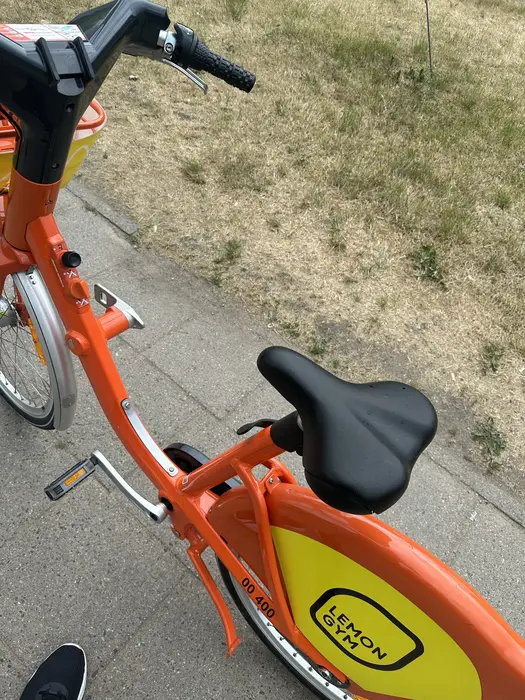
Bike Rental & Cycling in Vilnius
How to rent a bike and where to ride in Vilnius: the city bike-share, rental shops, the riverside and park routes worth pedalling, where the bike lanes go, e-scooter cautions and when riding beats walking.
Read guide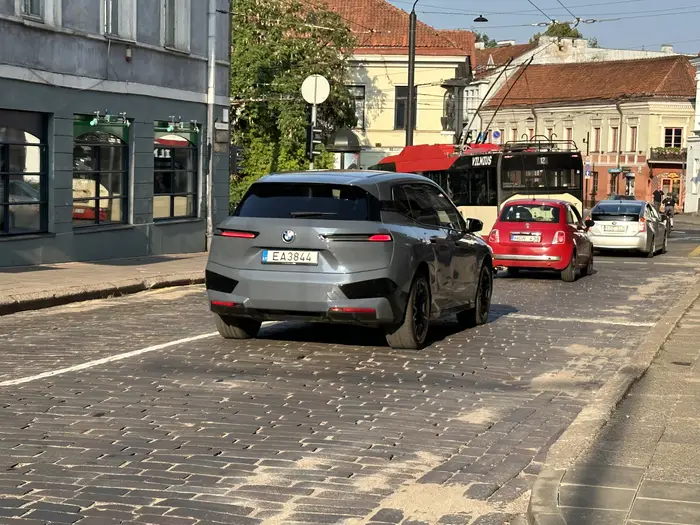
Driving & Parking in Vilnius
When a car actually helps in Vilnius and when it gets in the way: Old Town parking zones and prices, where to leave the car, day-trip driving, rental strategy and winter cautions.
Read guide