
Best Boutique Hotels in Vilnius
Design-led, heritage and art-filled Vilnius hotels in the Old Town, Užupis and Naujamiestis — how to find an intimate, characterful base for two.
- ✓Boutique is Vilnius's strong suit — small, owner-cared-for hotels in restored townhouses with real character.
- ✓Three seams to mine: Old Town heritage conversions, Naujamiestis modernism, and bohemian Užupis across the river.
- ✓Expect exposed brick, vaulted cellars and art on the walls — and the gentle quirks that come with old buildings.
- ✓Personal service is the point: a dozen rooms, a real welcome, and staff who actually know the city.
- ✓Perfect for couples and design-minded travellers who'd rather have charm and quiet than a big-chain checklist.
Why boutique works so well in Vilnius
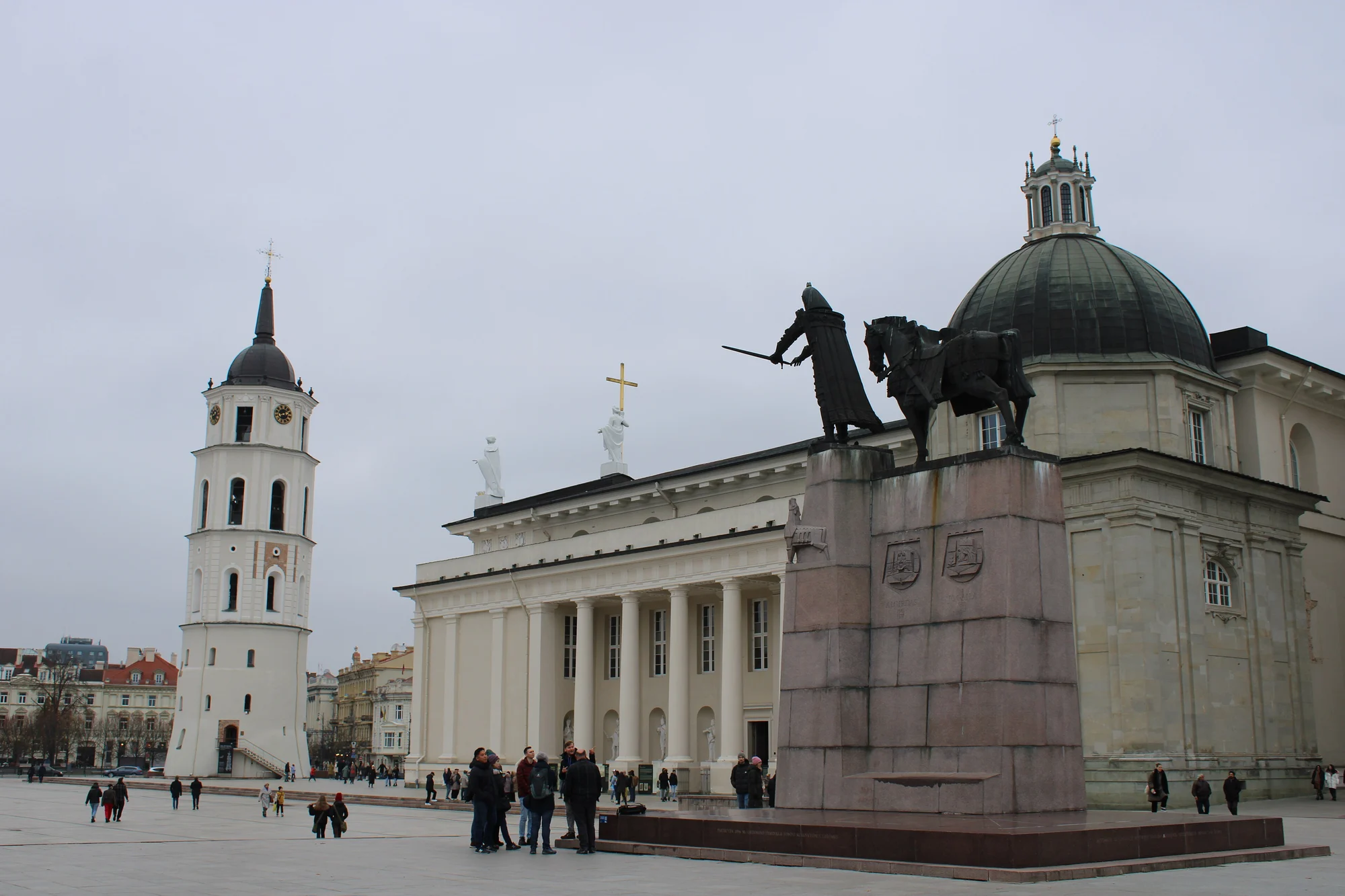
Vilnius is almost purpose-built for boutique hotels. The Old Town is full of centuries-old townhouses with exactly the right bones — vaulted cellars, exposed brick, thick walls and courtyard quiet — and the city's small scale means independent owners can run intimate places without losing their location advantage. The result is a deep bench of characterful, human-sized hotels that out-charm the international chains and still sit minutes from the cathedral.
The appeal is partly aesthetic and partly practical. Boutique stays here trade gym suites and conference floors for things that matter more on a short city break: a genuine sense of place, staff who know which cellar restaurant to book, and rooms that feel designed rather than rolled out. If you're travelling as a couple or you simply care how a room looks and feels, this is the category to start with — and Vilnius rewards the search more than most capitals its size.
It's also surprisingly good value. Because the city is affordable to begin with, a beautifully restored boutique room often costs what a forgettable chain room would elsewhere, which means the design-led choice rarely carries a painful premium. That combination — character, location and value — is why so many returning visitors skip the big names entirely and book straight into the small ones.
Old Town: heritage conversions
The densest concentration of boutiques is in Senamiestis, where the buildings do half the work. These are the storybook stays: restored townhouses with painted ceilings, brick vaults and the occasional Gothic or Baroque flourish. Artagonist sets itself apart as an art hotel in a building of medieval origin, with rooms decorated by Lithuanian artists; the literary Shakespeare Boutique Hotel fills its rooms with books and writerly themes; and the long-running Narutis occupies one of the oldest hotel buildings in the city, on the main Pilies street.
What unites them is atmosphere over uniformity — no two rooms are quite alike, and the trade-off is the usual heritage one: narrow stairs, the odd missing lift, and floors that creak with character. For a romantic or design-led weekend that's a feature, not a bug, but it's worth matching the room to your needs. If you want the period charm with fewer surprises, ask about the renovated rooms and whether there's a lift, and request a quiet, courtyard-facing room away from the bar lanes.
These hotels also tend to come with a small, well-judged restaurant or wine cellar of their own, which is a genuine perk on a cold night — you can eat beautifully without leaving the building. Between the architecture, the art and the personal welcome, a heritage boutique gives you the most concentrated dose of Old Town atmosphere money can buy here.
- Old Town heritage boutiques lead on atmosphere — expect unique, individually styled rooms.
- Confirm a lift and a quiet room if either matters; old buildings vary a lot floor to floor.
- Art- and book-themed hotels (Artagonist, Shakespeare) suit travellers who want a hotel with a point of view.
The historic core where the heritage boutiques sit.
Luxury HotelsWhen you want the heritage feel with full five-star service.
Map pins
Map data © OpenStreetMap contributors · Tiles © OpenFreeMap
Naujamiestis modernism and Užupis bohemia
Step just outside the Old Town and the boutique story changes register. Naujamiestis, the New Town immediately west of the historic core, is where you'll find a more modern, design-forward streak — most famously the Neringa Hotel, a preserved mid-century modernist landmark with period interiors, a buzzy restaurant and a chic bar. This is the area for travellers who'd rather sleep in twentieth-century design than a medieval vault, and it puts you on the doorstep of the city's contemporary cafés, galleries and street art.
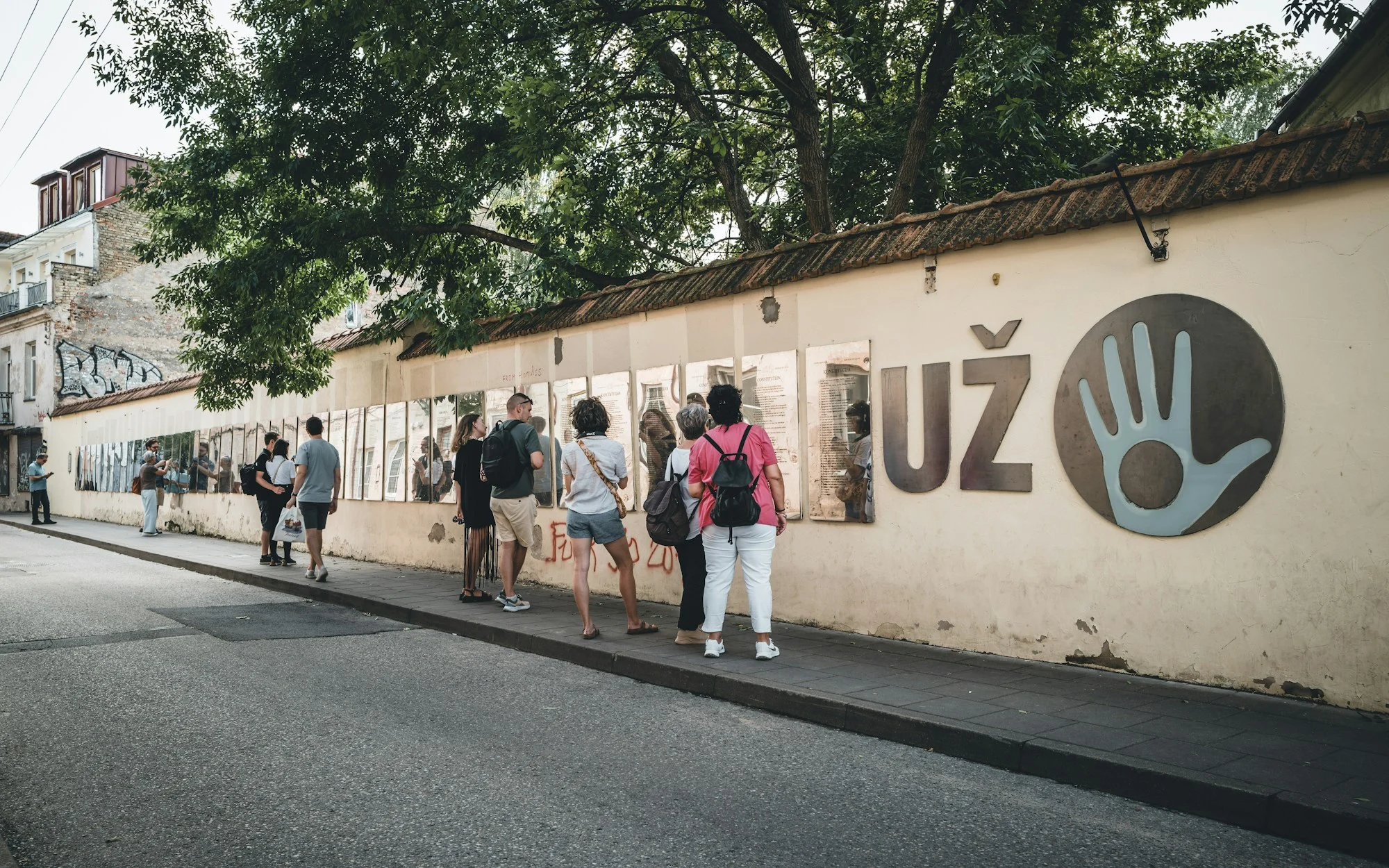
Across the Vilnia, bohemian Užupis offers the most romantic and offbeat boutique mood of all. The self-declared 'republic' is the artists' quarter — galleries, riverside benches, the famous constitution on a wall — and a small number of intimate, arty places let you wake up inside that scruffy charm and walk into the Old Town in a few minutes. It's the pick for couples and creatives who want character with a side of attitude, and it pairs naturally with an art-and-design day in the city.
Both areas trade a little of the Old Town's relentless prettiness for a stronger sense of the city's living creative present — the cafés locals actually use, the galleries showing new work, the murals around the next corner. If your idea of a good hotel is one that plugs you into the contemporary city rather than the museum version of it, this is where to look.
- Naujamiestis = modern and mid-century design, close to contemporary cafés and street art.
- Užupis = bohemian, arty and romantic, a short walk from the Old Town across the river.
- Both areas trade a little Old Town footfall for a stronger sense of the city's creative present.
What 'boutique' gets you — and what it doesn't
It's worth being clear about the trade. What a boutique gives you is character, location and personal service: a room with a point of view, a front desk that knows the city, and the kind of small touches that come from a place run by people who care rather than a brand playbook. On a short, atmospheric trip — which is what most Vilnius visits are — that's exactly the right priority.
What it often doesn't give you is scale and facilities. Don't expect a big gym, a large pool, extensive conference space or the predictability of an international chain; the rooms vary, the lift may be small or absent, and the breakfast room may seat twenty rather than two hundred. If those facilities are dealbreakers, look at the luxury or larger-hotel options instead. But if what you want is somewhere that feels like Vilnius rather than anywhere, the boutiques win comfortably.
- Boutique strengths: character, central location, personal service, design and value.
- Boutique limits: little or no gym/pool, variable rooms, small or absent lifts, modest breakfast rooms.
- If big facilities matter more than character, compare the luxury and larger-hotel options.
How to choose your boutique
With so many strong options, narrow by mood and micro-location rather than star rating. Decide first whether you want medieval vaults (Old Town), mid-century lines (Naujamiestis) or bohemian edge (Užupis); all three keep you within a comfortable walk of the centre. Then weigh the heritage trade-offs honestly — stairs, lifts, noise — and pick the room type accordingly. Because these places are small, the gap between their best and most basic rooms can be large, so it pays to read what each room actually offers.
Finally, lean into what boutique does best: ask. The whole point of a twelve-room hotel is that someone there can book your cellar dinner, point you to the quiet viewpoint, and tell you which lane comes alive after dark. Mention if you're celebrating — owner-run places often add a small touch — and you'll usually get a warmer, more personal trip than any chain of the same price could deliver. Book early for summer and the Christmas weeks, when the best small rooms go first.
Boutique for couples and special occasions
Boutique hotels are the natural choice for a romantic Vilnius weekend, and the reasons line up neatly with what the category does best. A small hotel in a restored townhouse gives you the things that actually make a couple's trip feel special: a room with character rather than a corporate template, quiet if you ask for it, and a location that lets you walk home from a candle-lit dinner in minutes. You're trading facilities you wouldn't use for atmosphere you'll remember.
For an occasion — an anniversary, a proposal, a first trip away together — the personal scale pays off again. Tell the owner or front desk what you're celebrating and they'll often arrange something thoughtful, from a bottle waiting in the room to a tip about the best table in town that night. That kind of attention is hard to buy in a 300-room hotel, and it's exactly where the small places shine. Pair the room with a viewpoint at golden hour and a long dinner and you have the bones of a perfect Vilnius weekend.
If wellness is part of the plan, note that most boutiques are too small to run a full spa — for saunas, pools and treatments you'll usually want a larger or more luxury property, or one of the spa-focused hotels. Many couples happily split the difference: a characterful boutique for the room and the romance, and a spa visit booked separately. In a city this compact, mixing and matching like that costs you almost nothing in travel time.
- Boutiques deliver the couple's-trip essentials: character, quiet and a walk-home location.
- Flag a special occasion — small hotels are quick to add a personal touch.
- For a full spa, pair a boutique room with a separate spa visit or a larger property.
- The compact city makes mixing room, dinner and a spa across venues effortless.
What makes a Vilnius building special
Part of the fun of booking a boutique here is learning to read the buildings, because the building is so often the point. The most characterful stays trade on features you simply can't fake in a new-build: brick or stone cellars that go back centuries, painted or beamed ceilings, thick walls that keep the room cool in summer and quiet at night, and courtyards that turn a city-centre room into a pocket of calm. When a listing leans into its history — a date, a restored fresco, a vaulted breakfast room — that's usually a sign you're getting the real thing rather than a generic interior dropped into an old shell.
It pays to look past the lobby photos at the actual room you'll get. In small heritage hotels the rooms vary enormously: one might be a soaring corner room with original details and a spire view, the next a cosy attic up a tight stair. Neither is wrong, but you want to choose knowingly. Read the room descriptions, check the photos of the specific category you're booking, and don't be shy about emailing to ask which rooms are quietest, which have the best light, and whether the one you like is reachable by lift.
The same eye helps in the design-led and modernist places. A genuine period property like the mid-century Neringa is worth seeking out precisely because its character is intact; a hotel that merely calls itself 'design' may just mean a recent refurbishment. Look for specifics — original features, named architects or eras, real materials — and you'll end up somewhere with a story rather than a style. In a city as old and layered as Vilnius, that story is half of what you're paying for.
- Real heritage shows in cellars, ceilings, thick walls and courtyards — features you can't fake.
- Rooms in small hotels vary a lot; book the specific category knowingly, not from the lobby shots.
- Email to ask which rooms are quietest, brightest and lift-served before you commit.
- Prefer specifics — original features, named eras, real materials — over a vague 'design' label.
An elegant 19th-century hotel opposite Bernardine Garden — a Michelin Key pick with bri…
Shakespeare HotelA literary boutique hotel in a 17th-century Old Town palace: author-themed rooms, deep …
Artagonist Art HotelA living gallery on Pilies gatvė: a 15th-century building where every room carries hand…
St. Palace HotelAn elegant boutique four-star beside the Gate of Dawn — individually laid-out rooms in …
ROOMA ApartmentsScandinavian-styled boutique apartments on Aušros Vartų gatvė with kitchenettes, in-roo…
Grotthuss HotelAn intimate four-star hidden on quiet Ligoninės gatvė — Lithuanian art, marble bathroom…
Art & Design ItineraryBuild a day around the city's architecture, galleries and street art.
Old Town HotelsHow to read the streets as well as the buildings in the core.
Best Hotels in VilniusWhere boutiques sit alongside the city's other stay styles.
Related guides

The Most Romantic Hotels in Vilnius
Boutique, historic, design and spa hotels for a romantic Vilnius break — where to stay for a proposal, an anniversary, or a slow couples' weekend in the Old Town.
Read guide
Best Old Town Hotels in Vilnius
Stay inside Vilnius Old Town with clear trade-offs on charm, noise, cobbles, taxis, restaurants and winter walking — and how to pick the right street.
Read guide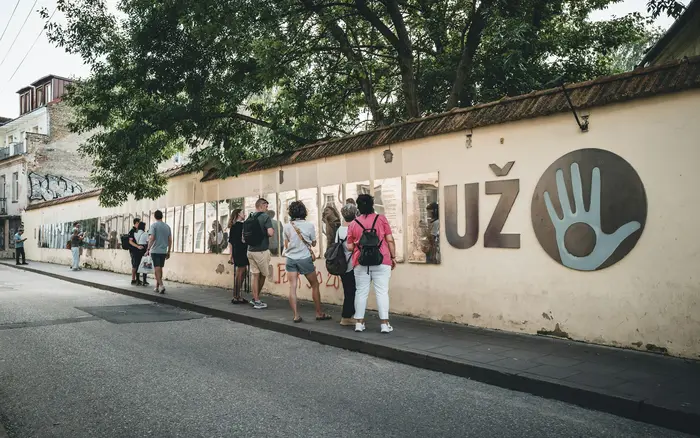
Užupis Neighborhood Guide
A guide to Užupis, Vilnius's self-declared bohemian 'republic' across the Vilnia: its tongue-in-cheek constitution, galleries and sculptures, café-and-wine-bar afternoons, and how to spend time in the city's artistic heart.
Read guide