
Vilnius Cathedral Bell Tower
How to climb the Cathedral Bell Tower on Cathedral Square: tickets, the stair count, the old clock and bell mechanisms, the central Old Town view, and whether to choose it over Gediminas' Tower.
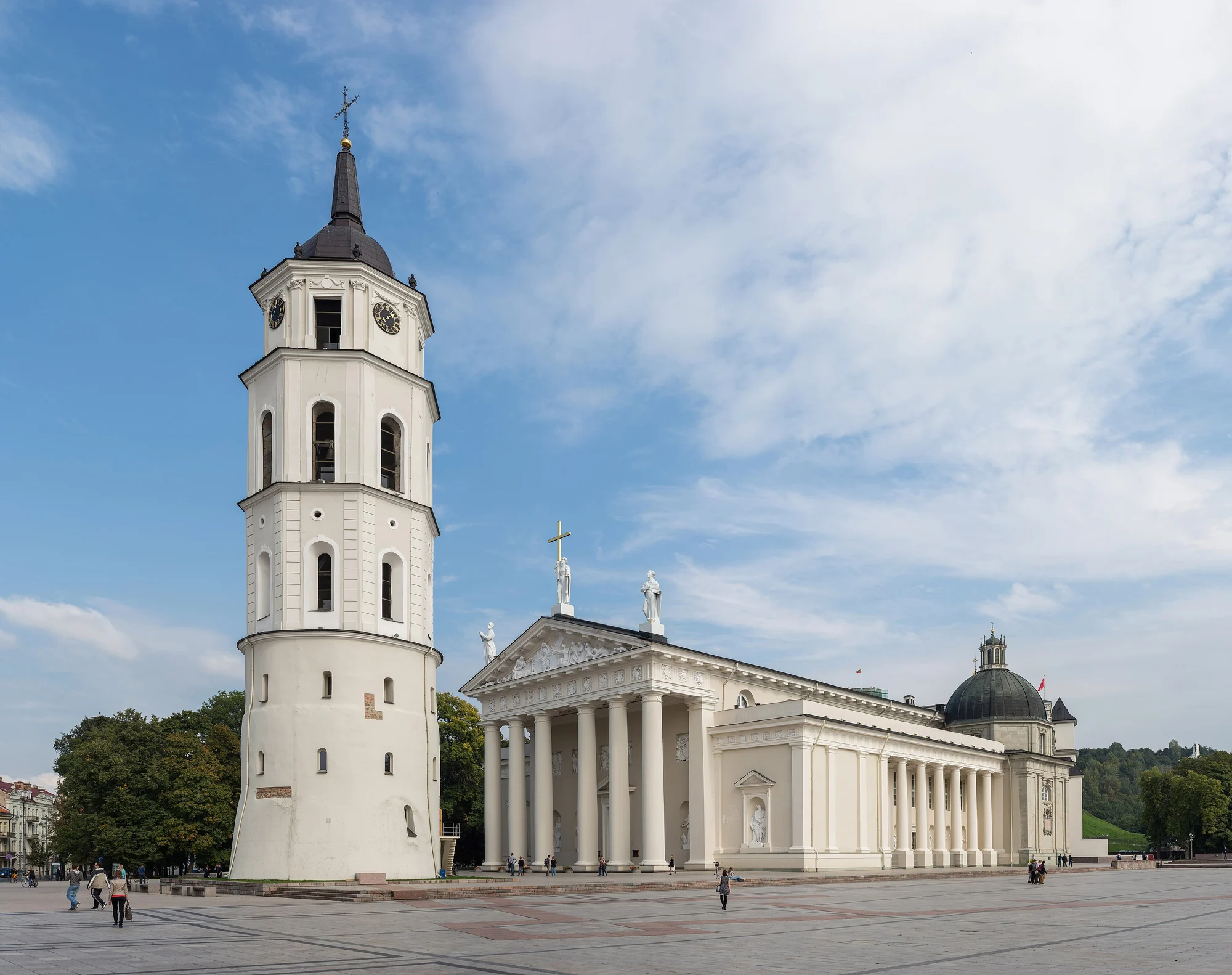
- ✓The white belfry on Cathedral Square is one of the oldest and most central towers in Vilnius — about 57 metres tall, with the city's oldest clock near the top.
- ✓It's a museum climb run by the Church Heritage Museum: an interactive exhibition on watchmen, bell-casters and clockmakers winds up the floors to a panoramic gallery.
- ✓The view is right over the heart of the city — Cathedral Square, Gediminas Avenue and Castle Hill — rather than the wider valley angle you get from the hills.
- ✓Tickets are inexpensive and the same office sells the Cathedral Crypts tour, so the two pair naturally on one visit.
- ✓Choose the Bell Tower for a central, sheltered, indoor climb; choose Gediminas' Tower for the classic hilltop panorama of the whole Old Town.
What the Bell Tower is
The free-standing white tower in the middle of Cathedral Square is the Cathedral Bell Tower (Katedros varpinė) — the most recognisable vertical landmark in central Vilnius after Gediminas' Tower. Its lower stages are genuinely ancient: the base began as a defensive tower in the old castle wall, and over the centuries it was raised, rounded and capped until it became the slender belfry you see today. Because it stands apart from the cathedral itself, it reads as its own monument, and at night it's one of the most photographed silhouettes on the square.
Inside, it's run as a museum climb by the Church Heritage Museum (Bažnytinio paveldo muziejus), the same body that manages the Cathedral Crypts. Rather than a bare staircase, the floors carry an interactive exhibition that tells the tower's story through the people who kept it — night watchmen who scanned the city for fires, the bell-casters, and the clockmakers who tended the mechanism. Near the top sits the city's oldest working clock, and the climb finishes at a gallery with windows looking out over the rooftops.
Tickets, hours and the climb
The Bell Tower is a ticketed museum climb with modest admission — typically a low single-figure euro fee, with reduced rates for students, seniors and children — bought at the office in the tower base on Cathedral Square. Opening hours run roughly through the day from mid-morning, Monday to Saturday, and the tower is usually closed on Sundays and public holidays; seasonal hours and the exact price shift over time, so check the museum's site before you set out. The same ticket office handles the Cathedral Crypts tour, which is why many visitors do the climb and the crypts back to back.
The ascent is up a winding internal staircase, so it isn't step-free, but it is fully sheltered — a real advantage on a wet or windy Vilnius day when the open hilltop viewpoints are miserable. It's a manageable climb broken up by the exhibition floors rather than one long slog, and you pause at the clock and bell stages on the way up. Allow around 30–45 minutes for the whole thing if you stop to read the displays and take photos at the top.
- Tickets sold at the tower base on Cathedral Square; reduced rates for students, seniors and children.
- Open Monday–Saturday daytime; usually closed Sundays and public holidays — verify seasonal hours.
- Internal winding staircase, not step-free, but indoors and sheltered from the weather.
- Same office sells the Cathedral Crypts tour — pair the two on one visit.
- Budget 30–45 minutes including the exhibition and time at the viewing gallery.
The guided crypts tour sold from the same Bell Tower ticket office.
Vilnius Pass guideWhether a city pass is worth it for the towers and museums you plan to climb.
Map pins
Map data © OpenStreetMap contributors · Tiles © OpenFreeMap
The view, and whether it beats Gediminas' Tower
What the Bell Tower gives you that the hills can't is a central, top-down view of the city's ceremonial heart. From the gallery you look straight down onto Cathedral Square, along Gediminas Avenue towards the New Town, and across to Castle Hill with Gediminas' Tower on its crown. It's a tighter, more architectural panorama — you're photographing the texture of the centre rather than the full sweep of the Old Town silhouette.
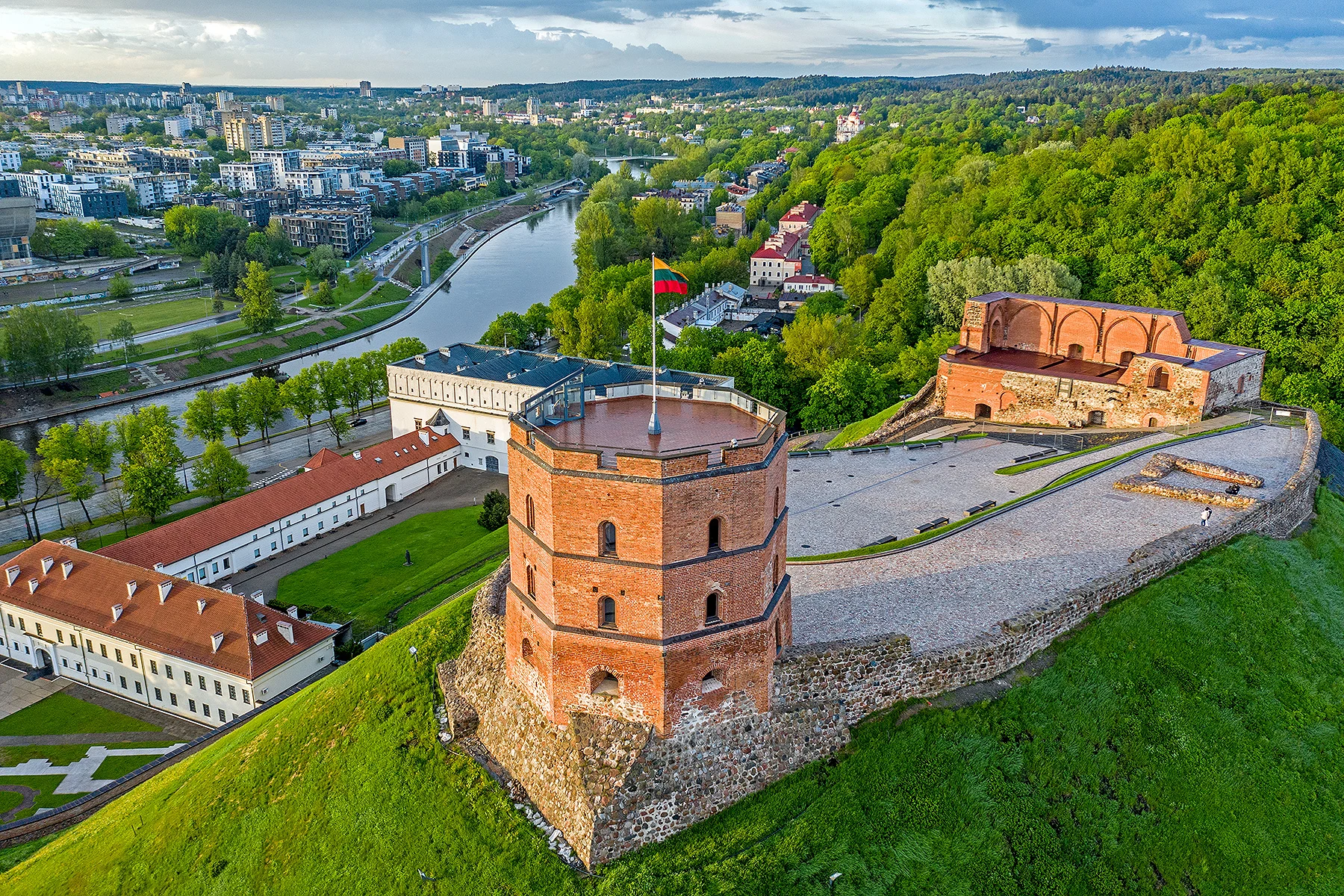
So which tower? Climb Gediminas' Tower (or the hill behind it) for the classic wide panorama of red roofs and Baroque spires, especially at sunset. Climb the Cathedral Bell Tower when you want a central vantage point, a sheltered indoor climb in bad weather, or a museum-style experience with the old clock and bell story built in. They're a five-minute walk apart, so on a longer stay there's no reason not to do both — and the Bell Tower, St John's Bell Tower and the hilltops together make up the bulk of the city's best lookouts.
If you're a serious view-hunter, treat this page as one stop on our wider viewpoints round-up, which ranks every tower, hill and rooftop in Vilnius by how much effort each one takes for the payoff.
A short history of the tower
The Bell Tower has the most layered story of any structure on the square. Its lowest stage began as a round defensive tower in the medieval lower-castle wall — long before any bell hung in it — and you can still read that military origin in the heavy stone base. As the cathedral grew in importance, the tower was raised in stages, gaining its octagonal upper storeys and, eventually, the slim classical cap that matches the rebuilt cathedral facade you see today. That patchwork of eras is exactly what the exhibition inside is built to explain.
Fire shaped the tower as much as architects did. Vilnius burned repeatedly over the centuries, and the displays include molten, fire-warped bricks and blackened stone salvaged from those disasters — a vivid reminder of why the night watchmen who once scanned the city from up here mattered so much. Near the summit hangs the city's oldest clock, its mechanism still part of the tour, and the bells that give the tower its name remain a working part of cathedral life on feast days.
Because it has stood at the centre of the city's ceremonial life for so long, the tower turns up in countless paintings, photographs and postcards of Vilnius. Climbing it is partly about the view and partly about standing inside a monument that has watched over every major moment on the square below.
Good to know before you climb
A few practical notes make the visit smoother. The climb is up a winding internal staircase with no lift, so it isn't suitable for visitors who can't manage stairs or for strollers; if mobility is a concern, the exhibition's lower floors and the square itself still reward a visit even without the full ascent. The steps are uneven in places, as you'd expect in a building this old, so sensible shoes help.
Photography is welcome at the top, and the gallery has openings on multiple sides so you can shoot the square, the avenue and Castle Hill in turn. The best light falls in the late afternoon, when the low sun rakes across the rooftops; on a clear winter day the snow-covered roofs are especially photogenic. Because the climb is indoors, it's a reliable option when rain or wind has closed in the open hilltop viewpoints.
Finally, treat the Bell Tower as one stop in a tight cluster. The cathedral, the crypts entrance, the Palace of the Grand Dukes and Castle Hill are all within a few minutes' walk, so it slots easily into a single morning or afternoon on the square. If you're climbing more than one tower, our viewpoints guide helps you decide which are worth the legs.
- Winding internal stairs, no lift — not suitable for strollers or limited mobility.
- Photography welcome at the top; openings on several sides.
- Best light is late afternoon; snowy winter days are especially striking.
- Indoors and sheltered — a dependable wet-weather alternative to the hills.
- Combine with the cathedral, crypts, Palace of the Grand Dukes and Castle Hill in one loop.
Related guides
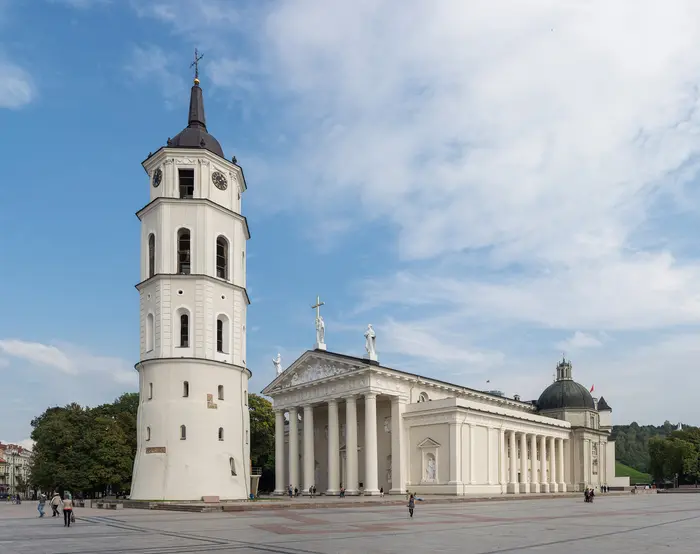
Vilnius Cathedral
Vilnius Cathedral is the white neoclassical heart of the Old Town, free to enter, home to the ornate baroque Chapel of St. Casimir, royal tombs and the 'Stebuklas' miracle tile on the square outside.
Read guide
Cathedral Square (Katedros aikštė) — the heart of Vilnius
Cathedral Square is the historic heart of Vilnius — a vast plaza framed by the Cathedral and its free-standing Bell Tower, and the city's stage for festivals, parades and the Christmas market.
Read guide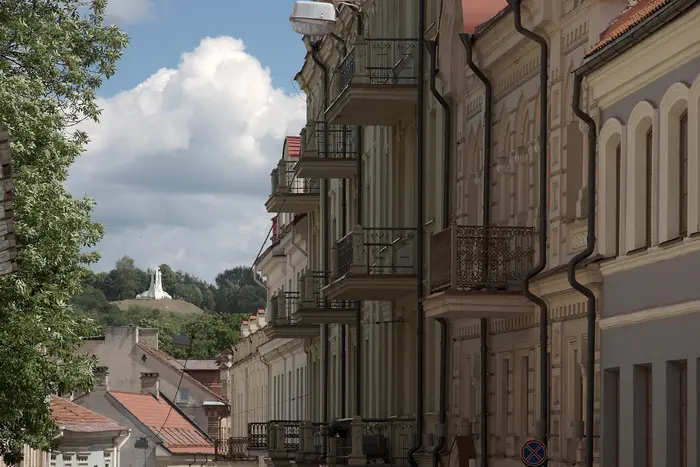
The Best Viewpoints in Vilnius
Compare the best viewpoints in Vilnius — Gediminas Tower, Three Crosses Hill, church bell towers, the TV Tower and rooftop bars — ranked by effort, payoff and the time of day to go.
Read guide