
Rasos Cemetery: A Respectful Visitor's Guide
A respectful guide to Rasos Cemetery, Vilnius's oldest and most atmospheric burial ground — Polish-Lithuanian memory, the Piłsudski heart mausoleum, paths, etiquette and whether to take a guide.
- ✓Vilnius's oldest surviving cemetery, founded in 1801 on a wooded hillside in Rasos
- ✓Resting place of national figures including Jonas Basanavičius and the heart of Mikalojus Konstantinas Čiurlionis's contemporaries
- ✓The separate 'Mother and Son' mausoleum holding the heart of Marshal Józef Piłsudski
- ✓A layered Polish-Lithuanian-Belarusian-Jewish memory landscape best explored slowly and quietly
- ✓Steep, root-crossed paths and a hilltop chapel that reward unhurried, weekday visits
Why Rasos is worth the walk
Rasos Cemetery is the oldest surviving burial ground in Vilnius and one of the most moving places in the city to understand how many histories overlap here. Founded in 1801 on a steep, wooded slope southeast of the Old Town, it grew into the resting place of writers, artists, scholars and political figures who shaped Lithuania, Poland and the wider region. Walking its terraced paths is less a sightseeing stop than a slow act of remembrance — and a reminder that Vilnius has always been a city of many peoples.
Unlike a tidy municipal cemetery, Rasos feels half-wild. Moss softens the older headstones, tree roots heave the cobbled lanes, and ivy climbs the chapels and family vaults. In autumn the hill turns gold and copper; in winter, snow lends it a hush that is hard to find anywhere else in the city. It is precisely this unmanicured, time-worn quality that makes Rasos so atmospheric — but it also means you should come with sturdy shoes and a quiet, unhurried frame of mind.
Because it sits a short walk uphill from Paupys and the southern edge of the Old Town, Rasos pairs naturally with a slower, more local day in Vilnius. Many visitors who seek out the city's quieter corners find it among the most memorable — which is why it features so often on lists of Vilnius's lesser-known places.
Rasos also tells the story of Vilnius itself. The cemetery expanded through the 19th and early 20th centuries, a period when the city passed between empires and nations, and its monuments record those shifts in stone. Grand family vaults of the local gentry stand near humble parish graves; military plots and memorials sit alongside the tombs of poets and professors. Reading the cemetery from bottom to top is, in a sense, reading two centuries of the city's fortunes — its prosperity, its losses and its enduring sense of itself as a meeting point of cultures.
The people who rest here
Rasos is, above all, a place of national memory. The patriarch of the Lithuanian national revival, Dr Jonas Basanavičius — often called the 'father of the nation' for his role in the 1918 declaration of independence — is buried here, and his grave remains a focal point on Lithuania's commemorative days. Among the many cultural figures interred at Rasos are writers, painters, architects and academics whose names recur across Vilnius street signs and museum walls.
The cemetery is equally significant for Poles. In a separate walled complex below the main hill — known in Polish as the 'Mother and Son' mausoleum — lies the heart of Marshal Józef Piłsudski, the interwar Polish leader who was born near Vilnius, buried beside his mother. The simple black slab, inscribed with lines of Polish verse and guarded by stone lions, draws Polish visitors year-round and is one of the most-visited single graves in the cemetery.
Rasos also reflects Vilnius's Belarusian and broader Christian heritage, and sits within a wider landscape of remembrance that includes the city's Jewish history elsewhere in town. Reading the headstones — in Lithuanian, Polish, Russian and Latin — is itself a lesson in how many communities have called this city home.
- Jonas Basanavičius — signatory of the 1918 Act of Independence and central figure of the Lithuanian national revival
- The 'Mother and Son' mausoleum — the heart of Marshal Józef Piłsudski, buried beside his mother
- Numerous writers, painters, architects and scholars of Lithuanian, Polish and Belarusian culture
- A hilltop chapel and 19th-century family vaults that anchor the cemetery's terraced layout
Finding your way around
Rasos is built across a hillside, so there is no single flat loop. The main gate opens onto an avenue that climbs gently before branching into terraced sections; the Piłsudski 'Mother and Son' complex sits lower and slightly apart, near its own entrance, so it is easy to miss if you only follow the upper paths. Give yourself time to wander rather than rushing to tick off named graves — the cemetery rewards drifting.
Paths are uneven, cobbled in places and earthen in others, with exposed roots and steps that can be slippery after rain or under snow. Comfortable, grippy footwear matters far more here than at most Vilnius sights. There is little shade-free seating, so a water bottle in summer and warm layers in winter will keep a visit comfortable.
The cemetery is gated and keeps daytime opening hours that shift with the seasons, generally opening in the morning and closing before dusk; gates are locked outside those hours. Because the exact times change through the year, confirm them on the day with the city's official tourism resources rather than relying on a fixed figure, and plan to arrive with enough daylight to explore safely.
If you have only an hour, a sensible loop is to enter by the main gate, climb the central avenue to the hilltop chapel for the lie of the land, pause at the Basanavičius grave, then descend and find the separate 'Mother and Son' complex with the Piłsudski heart before leaving. That covers the headline graves without rushing, and lets you absorb the atmosphere of the terraces in between.
There is no café, shop or ticket office inside, and signage is limited, so download or screenshot a map before you arrive and bring whatever you need with you. Public transport and a short walk bring you to the gates from the centre; the surrounding streets are quiet residential ones, so it is an easy, low-key arrival rather than a tourist scrum.
When to visit and what to expect
Rasos is at its most beautiful in the shoulder seasons. Autumn, when the mature trees turn and leaves drift across the old stones, is the classic time to come; spring brings fresh green and birdsong to the slopes. Summer is lush but can be humid under the canopy, and winter, though stark and quietly magical under snow, makes the steep paths genuinely slippery — go carefully and only in daylight.
Weekday mornings are the quietest, when you may have whole terraces to yourself. The cemetery is far busier around national commemorative days and around All Souls' and All Saints' at the start of November, when families and crowds come to light candles and the whole hillside flickers with flame after dark — a deeply moving sight, but one to witness respectfully and at a distance rather than as a photo opportunity.
Whenever you come, plan for an unhurried hour or more. Rasos is not a place to rush, and it gives most to visitors who are willing to walk slowly, read the stones, and let the layered history of the city settle around them.
Etiquette and quiet respect
Rasos is an active place of mourning and remembrance, not a museum. Families still tend graves, light candles and visit relatives, and on national commemorative days the cemetery fills with people paying their respects. Keep your voice low, give mourners space, and avoid walking or leaning on graves and kerbstones.
Photography is generally tolerated for the historic monuments and the atmospheric paths, but be discreet: never photograph mourners, funerals or fresh graves, and step aside rather than block anyone's way for a shot. Treat candles, flowers and small mementos as sacred — leave them as you found them.
Take any litter out with you, stay on the paths to protect old plantings and crumbling stonework, and resist the urge to clamber for a better angle. The unspoilt, slightly overgrown feel of Rasos depends on every visitor treading lightly.
- Speak quietly and yield to families and mourners at all times
- Photograph monuments and paths, never people, funerals or fresh graves
- Stay on the paths; do not climb or sit on graves, vaults or kerbstones
- Leave candles, flowers and tokens undisturbed and carry out your rubbish
Should you take a guide?
You can absolutely visit Rasos independently and find it rewarding — simply wandering the terraces, reading inscriptions and pausing at the Basanavičius grave and the Piłsudski mausoleum tells much of the story on its own. For a first visit with limited time, a printed map or a saved location pin for the two or three landmark graves is usually enough.
That said, Rasos densely encodes a tangled Polish-Lithuanian-Belarusian history that is easy to walk straight past without context. A knowledgeable local guide or a well-researched walking tour can turn a pretty hillside into a vivid lesson on the city's nationalities, its 19th- and 20th-century upheavals and the people behind the names. If you are interested in the human stories rather than just the monuments, a guided visit is worth considering.
Either way, treat Rasos as the contemplative high point of a slower day in Vilnius rather than a quick photo stop. Combine it with the nearby Old Town fringe, Paupys or Antakalnis, and you will come away with a deeper sense of the city than the headline sights alone can offer.
Related guides
Vilnius Hidden Gems Worth Seeking Out
The Vilnius hidden gems worth your time — quiet courtyards, lesser-known churches, art streets, atmospheric cemeteries, modernist corners and green spaces for slower, more local travellers.
Read guide
Jewish Vilnius heritage guide
A careful, full guide to Jewish Vilnius — the 'Jerusalem of the North': the Vilna Gaon and the city's scholarship, the surviving synagogue, the ghetto streets and memorials, the Vilna Gaon Museum branches, Paneriai and how to plan a respectful visit.
Read guide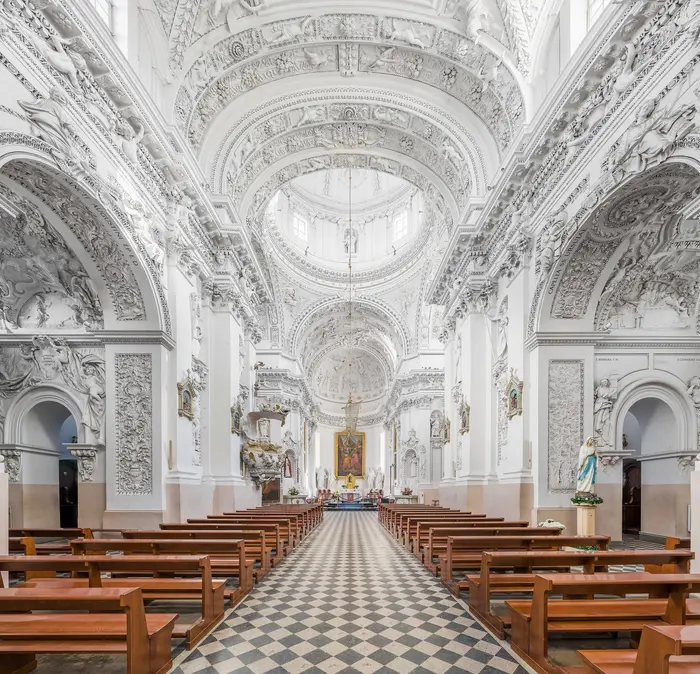
Antakalnis: Vilnius's Leafy Riverside District
A guide to Antakalnis, a vast, prestigious Vilnius district along the Neris: the Baroque masterpiece of St Peter and St Paul, the restored Sapieha Palace, Antakalnis Cemetery, university and clinic streets, parks and a tranquil residential pace.
Read guide