
Jewish Vilnius heritage guide
A careful, full guide to Jewish Vilnius — the 'Jerusalem of the North': the Vilna Gaon and the city's scholarship, the surviving synagogue, the ghetto streets and memorials, the Vilna Gaon Museum branches, Paneriai and how to plan a respectful visit.

- ✓Why Vilna was called the 'Jerusalem of the North' — a world centre of Jewish learning
- ✓The Choral Synagogue, the city's only synagogue still in regular use
- ✓The Vilna Gaon Museum of Jewish History and its branches, from the Tolerance Centre to Paneriai
- ✓A respectful plan that joins the quarter, the museums and the Paneriai Memorial
Why Vilnius matters in Jewish history
Few cities loom as large in Jewish history as Vilnius. From the seventeenth century onward, Vilna — its Yiddish and traditional name — grew into one of the foremost centres of Jewish religious scholarship, secular Yiddish culture and political life in all of Europe. Its yeshivas drew students from across the continent, its presses printed books read from Warsaw to New York, and the breadth of its institutions earned it the title by which it is still known: the Jerusalem of the North, or in Yiddish, Yerushalayim de Lita.
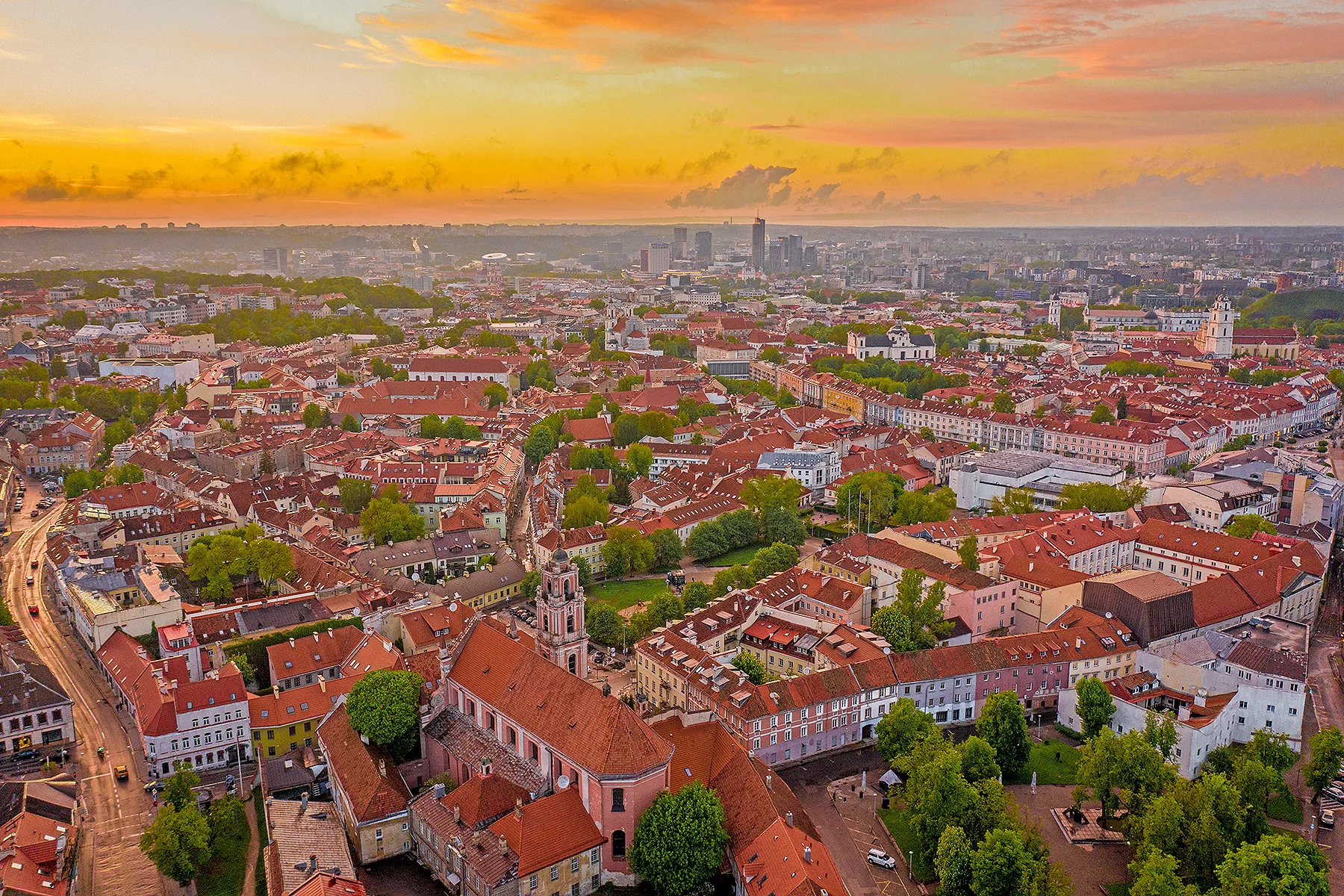
On the eve of the Second World War, Jews numbered close to a third of the city's residents, and Jewish life shaped the look, sound and rhythm of central Vilnius. The Holocaust destroyed almost all of it: the overwhelming majority of Lithuania's Jews were murdered, most of Vilnius's at Paneriai, and the physical fabric of Jewish Vilna — synagogues, study houses, the Great Synagogue — was lost during the occupation and the Soviet decades that followed.
The scale is hard to take in. Lithuania lost a higher proportion of its Jewish population than almost any country in occupied Europe — the great majority of a community that had lived here for six centuries was murdered within a couple of years. Vilnius did not simply lose buildings; it lost the people who were its scholars, doctors, printers, poets, shopkeepers and children. Any honest account of the city's history has this absence at its centre, and a respectful visit begins by acknowledging it rather than treating Jewish heritage as a pleasant cultural footnote.
This guide is the hub for visiting that heritage with the seriousness it demands. It connects the surviving sites, the ghetto memory, the museums and the place of memorial outside the city, and points to a respectful itinerary you can follow. Throughout, we have tried to honour both the richness of the world that was here and the gravity of its loss. This is recent history, with living descendants and a small continuing community in the city; please visit accordingly.
Jewish Vilna mattered far beyond Lithuania. Its yeshivas trained rabbis who carried the 'Litvak' style of rigorous, text-centred learning to Israel, the United States and across the diaspora; its presses printed editions of the Talmud and Hebrew and Yiddish books read worldwide; and in the modern era it became a hub of Yiddish scholarship, theatre, journalism and political movements. When people say Vilnius was one of the most important Jewish cities in history, they are not exaggerating — its influence is still felt in synagogues and study halls on several continents.
Because the subject is heavy, it is worth saying plainly what a visit can and cannot be. You will not find an intact, living Jewish quarter to stroll through; you will find street names, foundations, plaques, a handful of buildings, several museum branches and a memorial forest. The reward is understanding, not spectacle — and approached that way, Jewish Vilnius is one of the most meaningful things you can engage with anywhere in the Baltics.
The Vilna Gaon and the city of scholars
No single figure embodies Jewish Vilna like the Vilna Gaon, Rabbi Elijah ben Solomon Zalman (1720–1797). A prodigy of staggering range — Talmud, Kabbalah, mathematics, grammar — he reshaped traditional Jewish study, championed rigorous textual scholarship and stood at the head of the Mitnagdic tradition that defined Lithuanian Jewish religious life in contrast to Hasidism. His influence radiated out across the Jewish world and lent Vilna an authority that lasted for generations.
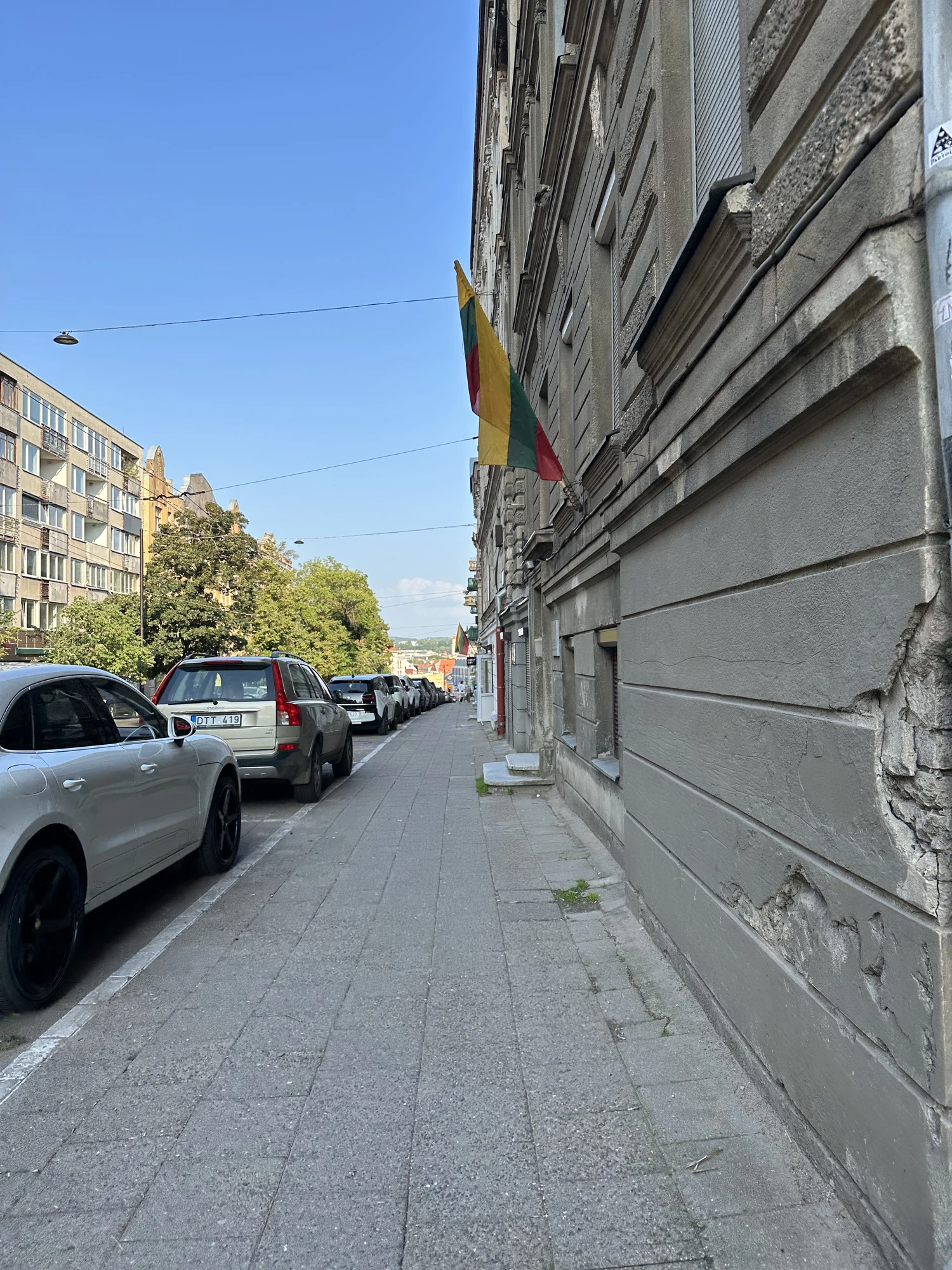
His memory is woven through the modern city. The state Jewish museum carries his name; a plaque and bust on Gaono Street mark his association with the heart of the old quarter; and the very identity of "Litvak" Jewry — the Lithuanian Jewish tradition of learning, language and sensibility — traces much of its character to the world he shaped. To understand why Vilnius was called the Jerusalem of the North, start with the Gaon.
Around him orbited a whole ecosystem of learning: the great Strashun library, dozens of prayer and study houses clustered in the Shulhoyf courtyard, and later the secular flowering of Yiddish culture, the YIVO institute and a vibrant political and literary life. Jewish Vilna was not only pious; it was modern, argumentative and alive.
That modern life is as important to remember as the religious one. By the early twentieth century Vilnius was a Yiddish cultural capital: home to newspapers and publishing houses, a celebrated Yiddish theatre, Zionist and Bundist political movements, sports clubs, schools and the YIVO Institute for Jewish Research, founded here in 1925 to study Yiddish language and Jewish life scientifically. Writers, photographers, doctors and activists made Vilna a place of ferment and argument, not a museum-piece of piety. Holding both the Gaon's yeshiva world and this modern, secular, multilingual city in mind is the key to understanding what was lost.
You can still trace the Gaon's memory on the ground. The plaque and bust on Gaono Street, the museum that bears his name, and the broader Litvak identity all keep him present; reading about him before you walk the quarter turns the lanes from pretty streets into the heart of a scholarly world.
The state museum of Jewish history named for the great scholar.
Jewish Quarter guideThe Gaon's street and the lanes of the old quarter.
Map pins
Map data © OpenStreetMap contributors · Tiles © OpenFreeMap
Surviving sites: the Choral Synagogue and the quarter
Of the scores of synagogues and prayer houses that once filled Vilnius, the Choral Synagogue on Pylimo Street is the only one still standing and in regular use. Built in the early twentieth century in a Moorish-influenced style and used by the city's reform-minded congregation, it survived the war in part because it served as a store during the occupation. Today it is the home of Vilnius's small Jewish community; visitors are generally welcome to see it at appropriate times, with respect for prayer and dress conventions — check current visiting arrangements before you go.
From the synagogue, the former Jewish quarter is a short walk into the Old Town. Its lanes — Žydų, Stiklių, Gaono, Mėsinių — were the dense core of Jewish Vilna, and although the buildings were rebuilt and renamed, the street pattern and the names survive. Plaques mark the Vilna Gaon, the doctor Tsemakh Shabad and the gates of the wartime ghettos. The site of the Great Synagogue and the Shulhoyf, demolished after the war, is the subject of ongoing archaeology beneath a later school building.
Our dedicated quarter guide walks these streets in detail. Read the two together: the heritage guide for the why, the quarter guide for the where.
Other traces are scattered across the city. The Tsemakh Shabad monument honours a beloved Vilna doctor and public figure said to have inspired the children's character Doctor Aboilit; the Chiune Sugihara memorial recalls the Japanese consul who issued thousands of life-saving transit visas to Jews fleeing through Lithuania in 1940; and the city's old Jewish cemeteries, much disturbed over the centuries, are marked and partly preserved. None of these are grand, but each adds a thread to the story, and a good guide or a careful self-guided route will link them for you.
It is worth managing expectations about the synagogue too. The Choral Synagogue is a working house of prayer, not a tourist attraction, and its opening to visitors is limited and tied to the rhythm of the community. Visit it for what it is — a survivor, and a sign that Jewish life in Vilnius did not entirely end — rather than as a sight to be consumed, and always check current arrangements first.
Two figures from those scattered memorials deserve a pause. Tsemakh Shabad was a doctor, public-health pioneer and community leader so loved in interwar Vilna that his statue shows him tending a child; he is a reminder that Jewish Vilnius was a city of ordinary devotion and care, not only scholarship and catastrophe. Chiune Sugihara, meanwhile, was the Japanese vice-consul who in 1940 wrote out transit visas day and night to help Jewish refugees escape the closing trap — an act of conscience now commemorated in the city. Seeking out these markers turns an abstract history into individual human faces, which is exactly what respectful remembrance requires.
- Choral Synagogue (Pylimo St): the city's only working synagogue
- Old quarter lanes: Žydų, Stiklių, Gaono, Mėsinių, with memorial plaques
- Great Synagogue site: demolished post-war, now under archaeological study
The ghetto, the Holocaust and Paneriai
Understanding Jewish Vilnius means facing its end. After the German occupation in 1941, the city's Jews were forced into two ghettos within the old quarter. The Small Ghetto was liquidated within weeks; the Large Ghetto, holding tens of thousands, existed for two years amid forced labour, starvation and selections before its destruction in 1943. Most of those imprisoned were taken to Paneriai (Ponar), a wooded site just outside the city, and shot in pits originally dug for Soviet fuel tanks. Tens of thousands of people — Jews above all, alongside Poles, Roma and others — were murdered there.
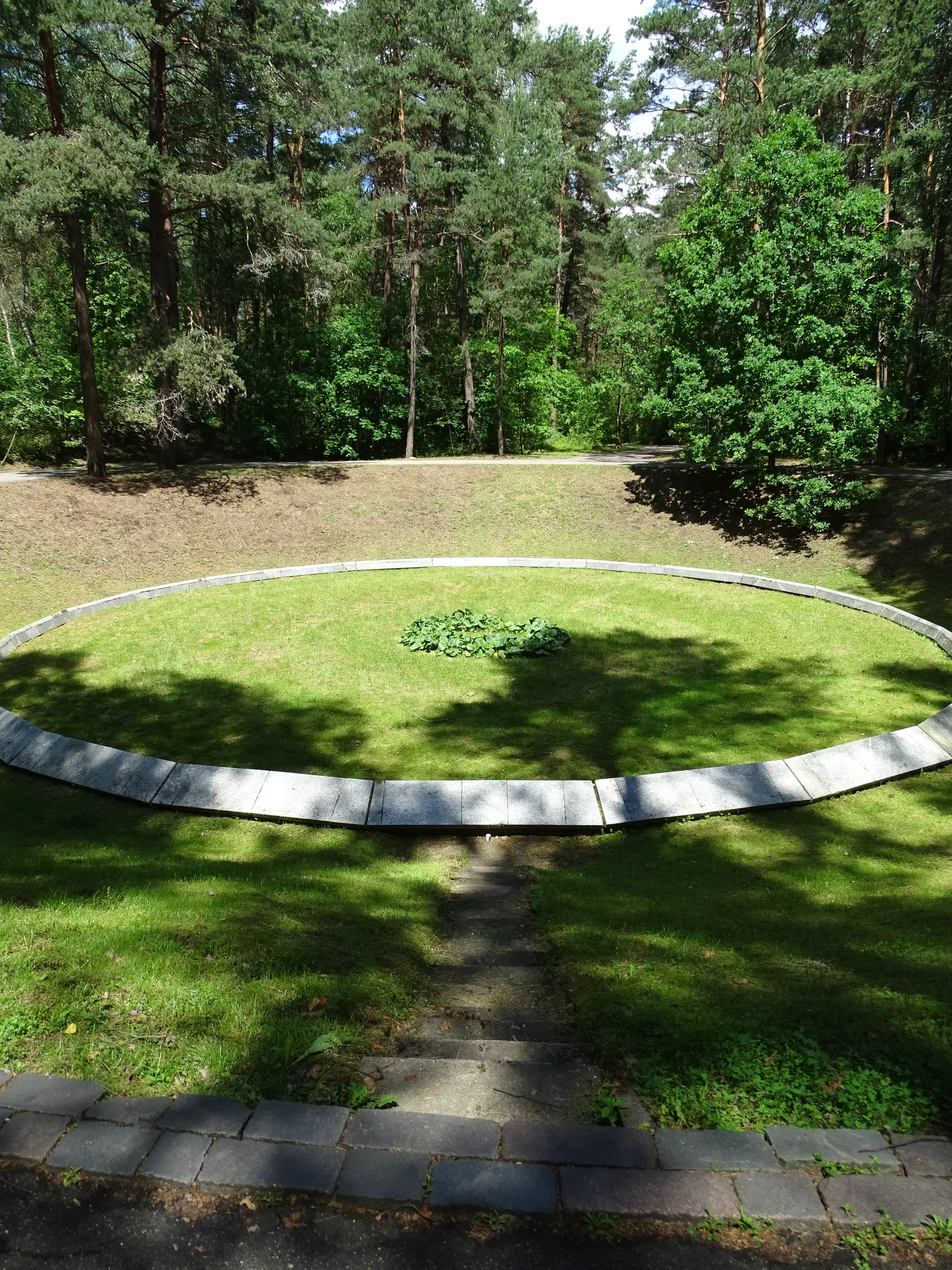
Today the Paneriai Memorial marks the killing site with monuments and a small museum, reachable by suburban train or a short drive. It is a quiet, harrowing place, and it is the necessary counterpart to the streets in town: the quarter is where the community lived; Paneriai is where it was destroyed. Visit both, in that order if you can, and allow time to sit with it.
In the city, ghetto memorials mark the gates and boundaries — the plaque at Rūdninkų 18 shows the Large Ghetto's plan — and a memorial to the Vilna Gaon and the destroyed community stands in the old quarter. The Vilna Gaon Museum's Holocaust exhibition provides documentary depth that the street markers cannot.
Within that horror, remember the resistance. The Large Ghetto sustained a clandestine cultural and political life and gave rise to the United Partisan Organisation (FPO), whose members smuggled weapons, documented events and, when the ghetto was being liquidated in 1943, escaped through the sewers to fight as partisans in the forests. Figures such as the poet-partisan Abba Kovner became symbols of Jewish armed resistance. The story of Jewish Vilna is therefore not only of victims but of people who studied, created, organised and fought to the very end.
When you visit Paneriai, go knowing what it is: not a battlefield but a place of mass murder, where people were brought from the city and shot. The memorial is deliberately quiet. Allow time, keep your phone away, and treat it as the solemn site it is. Reading the quarter and then standing at Paneriai is the most complete and most demanding way to understand what happened here — and why it must be remembered.
- Two WWII ghettos in the old quarter, both destroyed by 1943
- Paneriai (Ponar): the forest site where most of Vilna's Jews were murdered
- Visit the quarter and Paneriai together for the full, sober story
The museums and planning a respectful visit
The institution that holds it all together is the Vilna Gaon Museum of Jewish History, the state museum spread across several branches in the city and beyond. Its sites have included the Tolerance Centre (art, sacred objects and history in a former Jewish theatre), the Holocaust Exhibition in the so-called Green House, the Samuel Bak Museum of the Vilnius-born painter's work, the newer Museum of Culture and Identity of Lithuanian Jews — informally the Litvak museum — and the Paneriai Memorial itself. The museum has been renewing and renaming branches in recent years, so check which sites are open and where before you plan a day around them.
For most visitors a sensible plan is: read this guide and the quarter guide for orientation; walk the old streets and ghetto memorials; visit the Tolerance Centre or the Litvak/Holocaust exhibition for documentary depth; and make the trip to Paneriai. That is a full, emotionally demanding day — consider splitting it across two, and consider a specialist guide, who will bring out the human stories the stones cannot.
Above all, approach Jewish Vilnius as memory, not spectacle. This was one of the great Jewish cities of the world, and most of its people were murdered within living memory. Visiting thoughtfully — reading the plaques, supporting the museums and the living community, taking the time it deserves — is itself a small act of remembrance.
A few practical notes help. Most central sites are walkable within the Old Town and around Pylimo Street; Paneriai is a short suburban-train ride or drive away and needs a half-day in itself. Museum tickets are inexpensive, but hours vary by branch and several sites observe Lithuanian remembrance days; check each one's current schedule. If you read about a synagogue, study house or museum elsewhere, confirm it still exists and is open before building a visit around it — much has been lost, moved or renamed, and an honest guide would rather tell you that in advance.
If you have Lithuanian-Jewish roots yourself, Vilnius is also a place for genealogical and personal connection: archives, the museum's research staff and specialist guides can help you trace family histories. For everyone else, the most respectful thing is simply to come, to learn, and to carry the story onward. That, more than any photograph, is what these streets ask of a visitor.
- Vilna Gaon Museum branches: Tolerance Centre, Holocaust Exhibition (Green House), Samuel Bak Museum, Litvak museum, Paneriai (verify which are open)
- Suggested flow: quarter walk → a museum branch → Paneriai, ideally over two days
- Consider a specialist Jewish-heritage guide for the human stories
Sample routes and how much time to allow
How much time does Jewish Vilnius need? A focused half-day covers the essentials in the city: the old quarter lanes, the Gaon and Shabad markers, the Great Synagogue site, the ghetto-gate plaques and, if hours allow, one museum branch. A full day adds a second branch and lets you slow down. Paneriai is best given its own half-day on top, since it sits outside the city and asks for unhurried, quiet time. If you can spread the heritage across two days rather than cramming it into one, the experience is both gentler and more complete.
A sensible one-day plan looks like this: start at the Choral Synagogue on Pylimo Street; walk into the old quarter and trace Žydų, Stiklių and Gaono streets with their plaques; take in the Great Synagogue site and the ghetto-gate marker at Rūdninkų; then visit the Tolerance Centre or the Litvak museum in the afternoon for documentary depth. Keep the next morning for Paneriai. That sequence moves from the living to the lost to the documented to the place of memory — a coherent and respectful arc.
If you are short on time, prioritise context over coverage. One good guided walk through the quarter, or one museum branch read carefully, will teach you more than a rushed dash between sites. And if you have a personal or genealogical connection to Lithuanian Jewry, build in time for the museum's research resources and a specialist guide, who can connect the general history to your own family's story.
Whatever shape your visit takes, end it by carrying the story onward. The most fitting response to Jewish Vilnius is not a full camera roll but a real understanding of what this city was, what it gave the world, and what was taken from it — and a quiet commitment to remember.
- Half-day: quarter walk, key markers and one museum branch
- Full day: add a second branch; keep Paneriai for its own half-day
- Short on time: one good guided walk or one branch, read carefully
- Ideally spread the heritage across two days rather than one
Related guides
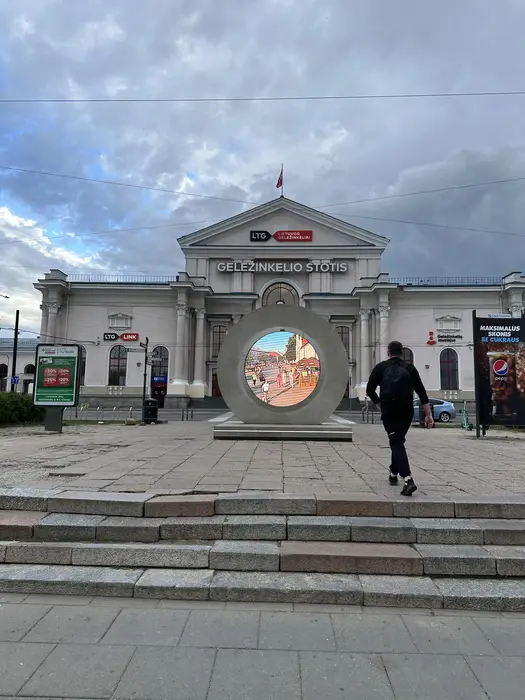
Jewish Quarter Vilnius guide
A respectful guide to Vilnius's former Jewish quarter and ghetto streets: the lanes of old Jewish Vilna, the site of the Great Synagogue, the Vilna Gaon's legacy, the ghetto memorials and where to find context before you walk.
Read guide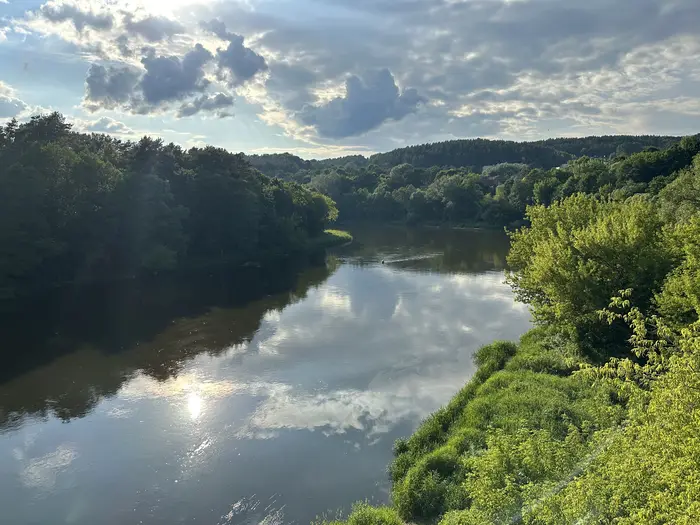
Vilna Gaon Museum guide
How to use Vilnius's state Jewish-history museum — the Vilna Gaon Museum of Jewish History — and its branches, from the Tolerance Centre and the Holocaust exhibition to the Samuel Bak and Litvak museums and the Paneriai Memorial.
Read guide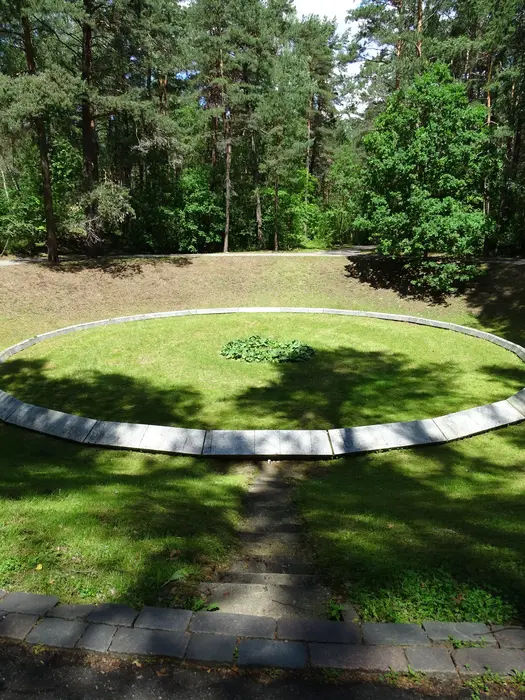
Paneriai Memorial: Visiting from Vilnius
A respectful guide to visiting the Paneriai (Ponary) Holocaust Memorial from Vilnius: how to get there by train, taxi, or tour, the history, time needed, and how to visit with care.
Read guide