
Green Vilnius: Parks & Nature
Vilnius's parks, river paths, hill walks and nature escapes: Bernardine Garden, Vingis Park, the manor parks, the Sapieginė forest trail, and the Verkiai, Pavilniai and Green Lakes nature just outside the city.
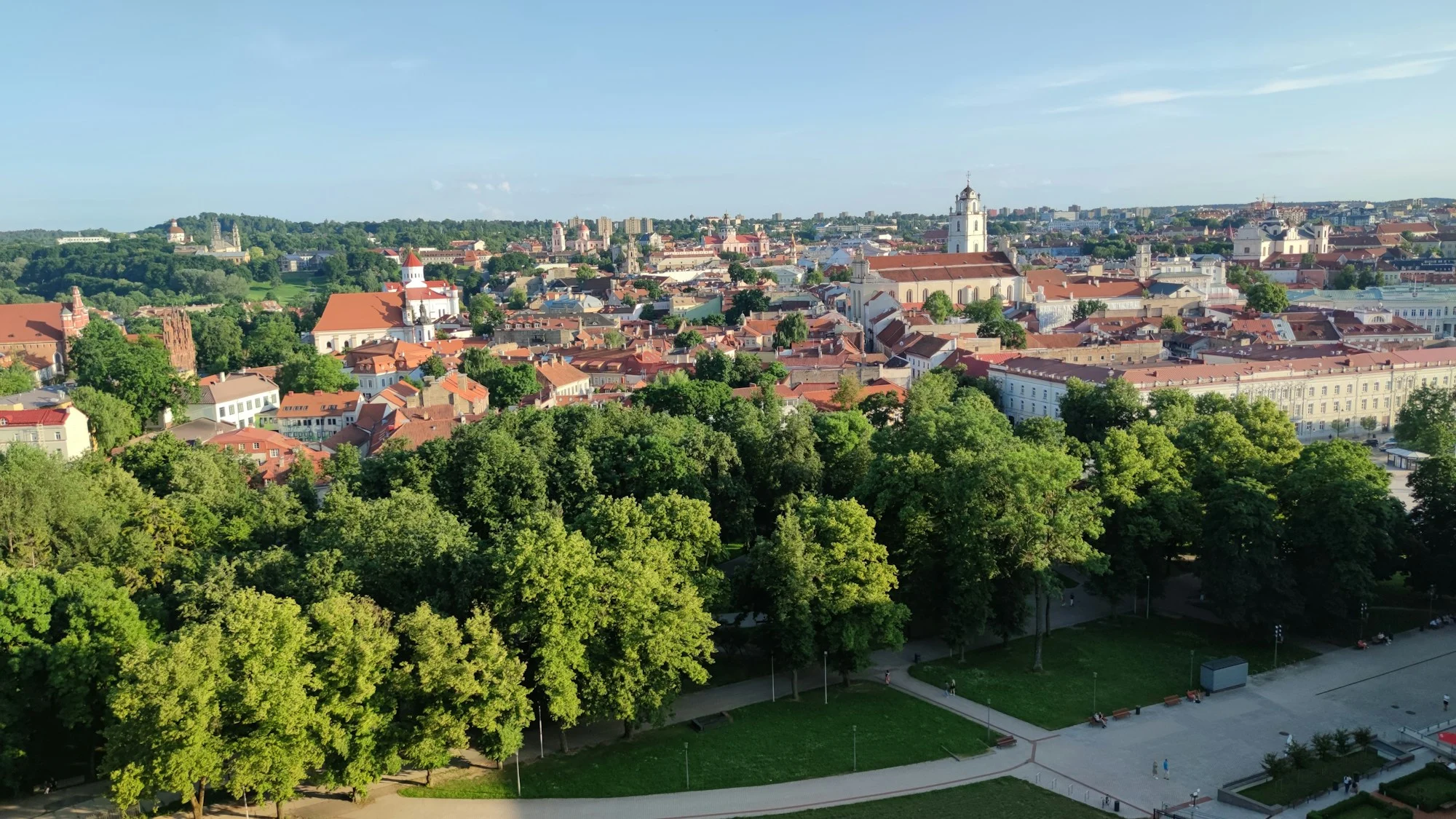
- ✓Vilnius is one of Europe's greenest capitals — over half the city is green space, so nature is never more than a short walk away.
- ✓Bernardine Garden in the Old Town is the elegant central park; Vingis Park, at 162 hectares, is the vast riverside one.
- ✓Manor parks like Markučiai give you quiet, autumn-gold walks; the Sapieginė trail offers hilly forest within the city limits.
- ✓Just outside town, Verkiai Regional Park, the Green Lakes and Pavilniai Park add forests, swimming and dramatic river bends.
- ✓Most of it is free, flat and walkable or cyclable along the river — easy nature breaks between the city's sights.
One of Europe's greenest capitals
Vilnius wears its greenery lightly, but it's one of the defining facts about the city: more than half of it is parks, forest, river and garden, and that abundance is easy to feel the moment you step off the cobbles. You're never far from a tree-lined path or a riverbank here, and the city's nature ranges from manicured Old Town gardens to genuine forest and lakes within or just beyond the boundary. For a capital, that's rare — and it's a big part of why Vilnius feels so unhurried and liveable.
It's worth dwelling on just how green the city is, because it shapes the whole feel of a trip. Vilnius consistently ranks among the greenest capitals in Europe, and the statistic — roughly half the city given over to green space — isn't an abstraction: it means forest reaches almost into the centre, that a fifteen-minute walk from a Baroque church can put you among pines, and that locals treat parks and riverbanks as an extension of their living rooms. For a visitor, that translates into a city where you can balance heavy sightseeing with genuine nature breaks every single day, without leaving town or hiring a car.
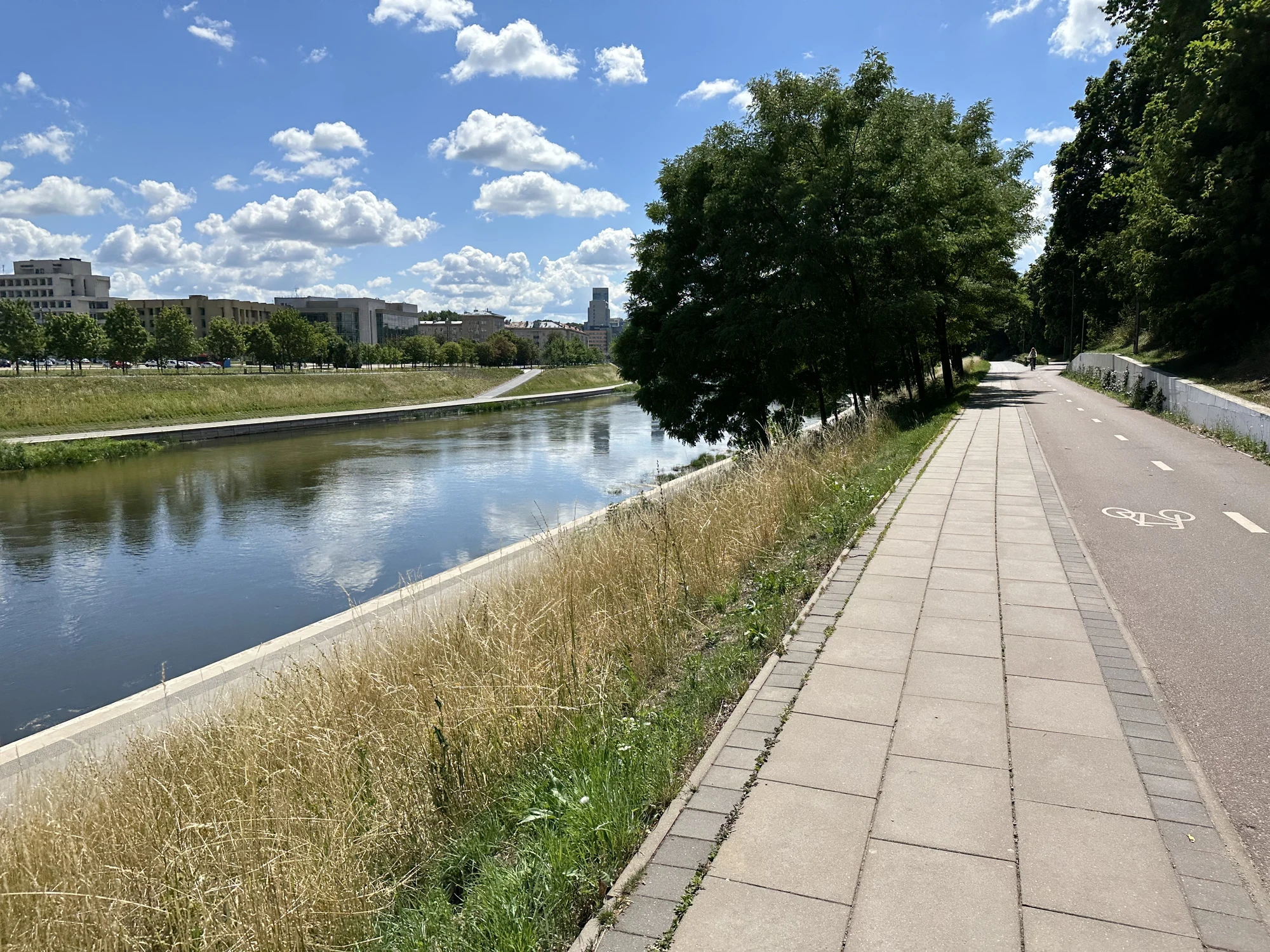
This guide rings the city outward, from the central gardens you can reach in five minutes to the regional parks that make easy half-day escapes. The thread running through all of it is the river: the Neris and the smaller Vilnia carry flat, green walking and cycling paths that string the parks together, so much of Vilnius's nature is connected by a continuous, traffic-free corridor. Bring comfortable shoes, or better still a bike, and you can spend a whole day in green Vilnius without ever feeling like you've left the city far behind. We've ordered everything below from the centre outward, so you can dip in for twenty minutes or build a full nature day depending on how much time and energy you have.
- Over half of Vilnius is green space — parks, forest, river and garden.
- Nature ranges from formal Old Town gardens to real forest and lakes nearby.
- The Neris and Vilnia rivers link the parks with flat, traffic-free paths.
- Most of it is free; a bike turns the whole green network into one day out.
The central gardens: Bernardine and the Old Town
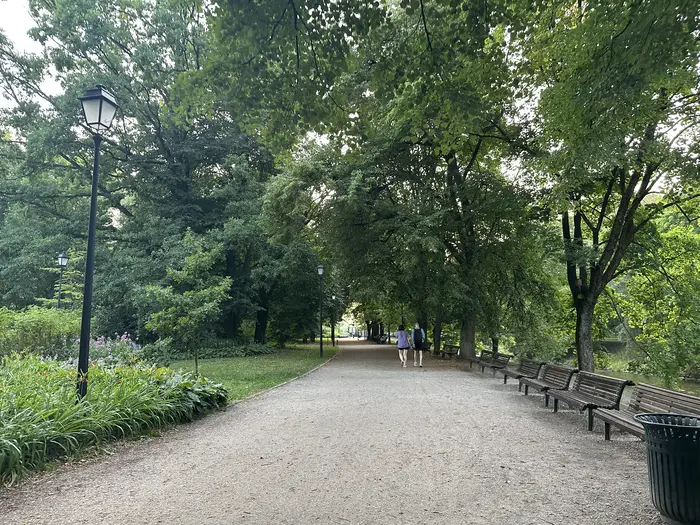
Start in the centre. The Bernardine Garden (Bernardinų sodas) is the city's loveliest central park, a beautifully restored 19th-century garden tucked behind the Cathedral and St Anne's, running along the little Vilnelė river beneath Castle Hill. It's a polished, family-friendly green room of botanical beds, rockeries and a central musical fountain that puts on shows in the warm months, with playgrounds, a carousel and outdoor chess tables. It also shelters one of the city's natural treasures — a protected oak said to be around 400 years old, the oldest in Vilnius. It's the easiest nature stop in the city: minutes from Cathedral Square, and free.
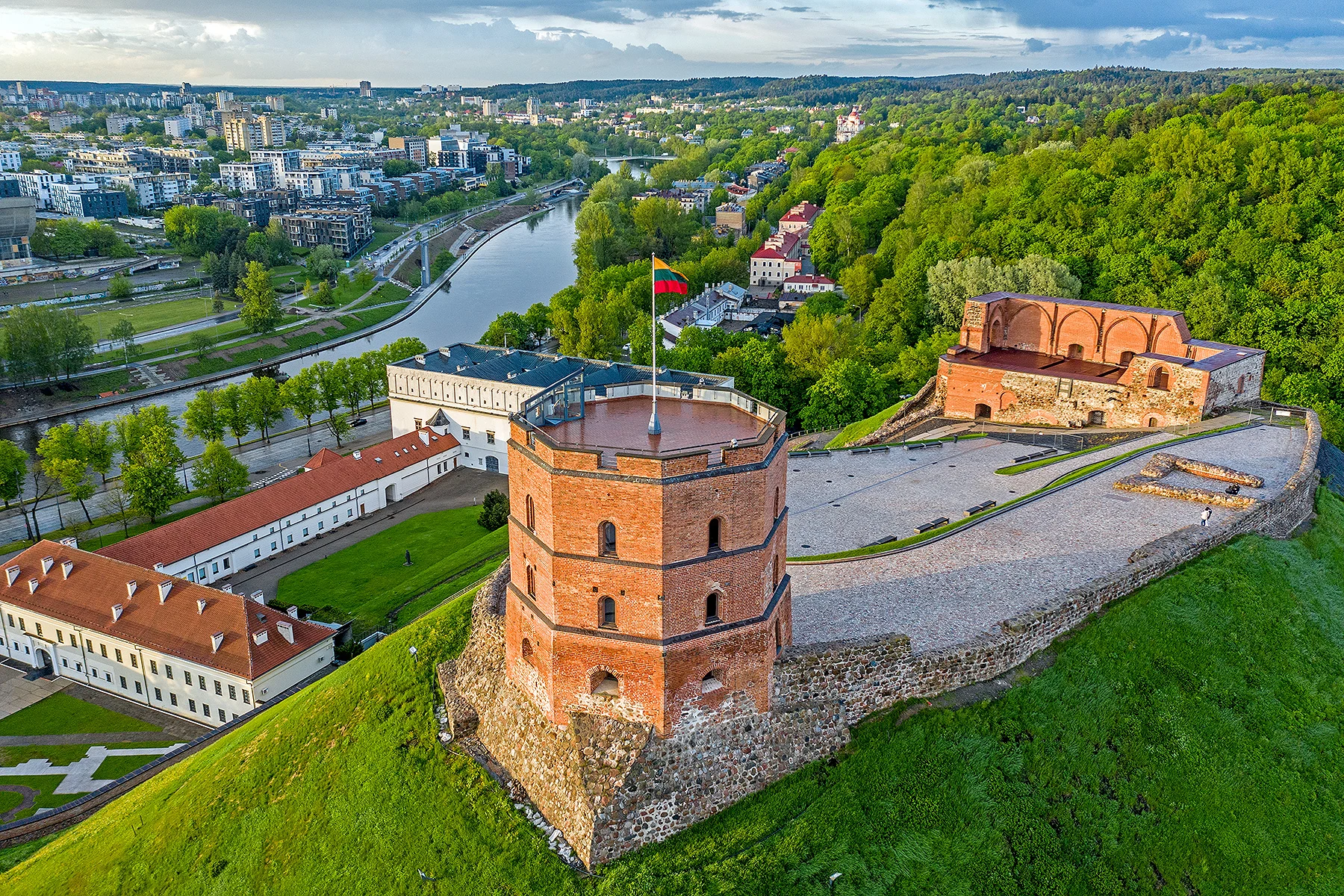
The Old Town and its fringe hold more pocket greenery: the slopes of Castle Hill and the Hill of Three Crosses give you woodland paths and the best city panoramas, and small squares and the riverbanks fill the gaps. For a short break between churches and museums, the Bernardine Garden and a climb to a viewpoint are the obvious, low-effort moves — green Vilnius at its most accessible.
- Bernardine Garden — the restored 19th-century central park with a musical fountain.
- Family-friendly: playgrounds, a carousel, outdoor chess and botanical beds.
- Home to a protected ~400-year-old oak, the oldest tree in the city.
- Castle Hill and Three Crosses add woodland paths and the best panoramas.
The full entry on the central garden, its fountain and the ancient oak.
Cathedral SquareThe square beside the garden, at the foot of Castle Hill.
Map pins
Map data © OpenStreetMap contributors · Tiles © OpenFreeMap
The big city parks: Vingis and beyond
For real space, head to Vingis Park, the largest park in Vilnius at around 162 hectares, set in a great bend of the Neris just west of the centre (its name means 'bend' or 'curve'). It's a forest-like expanse of paths for walking, cycling, jogging and roller-skating, with a botanical garden section, playgrounds and cafés, and at its heart a vast open-air amphitheatre — the stage for the Lithuanian Song and Dance Festival, the country's huge, UNESCO-recognised choral celebration held every few years (next due in 2026). It's the city's lungs and its festival ground in one, an easy walk or ride from the centre via Žvėrynas.
Vingis is a park you can use in completely different ways. Joggers and cyclists treat its long shaded loops as a training ground; families come for the playgrounds, the carousel and the open lawns; couples and solo walkers come simply to disappear into the trees for an hour. The amphitheatre at its heart gives the park its grandest moments — when the Song Festival fills it with tens of thousands of singers in national dress, it becomes one of the most stirring sights in the country — but for most of the year it's a place of quiet, ordinary recreation. The park has also been a stage for history: it hosted the great independence-era rallies of the late 1980s and a papal mass in 1993, layers that add resonance to a simple walk.
Other large green spaces ring the city: Ozas Park to the north is a calm, clean local park with ponds, ducks, disc golf and basketball courts, good for a relaxed afternoon away from tourists. Across the city's parks you'll find the same easy, free recreation — duck-filled ponds, picnic lawns, sports courts and quiet paths. These are where locals actually spend their leisure time, and dropping into one is a simple, pleasant way to slow your trip down — and to see a side of Vilnius the guidebooks rarely send you to.
- Vingis Park — the city's largest at ~162 hectares, in a bend of the Neris.
- Home to the amphitheatre that hosts the Lithuanian Song and Dance Festival.
- Paths for walking, cycling, jogging and skating, plus a botanical garden section.
- Ozas Park to the north adds ponds, ducks, disc golf and a quiet local feel.
Quiet manor parks and forest trails
Beyond the big-name parks lie the city's quieter green corners, and they're often the most rewarding. The Markučiai manor park, an 18-hectare estate park of ponds, old trees and a historic chapel wrapped around the Pushkin literary museum, is a genuine oasis of calm southeast of the centre — and one of the prettiest places in Vilnius for an autumn walk. It's the kind of spot most visitors miss entirely, which is exactly its charm.
If you want something wilder without leaving the city, the Sapieginė trail offers hilly forest terrain, winding paths and trail-running ground right inside Vilnius, complete with historical points of interest and old bunkers along the way — a quick nature escape that feels far from the centre. Between the formal central gardens, the big river parks and these quieter forest-and-manor pockets, Vilnius gives you a full spectrum of green within its own boundaries, much of it free and reachable on foot or by a short bus ride.
- Markučiai manor park — an 18-hectare estate park, ponds and a chapel; superb in autumn.
- A peaceful local secret beside the Pushkin literary museum, southeast of the centre.
- Sapieginė trail — hilly forest, winding paths and old bunkers within the city.
- A quick, wild-feeling nature escape ideal for walks and trail running.
Nature just outside the city: Verkiai, Green Lakes and Pavilniai
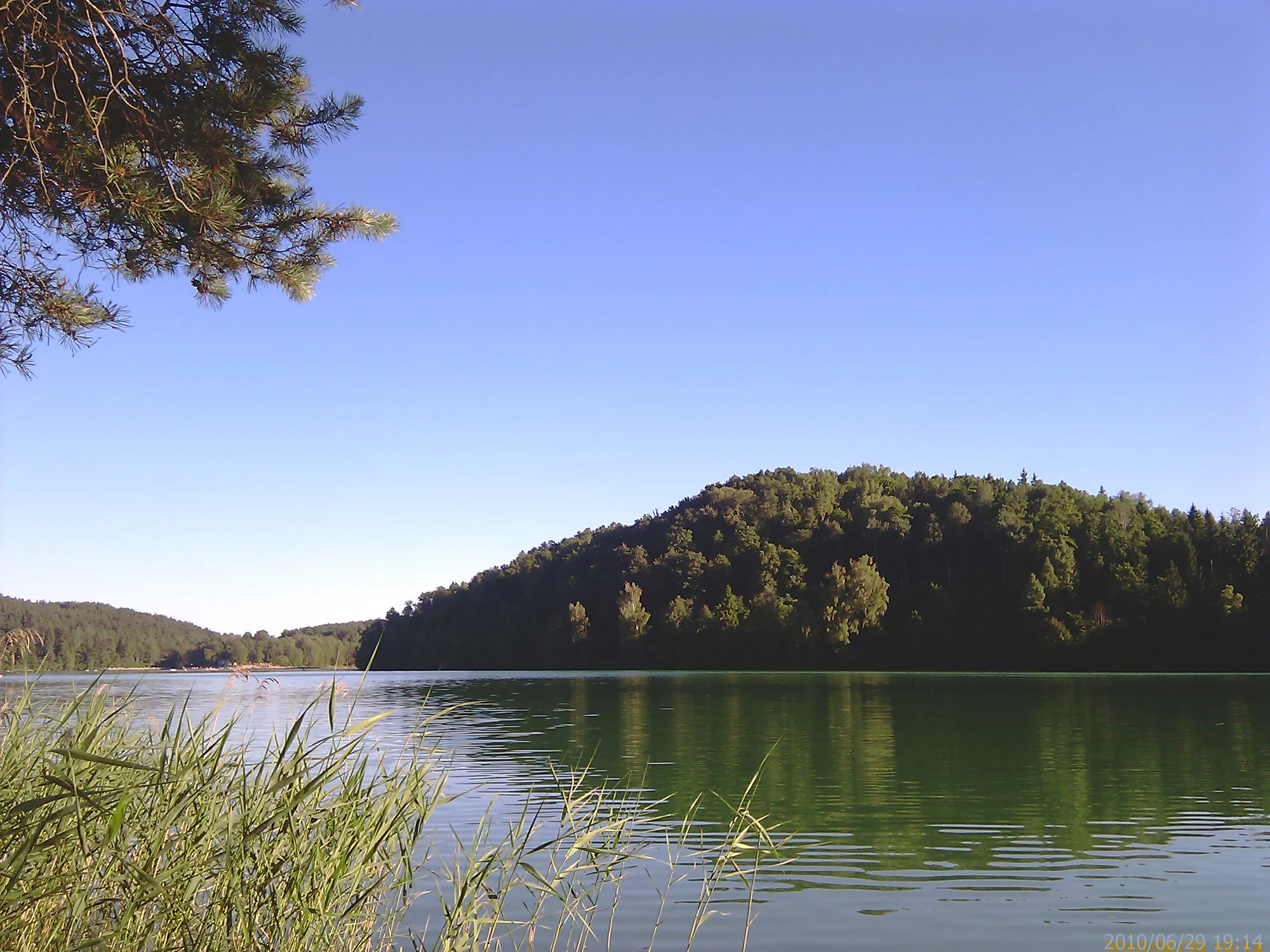
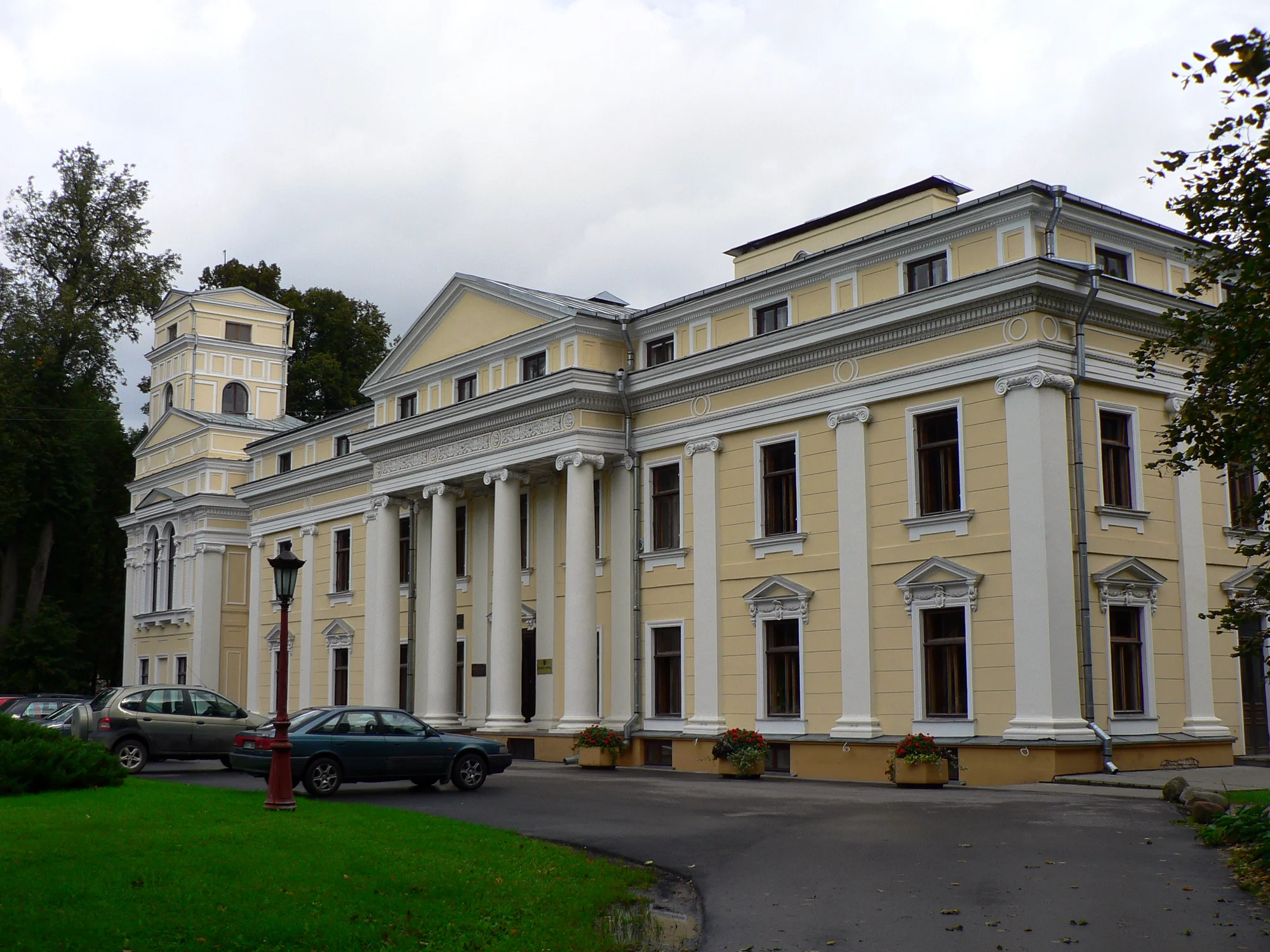
When you want proper countryside, three protected areas sit on the city's doorstep. Verkiai Regional Park sprawls across the wooded northeastern edge of Vilnius — a large protected park (around 2,600 hectares, established in 1992) of forests, river views and walking and cycling trails, anchored by the neoclassical Verkiai Palace grounds above the Neris. The park is heavily forested — woods cover roughly three-quarters of it — which makes it feel like genuine wilderness despite sitting on the city's edge. Within and beside it lie the Green Lakes (Žalieji ežerai), a cluster of strikingly green, deep glacial lakes coloured by their carbonate-rich water and formed when the glaciers melted thousands of years ago; the largest, Balsys, has a well-equipped city beach that's one of the most popular swimming spots in Vilnius in summer. Forest walks, swimming and a picnic make an easy half-day.
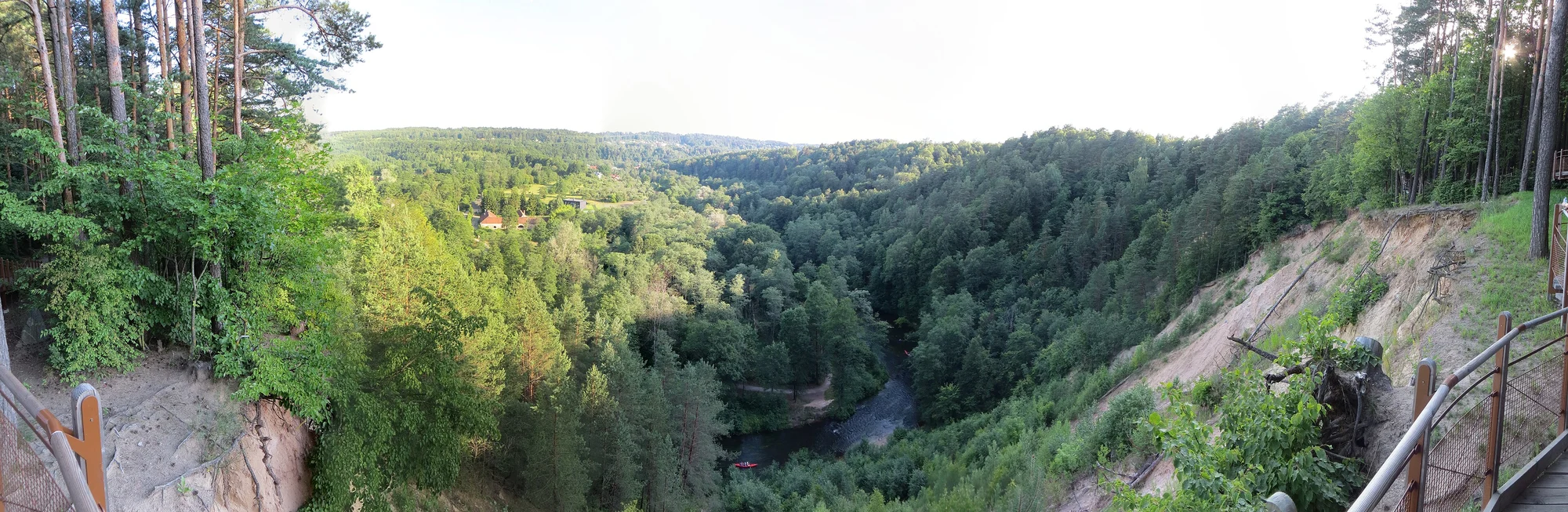
On the opposite, southeastern side, Pavilniai Regional Park follows the winding Vilnia through steep, wooded river valleys. Its showpiece is the Pūčkoriai exposure, a tall sandstone cliff above a dramatic river bend, with trails, viewpoints and the Belmontas waterfall-and-restaurant complex nearby — a nature half-day without ever really leaving greater Vilnius. All three are reachable by city or seasonal bus, by bike, or by a short taxi, and they turn a city break into a city-and-nature one. As with any swimming, walking or transport plan, check current bus timetables, beach conditions and seasonal access before you set out.
- Verkiai Regional Park — forests, river views, trails and the Verkiai Palace grounds.
- Green Lakes — deep, vividly green glacial lakes; Balsys has a popular summer beach.
- Pavilniai Regional Park — wooded Vilnia valleys and the dramatic Pūčkoriai cliff.
- All reachable by bus, bike or short taxi; verify timetables and conditions seasonally.
How to do green Vilnius: walking, cycling and when to go
The best way to experience green Vilnius is on foot or by bike. The riverside paths along the Neris and Vilnia link many of these parks into one continuous, flat, traffic-free route, and a rented bike or e-scooter turns a string of parks into an effortless day out. A classic green day might run from the Bernardine Garden in the centre, out through Žvėrynas to Vingis Park, with the option to push on toward the regional parks — all of it scenic, mostly riverside and largely free. If you'd rather keep it gentle, you can equally well dip into a single park for an hour between sights; green Vilnius scales to whatever time and energy you bring it.
Pairings make the most of a green day. The central gardens slot neatly between Old Town sights; Vingis pairs with leafy Žvėrynas; the Green Lakes pair with Verkiai for a swim-and-forest half-day; Pavilniai and its Pūčkoriai cliff pair with the quiet hill of Markučiai just to the north. With a bit of planning you can thread nature through almost any itinerary rather than treating it as a separate excursion — which suits the way Vilnius itself blends city and countryside.
Season shapes the experience. Spring and summer bring the fountains, festivals, lake swimming and long light; autumn is the standout for the manor and forest parks, when Markučiai and the wooded trails turn gold; winter hushes everything and, in a cold year, freezes paths and ponds for atmospheric walks and even the occasional skate. Pack for the weather, carry water on the longer routes, wear proper shoes for the forest trails, and treat anything time-sensitive — bus timetables to the regional parks, beach season, festival dates — as something to confirm before you go. Beyond that, green Vilnius asks very little of you and gives back a lot: it's one of the simplest, cheapest and most restorative things the city offers, and the easiest way to feel like you've left the capital without actually leaving it.
- Walk or cycle the river paths — they link the central and outer parks car-free.
- A classic green day: Bernardine Garden → Žvėrynas → Vingis, then optionally the regional parks.
- Spring/summer for fountains, festivals and swimming; autumn for golden manor and forest parks.
- Confirm regional-park bus times, beach season and festival dates before setting out.
Related guides
Bernardine Garden — Vilnius
A beautifully restored 7.8-hectare 19th-century garden along the Vilnelė river in Vilnius Old Town, with botanical displays, a musical fountain, playgrounds and the city's oldest oak.
Read guide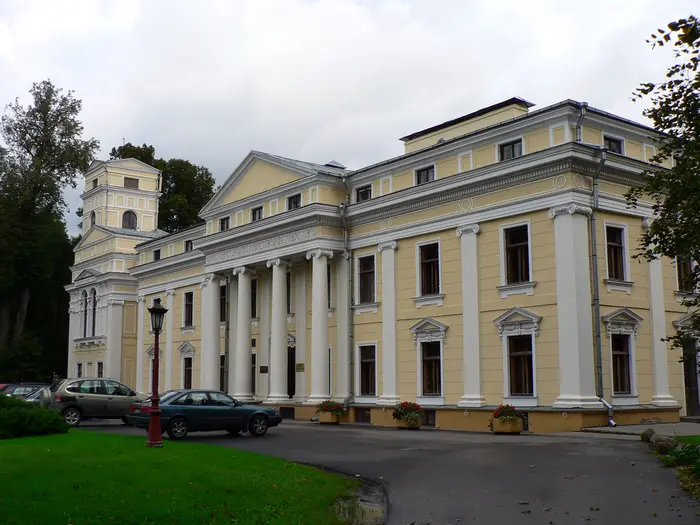
Verkiai Regional Park: Vilnius's Green Northern Edge
A guide to Verkiai Regional Park on Vilnius's northern edge: the neoclassical palace terrace over the Neris, forest and lake trails, easy cycling, bus access and how to pair it with the Green Lakes.
Read guide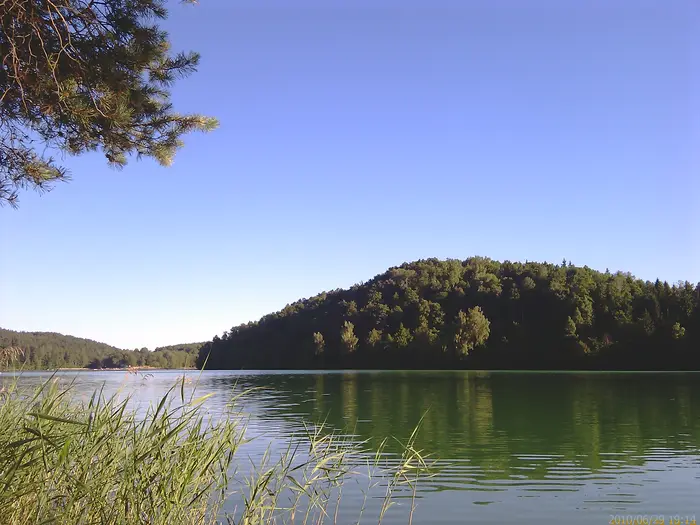
Green Lakes near Vilnius: Swimming & Forest Walks
A guide to the Green Lakes (Žalieji ežerai) near Vilnius: swimming and beaches, forest walks, summer buses, picnic timing, winter caution, and pairing them with Verkiai.
Read guide