
Markučiai: Vilnius's Quiet Literary Hill
A guide to Markučiai, a green, wooden-house corner of southeast Vilnius: the Pushkin literary museum and its manor park, hillside walks, a slower local pace and how to combine it with the city's nature spots.
- ✓Markučiai is a leafy, low-key hillside district southeast of the centre, built around an old manor estate and its wooden summer villas.
- ✓Its anchor is the Markučiai Manor Museum — the Literary Museum of Alexander Pushkin — set in a beautifully preserved 19th-century wooden house.
- ✓The manor's 18-hectare park, with ponds, a chapel and old trees, is a genuine local secret and especially lovely in autumn.
- ✓This is wooden-house Vilnius: the settlement grew from plots sold off the estate in the 1920s–30s, and the timber architecture survives.
- ✓Come for slow walks, literary history and quiet rather than headline sights — it pairs well with the city's other green corners.
A quieter corner of Vilnius
Most visitors never make it to Markučiai, and that's rather the point. This is a calm, green residential hill on the southeast edge of the centre, just across the railway from the Old Town and the Paupys district — close enough to reach easily, far enough to feel like a different, slower city. There are no crowds and no must-see checklist here; instead there's a manor museum, a beautiful unhurried park, and streets of wooden houses that hint at how much of Vilnius looked before the modern blocks arrived.
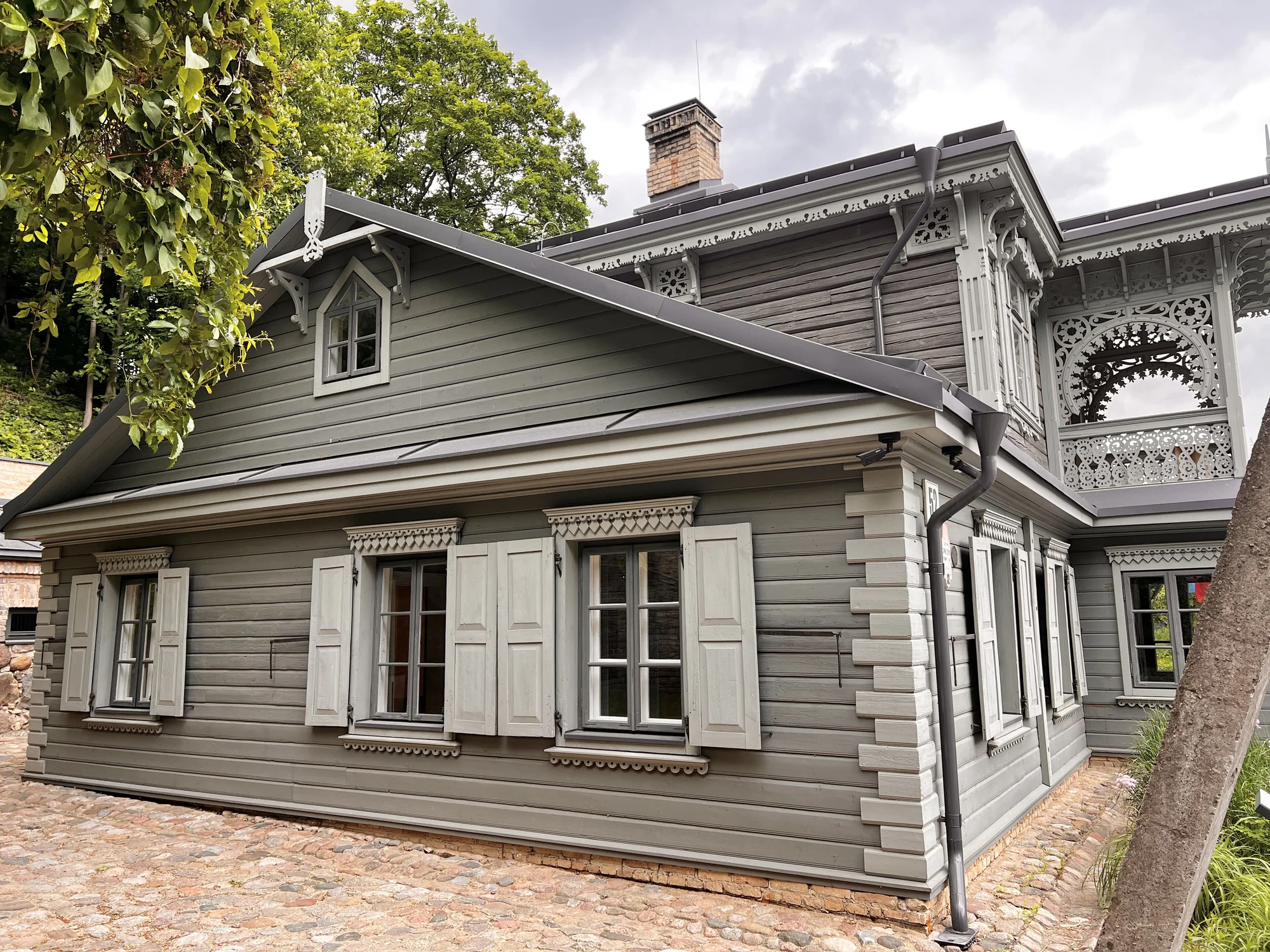
Markučiai grew up around a single estate. In the late 19th century an engineer who came to Vilnius to build the railway laid out a manor and a scatter of wooden summer villas across the hill, prized for their views over the city. From the 1920s the estate's land was sold off plot by plot — by the mid-1930s well over a hundred parcels had gone — and the rural settlement of Markučiai filled in around the old manor. That history is why the area still reads as a leafy garden suburb of timber houses rather than a planned neighbourhood, and why a walk here feels like stepping slightly out of time.
What you get here, in other words, is a neighbourhood that the city's tourist circuit simply skips. That brings a particular kind of pleasure: you're walking residential streets where people actually live, past gardens and timber porches and the occasional ageing villa, with the hill rising and falling under you and glimpses of the wider city opening up between the trees. It is the antidote to a churches-and-squares overload — somewhere to slow right down, listen to birdsong rather than crowds, and read Vilnius through its quiet edges rather than its monuments. For travellers on a second or third visit, or anyone who likes finding the corners a city keeps for itself, Markučiai is exactly that corner.
- A calm, green residential hill in southeast Vilnius, across the railway from Paupys and the Old Town.
- Grew from a 19th-century manor estate and its rented wooden summer villas.
- The settlement formed as estate land was sold off in plots from the 1920s onward.
- Wooden-house architecture and quiet streets give it a garden-suburb, out-of-time feel.
- Skipped by the tourist circuit — a neighbourhood the city keeps mostly for itself.
The Pushkin connection and the manor museum
The heart of Markučiai is the Markučiai Manor Museum, better known as the Literary Museum of Alexander Pushkin. The link to the great Russian poet is by family rather than by visit: the manor passed to Varvara, daughter of the railway engineer who built it, who married Grigory Pushkin — the poet's youngest son. The couple lived here, and the house has been a museum dedicated to Alexander Pushkin since 1948. It's one of the best-preserved 19th-century wooden villas in the city, a rare survivor of the fashion for timber summer houses around old Vilnius.
The house itself is the story. Built in 1868 by an engineer who had come to Vilnius to work on the Saint Petersburg–Vilnius railway, it's a graceful single-storey wooden villa of the kind wealthy families once put up as summer retreats on the wooded hills around the city — most of which are long gone. That it survives at all, furnished and intact, makes it doubly worth the trip: you're not just seeing a literary memorial but one of the last lived-in examples of a vanished architectural fashion. The setting, on its hill above the city with the park rolling away behind, is exactly what made these summer villas desirable in the first place.
Inside, six authentically furnished rooms recreate the late-19th-century home, with original furniture, family portraits and pieces marked with the Pushkin crest and monograms. It's an intimate, lived-in sort of museum rather than a grand gallery, and the guides are warm and genuinely knowledgeable — the kind of place where the stories matter as much as the objects. Whether or not you have a deep interest in Russian literature, it's a lovely window into a 19th-century Vilnius household and the city's layered cultural past. The estate also holds a small wooden chapel where Varvara and Grigory are buried, tucked among the park trees — a quiet, slightly melancholy footnote to the family's story. Opening hours and ticket details vary by season, so check the museum's current information before you go.
- The manor was home to Grigory Pushkin (the poet's son) and his wife Varvara.
- It has been the Literary Museum of Alexander Pushkin since 1948.
- Six authentically furnished rooms with original furniture and the Pushkin family crest.
- An intimate wooden-villa museum with knowledgeable guides — check hours and tickets in advance.
The full entry on the Pushkin literary museum, its rooms and its history.
Art & Design ItineraryWhere a literary, slow-culture stop like Markučiai fits a creative day out.
Map pins
Map data © OpenStreetMap contributors · Tiles © OpenFreeMap
Markučiai Park: the manor grounds
Wrapped around the museum is its real free gift to the city: the manor park. This is a tranquil, lightly wooded 18-hectare estate park of winding paths, ponds with their resident ducks, old trees and a small historic chapel — a proper oasis of calm only minutes from the centre but a world away from the Old Town's bustle. Locals come to walk, sit by the water and let the city fall quiet; visitors who find it tend to be quietly delighted that somewhere this peaceful exists so close in.
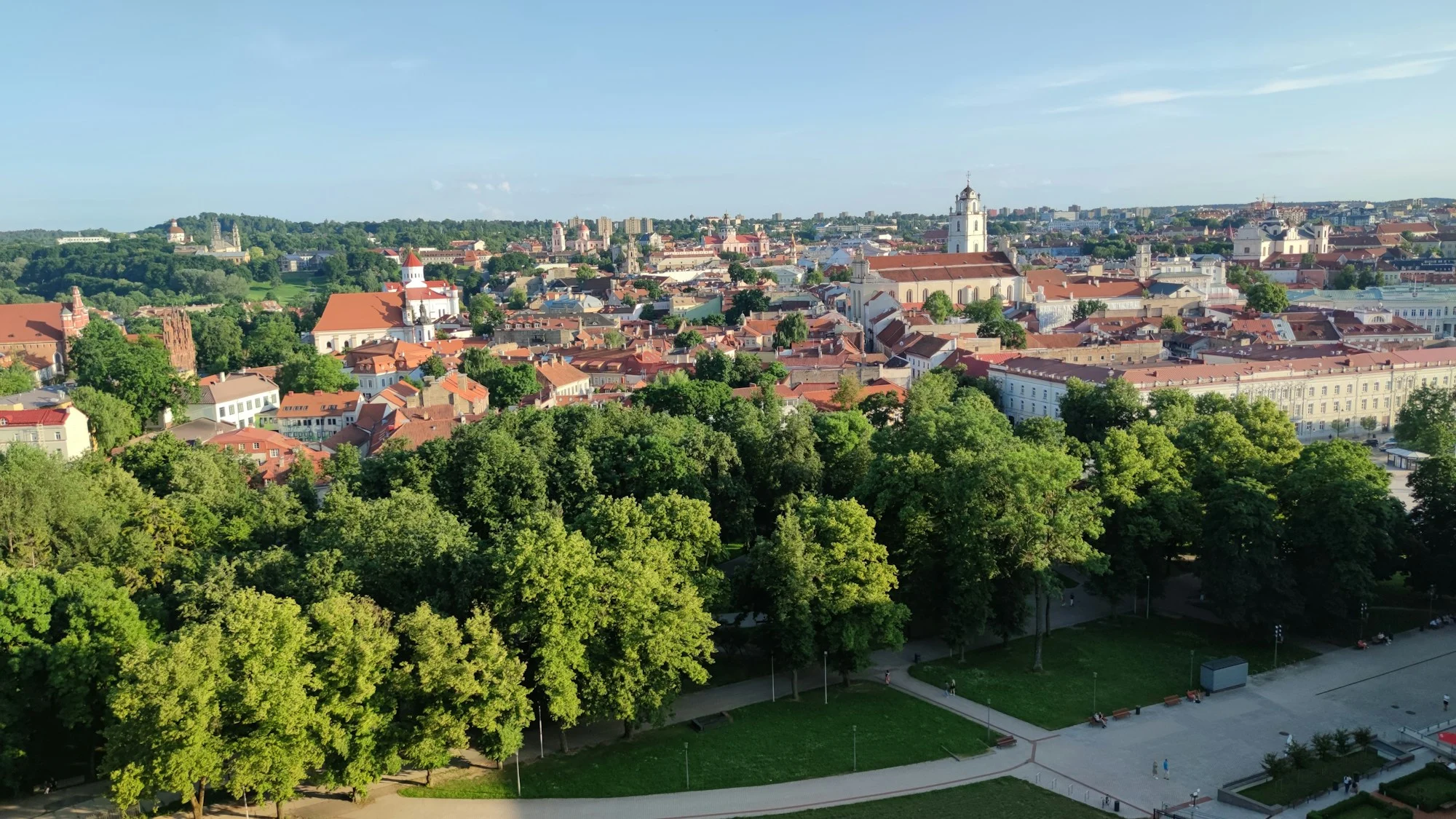
The park has the slightly wild, unmanicured feel of grounds that have grown into themselves over a century and a half. Paths wind between mature trees and around the ponds, where ducks paddle and the water catches the light; benches invite you to simply sit; and the gentle rise and fall of the hillside gives the walk a bit of shape without ever being strenuous. It's the kind of place where you come for twenty minutes and leave an hour later. Families with small children, anyone after a contemplative walk, and photographers all find something here, and because it's free and rarely busy, it never feels like an attraction so much as a borrowed local secret.
The park is at its most beautiful in autumn, when the trees turn and the ponds mirror the colour — it's one of the loveliest spots in Vilnius for a slow seasonal walk. In spring and summer it's green and shaded; in winter it's hushed and atmospheric, with the bare trees and frozen ponds giving it a stark beauty. Because the museum and the park sit together, the natural way to visit Markučiai is to combine the two: a stroll through the grounds, a look round the wooden manor house, and an unhurried wander back through the surrounding streets of timber villas. There's no need to rush or plan — the whole appeal of the place is that it asks nothing of you.
- An 18-hectare estate park with ponds, ducks, old trees and a historic chapel.
- A genuine local oasis of calm just minutes from the city centre.
- Especially beautiful in autumn — among the best spots in Vilnius for a fall walk.
- Best combined with the manor museum for a single, slow half-day visit.
Wooden Vilnius and a slow local route
Beyond the manor, the appeal of Markučiai is simply its texture. This is one of the corners where the old wooden architecture of Vilnius survives — single-storey timber houses with carved details and overgrown gardens, climbing a hill that still gives glimpses over the city. There are no big attractions to tick off, which is exactly why it rewards aimless walking: follow the streets uphill, enjoy the views, and notice how different this is from the stone-and-stucco centre. It's a neighbourhood for travellers who like to read a city through its ordinary streets, not just its monuments.
Wooden Vilnius is a vanishing thing, which gives a walk here a faint sense of urgency. Across the city, the timber houses that once covered whole districts have steadily given way to apartment blocks and new builds, and pockets like Markučiai — where enough survive to set the character of the streets — are increasingly rare. The houses range from carefully restored villas to weathered, lived-in homes with sagging porches and gardens gone to seed, and that mix of preservation and gentle decay is part of the atmosphere. Look up at the carved window frames and decorative eaves; they're the everyday vernacular architecture of a Vilnius that the Old Town's grand stone churches can make you forget existed.
A satisfying slow route here starts at the manor and park, then loops up and through the residential lanes to take in the wooden houses and the hillside outlook, before heading back toward Paupys and the river. Markučiai pairs naturally with a rainy-day or low-energy plan — the museum gives you an indoor anchor, the park a gentle walk — and with the city's other quiet green corners if you're stringing together a 'second-visit' Vilnius away from the headline sights. Bring a camera, wear shoes that cope with a bit of uphill and uneven pavement, and don't over-plan it: half the pleasure is simply ambling and letting the neighbourhood set the pace.
- One of the surviving pockets of old wooden-house Vilnius — best explored on foot.
- Hillside streets give glimpses over the city; no big sights, just atmosphere.
- A natural slow loop: manor and park, then the wooden lanes, then back toward the river.
- Pairs well with a rainy-day plan and with the city's other quiet green spaces.
Getting to Markučiai and when to go
Markučiai sits just southeast of the centre, beyond the railway and the Paupys district. It's reachable on foot from the Old Town for the energetic — a walk of roughly half an hour, partly uphill — or by a short bus ride or taxi if you'd rather save your legs for the park. Because it's residential and quiet, there's little in the way of cafés or services on the hill itself, so it's worth eating or grabbing a coffee in Paupys or the Old Town before you head over. The walk out, over the river and up through Paupys, is pleasant in itself and stitches Markučiai naturally onto a riverside day.
The best time to visit is autumn, when the manor park is at its most photogenic, though it's a pleasant escape in any green-leaved season. Allow a couple of hours to do it justice: the museum, a slow loop of the park, and a wander through the wooden streets. Markučiai also works beautifully as part of a 'beyond the Old Town' day or a low-energy plan — pair it with Paupys for food, with Užupis for art and atmosphere just across the river, or with the city's other green corners if you're chasing autumn colour. As always, confirm the museum's current opening hours and ticket prices before you set out, since these change seasonally and Markučiai is too far from the centre to risk a wasted trip on a closed day.
- Southeast of the centre, past Paupys and the railway; ~30-minute walk or a short bus/taxi.
- Few cafés on the hill — eat or get coffee in Paupys or the Old Town first.
- Autumn is the standout season; allow a couple of hours for museum and park.
- Pairs well with Paupys (food), Užupis (art) and the city's other green spaces.
- Check the museum's current hours and prices before making the trip out.
Related guides
Local Vilnius: Beyond the Old Town
Where to find the real, lived-in Vilnius after the classic Old Town sights: the New Town's reborn factories, leafy Žvėrynas, Antakalnis, Paupys, riverside paths, markets and street art — and how to spend a second day like a local.
Read guide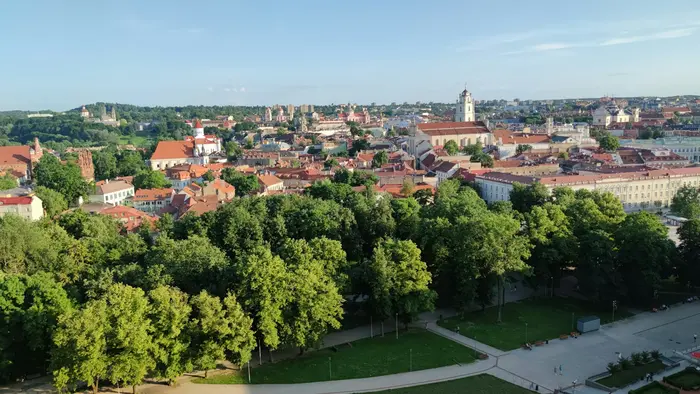
Green Vilnius: Parks & Nature
Vilnius's parks, river paths, hill walks and nature escapes: Bernardine Garden, Vingis Park, the manor parks, the Sapieginė forest trail, and the Verkiai, Pavilniai and Green Lakes nature just outside the city.
Read guide
Rainy Day in Vilnius
What to do in Vilnius when it rains: museums, cafés, food halls, churches, galleries, spa hotels and cozy indoor routes for wet or cold days.
Read guide