
Vilnius Layover Guide
What to do with a few hours in Vilnius on a layover — realistic timing from the airport, luggage storage, and a safe, efficient Old Town loop that fits whatever window you've got between flights.
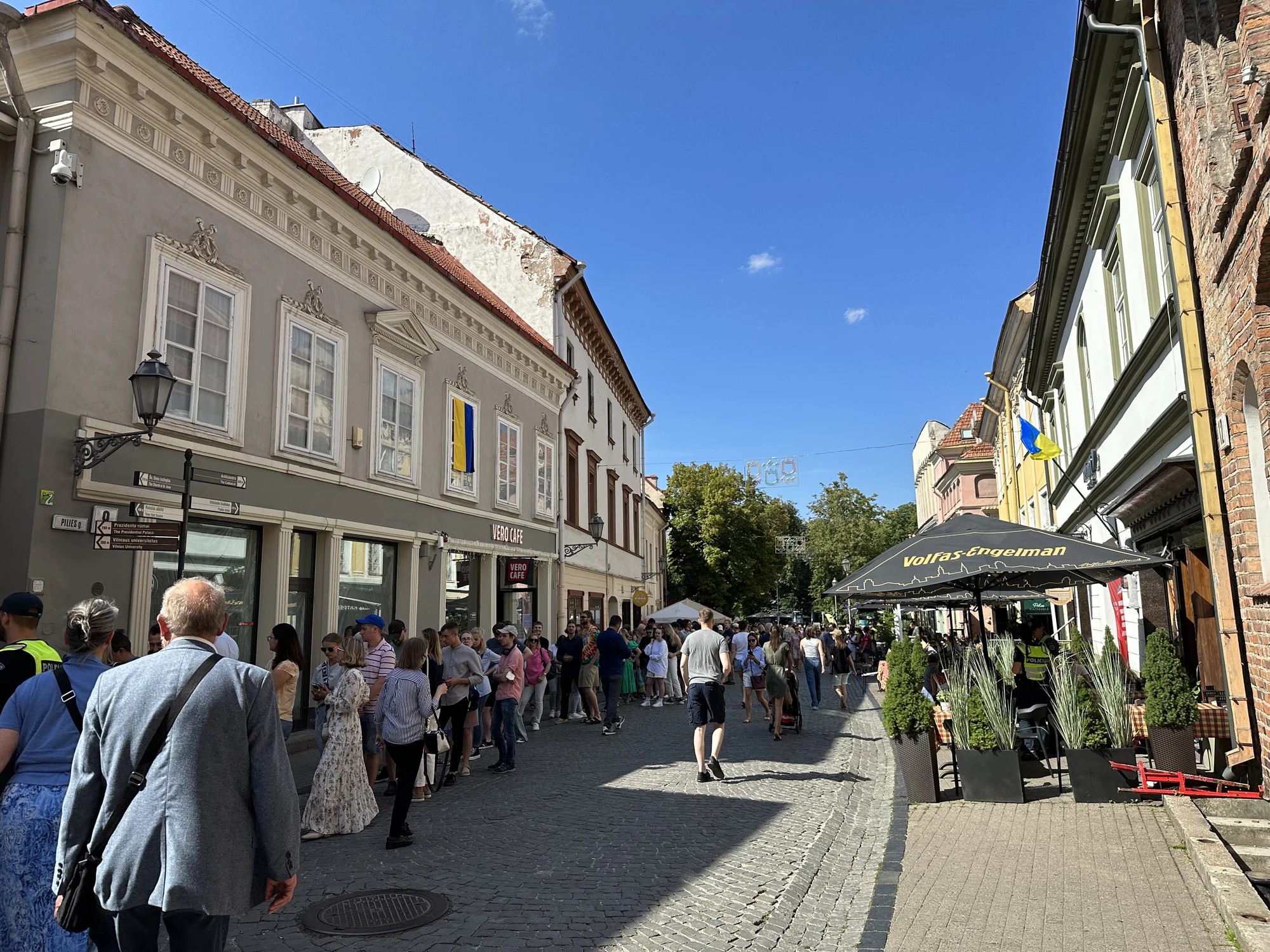
- ✓Vilnius Airport is unusually close to the centre — the train takes about 7 minutes — so even a short layover can buy real time in the Old Town.
- ✓Roughly: with 4+ hours you can see the Old Town highlights; with 6+ you can add a meal and a viewpoint; under 3, weigh it carefully.
- ✓Drop your bags first — left-luggage at the station or in the Old Town frees you to move quickly and safely.
- ✓The Old Town is compact and walkable, so a tight loop from Cathedral Square covers the essentials without rushing.
- ✓Always build in a generous buffer to get back through the airport — never cut a layover walk too fine.
Is your layover long enough?
Vilnius is one of the easiest cities in Europe to dip into on a layover, because the airport is remarkably close to the centre. The airport's own train station sits a short walk from the terminal, and the ride into the central railway station takes about 7 minutes; from there it's a short walk or ride to the Old Town. That proximity changes the maths of a layover entirely — time that would be swallowed by a long airport transfer elsewhere is, here, time you actually get in the city.

As a rough rule of thumb: if you have four hours or more between flights, you can comfortably nip into the Old Town, see the headline sights and get back. With six hours or more, you can add a sit-down meal and a viewpoint and still have a relaxed buffer. With around three hours, it's borderline — doable if you're confident and travel light, but you'll be moving briskly and watching the clock. Under three hours, or on a tight international connection, it's usually wiser to stay airside and relax rather than risk it.
The key variables are your own buffer and your bags. Factor in the time to clear arrivals, get to the city and back, and re-clear security and any passport control for your onward flight — and always err on the side of caution. A layover walk is a bonus, not a mission; the golden rule is to give yourself a generous margin to be back at the gate, because a missed connection is never worth one more church.
This guide assumes you'll leave the airport. If your window is genuinely too short, or your bags can't be checked through, there's no shame in staying put — but if you've got the hours, Vilnius rewards the effort more than almost any layover city its size, precisely because the good stuff is so close. Confirm current train times and your airline's connection rules before you commit.
First moves: bags, transport and timing
Sort your luggage before anything else. If your bags aren't checked through to your final destination, store them — there's left-luggage near the central railway station and storage options around the Old Town and the airport, so you can explore hands-free rather than dragging a suitcase over cobbles. Travelling light and bag-free is what makes a layover walk quick and pleasant, so make this your first move on landing.

Then get into town. The fastest link is the train from the airport station to the central railway station — about 7 minutes, several times a day, very cheap — which drops you a short walk or ride from the Old Town. If the train timing doesn't suit, buses (routes such as 88 and 3G) reach the centre in around 20 minutes, and Bolt or Uber give you door-to-door convenience for a modest fare, which is often the easiest option when you're watching the clock. Check the train schedule against your window before you rely on it.
Note your timings the moment you arrive. Work out the latest moment you must start heading back, building in a comfortable buffer for the return journey, security and boarding, and set an alarm for it. With that hard deadline fixed, you can relax into the visit knowing exactly how much time you really have. The compactness of Vilnius means even a modest window translates into a satisfying amount of sightseeing once you've subtracted the transfers.
From the central station or the edge of the Old Town, everything worth seeing on a layover is within easy walking distance, so once you're in the centre you can put the transport behind you. Keep your boarding pass and documents on you, know which station or stop you're returning from, and you're set. The system here is simple and quick, which is exactly why a Vilnius layover is worth the effort.
- Store your bags first — station, Old Town or airport left-luggage.
- Train into the centre (~7 min) is fastest; bus (~20 min) or Bolt/Uber also work.
- Fix your latest turn-back time with a generous buffer, and set an alarm.
- Once in the centre, everything is walkable — put the transport behind you.
Where to store bags near the station, Old Town and airport.
Vilnius Train StationThe central station where the airport train arrives, and getting onward.
Vilnius Airport to the City CentreThe full transport guide for the airport run, both directions.
Map pins
Map data © OpenStreetMap contributors · Tiles © OpenFreeMap
A quick Old Town loop that fits your window
Start at Cathedral Square, the natural gateway to the Old Town and an easy point to aim for from the station. The wide white Cathedral, its free-standing belfry and the open square at the foot of Castle Hill give you an instant sense of the city, and the 'stebuklas' miracle tile in the pavement is a fun thirty-second stop. If your window is short, even just this square and a short stroll up the adjacent streets is a worthwhile glimpse of Vilnius.

With a couple of hours in hand, walk the Old Town's spine — Pilies Street — down toward the Town Hall, drinking in the cobbled lanes, the Baroque churches and the courtyards along the way. Detour to the red-brick Gothic St Anne's Church and the soaring St Peter and St Paul if time allows, and pause for a coffee or a quick Lithuanian bite — a dumpling, a pancake, a pastry — somewhere along the route. This is the heart of the UNESCO Old Town, and an hour or two here is a genuinely satisfying taste of the city.
If you've got six hours or more, add a viewpoint and a proper meal. Climb (or take the funicular up) Castle Hill to Gediminas' Tower for the panorama over the red roofs and spires — the view that makes sense of everything you've just walked — and sit down for an unhurried lunch of cepelinai or another classic. You could even cross the little bridge into quirky Užupis for a quick look at the artists' republic. That's a near-complete first impression of Vilnius, all on foot.
Whatever your window, keep the loop tight and the navigation simple — the Old Town is small, safe and easy to walk, so you won't get lost or stranded. Keep an eye on your turn-back alarm, head for the station in good time, and you'll be back at the gate relaxed rather than frazzled. A Vilnius layover, done with a clear deadline and light bags, turns dead time between flights into a real, if brief, encounter with one of Europe's loveliest small capitals.
- Short window: Cathedral Square, the belfry and a stroll up the nearest lanes.
- A couple of hours: walk Pilies Street, the churches and a quick Lithuanian bite.
- 6+ hours: add Gediminas' Tower for the view, a sit-down lunch, maybe Užupis.
- Keep the loop tight, mind your turn-back alarm, and head back in good time.
Making the most of a longer layover — or a self-transfer overnight
If your layover stretches to a generous half-day — say eight hours or more — you can treat it almost like a proper visit rather than a dash. With that much time you can comfortably do the Old Town loop, climb Castle Hill for the view, sit down for an unhurried Lithuanian lunch, wander into Užupis, and still have a relaxed buffer. The only real difference from a flying visit is your bags and your deadline, both of which are easily managed: store the luggage, fix a turn-back time, and otherwise enjoy the city as you would on a short break. Our one-day itinerary is a good template to borrow from for the longer windows.
A common situation is a 'self-transfer' or long layover that runs overnight — you land in the evening and fly out the next morning on separate tickets. Here the calculation shifts toward whether to go into the city and where to sleep. Because the centre is only minutes from the airport, an overnight self-transfer is one of the easiest there is: take the 7-minute train or a quick ride into town, sleep in a central hotel, see a little of the Old Town over dinner and breakfast, and return in good time. It's far more pleasant than dozing in the terminal, and Vilnius's affordability means a central room is rarely expensive.
Weigh an airport hotel only for the genuine edge cases — a very early onward flight where even the first train is too late, a midnight landing when you just want a bed, or a layover too short to bother leaving airside. For everything else, the city wins: the transport is quick, cheap and reliable, and a night or an afternoon in the Old Town is the whole reason to break a journey here in the first place. If you're nervous about the morning connection, pre-book a taxi or confirm the first train runs early enough, and you keep the better, more central option without the risk.
Whatever your window, the principles are the same: store your bags, fix a generous turn-back time, keep the route tight and walkable, and confirm transport schedules and your airline's connection rules before you commit. Vilnius is unusually rewarding to dip into between flights precisely because the good stuff is so close — but a layover walk should always be a relaxed bonus, never a gamble against the clock.
- 8+ hours: do the full Old Town loop, the view, a lunch and Užupis with a buffer.
- Overnight self-transfer: a central hotel beats the terminal — the centre is minutes away.
- Airport hotel only for pre-dawn flights, midnight landings or very short layovers.
- Always store bags, fix a turn-back time, and confirm schedules and connection rules.
Related guides

Vilnius Airport to City Center
How to get from Vilnius Airport (VNO) into the city and Old Town: the €0.70 airport train, airport buses, taxis and Bolt, with prices, times and which option suits you.
Read guide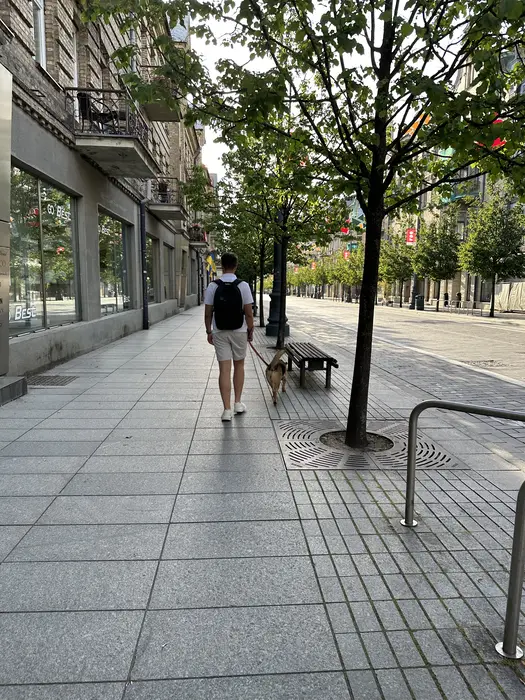
Luggage Storage in Vilnius
Where to store your bags in Vilnius: lockers at the central train station, app-based bag-storage shops near the Old Town, hotel left-luggage, and what to do on an airport or day-trip stopover.
Read guide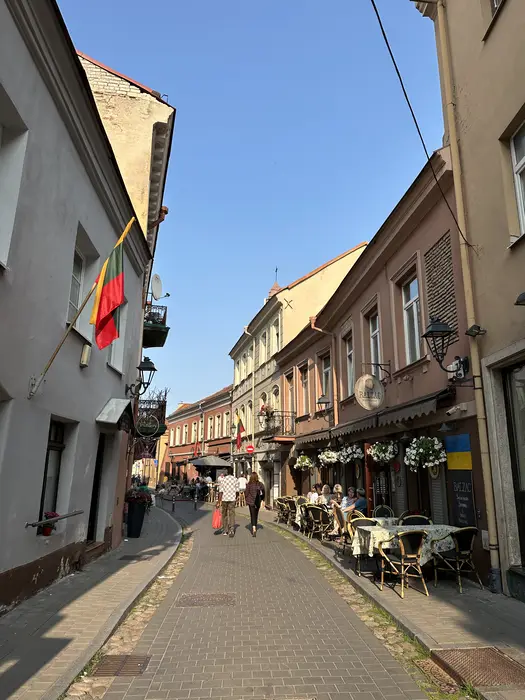
One Day in Vilnius: The Perfect Itinerary
A focused one-day Vilnius route — the Old Town, Gediminas Tower, Cathedral Square, Užupis, a proper Lithuanian lunch and sunset from Three Crosses. Walkable, well-ordered, no backtracking.
Read guide