
Traditional Lithuanian Food in Vilnius
What to eat in Vilnius, from cepelinai and šaltibarščiai to kibinai, dark rye bread, smoked fish, honey cake and beer snacks — and the best places to try each.
- ✓Lithuanian cooking is hearty, seasonal and rooted in the forest, the farm and the river — potatoes, rye, dairy, pork, game, mushrooms and berries do most of the heavy lifting.
- ✓The three dishes every visitor should try are cepelinai (potato dumplings), šaltibarščiai (cold pink soup) and kibinai (Karaim meat pastries) — each has its own dedicated guide.
- ✓Dark rye bread (ruginė duona) is the national staple: dense, sour, long-keeping and a genuine edible souvenir.
- ✓Summer brings light, cold dishes and berry desserts; winter leans into dumplings, stews and game — eat to the season for the best version of each.
- ✓Portions are generous and prices are modest, so a couple can eat a full Lithuanian meal, with beer, for far less than in Western Europe.
What Lithuanian food actually is
Lithuanian cuisine is the food of a northern, forested, agricultural country, and it tastes like it. The building blocks are potatoes, rye, dairy, pork, freshwater fish, mushrooms, beetroot and seasonal berries — ingredients that grow well in a cool climate and store well through a long winter. The result is hearty, comforting and unfussy: dishes built to fill you up after a day outdoors rather than to impress on a plate. For a visitor, that makes Vilnius an easy and rewarding place to eat, because the national dishes are distinctive, filling and cheap.
Two influences shape what you'll see on menus. The first is the deep peasant and farmhouse tradition — dumplings, pancakes, cold soups, smoked meats and rye bread — which survived Soviet decades largely intact and is now served with pride in folk-styled taverns across the Old Town. The second is the multicultural history of the Grand Duchy: Karaim, Tatar, Jewish, Polish and Russian communities all left dishes behind, which is why a Karaim meat pastry from Trakai sits comfortably alongside a borscht and a herring on the same national table.
If you only have a few meals in Vilnius, the strategy is simple: try the three signature dishes (cepelinai, šaltibarščiai and kibinai), eat a lot of dark rye bread, and round it off with whatever the season is offering — cold soups and berries in summer, game and stews in winter. Everything below is organised to help you do exactly that, with separate deep-dive guides for the headline dishes.
One reassurance before you start: Lithuanian food is approachable. There's nothing here designed to challenge an adventurous eater — no fearsome textures or extreme flavours — just generous, well-made comfort food rooted in ingredients you'll recognise. Menus in central Vilnius almost always carry English translations and photos, staff are used to explaining dishes, and vegetarians and families are well catered for. The biggest risk is over-ordering, because everything is filling and cheap. Pace yourself across the trip and you'll work through the whole canon without trouble.
- Staples: potatoes, dark rye, dairy (especially curd cheese, varškė), pork and freshwater fish.
- Seasonal stars: wild mushrooms and game in autumn, berries and cold soups in summer.
- Eat like a local: bread with everything, soup as a serious course, and beer or kvass to drink.
Cepelinai: the national dish
<!-- IMAGE SLOT: two cepelinai potato dumplings on a plate with sour cream and bacon, traditional Lithuanian tavern setting -->
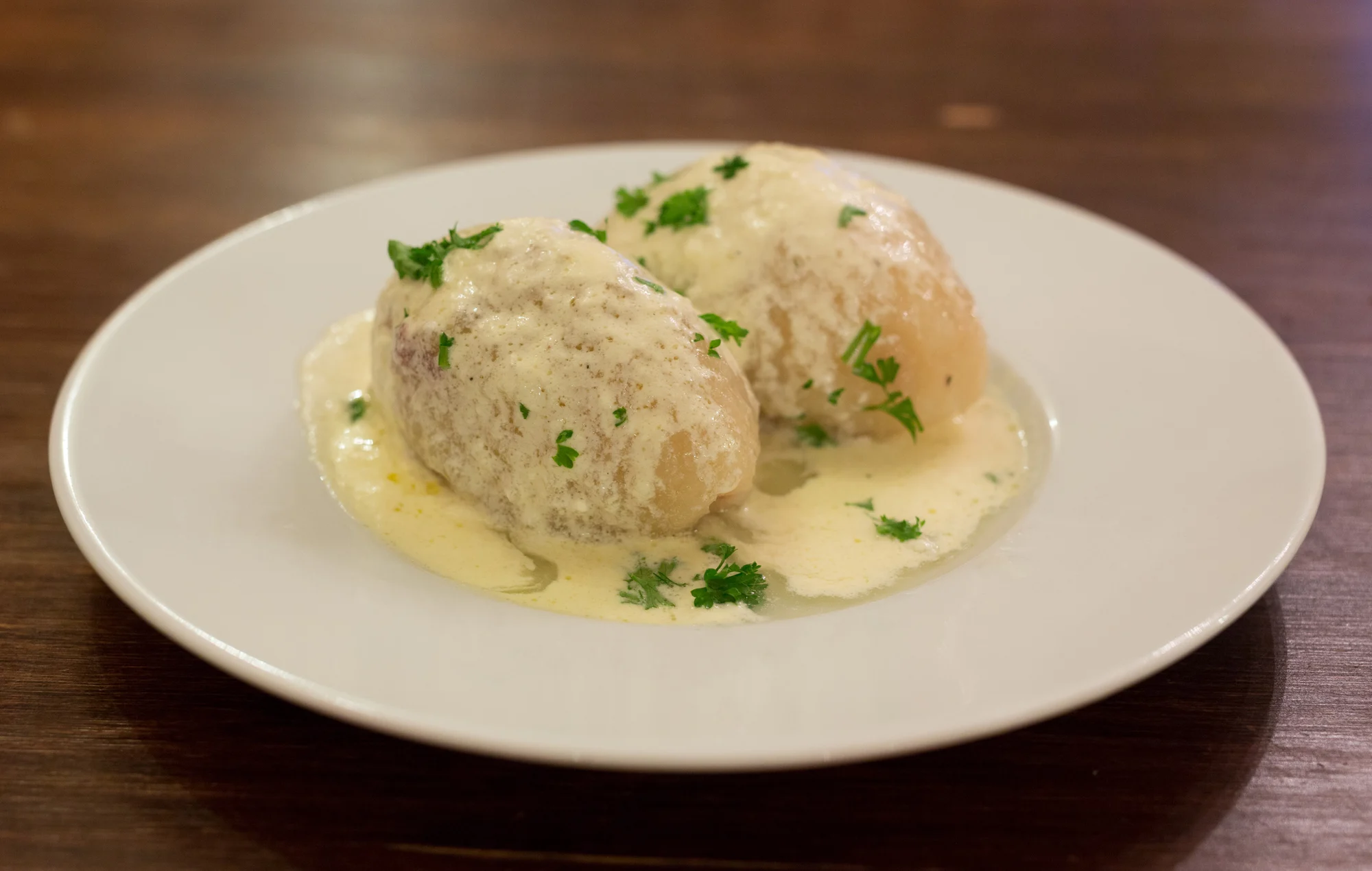
If Lithuania has one national dish, it's cepelinai — large, oval potato dumplings named after the Zeppelin airships they resemble. They're made from a dough of grated raw and boiled potato wrapped around a filling, most often minced pork, and boiled until heavy and glossy. They arrive smothered in a sauce of sour cream, fried onion and crispy pork crackling (spirgučiai), and a single portion of two is a serious meal — most people can't finish a third.
Cepelinai are comfort food in the truest sense: dense, rich and best eaten when you have nowhere to be afterwards. The classic move is to order them for a leisurely lunch rather than dinner, and to pair them with a cold local beer, which cuts through the richness. Vegetarian versions filled with curd cheese (varškė) or mushrooms are common, so this isn't a meat-only dish. They appear on virtually every traditional menu in the city, from atmospheric Old Town taverns to no-frills canteens, so you'll never struggle to find them — the only trick is finishing a portion. We've given cepelinai a full guide of their own, covering portions, fillings and where comfortably to fit them into a day of walking.
Portions, fillings, vegetarian options and where to try the national dish.
Budget Eats in VilniusFilling, affordable meals — cepelinai included.
Map pins
Map data © OpenStreetMap contributors · Tiles © OpenFreeMap
Šaltibarščiai: the cold pink soup
<!-- IMAGE SLOT: bright magenta-pink cold beetroot soup šaltibarščiai with a side of hot boiled potatoes and dill, summer outdoor table -->
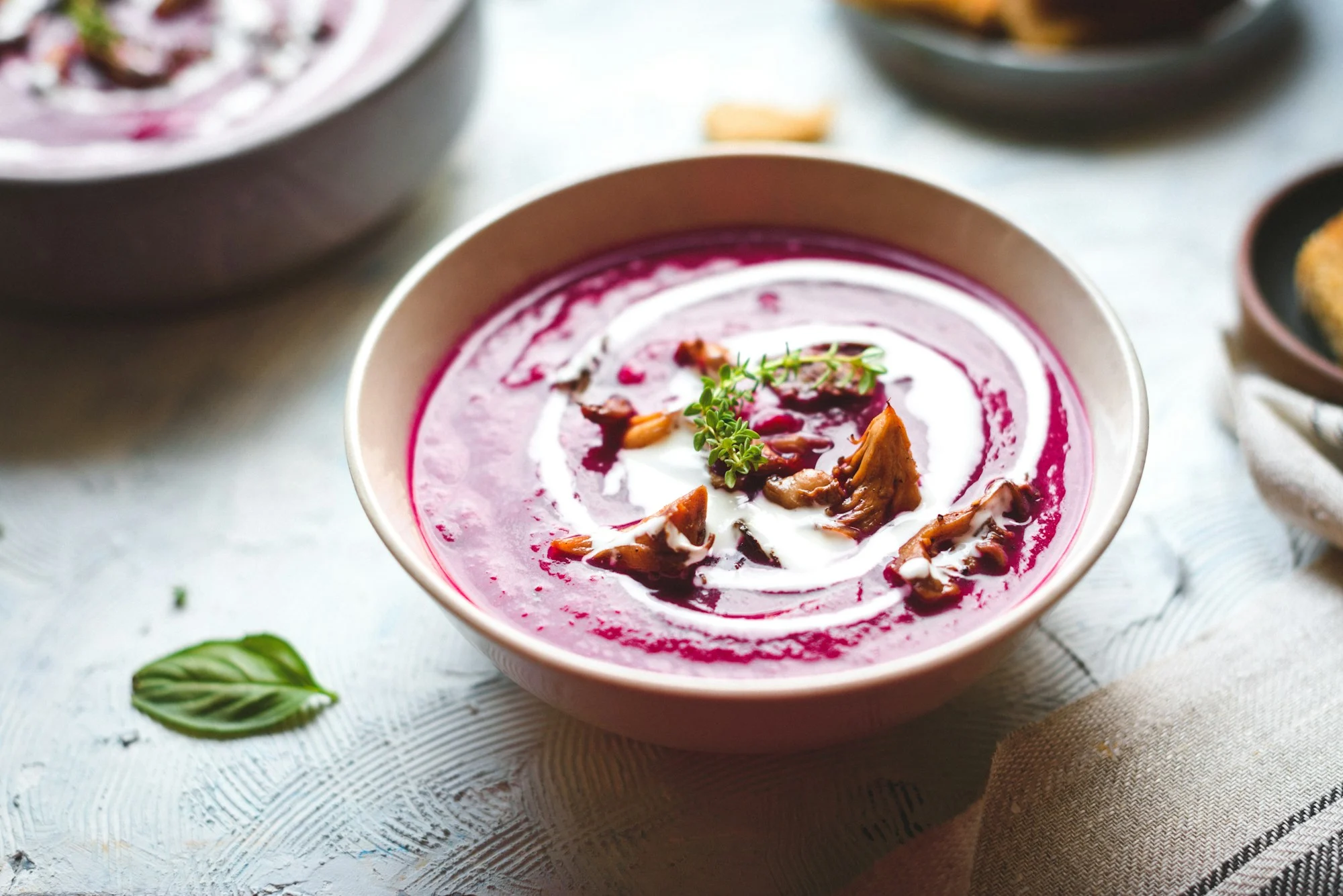
Šaltibarščiai is the most photogenic thing on any Lithuanian menu: a vivid magenta-pink chilled soup of beetroot, kefir and buttermilk, studded with cucumber, dill and chopped hard-boiled egg, and served — crucially — with a side plate of hot boiled potatoes. The contrast of cold soup and hot potato is the whole point, and it's the perfect thing to eat on a warm Vilnius afternoon.
This is a summer dish above all; you'll see it everywhere from May through August, and the city even throws an annual Pink Soup Fest in its honour. Out of season many places still serve it, but summer is when it's at its best and most ubiquitous. Light, tangy and refreshing, it's the easiest Lithuanian dish for newcomers to love. Our dedicated šaltibarščiai guide covers where and when to try it, plus the festival context.
Kibinai and the Karaim table
Kibinai (kybynlar in the Karaim language) are crescent-shaped baked pastries filled with seasoned chopped mutton or beef, brought to Lithuania centuries ago by the Karaim — a small Turkic community whose cultural centre is the lakeside town of Trakai, an easy day trip from Vilnius. Hot from the oven, with a flaky shell and a juicy filling, they're the perfect hand-held snack, traditionally eaten with a cup of clear broth.
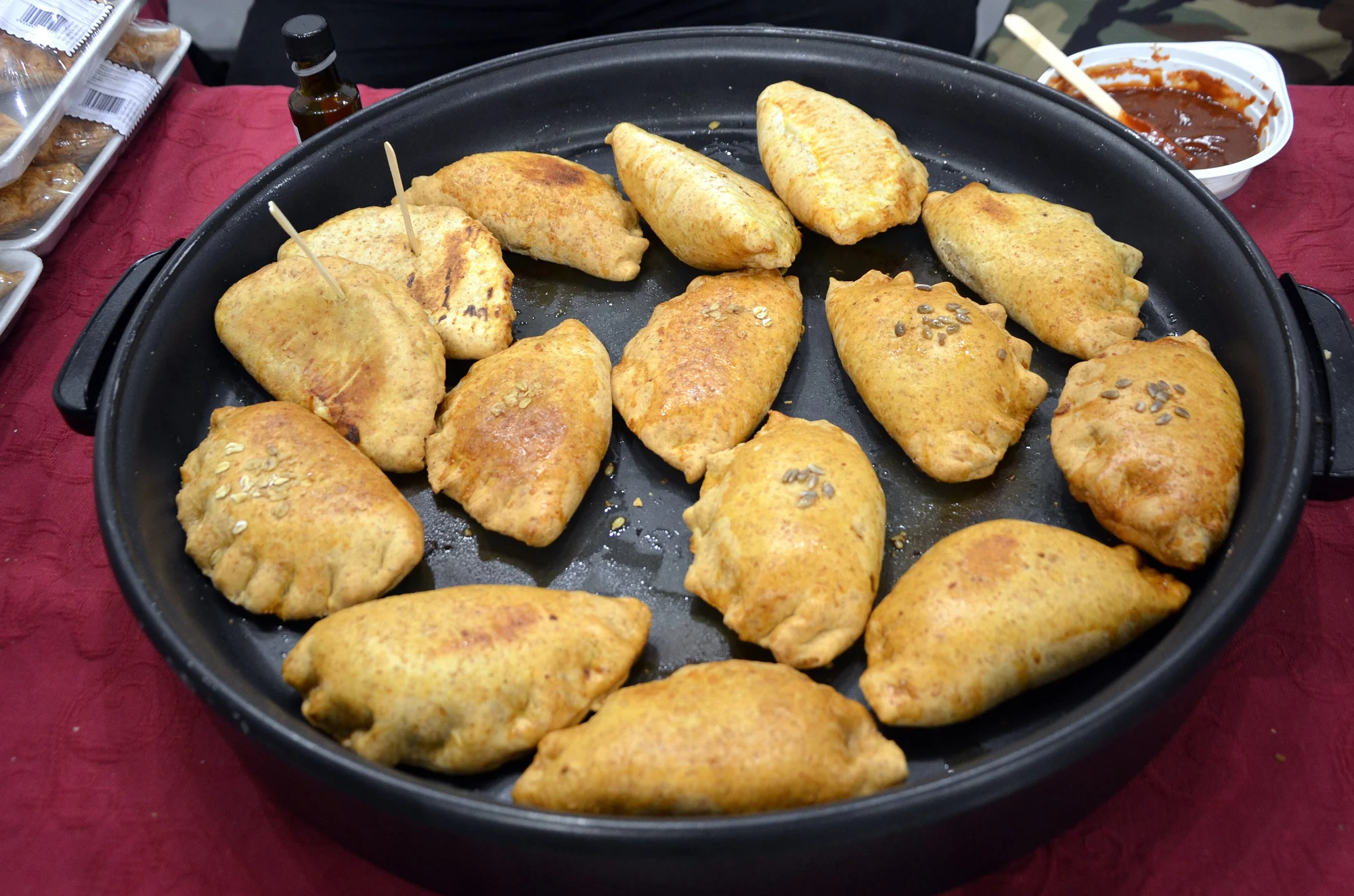
You'll find kibinai in Vilnius bakeries and cafés, but the classic experience is to eat them in Trakai itself, where Karaim restaurants have been baking them for generations. They make the ideal pairing with a castle-and-lake day trip. Our kibinai guide explains what they are, why Trakai matters, and where to eat them either in the city or on the road.
Bread, dairy and the everyday table
Beyond the headline dishes, the everyday Lithuanian table is built on dark rye bread and dairy. Ruginė duona — dense, sour, almost black rye — is served with nearly every meal and keeps for days, which makes a wrapped loaf one of the best edible souvenirs you can carry home. A close cousin is the beer snack you'll meet in every bar: kepta duona, deep-fried rye-bread sticks rubbed with garlic and served with a cheese dip, engineered precisely to make you order another drink.
Dairy runs through everything. Curd cheese (varškė) fills pancakes and dumplings and sweetens cheesecakes; sour cream (grietinė) tops soups, dumplings and pancakes alike; and kefir and buttermilk form the base of that famous cold soup. Look out, too, for varškės sūris, a mild farmer's cheese, and for the smoked cheeses sold at markets. Potato pancakes (bulviniai blynai) and the baked potato pudding kugelis (a Lithuanian-Jewish crossover) round out the carbohydrate-rich heart of the cuisine.
For the sweet finish, the show-stopper is šakotis — a spit-baked, tree-shaped cake with spiky branches, traditionally served at weddings and celebrations and sold in tall golden cones at markets and the Kaziukas Fair. Simpler everyday sweets include honey cake (medutis), curd-cheese pastries and seasonal berry desserts. A market stall or a bakery counter is the easiest place to graze your way through all of them.
- Ruginė duona — dark sour rye, the national bread and a great souvenir.
- Kepta duona — fried garlic rye sticks, the classic beer snack.
- Kugelis — baked grated-potato pudding, rich and savoury.
- Šakotis — spiky spit-cake for celebrations; honey cake (medutis) for every day.
Forest, river and the seasonal kitchen
Lithuanians take foraging seriously, and the forest shapes the autumn menu in particular. Wild mushrooms — chanterelles, ceps and more — are gathered enthusiastically and turn up in sauces, soups and side dishes from late summer onward; a plate of fried chanterelles in cream over the right few weeks is one of the country's great seasonal treats. Berries follow the same rhythm: wild strawberries, bilberries, lingonberries and cranberries appear in desserts, drinks and preserves.

Game is the other forest food. Traditional taverns serve venison, wild boar and even beaver, usually slow-cooked into rich stews — the kind of thing best eaten on a cold evening. Freshwater fish from the country's many lakes and rivers, especially smoked, is a staple you'll find piled at every market: smoked eel, bream and other catches, sold by weight and eaten with rye bread. For a romantic, atmospheric version of all this, the Old Town's historic cellar restaurants do game and smoked fish particularly well.
The simplest way to eat seasonally is to follow the markets and ask what's fresh. In summer, that means cold soups, new potatoes and berries; in autumn, mushrooms and game; in winter, dumplings, stews and pickles; in spring, the first greens and Easter baking. Eating to the season isn't just romantic advice — it's genuinely how the best Lithuanian food works.
What to drink: beer, kvass and herbal balsam
<!-- IMAGE SLOT: glasses of amber Lithuanian craft beer and dark beer snacks (fried rye bread, smoked cheese) on a wooden tavern table -->
Food this hearty needs something to wash it down, and Lithuania has a serious drinking tradition to match. Beer (alus) is the national drink, and the country has a deep, distinctive brewing heritage — particularly the rustic farmhouse beers of the northern Aukštaitija region, which predate and differ from mainstream lager. The modern craft-beer scene in Vilnius has revived and refined all of this, so you can drink everything from a crisp pale ale to a cloudy traditional farmhouse brew. A cold beer is the default partner for cepelinai, fried rye and smoked snacks, and the bars make a relaxed evening out of it.
For something non-alcoholic and traditional, look for gira — Lithuanian kvass, a lightly fermented, faintly sweet drink made from rye bread, sold on tap at markets and summer kiosks. It's refreshing, low in alcohol to the point of being family-friendly, and an authentic taste of the everyday. At the other end of the spectrum sits Trejos devynerios ('999'), a bitter herbal balsam infused with dozens of botanicals — an acquired taste, traditionally taken as a digestif or a cold remedy, and a memorable, very local thing to try once.
Mead (midus), made from fermented honey, is another old Lithuanian drink worth seeking out, often sold alongside honey cake and other honey products at markets and the Kaziukas Fair. Between the beer, the kvass, the mead and the balsam, the drinks here are as distinctive as the food — and pairing them thoughtfully turns a plate of dumplings into a proper Lithuanian meal.
- Alus (beer) — the national drink, with a strong farmhouse and craft tradition.
- Gira — refreshing, lightly fermented rye kvass, sold on tap in summer.
- Trejos devynerios ('999') — bitter herbal balsam, a memorable digestif.
- Midus (mead) — fermented honey drink, sold at markets and fairs.
Eating through the festivals and the calendar
Lithuanian food is closely tied to the calendar, and timing your visit to a food festival or a holiday turns eating into an event. The biggest is the Kaziukas Fair (Kaziuko mugė), a huge spring artisan and food market held across the Old Town each March, where you'll find tall golden cones of šakotis, smoked meats and cheeses, honey and mead, gingerbread hearts, and stalls of every Lithuanian treat — the single best place to graze through the country's food traditions in one go.

Summer brings the city's playful Pink Soup Fest, a whole festival devoted to šaltibarščiai, while markets fill with berries and the first wild mushrooms toward autumn. Christmas has its own table entirely: the meatless, twelve-dish Kūčios supper on Christmas Eve, built around fish, mushrooms, poppy-seed dishes and the small biscuits called kūčiukai eaten with poppy-seed milk. Easter brings decorated eggs (margučiai), baking and roast meats. Eating in Vilnius around any of these dates connects you to the traditions behind the dishes, not just the dishes themselves.
Even outside the big festivals, the seasonal markets are the easiest window into all of this — a place to taste, buy and ask questions. Combine a market visit with one sit-down traditional meal and you'll have covered the full sweep of Lithuanian eating in a single, very enjoyable day.
Where and how to eat traditional food in Vilnius
You don't have to hunt for traditional food in Vilnius — it's everywhere, from rustic folk-themed taverns with timber interiors and waitstaff in linen aprons to humble lunch canteens (valgyklos) where locals eat cheaply on weekdays. The taverns are the tourist-friendly, atmospheric option and a reliable place to try the classics in one sitting; the canteens are where you eat the same food at half the price, cafeteria-style, alongside office workers on their lunch break. Both are worth doing, and they suit different moods: the tavern for a proper meal out, the canteen for a fast, honest, no-frills lunch.
There's also a thriving modern Baltic scene that reinvents these traditions with contemporary technique — tasting menus built on foraged ingredients, fermented vegetables, local fish and game, plated as carefully as anything in Western Europe. If you want to see where Lithuanian cooking is heading rather than where it's been, a meal at one of these kitchens is the other half of the story, and a memorable special-occasion choice.
A few practical notes. Lunch (pietūs) is the traditional main meal, and many places offer a cheap set lunch on weekdays — the best value going. Soup is treated as a proper course, not an afterthought, so expect a generous bowl. Bread usually comes with the meal but may be charged separately. Tipping is modest: rounding up or roughly 10% in a sit-down restaurant is plenty. Cards and contactless are accepted almost everywhere. And portions, especially of dumplings, are large — order conservatively, share a starter, and don't feel obliged to finish everything.
For couples, a cellar tavern with candlelight, game and a bottle of local craft beer makes a genuinely romantic, distinctly Lithuanian evening. For families and budget travellers, a market hall or a canteen delivers the same flavours faster and cheaper, and children usually take to the dumplings and pancakes. However you do it, build at least one fully traditional meal into your trip — and consider a guided food tour if you'd rather have the dishes, and the history behind them, explained as you eat your way around the city.
- Folk taverns: atmospheric, tourist-friendly, all the classics in one place.
- Valgyklos (canteens): the same food, cafeteria-style, at local prices.
- Modern Baltic kitchens: contemporary tasting menus for a special occasion.
- Set weekday lunch is the best value; soup is a serious course; portions are big.
Common questions about Lithuanian food
Is Lithuanian food good for vegetarians? Better than you might expect. Cold pink soup is naturally vegetarian, cepelinai and other dumplings come with curd-cheese or mushroom fillings, potato pancakes and kugelis are meat-free, and curd-cheese pastries cover the sweet end. Vilnius also has a growing number of dedicated vegetarian and vegan restaurants, so plant-based travellers are well served alongside the traditional table.
Is it expensive? No — eating traditional food in Vilnius is one of the cheaper pleasures in Europe. A hearty portion of cepelinai or a bowl of soup with bread costs a fraction of what an equivalent meal would in Western European capitals, and canteens and markets bring the price down further. Even a sit-down meal with beer at an atmospheric tavern is good value. The main budget tip is simply not to over-order, because portions are large.
How spicy or unusual is it? Not spicy at all, and rarely challenging. Lithuanian cooking is mild, savoury and comforting, built on familiar ingredients — potato, pork, dairy, bread, beetroot. The most 'unusual' things on a typical menu are the game dishes and the bitter herbal balsam, both optional. For most visitors, including children and cautious eaters, the food is easy to enjoy from the first bite.
What should I eat first? If you have one meal, make it cepelinai with a cold beer at a traditional tavern — it's the national dish and the fullest single expression of the cuisine. If you have a second, add šaltibarščiai in summer or game and mushrooms in autumn. If you have a third, take the short trip to Trakai for kibinai by the lake. Cover those and you've eaten the heart of Lithuania.
Related guides

Šaltibarščiai in Vilnius: The Cold Pink Soup
Where and when to try Lithuania's vivid cold pink beetroot soup in Vilnius — summer timing, what it tastes like, how it's served, and the Pink Soup Fest context.
Read guide
Cepelinai in Vilnius: Lithuania's Potato Dumplings
Where to try Lithuania's national potato dumplings in Vilnius — what cepelinai are, portion sizes, vegetarian options, and where heavy comfort food fits into your day.
Read guide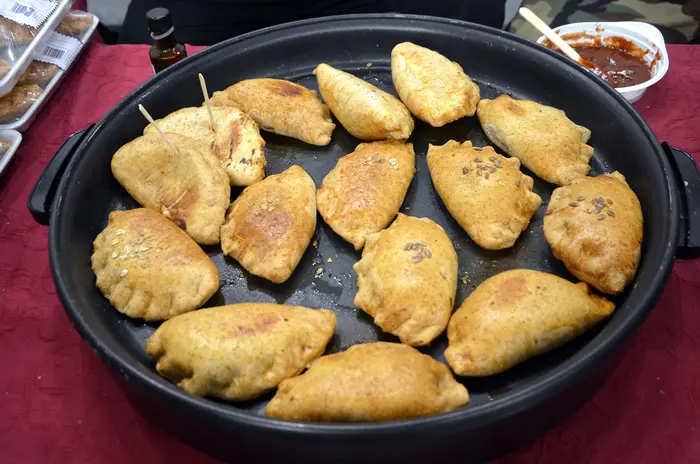
Kibinai in Vilnius & Trakai: The Karaim Pastries
What kibinai are, why Trakai matters, and where to eat the Karaim meat pastries — in Vilnius or as part of a Trakai castle-and-lakes day trip.
Read guide