
MO Museum guide
Tickets, exhibitions, architecture, family fit, bistro and how MO fits a modern-art and rainy-day Vilnius day.
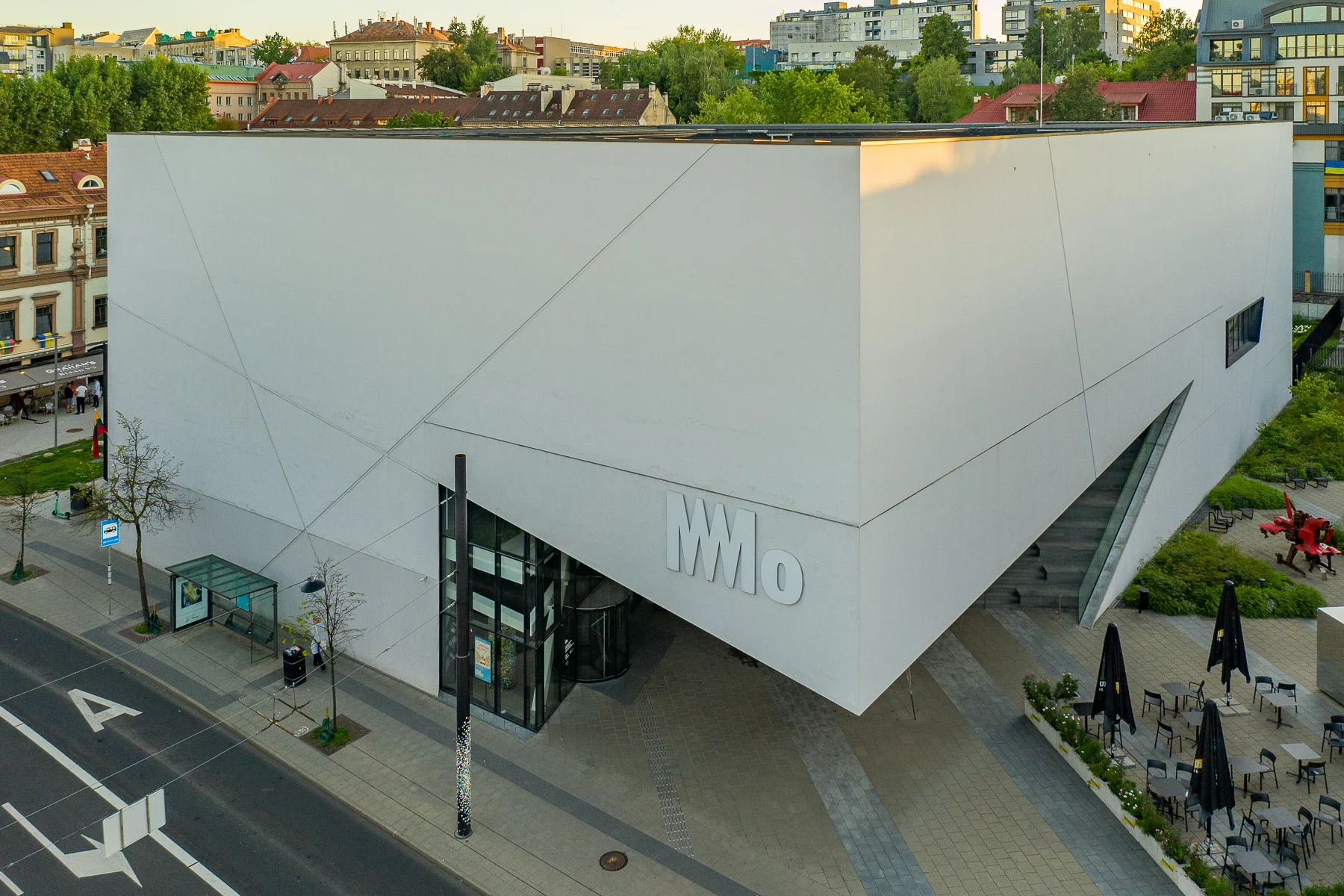
- ✓MO Museum is Vilnius's headline modern-art museum — a private collection of Lithuanian art from the 1960s to today, in a striking Daniel Libeskind building near the Old Town.
- ✓Opened in 2018, it shows rotating exhibitions rather than a fixed display, so there's usually something new even on a repeat visit.
- ✓It's compact and very doable in 1.5–2 hours, with a café/bistro, shop and a sculpture-friendly forecourt.
- ✓Great for a rainy day, an art-and-design itinerary, or a low-key cultural hour between Old Town sights.
- ✓Hours and prices shift — check the official site before you go; we cite the latest below.
What MO is
MO Museum (MO muziejus) is Vilnius's leading museum of modern and contemporary art, and the city's most talked-about cultural addition of the last decade. It grew out of a private collection assembled by the scientists and philanthropists Viktoras and Danguolė Butkus, who spent years buying up Lithuanian art and then built a public museum to house and share it. The collection runs to several thousand works — paintings, sculpture, photography, graphics and installation — focused on Lithuanian art from the 1960s through to the present, including pieces made under Soviet rule that were never officially sanctioned at the time.
Crucially, MO is not a static hang. Rather than a fixed permanent display, it mounts a programme of changing thematic exhibitions drawn from the collection and supplemented by guest works, which means the experience is different from season to season. That makes it worth checking what's on before you go — and worth a return visit if you've been before. The curation is accessible and often playful, aimed at first-time gallery-goers as much as art insiders.
It opened to the public in October 2018 and quickly became a fixture of the Vilnius scene — a 'small but beloved' museum, as locals put it, that punches well above its size.
What makes the collection special is its time frame. The 1960s to the present spans the late-Soviet decades, the dramatic break of the independence movement, and the explosion of free expression since 1990 — so MO doubles as a visual history of how Lithuanian society changed. You'll find works that quietly resisted Soviet doctrine, the raw energy of the perestroika years, and the confident, internationally minded art of recent times, all curated to be legible to visitors who know nothing about Lithuania. It's one of the most efficient ways in the city to understand the country's recent past through its art.
The Libeskind building
Half the reason to visit is the building itself. MO is housed in a purpose-built museum designed by the world-renowned architect Daniel Libeskind — his first completed project in the Baltics — on the edge of the Old Town where a Soviet-era cinema once stood. The structure is classic Libeskind: a crisp white volume with angled walls and sharp geometry, conceived as a 'gateway' between the medieval city and a modern public space, with a grand external staircase and clean, light-filled galleries inside.
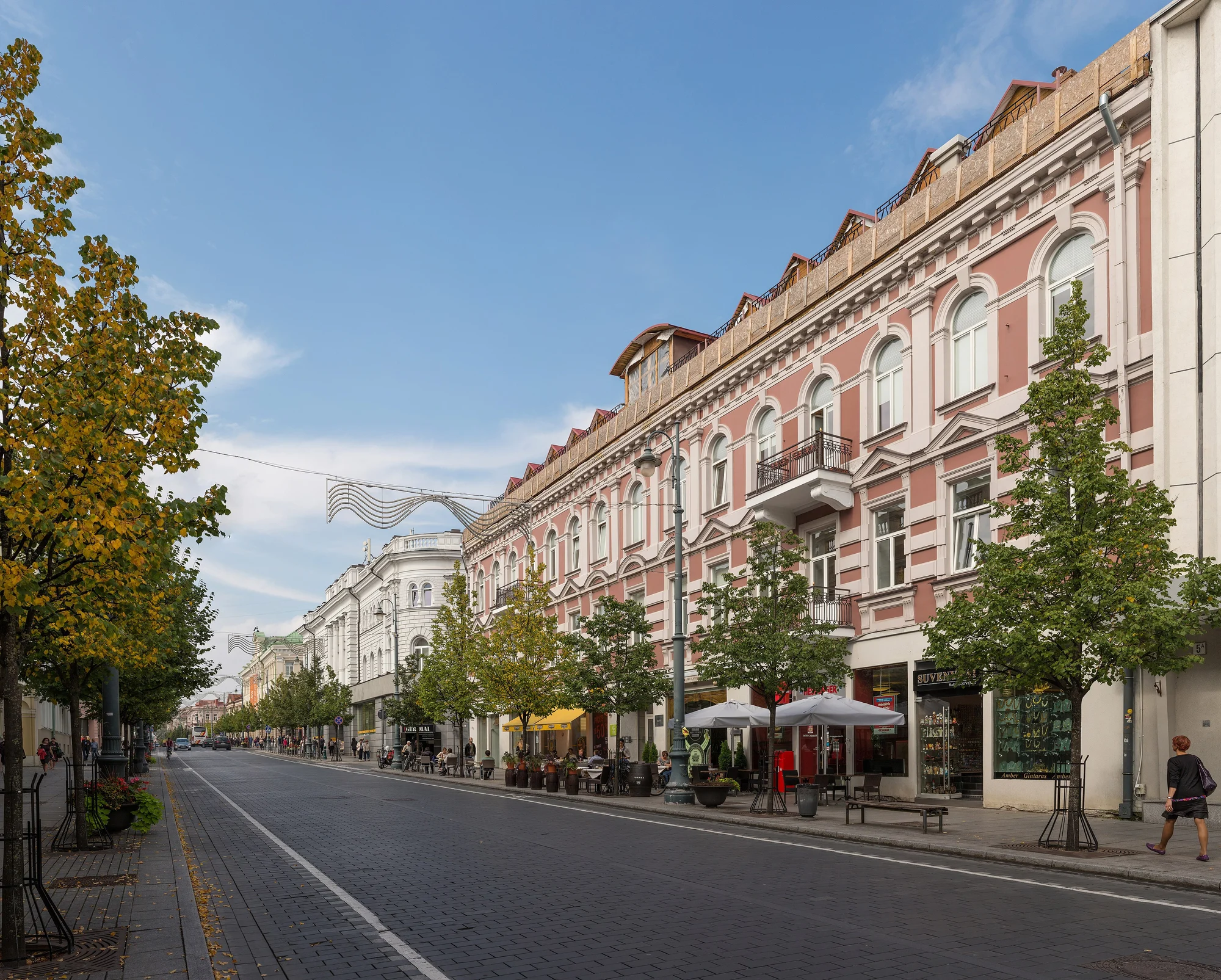
The architecture does real work for the visit. Skylights and a sculptural internal stair choreograph the way you move through the floors, and the angled surfaces create unexpected sightlines that keep the spaces feeling alive. The forecourt and stair have become a hangout in their own right — a place locals sit on a sunny afternoon — and a popular photo spot. Even visitors who aren't sure about modern art tend to leave impressed by the space that holds it.
Libeskind, best known for buildings like the Jewish Museum in Berlin and the master plan for the World Trade Center site, designed MO as a deliberately civic gesture: the broad external staircase functions almost as a public square, drawing the city up and into the building, while a large 'gate' framing the entrance symbolically links the medieval streets behind it to the contemporary art within. It is a relatively small building by his standards, but it concentrates his signature ideas — fractured geometry, dramatic natural light, movement as architecture — into a space you can read in a single visit.
The museum sits just outside the Old Town wall, a short walk from the Town Hall and the Gates of Dawn, on the edge of the Naujamiestis (New Town) district — easy to reach on foot from almost anywhere central.
The district around MO Museum.
Vilnius photo spotsThe Libeskind stair is a photographer's favourite.
Map pins
Map data © OpenStreetMap contributors · Tiles © OpenFreeMap
Tickets, hours and how long to stay
MO is on Pylimo Street (Pylimo g. 17), right at the edge of the Old Town. As of the latest published information, the standard adult ticket is around €11, with reduced rates (roughly €6) for students, schoolchildren, seniors and children aged 4–7, a family ticket for two adults and up to four children, and a discount for Vilnius Pass holders; under-3s and over-80s go free. Tickets are sold online and at the door, with the last admission about 30 minutes before closing. Because pricing and concessions change, treat these as a guide and confirm on the official site when you book.
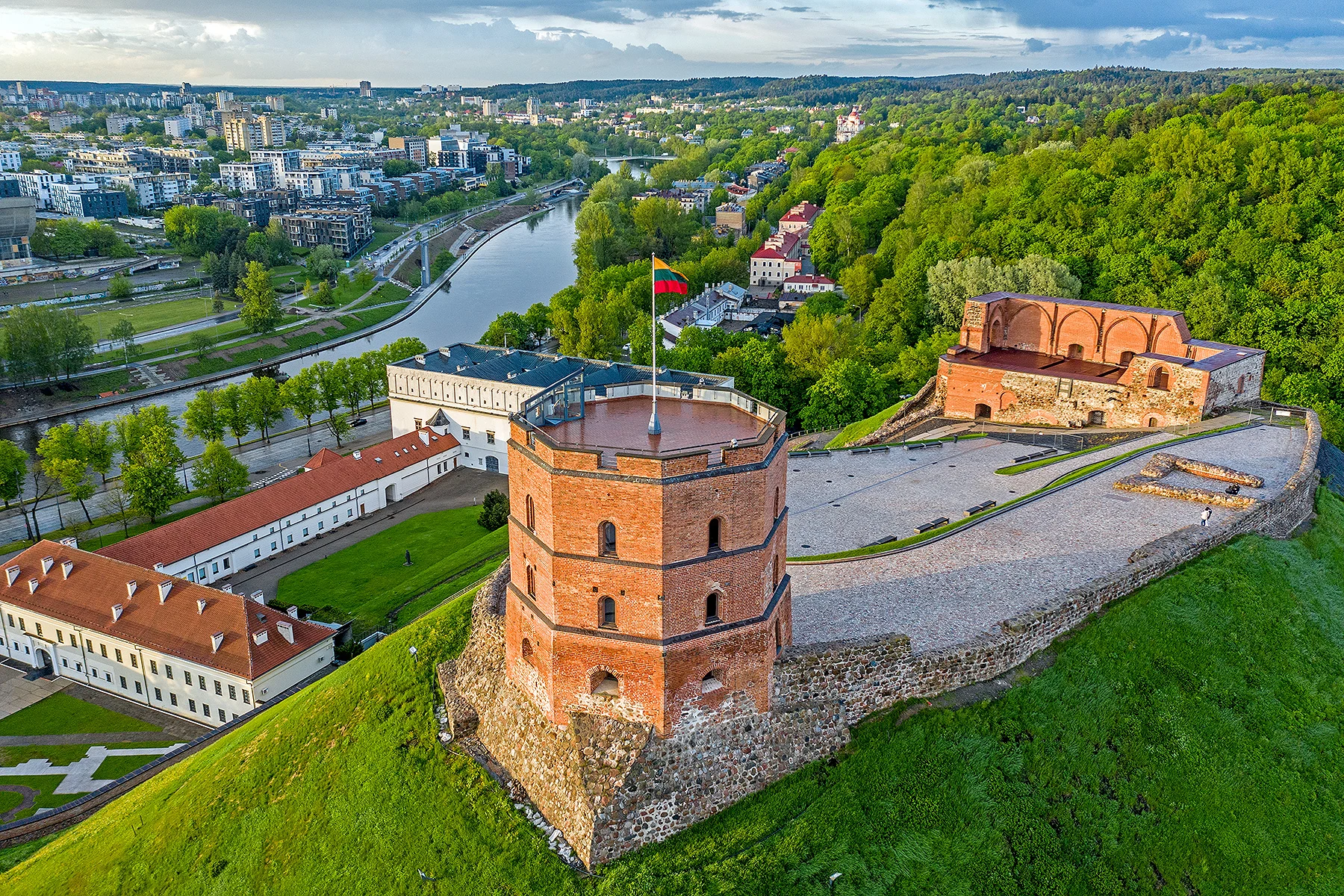
Opening hours have generally been long — open most days from late morning into the evening, with a later closing on Fridays and a typical closed day midweek (often Tuesday). The exact schedule shifts with the season and with exhibition changeovers, so check mo.lt before making a special trip, especially if you're aiming for a weekday or an evening visit. During Vilnius's Museum Night in May, MO usually opens late and free as part of the citywide event.
Plan on about ninety minutes to two hours. MO is deliberately compact — you can see the current exhibition thoughtfully in that time without rushing — which makes it easy to slot into a half-day. Allow a little extra if you want to linger over the bistro, the shop, or the building.
- Address: Pylimo g. 17, on the Old Town edge.
- Standard ticket ~€11; reduced ~€6; family and Vilnius Pass rates available — verify on mo.lt.
- Open most days late morning to evening, later on Fridays, usually closed one weekday — confirm before visiting.
- Allow 1.5–2 hours; last entry ~30 minutes before closing.
Families, the bistro and fitting MO into your day
MO works well for families. The building invites movement, the exhibitions are accessible rather than forbidding, and the museum runs an active education programme with workshops and family-friendly weekends. The compact scale helps too — children rarely flag before you've seen everything — and the forecourt and stair give restless kids somewhere to burn off energy before or after. Check the website for current family activities, which often cluster on weekends.
It's also a strong choice for travellers who don't consider themselves 'art people'. The shows are themed around accessible ideas rather than dense art-historical argument, the labelling is clear and bilingual, and the whole thing can be enjoyed in well under two hours, so there's little risk of museum fatigue. Pair that with the striking building and the on-site café, and MO becomes one of those rare cultural stops that satisfies enthusiasts and reluctant gallery-goers alike — which is a big part of why it has become so beloved in the city.
On site there's a bistro/café and a well-curated shop. The café is a pleasant stop for coffee, cake or a light lunch, and many visitors treat it as part of the outing rather than an afterthought; the shop is strong on art books, prints and design objects if you want a more original Vilnius souvenir than a fridge magnet. Both can be visited without a museum ticket, which makes MO a nice low-commitment stop even if you're not sure you want to see the show — you can sit with a coffee on the forecourt, browse the books, and decide.
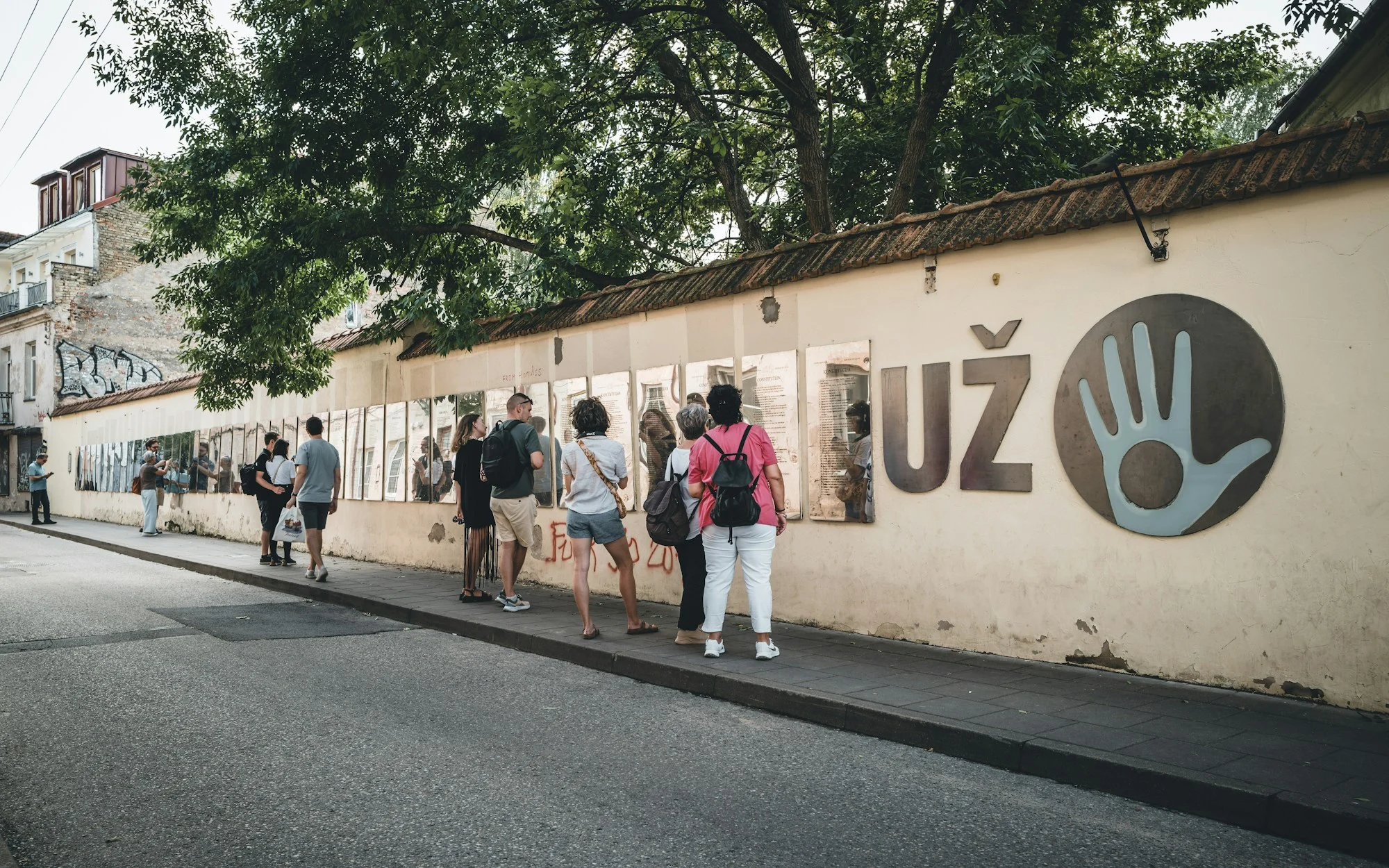
Where MO really shines is as the anchor of a creative half-day. Pair it with Užupis and the city's street art for an art-and-design route, fold it into a two-day Vilnius plan, or keep it in your back pocket as the obvious move when the weather turns. It's central, indoor, reliably interesting and quick to see — exactly the kind of flexible cultural stop that makes a city trip feel well-rounded.
A few final tips to get the most from a visit. If you can, read the exhibition theme before you arrive — MO's shows are built around an idea, and knowing it makes the works click into place faster. English labelling is good, and the free or low-cost audio and printed guides are worth picking up. The museum is fully accessible, with lifts between floors. And don't rush straight out at the end: the rooftop and external stair give a different perspective on the building, and the forecourt is one of the nicer spots near the Old Town simply to sit for ten minutes and watch the city go by.
Related guides
Best museums in Vilnius
Choose the right Vilnius museums for you — by history, art, Jewish heritage, rainy-day comfort, kids and value. A ranked, honest guide to MO Museum, the Palace of the Grand Dukes, the occupation museums, the National Museum and more.
Read guide
Rainy Day in Vilnius
What to do in Vilnius when it rains: museums, cafés, food halls, churches, galleries, spa hotels and cozy indoor routes for wet or cold days.
Read guide
Naujamiestis (New Town) Neighborhood Guide
A guide to Naujamiestis, Vilnius's creative engine in transition: converted factories, third-wave cafés and wine bars, the MO Museum, indie venues and a base between the station and the Old Town that leans local, not touristy.
Read guide