
Trakai Island Castle: A Day Trip from Vilnius
How to visit Trakai Island Castle from Vilnius: tickets, opening hours, the bridge approach, the museum route, lake views, kibinai, and how to pace the whole island day.
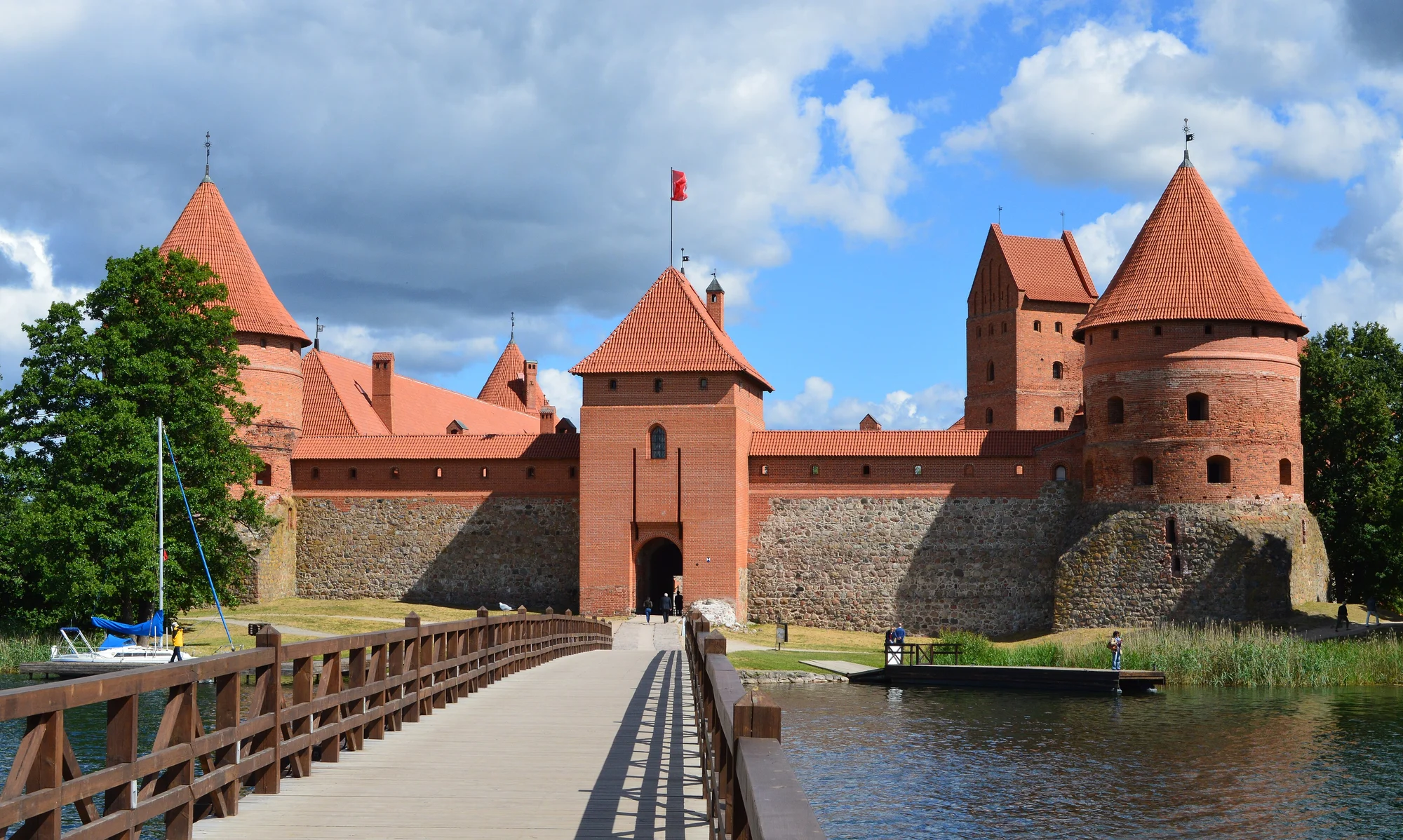
- ✓Trakai Island Castle is a fairy-tale red-brick fortress on an island in Lake Galvė, about 28 km west of Vilnius — the single most popular day trip from the city.
- ✓It's reachable in roughly 30–45 minutes by direct train or bus from the stations beside each other near the Old Town, then a pleasant 25–30 minute lakeside walk to the castle.
- ✓The castle is a museum: you cross a long wooden footbridge, enter the ducal palace courtyard, and follow casemate galleries of armour, coins, and Grand Duchy history.
- ✓Trakai is also the home of Lithuania's Karaim community — eat kibinai (hot stuffed pastries) on the main street before or after the castle.
- ✓Half a day covers the castle comfortably; a full day lets you add a boat trip, a swim in summer, or the lakeside trails.
Why Trakai is the day trip everyone takes
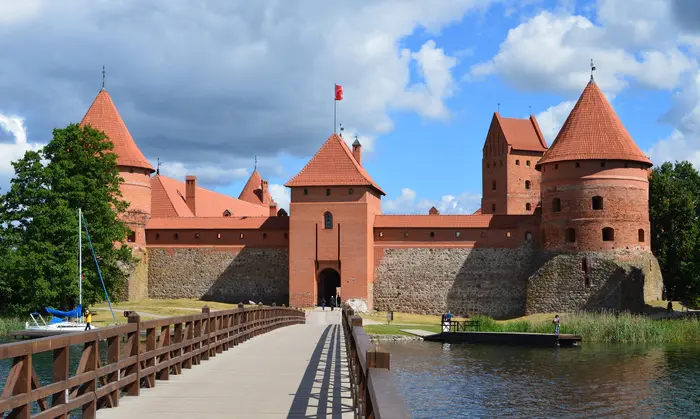
If you only make one excursion from Vilnius, it's almost certainly Trakai. The reason is simple: nowhere else this close to the capital delivers a complete fairy-tale picture — a restored Gothic castle of warm red brick sitting on its own island, ringed by water, reached by a long wooden bridge, with sailboats drifting across the lake behind it. It photographs like a film set and it's genuinely historic, which is a rare combination. For most visitors it lands as the most purely scenic half-day of the whole trip.
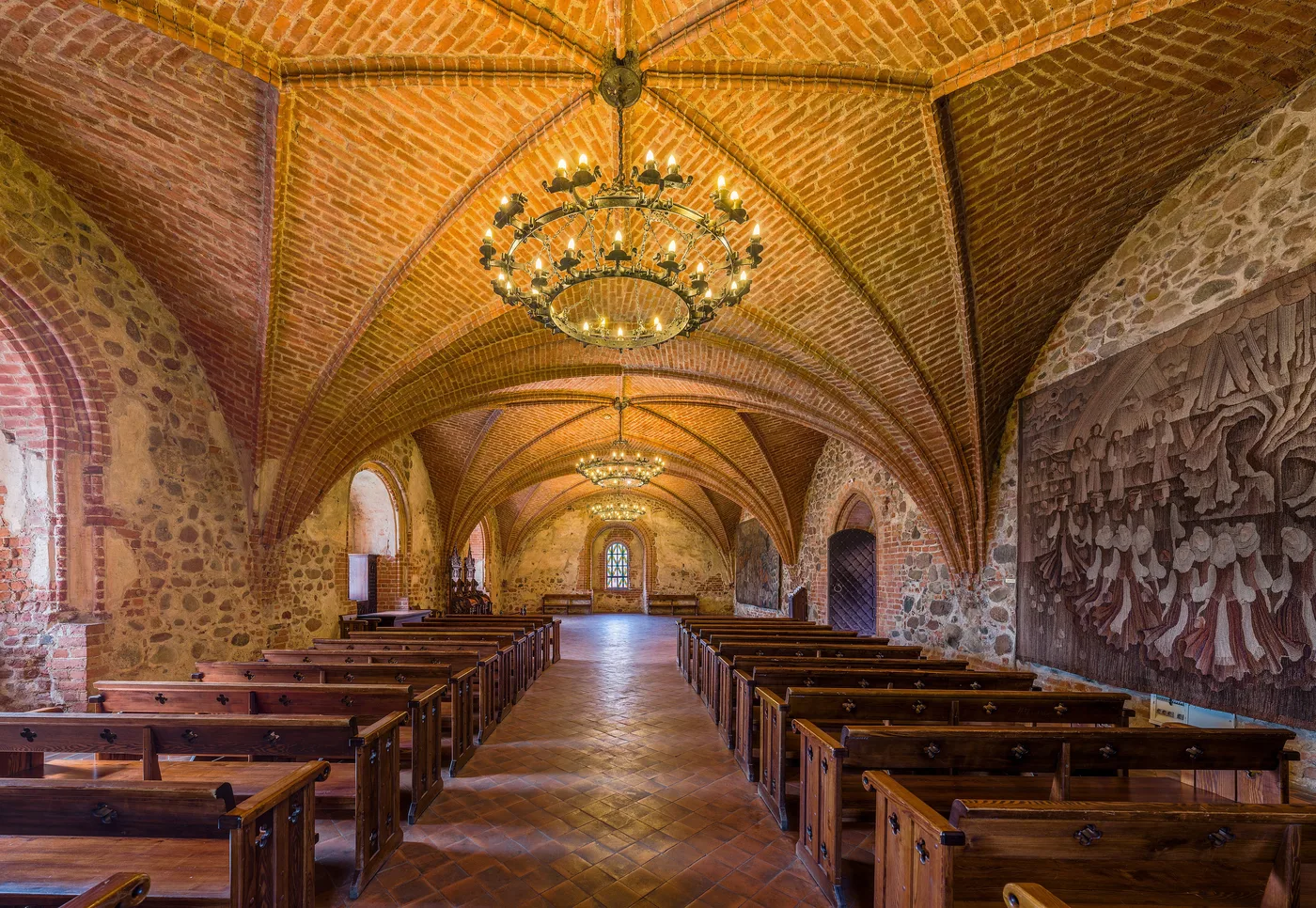
Trakai was the medieval seat of the Grand Duchy of Lithuania, the power base of Grand Duke Vytautas in the late 14th and early 15th centuries, when Lithuania was the largest state in Europe. The Island Castle you see today was built across the 14th–15th centuries as a defensive and residential stronghold, fell into ruin over the centuries, and was painstakingly reconstructed in the 20th century to become the Trakai History Museum. So you're looking at a careful restoration rather than a survived original — but the silhouette, the setting, and the sense of a frontier capital are entirely real.
The town of Trakai wraps around the lakes on a narrow peninsula, lined with brightly painted wooden houses. It's also the historic home of the Karaim (Karaite) people, a small Turkic community Vytautas brought to Lithuania from Crimea around 1397 as a palace guard. Their legacy survives in the wooden houses with three front windows, a kenesa (prayer house), and — most deliciously — kibinai, the hot stuffed pastries that have become a Lithuanian institution. Trakai, in other words, is a castle, a lake district, and a living minority-culture town rolled into one easy outing.
There's also a second castle here that most rushed visitors miss. The Peninsula Castle, on the mainland strip leading into town, is older than the famous island fortress and now survives mainly as evocative ruins among the trees — quieter, free to wander around, and a nice ten-minute detour for anyone interested in the full picture of medieval Trakai. Between the two castles, the lakes, the Karaim heritage and the food, Trakai packs an unusual amount of variety into a small area, which is exactly why it works so well as a flexible half- or full-day rather than a single-sight stop.
Getting there: train, bus, car, or tour
Trakai sits about 28 km west of Vilnius and is one of the easiest day trips in the Baltics because both public-transport options leave from the same place. The train and bus stations stand right next to each other near the southern edge of the Old Town, a short walk or quick taxi from the centre.
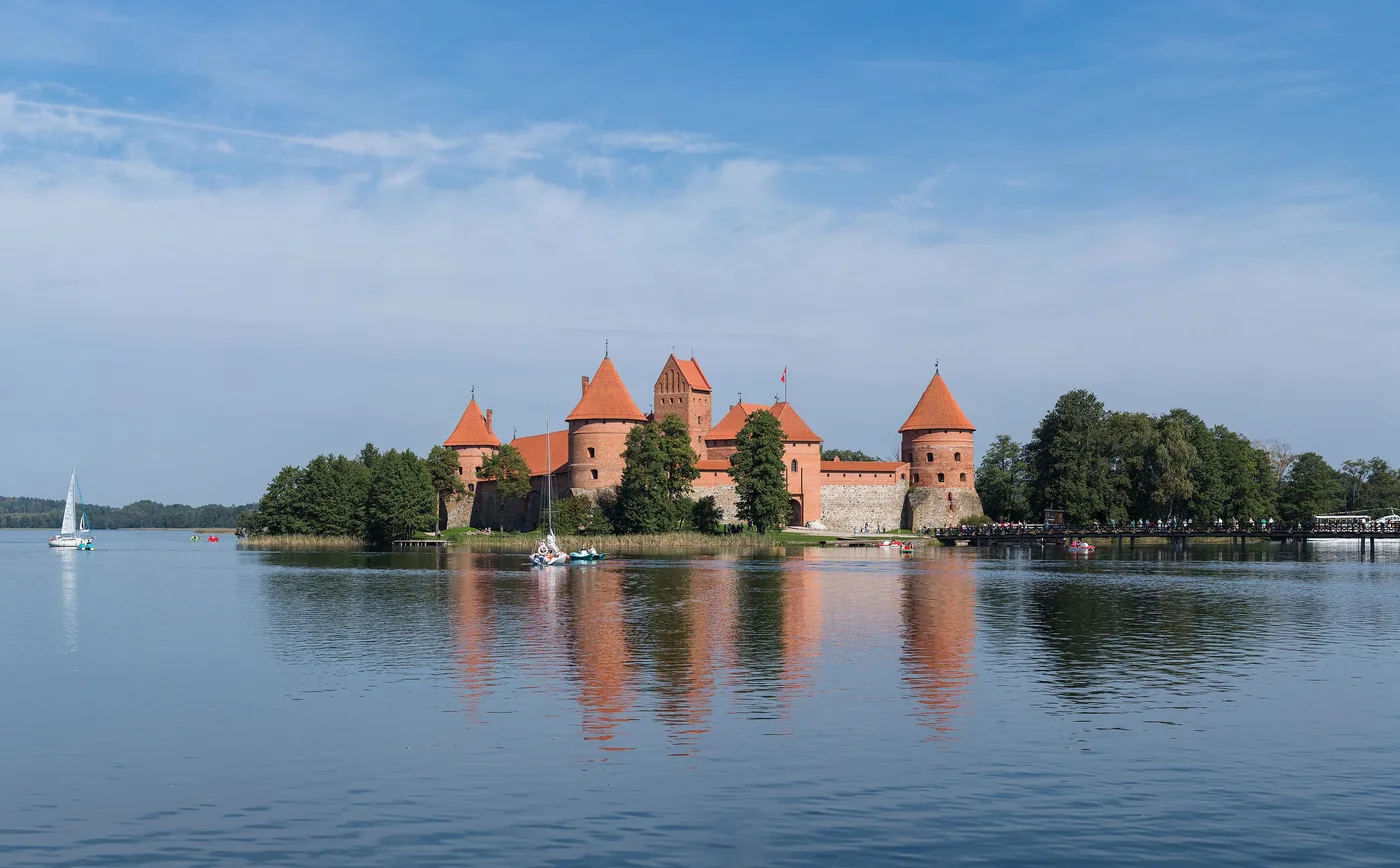
By train: LTG Link runs direct services from Vilnius to Trakai with a journey of roughly half an hour. There are only a handful of departures a day rather than an hourly clock-face service, so check the timetable in advance and note your return time before you set off. The train is comfortable and cheap, and the Trakai station is a flat, signposted walk from the lakes.
By bus: intercity buses run more frequently than the train — typically around once an hour through the day — and take a little longer, around 35–45 minutes depending on the service. Buses leave from the Vilnius bus station (autobusų stotis). For most visitors the bus is the more flexible choice simply because there are more departures.
Either way, both the train and the bus drop you a little outside the historic centre. From the arrival point it's an easy, pleasant 25–30 minute walk along the lakeshore to the Island Castle (or a short local taxi). By car the drive is about 30–40 minutes via the A16; there is paid parking near the castle that fills up on summer weekends, so arrive early. Plenty of organised tours also run from Vilnius if you'd rather not deal with logistics — useful in winter when public-transport timing is tighter.
- Train and bus both leave from the adjacent stations near the Old Town — walk or take a short taxi to reach them.
- Train: ~30 min, only a few departures a day — lock in your return time first.
- Bus: ~35–45 min, roughly hourly, more flexible for casual timing.
- From the Trakai arrival point it's a 25–30 minute lakeside walk to the Island Castle.
- Driving is ~30–40 minutes; castle-area parking fills early on warm weekends.
Which destinations work best by rail, and how to plan LTG Link timings.
Vilnius Photo SpotsThe castle's bridge approach is one of the region's best shots — more spots here.
Map pins
Map data © OpenStreetMap contributors · Tiles © OpenFreeMap
Visiting the castle: the bridge, the courtyard, the museum
The walk in is half the experience. From the lakeshore you cross a series of long wooden footbridges over the water, with the castle growing in front of you the whole way — it's the approach every photo is taken from, and it's worth slowing down for. The castle is split into a forecastle (an outer defensive yard) and the central ducal palace, joined by a drawbridge-style passage across an inner moat.
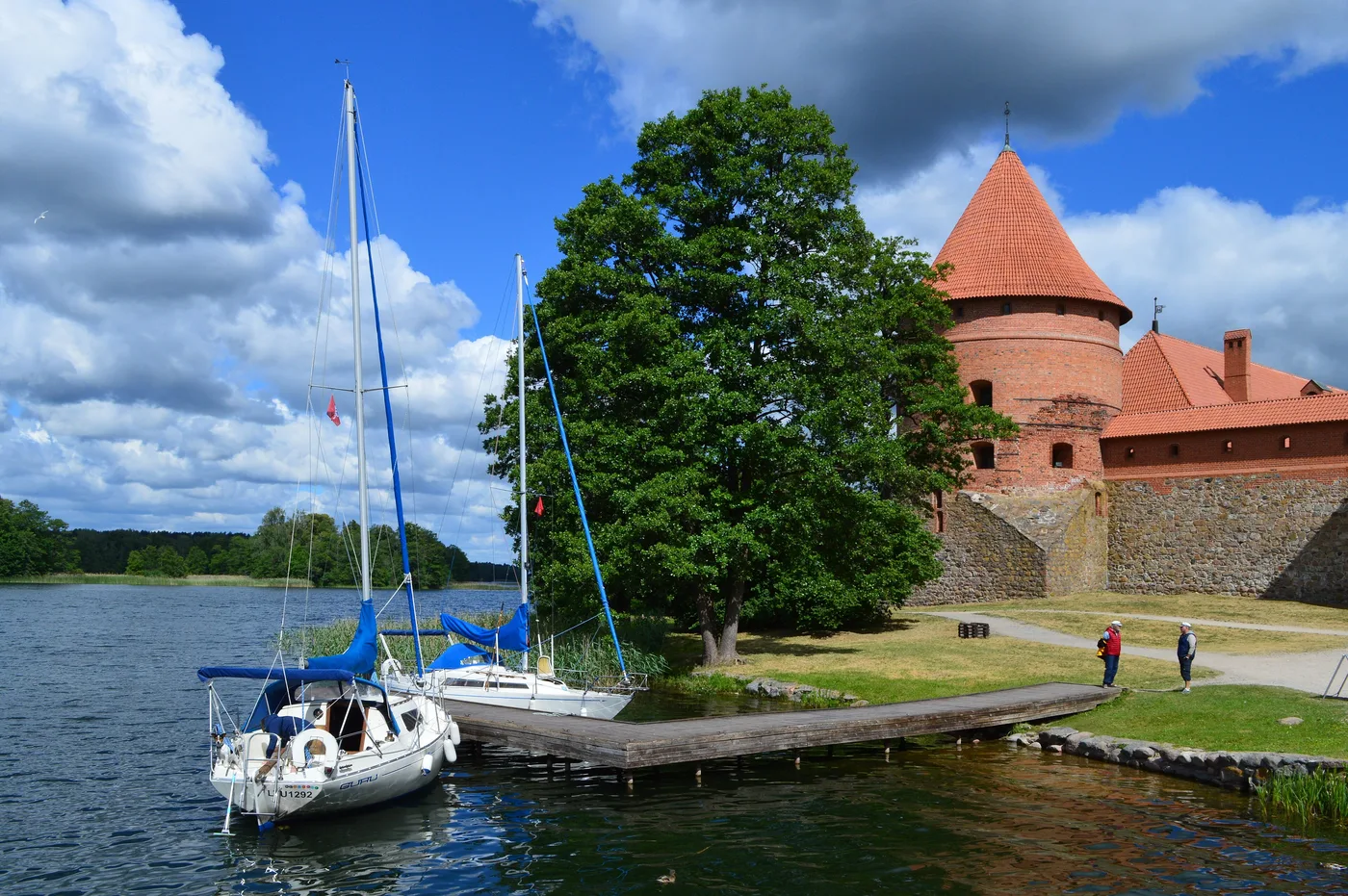
Inside, the Island Castle is run as the Trakai History Museum. You climb through a galleried inner courtyard — the wooden balconies are a reconstruction of the residential palace — and then follow the exhibition route through the casemates, the vaulted chambers built into the thick fortification walls. The collections cover the Grand Duchy of Lithuania, with armour and weaponry, coins and medals, ceramics, glassware, pipes, and applied art, plus displays on the castle's own construction and reconstruction. It's a steady, self-paced loop rather than a guided march.
Allow around 1 to 1.5 hours inside if you read the displays, less if you're mainly there for the architecture and the views from the upper galleries. The castle is a working museum with seasonal opening hours and an admission charge that varies by season, with reduced rates for students, children, and seniors; because both the schedule and the prices change, check the official museum site before you travel rather than relying on a number you read months ago. Photography inside is generally allowed.
A practical note: the castle involves stairs, uneven stone, and narrow passages, so it isn't fully step-free, and the wooden bridges can be slippery in rain or ice. In peak summer the courtyard and bridges get busy by late morning — going early or in the last hours of the afternoon gives you a calmer visit and better light.
It's worth knowing what the castle is and isn't, too. Because it was reconstructed in the 20th century from ruins, purists sometimes note that much of what you walk through is a careful recreation rather than original 15th-century fabric. That doesn't diminish it — the reconstruction is faithful and the museum is genuine — but it does mean the appeal is as much about the setting and the story of the Grand Duchy as about untouched medieval stonework. Approach it as a beautifully sited history museum and a window onto Lithuania's most powerful era, and it delivers exactly what it promises. Inside, look for the highlights of the applied-art collection and the displays on the castle's own dramatic rise, ruin, and rebuilding.
- Two parts: the outer forecastle and the central ducal palace, linked across an inner moat.
- The exhibition runs through the casemates — armour, coins, glass, and Grand Duchy history.
- Budget 1–1.5 hours inside; hours and ticket prices are seasonal, so confirm on the official site.
- Stairs and narrow passages mean it isn't fully accessible; bridges get slippery when wet.
Kibinai, the lakes, and making a full day of it
Trakai's other great pleasure is edible. Kibinai are crescent-shaped pastries of yeasted dough stuffed traditionally with minced lamb and onion (now also beef, chicken, mushroom, cheese, or sweet fillings), baked hot and eaten by hand — the signature dish of the Karaim community and reason enough on their own to make the trip. The main street, Karaimų, is lined with kibinai houses and lakeside terraces; pick one with a view over the water and order a couple of varieties with a clear broth or a cold kvass.
If you have a full day rather than a half, Trakai rewards lingering. In summer you can take a boat trip or rent a paddle boat or kayak on Lake Galvė for the castle's best angle, swim from one of the small beaches, or walk the quieter shore trails away from the crowds. There's also the older, ruined Peninsula Castle and the Karaim kenesa and ethnographic exhibition in town if you want more history. In autumn the lakes turn gold and reflective; in winter the bridges and walls under snow are spectacular but the boats and some terraces close down.
A sensible rhythm for most visitors: arrive late morning, walk the lakeshore to the castle, do the museum, then eat kibinai in town in the early afternoon and catch a mid-to-late-afternoon train or bus back to Vilnius in time for dinner. That keeps Trakai as a relaxed half-day-plus without feeling rushed, and pairs neatly with a second easy day trip elsewhere later in the week.
On the water, recreational boat trips run on Lake Galvė roughly from May to September — a half-hour circuit gives you the castle from angles you can't get on foot, gliding past wooded islands and the white neo-classical Užutrakis Manor on the far shore. You can also rent your own paddle boat, rowing boat, or kayak from the lakeside; Galvė is one of the deepest lakes in Lithuania and dotted with little islands, so it's a genuinely pretty paddle. The Užutrakis estate itself, built for the Tyszkiewicz family around 1900 with landscaped grounds, is a lovely add-on if you have the time and your own transport — its parkland faces the castle across the water.
Trakai is also a good fit for travellers basing a slower, two- or three-day plan around the lakes rather than dashing out and back. Staying a night lets you see the castle in early-morning light before the day-trippers arrive and catch the lake at sunset, both of which are magic. But for the majority on a short Vilnius trip, the classic half-day-plus is the right call — and it remains the single most reliable 'wow' you can deliver outside the city.
- Kibinai on Karaimų street are the local must-eat — try lamb plus one other filling.
- Boat trips and paddle/kayak rentals run on Lake Galvė roughly May–September for the best castle views.
- Summer adds swimming; autumn brings golden lake reflections; winter brings snow-dusted walls.
- Add the ruined Peninsula Castle, the Karaim kenesa, or Užutrakis Manor if you stay a full day.
- Typical pace: late-morning arrival, castle and museum, kibinai lunch, afternoon return.
When to go, what to bring, and a practical checklist
Season shapes the Trakai experience more than almost any other day trip from Vilnius. Summer (June–August) is the postcard version: green, warm, boats on the lake, swimming, and long light — but also the busiest, with tour coaches and queues at the most popular kibinai houses by midday. Late spring and early autumn are arguably the sweet spot: the crowds thin, the air is comfortable for the lakeside walk, and in autumn the surrounding woods turn gold and reflect in still water for spectacular photographs. Winter is quietly beautiful — the red brick under snow, the lake sometimes frozen — but the boats stop, some terraces close, and the daylight is short, so plan a compact midday visit and dress seriously for the cold.
Whatever the season, a few practicalities make the day smoother. Wear comfortable shoes with grip: the approach is a long lakeside walk and the castle has stairs, stone, and slippery wooden bridges. Bring some cash as well as a card — most places take cards, but a few small kibinai counters and boat operators prefer cash. Carry water in summer and a warm layer in shoulder season, when the wind off the lake bites. And if you're travelling by train, photograph or screenshot the return timetable before you lose signal — the limited departures are the one thing that catches people out.
Finally, a word on expectations. Trakai is rightly popular, which means at peak times you share the bridge and courtyard with a lot of other people. None of that diminishes the setting — but if you crave quiet, go early in the day, visit midweek, or come outside high summer. Do that, and Trakai delivers one of the most memorable few hours of any Baltic trip: a real medieval capital on its own island, a plate of hot kibinai by the water, and a lake that looks unreal in the right light.
- Best balance of weather and quiet: late spring and early autumn; summer is prettiest but busiest.
- Wear grippy shoes — long lakeside walk, castle stairs, and slippery bridges.
- Carry some cash for small kibinai counters and boat operators alongside a card.
- Going early or midweek (or off-peak season) gives you the castle with far fewer crowds.
Related guides
Trakai Day Trip
A complete Trakai day trip from Vilnius: how to get there, the island castle, Karaim kibinai, lake boating and a relaxed plan that doesn't feel rushed.
Read guide
Vilnius Family Itinerary
A kid-friendly Vilnius itinerary with tower views, riverside parks, hands-on museums, food halls, an easy day trip to Trakai and rainy-day backups — built for short legs, snack stops and real-world pacing.
Read guideDay Trips from Vilnius
The best day trips from Vilnius compared: island-castle Trakai, ancient Kernavė, second-city Kaunas, the Paneriai memorial, Europos Parkas, the Green Lakes, Rumšiškės and the Hill of Crosses — with honest notes on transport, timing and what's worth a car or a tour.
Read guide