
Kaunas Day Trip from Vilnius
A practical guide to a Kaunas day trip from Vilnius: train timing, the Old Town, UNESCO interwar modernism, museums, food, and whether Kaunas deserves an overnight.
- ✓Kaunas is Lithuania's second city, about an hour from Vilnius by frequent train — the easiest big-city day trip in the country.
- ✓Its interwar modernist architecture was inscribed on the UNESCO World Heritage List in 2023 as 'Modernist Kaunas: Architecture of Optimism, 1919–1939'.
- ✓The compact medieval Old Town meets a long pedestrian boulevard, Laisvės alėja, lined with cafés, the New Town's modernist landmarks beyond.
- ✓Highlights include the castle and Town Hall Square, Pažaislis Monastery, the Devils' Museum, the funiculars, and the sombre Ninth Fort on the edge of town.
- ✓A day covers the centre well; with the Ninth Fort or Pažaislis added, or a deeper modernism walk, Kaunas easily justifies an overnight.
Why visit Kaunas — and is a day enough?
Kaunas is Lithuania's second city and its former temporary capital, and it has the layered, slightly underrated character of a place that was once the centre of the country and is now finding its confidence again. Where Vilnius leans Baroque and royal, Kaunas leans interwar and inventive: a medieval core at the river confluence, then street after street of optimistic 1920s–30s modernist buildings put up when this was the seat of independent Lithuania. That contrast is the whole appeal — two cities for the price of one train ticket.
It works very well as a day trip because the journey is short and frequent, and the highlights cluster along a single walkable spine from the castle to the New Town. In a focused day you can stroll the Old Town, walk the length of Laisvės alėja, see the headline modernist landmarks, eat well, and be back in Vilnius for the evening. If you want to add the Ninth Fort, Pažaislis Monastery, or go deeper into the modernism trail and museums, that's where an overnight starts to make sense — but it is not required for a satisfying first visit.
The honest verdict: a day is enough to enjoy Kaunas and understand why it's worth your time, but it's a city that rewards more. If your trip is short, treat it as a confident day out. If you have four or more days in the region and an interest in 20th-century architecture or history, give it a night.
It's also worth setting expectations on character. Kaunas is less polished and less obviously pretty than Vilnius — it has grit, wide modernist streets, and a student-and-creative energy rather than a chocolate-box Old Town. That's a feature, not a flaw: it feels like a real working Lithuanian city rather than a tourist set piece, and in recent years (it was a European Capital of Culture in 2022) it has invested heavily in its museums, galleries, and public art. Come for the contrast with Vilnius, not for more of the same.
Getting there by train (and bus)
The train is the obvious way to reach Kaunas. LTG Link runs frequent services between the two cities, with regular stopping trains and faster express services, and the journey takes roughly an hour (the express, introduced on the route, runs non-stop in around an hour or just under). There are many departures spread across the day — far more than to most day-trip destinations — so you don't need to plan around a thin timetable the way you do for Trakai or Kernavė. Buy tickets online or at the station; fares are modest, with reduced rates for students and seniors.
Buses are an alternative and run very frequently too, leaving from the Vilnius bus station, with a journey time broadly similar to the stopping train. For a day trip the train is usually the nicer ride and lands you at Kaunas railway station a short ride or longer walk from the centre; from there a taxi, ride-hail, or local bus/trolleybus brings you to the Old Town or Laisvės alėja quickly.
Because departures are frequent in both directions, Kaunas is forgiving on timing — you can have a slow lunch and still catch a convenient train back. Still, check the last evening departure before you commit to a late dinner, especially off-season.
A note on the two stations: the train and bus stations in Vilnius sit right next to each other on the southern edge of the centre, a short taxi or 15-minute walk from the Old Town, so you can decide between rail and coach more or less on the day. In Kaunas, the railway station is a little south of the centre and the bus station is more central; whichever you use, getting into the heart of the city is quick and cheap. If you're combining Kaunas with onward travel west toward Klaipėda and the coast, the train is also the natural through-route, which is one more reason it tends to win over the bus for this trip.
One small efficiency tip: if you know your plans, buying the return leg in advance — online via LTG Link or at the machines — saves queuing and locks in your preferred departure on busy summer days. Tickets are inexpensive either way, and the trains are modern, comfortable, and a pleasant ride through the Lithuanian countryside in their own right.
- Train: ~1 hour, frequent stopping and express services through the day.
- Bus: also frequent from the Vilnius bus station, similar overall timing.
- Kaunas station sits a short ride from the centre — taxi, ride-hail, or local transit in.
- Frequent departures make Kaunas the most timing-forgiving day trip from Vilnius.
How to plan LTG Link rail day trips, Kaunas included.
Vilnius Train Station GuideOrientation, ticketing, and finding the right Kaunas departure.
Map pins
Map data © OpenStreetMap contributors · Tiles © OpenFreeMap
What to see: Old Town, Laisvės alėja, and UNESCO modernism
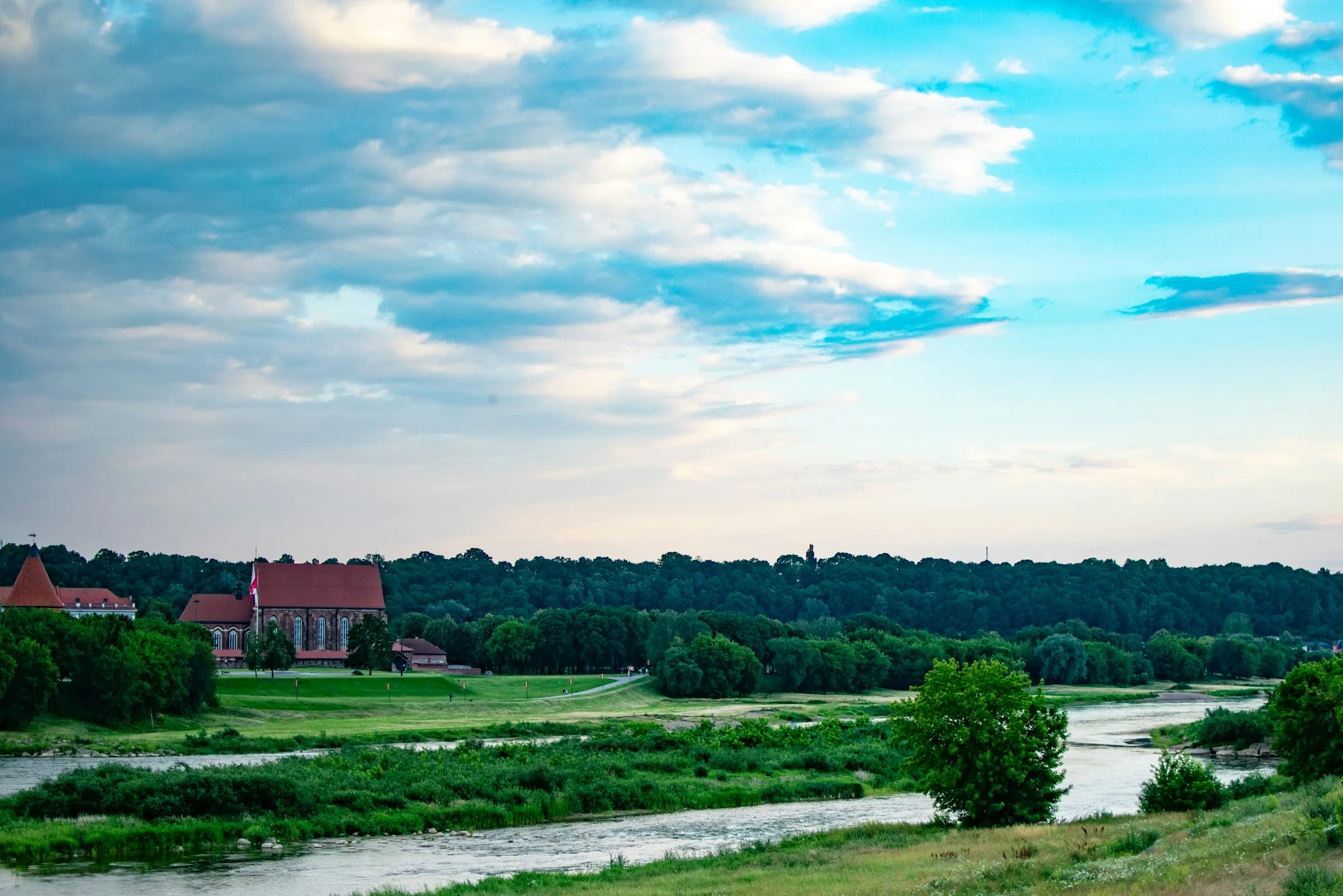
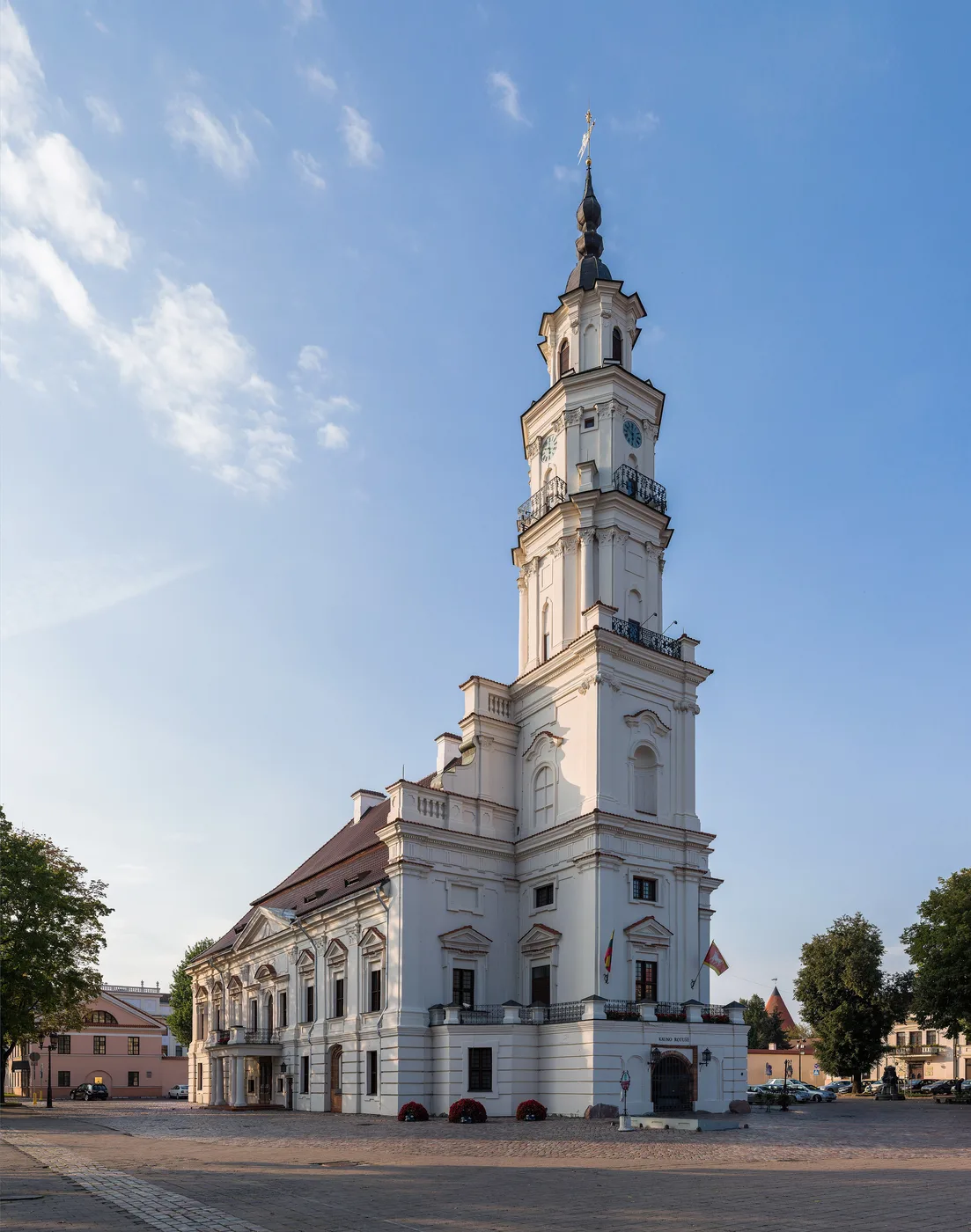
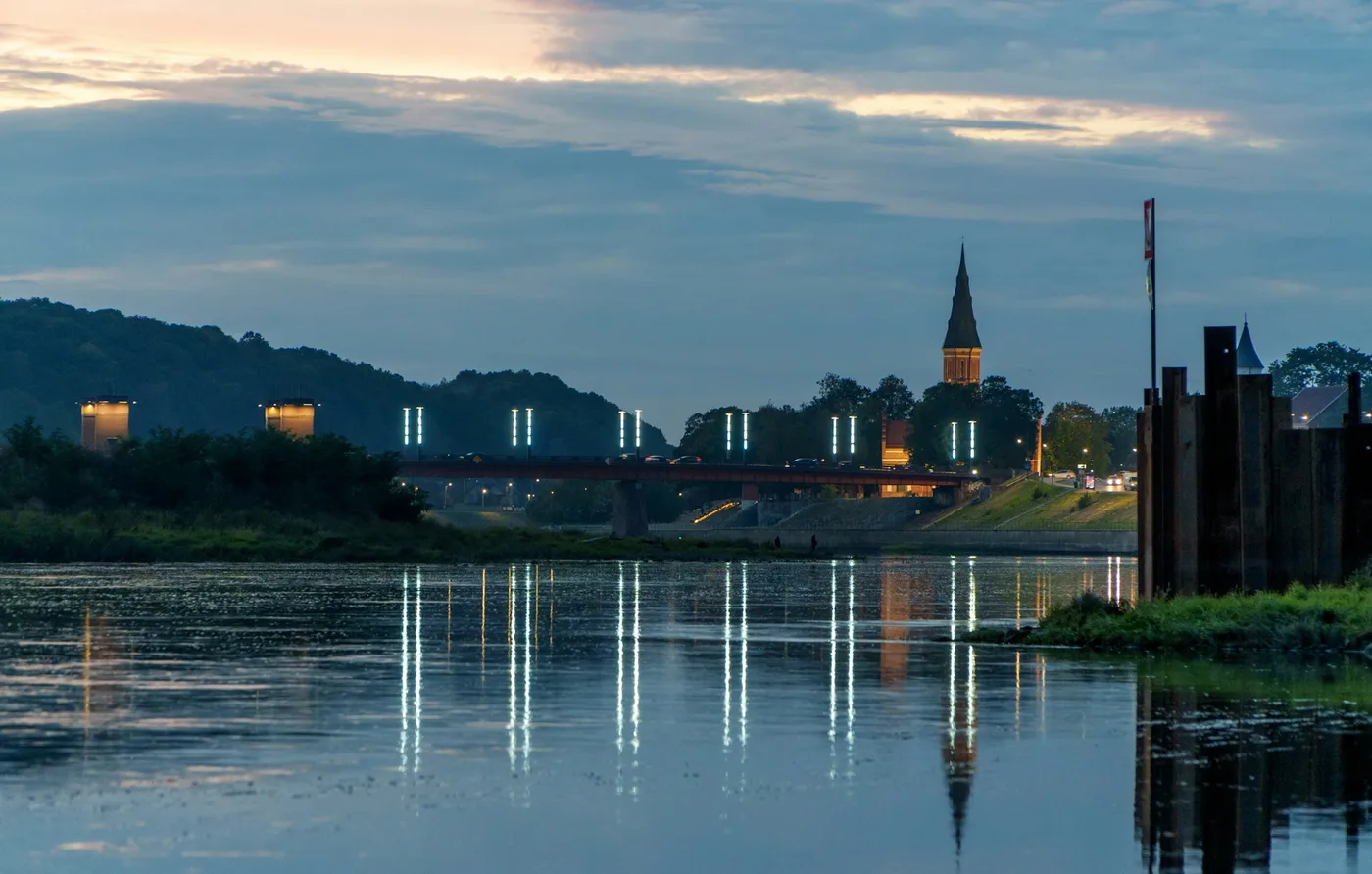
Start where the Neris and Nemunas rivers meet, at the western tip of the Old Town. Here you'll find the brick remains of Kaunas Castle, the city's oldest structure, and just inland the handsome Town Hall Square — nicknamed the 'White Swan' — ringed by the cathedral, churches, and merchant houses. The medieval core is small and easy to wander in an hour or two, with cobbled lanes, courtyards, and café terraces. Don't miss the House of Perkūnas, a rare flamboyant-Gothic merchant house tucked near the river, or the Vytautas the Great Church beside it — small reminders that, long before its modernist heyday, Kaunas was a wealthy Hanseatic-era trading town at the meeting of two rivers.
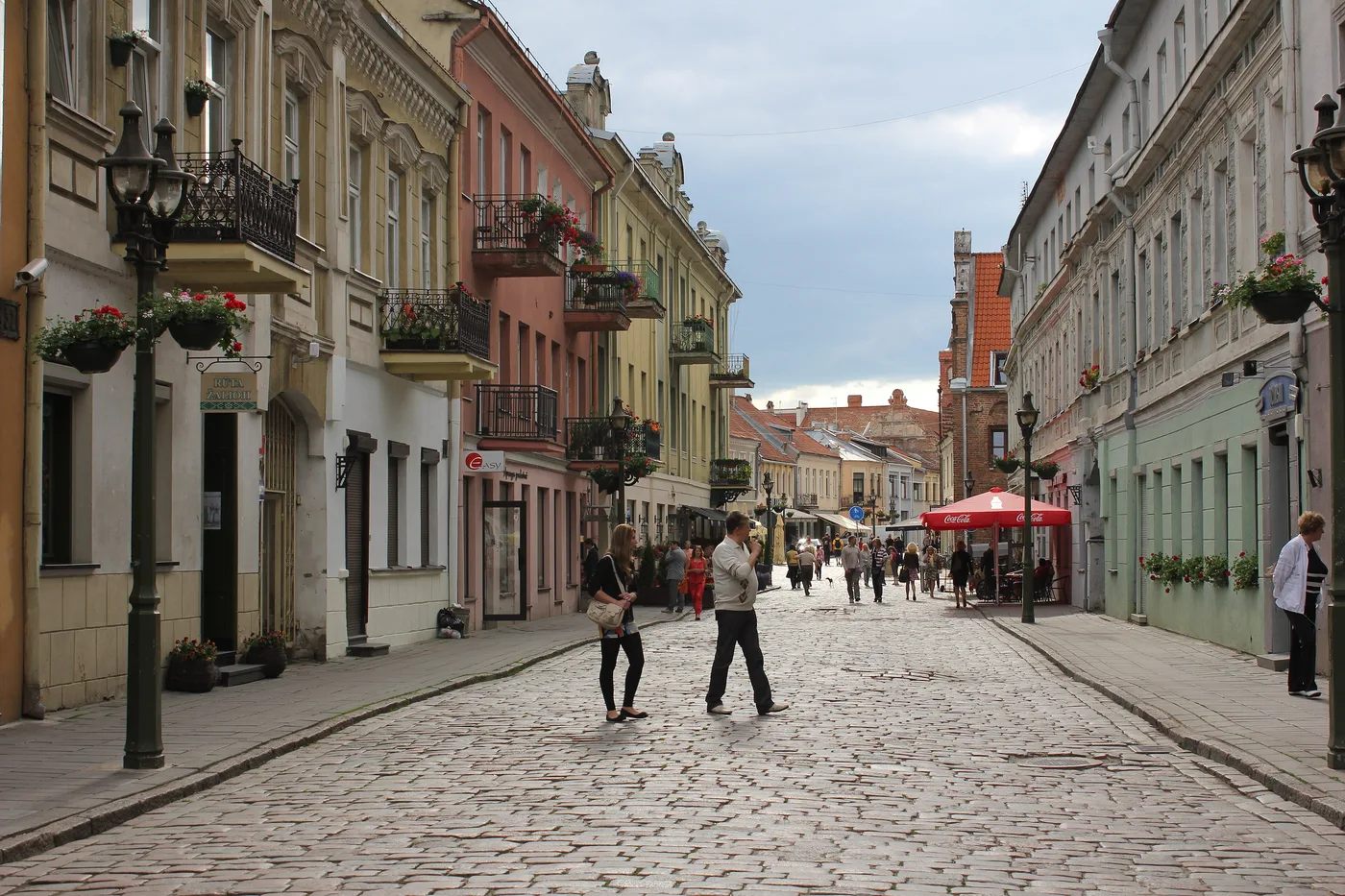
From the Old Town, the long pedestrian boulevard Laisvės alėja (Freedom Avenue) runs east into the New Town, shaded by lime trees and lined with shops, cafés, and ice-cream stops. This is the spine of interwar Kaunas. In 2023 the city's interwar architecture was inscribed on the UNESCO World Heritage List as 'Modernist Kaunas: Architecture of Optimism, 1919–1939', recognising the roughly two decades when Kaunas was Lithuania's provisional capital and built thousands of confident modernist buildings. Look out for landmarks like the Central Post Office, the Christ's Resurrection Basilica on the hill above the New Town, and the bank and apartment buildings along and around Laisvės alėja — many now marked on the city's modernism trail.
Beyond the architecture, Kaunas has genuine museum draws. The Devils' Museum (Žmuidzinavičius Museum) holds a famous, eccentric collection of thousands of devil figures from around the world. The M. K. Čiurlionis National Museum of Art covers Lithuania's most celebrated painter-composer. The Vytautas the Great War Museum and the carillon nearby anchor a green civic square. And for transport novelty, Kaunas runs two historic funiculars up its hillsides — the Žaliakalnis funicular climbs in about 90 seconds and is a small, charming ride in its own right.
Street art is another thread worth following. Over the last decade Kaunas has filled its walls with large, witty murals — the most famous being a giant 'Wise Old Man' on a New Town building — and a self-guided mural hunt is a fun way to wander the side streets you'd otherwise skip. It dovetails neatly with the modernism trail, since both reward looking up and stepping off the main avenue. If you have any interest in contemporary creativity, this is where Kaunas's Capital-of-Culture energy shows most clearly, and it costs nothing but curiosity and a bit of walking.
- Old Town: Kaunas Castle, Town Hall Square ('White Swan'), cathedral, riverside lanes.
- Laisvės alėja: tree-lined pedestrian boulevard linking Old Town to the modernist New Town.
- UNESCO 'Modernist Kaunas' (inscribed 2023) — follow the city's interwar architecture trail.
- Museums: Devils' Museum, M. K. Čiurlionis art museum, Vytautas the Great War Museum.
- Ride a historic funicular up Žaliakalnis or Aleksotas for a viewpoint over the city.
Heavier history, food, and whether to stay over
Kaunas also holds some of Lithuania's most important and most sobering history. On the city's northern edge, the Ninth Fort was a Tsarist-era fortification later used by the Nazi regime as a site of mass murder, where tens of thousands of people — most of them Jews, including many deported from elsewhere in Europe — were killed. Today it is a memorial and museum with a towering monument, and it is a serious, affecting visit; reaching it takes a local bus or taxi out from the centre, so factor in the time and the change of mood. Pažaislis Monastery, a magnificent Baroque complex on the Kaunas Reservoir at the opposite edge of the city, is the gentler counterweight — beautiful, peaceful, and reachable by bus or boat in summer.
Food in Kaunas is a pleasure and cheaper than in the capital. The Old Town and Laisvės alėja are full of cafés, bakeries, and restaurants ranging from traditional Lithuanian taverns to modern bistros and good coffee. It's an easy city to graze through — a mid-morning pastry, a long lunch, an afternoon ice cream on the boulevard — and a fine place to try cepelinai or a hearty regional plate away from the busier Vilnius tourist spots. The covered and street markets, and the bakeries dotted along the side streets, are good for picking up snacks if you'd rather picnic between sights.
If you do stay over, the city comes into its own in the evening, when day-trippers have left and the cafés and bars along and behind Laisvės alėja fill with a young, local crowd. An overnight also makes the two big out-of-centre sights manageable without rushing: you could do the Old Town, modernism, and a museum on day one, then the Ninth Fort and Pažaislis on a calmer second morning before heading back. For travellers genuinely interested in 20th-century history and architecture, that two-part rhythm is when Kaunas fully repays the trip.
So, day trip or overnight? For a first visit on a short trip, a focused day centred on the Old Town, Laisvės alėja, the modernism, and one museum is genuinely satisfying. If you want to add the Ninth Fort and Pažaislis, dig into the UNESCO architecture properly, or simply enjoy the city's evening and café culture, stay a night — Kaunas is at its best unhurried, and it makes a natural stepping stone if you're continuing west or toward the coast.
- Ninth Fort: a major Holocaust memorial and museum on the city's edge — a serious, time-consuming add-on.
- Pažaislis Monastery: Baroque masterpiece by the reservoir, reachable by bus or summer boat.
- Food is excellent and cheaper than Vilnius — graze along Laisvės alėja and the Old Town.
- A day suits a first visit; the Ninth Fort, Pažaislis, or deeper modernism make the case for an overnight.
A practical day plan — and how to walk it
The easiest way to do Kaunas in a day is to let the geography lead you. Almost everything worth seeing lines up west-to-east along a single axis, so you can walk the whole city in one logical sweep without backtracking. From the railway station, take a quick taxi, ride-hail, or local bus to the Old Town, start at Kaunas Castle and the river confluence, and work your way through Town Hall Square and the cathedral. That's your first hour or so, plus coffee.
From there, walk the full length of Laisvės alėja into the New Town. Take it slowly — this boulevard is the point, not a corridor between sights. Detour a block north or south wherever a modernist façade catches your eye; the city has marked many of the UNESCO-listed buildings, and a good number of them sit just off the main avenue. At the eastern end you reach the green civic square with the Vytautas the Great War Museum and the carillon. If you want a view and a quirk, ride the historic Žaliakalnis funicular up the hill to the Christ's Resurrection Basilica, whose rooftop terrace gives a panorama over the whole city — a fitting finish before you turn back toward the station.
A realistic single-day shape: late-morning arrival, Old Town and castle, a long graze down Laisvės alėja with lunch, one museum (Devils' Museum or M. K. Čiurlionis, depending on your taste), the funicular and a viewpoint, then an early-evening train back to Vilnius. That leaves the Ninth Fort and Pažaislis — both of which sit out at opposite edges of the city and eat a couple of hours each with transport — for a return visit or an overnight. Trying to cram one of those into a day usually means rushing the centre, which is the part most people enjoy most.
- Everything lines up west-to-east — walk one continuous sweep from the castle to the New Town.
- Take a taxi or local bus from the station to the Old Town, then walk; reverse it to leave.
- Detour off Laisvės alėja for the marked modernist landmarks; finish with the funicular viewpoint.
- Save the edge-of-city Ninth Fort and Pažaislis for an overnight rather than squeezing a day.
Related guides
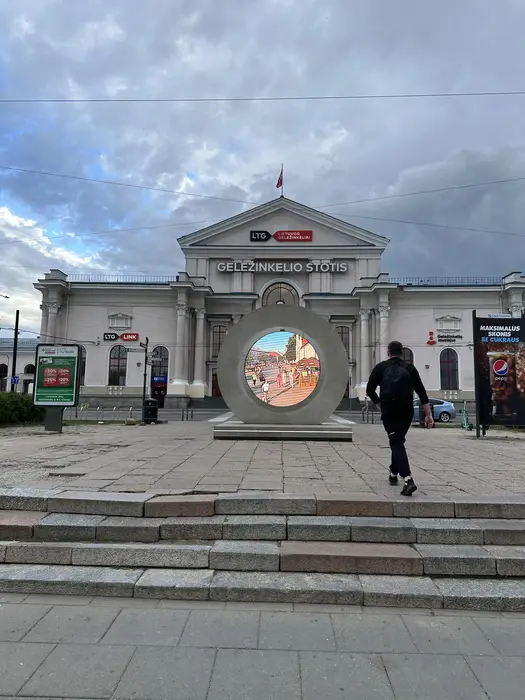
Best Vilnius Day Trips by Train
The easiest rail day trips from Vilnius: Trakai, Kaunas, Paneriai and beyond on LTG Link trains, with station strategy, fares, timing and when a car or tour is the better call.
Read guide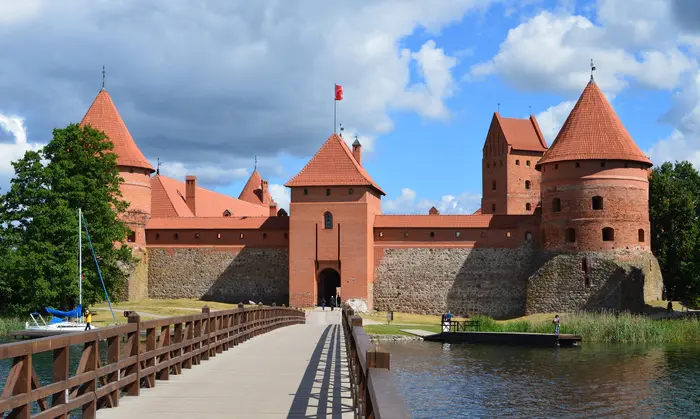
Day Trips from Vilnius
The best day trips from Vilnius compared: island-castle Trakai, ancient Kernavė, second-city Kaunas, the Paneriai memorial, Europos Parkas, the Green Lakes, Rumšiškės and the Hill of Crosses — with honest notes on transport, timing and what's worth a car or a tour.
Read guide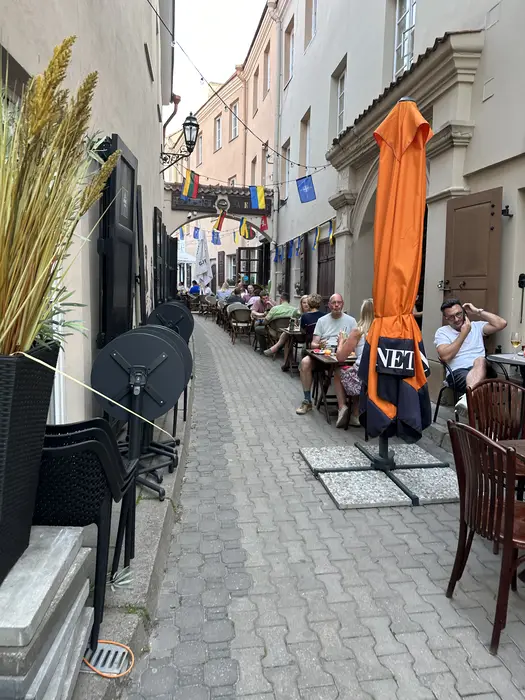
Four Days in Vilnius: A Slower, Deeper Itinerary
A four-day Vilnius itinerary that goes beyond the Old Town: the historic core and viewpoints, Užupis and the riverside, a day of neighbourhoods and Jewish heritage, and a full day trip to Trakai or Kaunas — for travellers who would rather know a city well.
Read guide