
Trakai, Kernavė & Kaunas Loop
Link Trakai, Kernavė, Kaunas, Pažaislis and Rumšiškės on a three-day first circuit from Vilnius.
- Allow
- 3 days
- Route
- 263 km
- Drive time
- 3 hr 23 min
- Stops
- 6
The strongest first drive from Vilnius is not a single out-and-back. Trakai supplies the lake-and-castle image, Kernavė reveals Lithuania’s earlier political landscape, and Kaunas needs a real overnight for its modernist architecture and river-confluence city life. Pažaislis and Rumšiškės widen the return through baroque and open-air heritage.
Trakai is busy enough that an early arrival and formal parking matter. Kaunas is best handled like Vilnius: leave the car at the hotel and walk. Short distances are an invitation to spend longer at each stop, not to add three more.
The road, in one glance
Pinch or scroll with Ctrl / ⌘ to zoom
Drawing the route…
The route earns
its distance
Each pin is selected as a place to do something—not merely proof that you passed through.
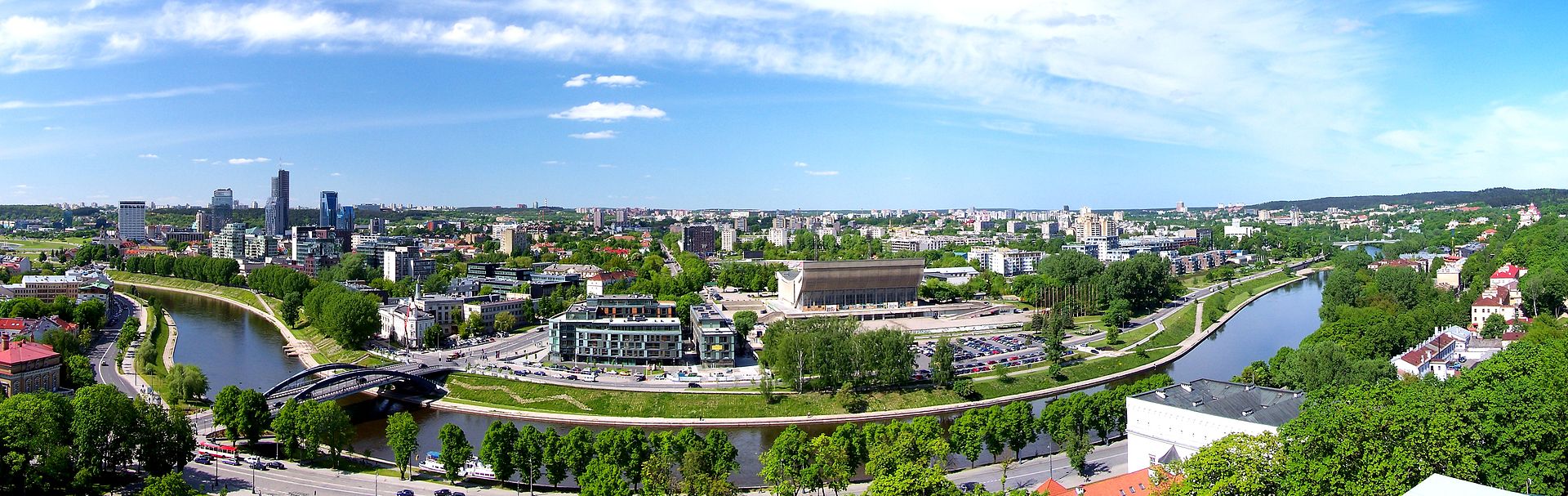 Photo: Lestat (Jan Mehlich) · CC BY-SA 3.0
Vilnius
Collect the car only after the Old Town, Užupis and central neighborhoods have been explored without it.
Vilnius ( VIL-nee-əs, Lithuanian: ) is the capital of and largest city in Lithuania and the most-populous city in the Baltic states. The city's estimated January 2026 population was 617,984, and the Vilnius urban area (which extends beyond the city limits) has an estimated population of 767,907. Vilnius is notable for the architecture of its Old Town, considered one of Europe's largest and best-preserved old towns.
 Photo: Skelanard (Aleksandr Petukhov) · CC BY-SA 4.0
Trakai
A red-brick island castle, Karaim heritage and a chain of lakes make a complete first day.
Trakai Island Castle (Lithuanian: Trakų salos pilis, Polish: Zamek w Trokach) is an island castle located in Trakai, Lithuania, on an island in Lake Galvė. The construction of the stone castle was begun in the 14th century by Kęstutis, and around 1409 major works were completed by his son Vytautas the Great, who died in this castle in 1430.
 Photo: Mindaur · CC BY-SA 4.0
Kernavė
Archaeological hillforts overlook the Neris Valley at Lithuania’s former medieval center.
Kernavė was a medieval capital of the Grand Duchy of Lithuania and today is a tourist attraction and an archeological site (population 238, 2021). It is located in the Širvintos district municipality located in southeast Lithuania. A Lithuanian state cultural reserve was established in Kernavė in 1989.
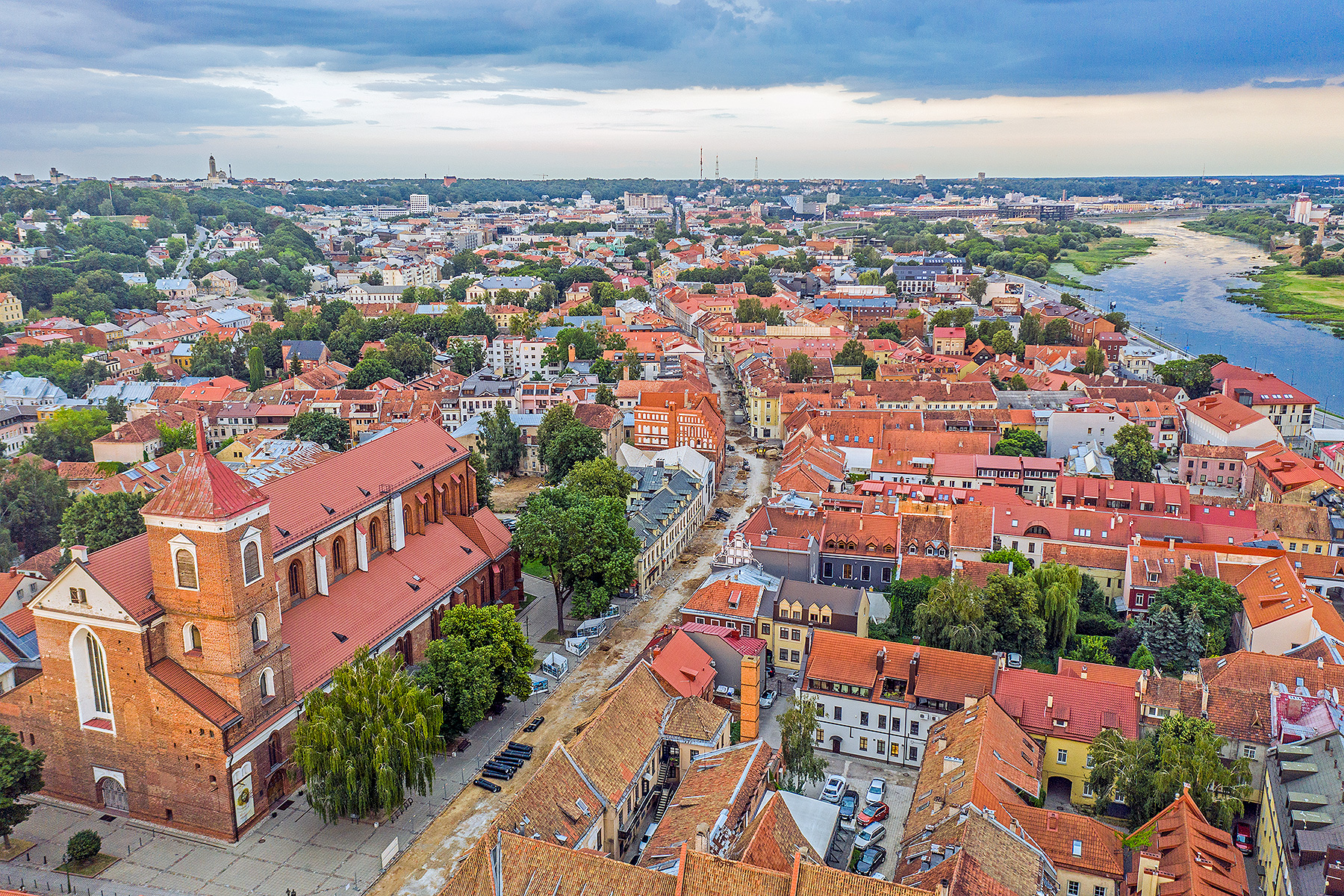 Photo: BigHead · CC BY-SA 4.0
Kaunas
Interwar modernism, a long pedestrian axis and two rivers justify at least one full night.
Kaunas (; Lithuanian: ) is the second-largest city in Lithuania (after Vilnius), the fourth-largest city in the Baltic States, and an important centre of Lithuanian economic, academic, and cultural life. Kaunas was the largest city and the centre of a county in the Duchy of Trakai of the Grand Duchy of Lithuania and Trakai Palatinate since 1413.
 Photo: Augustas Didžgalvis · CC BY-SA 4.0
Pažaislis Monastery
A mature baroque ensemble stands beside the Kaunas Reservoir east of the city.
Pažaislis Monastery and the Church of the Visitation (Lithuanian: Pažaislio vienuolynas ir Švenčiausios Mergelės Marijos apsilankymo pas Elžbietą bažnyčia, Polish: Klasztor w Pożajściu) form the largest monastery complex in Lithuania, and the most renowned example of Baroque architecture in the country. The church is the most marble-decorated Baroque church of the former Grand Duchy of Lithuania.
 Photo: Tocekas · CC BY-SA 3.0
Rumšiškės
Lithuania’s open-air museum spreads regional buildings across a large landscape by the reservoir.
Rumšiškės is a Lithuanian town (population 1,700), situated 20 km (12 mi) east of Kaunas on the northern bank of Kaunas Reservoir. Southern part of the town (including the birthplace of Lithuanian poet Jonas Aistis) is now under the waters of the artificial lake. The 18th century St.
Drive the conditions,
not the itinerary.
Use signed parking in Trakai, leave the car still in central Kaunas and check museum opening before fixing the route order.
Checked against
the people who run it
Distances and driving times are planning estimates. Conditions, closures, ferries, permits and park rules can change, so check the linked official guidance before setting out.