
Vilnius Marathon guide
A race-weekend planning guide to the Swedbank Vilnius Marathon: the September date, the distances on offer, the Cathedral Square start and finish, road closures and transport, the best spectator spots, and how to combine running with sightseeing.
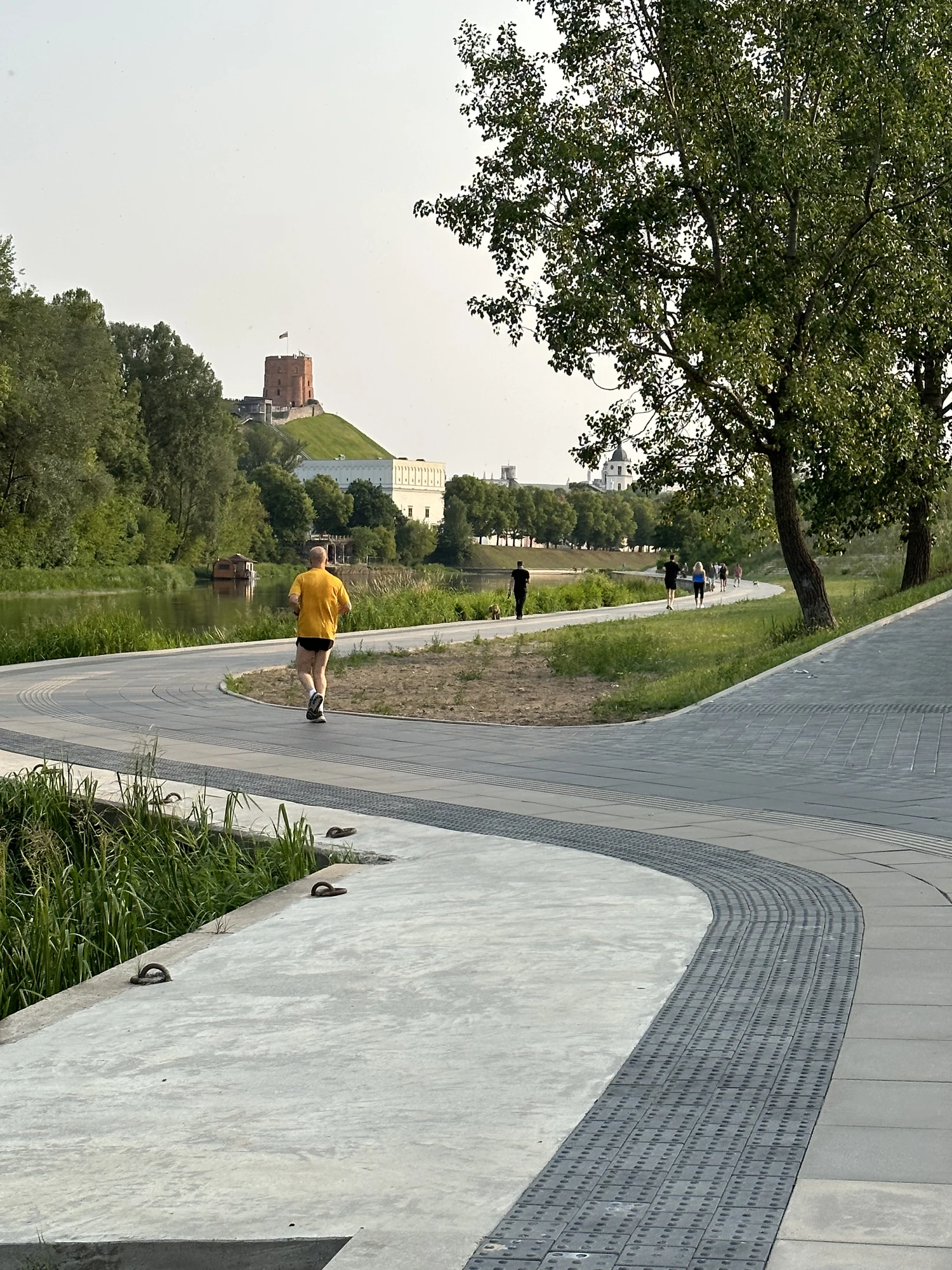
- ✓The Swedbank Vilnius Marathon is the city's flagship running event, held in mid-September with a start and finish on Cathedral Square in the heart of the Old Town.
- ✓There is a distance for everyone: full marathon, half marathon, 10 km, 5 km and short children's runs, all on the same weekend.
- ✓The 2026 race is scheduled for Sunday 13 September; registration is handled online through the official platform and closes in the days before.
- ✓The course threads the historic centre, the riverside and the city's parks, so spectators get scenic, easy-to-reach vantage points.
- ✓Race morning brings road closures and rerouted transport across the centre — plan a hotel within walking distance and leave the car behind.
The race and its distances
The Swedbank Vilnius Marathon is the biggest day on the city's running calendar, an autumn event that turns the Old Town and the riverside into a single long course and draws thousands of runners and spectators into the centre. It is well organised, scenic and genuinely international, with a start and finish on Cathedral Square that puts the city's signature backdrop — the cathedral, the bell tower and Gediminas' Hill behind — at both ends of the race. For visiting runners it is a rare chance to race through a UNESCO Old Town and along a river in the same morning.

Crucially, this is not a single-distance event. The day is built around several races so that almost anyone can take part: the full marathon, a half marathon, a 10 km, a 5 km, and short children's runs over a few hundred metres. That range makes it as much a city-wide participation festival as an elite competition — families enter the shorter distances, serious club runners chase the half and full, and the atmosphere along the course stays warm and supportive throughout.
The course itself is designed to show the city off. It links the historic centre with the green riverside corridors and the city's larger parks, so runners spend long stretches in tree shade and alongside the water rather than on bare arterial roads. That also makes it an unusually pleasant race to spectate, because the loop and out-and-back sections bring runners back past accessible, attractive points more than once.
The timing is part of the appeal too. Mid-September in Vilnius tends to be cool and bright — comfortable running weather, well past the summer heat but before the autumn damp sets in — which is one reason the race has built a following among visiting runners chasing a personal best in a scenic setting. The relatively flat, river-hugging profile and the shaded stretches keep the conditions kind for distance running, and the compact city means that even the full marathon never strays far from a backdrop worth looking at.
Dates, registration and the practical day
The Vilnius Marathon is run in mid-September, and the 2026 edition is scheduled for Sunday 13 September. Registration is online through the official entry platform, with the various distances bookable separately and a registration deadline in the days before race day rather than on the morning itself. Entry fees, distance options and the exact cut-off vary by edition, so register early and confirm the current details on the official marathon site before you commit travel around it.
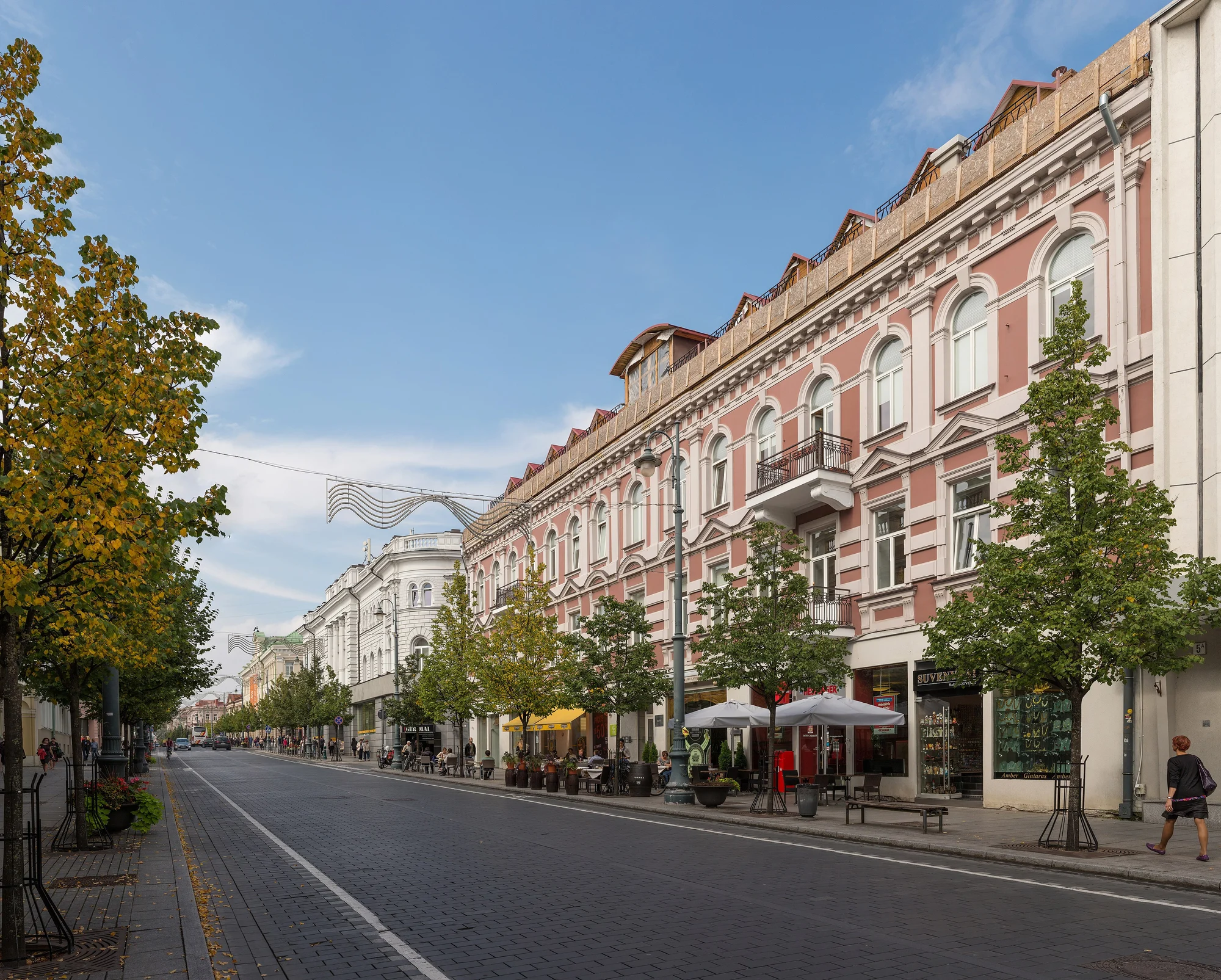
Race weekend is more than the run. There is usually an expo and number-collection window in the days before, where registered runners pick up their bib and race pack — build that into your schedule, because you generally cannot collect on the start line. If you are travelling specifically to run, arrive at least a day ahead so you are not collecting a number and racing in the same tight morning.
On race morning the centre changes character. Roads across the Old Town and along the course close to traffic, public transport reroutes around the closures, and the area around Cathedral Square fills with runners, bag drop and supporters from early. The simplest solution is to stay within walking distance of the start so you can reach it on foot; if you are further out, check the morning's transit changes the night before and allow extra time.
- 2026 race date: Sunday 13 September; start and finish at Cathedral Square.
- Distances: marathon, half marathon, 10 km, 5 km and children's runs.
- Register online in advance; entry closes before race day and fees vary by edition.
- Collect your bib at the pre-race expo — not on the start line.
- Expect Old Town road closures and rerouted transport on race morning.
How buses, trolleybuses and tickets work — and why transit beats a car on race day.
Where to Stay in VilniusStay within walking distance of Cathedral Square to make race morning easy.
Map pins
Map data © OpenStreetMap contributors · Tiles © OpenFreeMap
Spectating, hotels and turning the race into a trip
Spectators are spoiled in Vilnius because the course keeps coming back to the centre. The start and finish on Cathedral Square is the obvious spot — the energy at the finish line, with the cathedral as a backdrop, is the photograph everyone wants — but the riverside paths and the park sections give quieter, shaded vantage points where you can see your runner more than once. With the historic core compact, supporters on foot can hop between two or three viewing points during a single race without rushing.
For runners, the right base is one near the start. A hotel within easy walking distance of Cathedral Square removes every logistical headache on race morning: no transit puzzle, no parking, just a short warm-up walk to the line and a stagger back afterwards. The Old Town and the streets immediately around it are ideal; book early, because a popular race weekend tightens central availability.
A few race-morning details are worth getting right in advance. Plan your breakfast around an early, central start and check the bag-drop arrangements near the start area so you are not improvising with a kit bag at the last minute. Lithuanian September mornings can be chilly before the sun is fully up, so bring a throwaway layer for the start line that you can discard once you are warm. And study the published course map the night before — knowing where the route loops back near the centre helps both runners pace themselves and supporters position themselves for the best, most repeatable views.
Finally, do not let the race swallow the trip. Mid-September is one of the best windows to be in Vilnius — mild, bright and past the summer peak — so give yourself a recovery day to enjoy the city you just ran through. A gentle Old Town wander, a long lunch, a viewpoint and a riverside coffee make the perfect post-marathon afternoon, and the same scenery you raced past looks even better at walking pace.
Non-running partners and supporters are well served too, which makes the marathon an easy trip to bring company on. While one of you races, the other can spend the morning over coffee on Cathedral Square, drift through the Old Town's churches and museums, and reappear at the finish line in time for the photo — no logistics required beyond a working phone to track progress. Combined with the city's gentle autumn weather and the short distances between everything, that turns race weekend into a proper city break rather than a single-purpose sporting errand, and it is a large part of why so many runners come back to do it again.
- Best spectator spots: the Cathedral Square finish, plus the riverside and park sections.
- Stay within walking distance of the start for a stress-free race morning.
- Book central accommodation early for race weekend.
- Leave a recovery day to enjoy the Old Town at walking pace.
Related guides
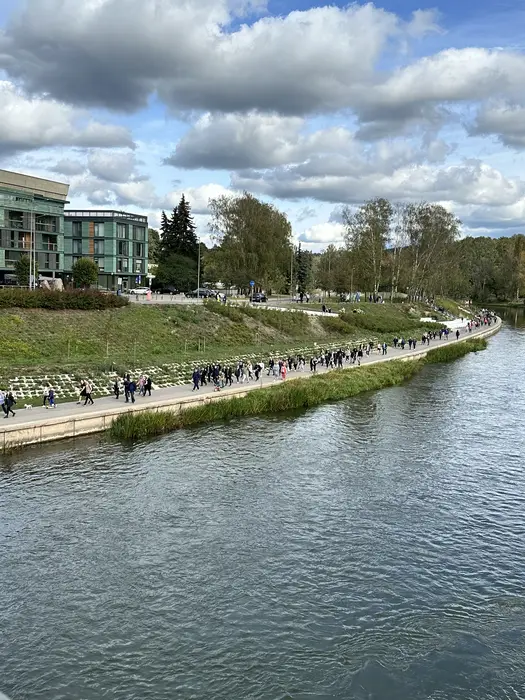
Vilnius in September
Softer weather, Capital Days, the Marathon, food season, design routes and one of Vilnius's strongest shoulder months.
Read guide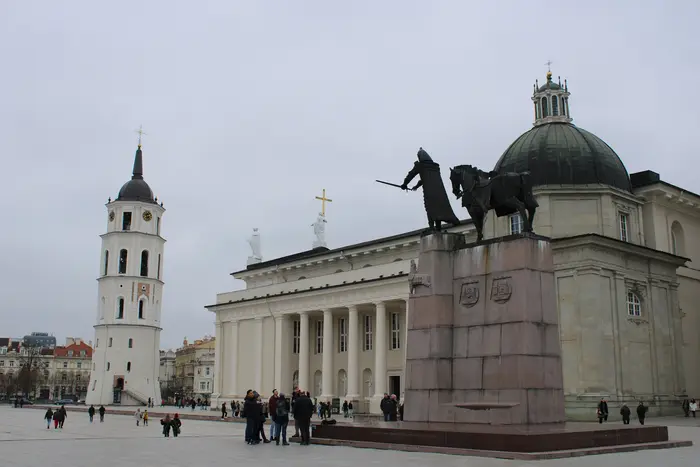
Where to Stay in Vilnius
How to choose where to stay in Vilnius: an area-by-area guide for first-timers, couples, families, nightlife, rail travellers and budgets — from the Old Town and Užupis to the station district, plus what kind of place to book.
Read guide
Vilnius Public Transport Guide
How Vilnius public transport works: JUDU buses and trolleybuses, time-based tickets, contactless bank-card payment, the Trafi and JUDU apps, airport routes and the mistakes visitors make.
Read guide